Desert Online General Trading LLC
Dubai, United Arab Emirates
Desert Online General Trading LLC
Dubai, United Arab Emirates

Full description not available
J**S
A "real" book to get you started
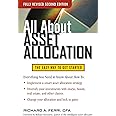
If you are just starting out like me, and want to learn how investing actually works, this book is a great place to start. It helped me get on the road to making informed decisions about how to set up my 401(k), evaluate financial advice, and make sure my parent's retirement was on track. It has chapters on each type of investment, like stocks, bonds, mutual funds, ETFs, real estate, etc. The main topic of the book is, of course, asset allocation, which turns out to be one of the most important things you need to know about investing.I spent some time searching Amazon for good books to start learning about finances. My initial research returned other books that were very, very, introductory level, and focused on things like "how to make a budget" or "why you should save money every month". While these types of titles are surely of use for the absolute beginner, they are somewhat lacking for people with the goal of understanding how to put their money to work saving for the future.The book is an easy read. I found it so helpful I searched Amazon for the author, Rick Ferri, and picked up some of his other titles as well. Highly recommended.
S**N
This is a very good book. Rick is of the school of investors ...
This is a very good book. Rick is of the school of investors with a faith in index investing, though he carefully goes through related research and clearly outlines his judgements on many of the issues which an investor will need to relate to — just as he avoids some of the conundrums which always come to my mind when I read these perspectives. Very sound advice for those who want to manage their own portfolios. There’s plenty of research behind his points, and about the virtues of keeping expenses to the bone. What I found particularly helpful was getting some handles on how to “tweak” the most simple of portfolios for hopefully somewhat better performance. The cover says “fully revised second edition” though I’m doubtful about that since most of the charts and data don’t go into some of what we need to know most — how elements recovered from the downfall of 2008.
M**R
Best Financial Book I've Read
I lost track of this book and only recently completed it. I found it to be the perfect amount of technical writing. Most financial books I've read are either to simplistic or overly complex, I read, understood and enjoyed each and every chapter.You will know why you do asset allocation and learn about the various asset classes. The book will help you determine a proper asset allocation for your current stage in life and even give you some suggestions on portfolio contents.
J**Y
Educational and Confidence Boosting
This is one of the best books I have ever read to get me started on a long-term investment plan. The material is presented very logically with charts and graphs to explain various financial concepts and practices. I was very reluctant to pay a financial manager a fixed percentage to manage my portfolio. I learned that the most difficult step was to determine your asset allocations, then stick to your plan when the bears and bulls are having their fun. I especially appreciated the sample portfolio asset allocations that could be used at different stages of your life. I now understand the importance of index funds and diversification within and across assets. The bottom line: I now believe that with this book and a few other resource references I have the tools I need to develop and implement my own long-term investment plan and do not have to rely on and pay a financial advisor.
C**E
A must read to any individual investor
It`s an excellent book about investing in general, written in such a way that even the layman can understand the principles of asset allocation. Richard Ferri has an original understanding of risk, proposing that risk for an individual investor is the same as for pension funds, that is, doesn`t have enough money to cope with retirement liabilities. He explains the basics about modern portfolio theory in practical ways, discussing that correlations between asset classes change over time, so he doesn`t need to detail the hard mathematics necessary to optimize a portfolio, what I believe is a more practical and useful approach. He also explains all the asset classes for those who aren`t used to it and, then, discusses asset allocation with examples for different life ages and argues that these examples should be adjusted to represent the unique needs of an investor. Besides he says that the allocation should be done according to the investor`s risk tolerance and devotes a whole chapter to develop techniques useful to assess someone`s tolerance to risk, which is very important at panic moments. When risk is correctly balanced, an investor is comfortable to rebalances her or his portfolio, a necessary step to maintain your investment plan. It`s a must read to any individual investor and I recommend it to everyone.
Trustpilot
4 days ago
2 weeks ago