
DOWNLOAD THE APP


Customer Services
Copyright © 2025 Desertcart Holdings Limited
DOWNLOAD THE APP
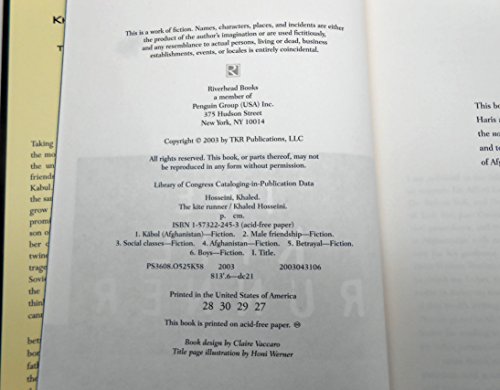
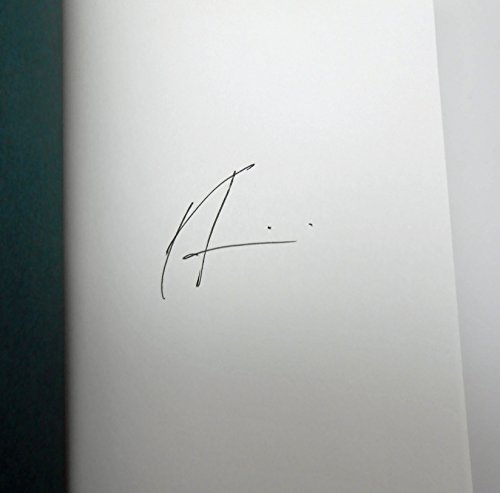
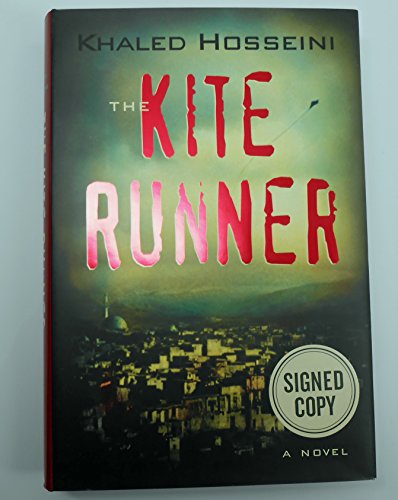


desertcart.com: SIGNED! The Kite Runner (Hardcover): 9780147542922: Khaled Hosseini: Books Review: Excellent read! - Brilliant writing! The best book I've ever read. Incredible story told with rich, captivating detail. Review: A Superb First Effort! - At once dark and illuminating, contemporary and historical, opaque and transparent, The Kite Runner is a shimmering coming-of-age story set against the backdrop of the last thirty years of Afghan history. Weaving a rich tapestry of literature using many brilliant and contrasting threads, Khaled Hosseini tells the complex tale of a young Afghan-American at conflict with both himself and his environment. The Kite Runner is most importantly about the cracks and fissures that inevitably develop in human relationships, whether between a boy and his stoic father, a young man and his new wife and eccentric in-laws, or a deeply troubled boy-man and his best friend. Indeed, human frailty is on full display in what is already regarded as a classic of contemporary Afghan-American literature. Clearly a gifted novelist, Hosseini both entertains and edifies in this his first major work. Excellent character development, vivid imagery, and a flowing, unrestrained style characterize the author's impressive literary debut. He infuses his characters with such passion, his scenes and dialogue with such feeling, and his story with so many twists and turns. Just as surely as we experience Hosseini's considerable gifts as a writer, though, we struggle to warm up to The Kite Runner's deeply flawed narrator, Amir. Early in Amir's recounting of the events that shape his life, we learn that he suffers from many of the same insecurities we all experience while growing into adulthood. During his early years in Kabul he struggles to gain his larger-than-life father's affection. In Amir's mind, he never quite measures up to his father's lofty expectations. Instead, his 'Baba' remains cold and distant, and only when Amir wins a sort of aerial combat with kites known as 'kite running' - a custom in the wealthier Kabul suburbs we learn - does Amir finally gain his father's approval. In the process, though, Amir betrays his best friend (and servant), Hassan, and remains stubbornly at war with himself. Hassan, perhaps the most striking of Hosseini's characters, embodies the many qualities and attributes Amir admires. A warm, gentle soul without an ounce of guile, Hassan repeatedly demonstrates his loyalty to his Agha (master), Amir. While valuing his companionship, Amir secretly resents Hassan's innocence and the way in which he seemingly glides through life while easily earning praise from Baba. Amir rewards Hassan's unflinching commitment by treating him at times as a brother and at times as a rival. Amir subjects Hassan to a kind of benign cruelty, one moment manipulating him, the next offering him his love. Interestingly, by birth Hassan is relegated to the lower tier of Afghanistan's caste system. The product of a sexual liaison between Baba and a peasant woman, Hassan is born hare-lipped and poor - two strikes in a rigid, intolerant Afghan society. Yet, he is infinitely rich in so many ways. Hosseini imbues Hassan with those qualities that make the Afghan people great - strength, pride, and resiliency. Indeed, the remainder of Hassan's short life in Afghanistan and subsequently in Pakistan parallels the fall of a proud society of Afghan people - first to the Soviets in the 1980s and then to the Taliban in the 1990s. By contrast, Hosseini's Amir is a study in contradictions. While Amir persists in reminding Hassan of his low station in Afghan society, he helps him learn to read and write. Nevertheless, throughout the story the two remain true to the Cain and Abel roles to which Hosseini assigns them. Amir eventually leaves Hassan to a brutal assault at the hands of the Faustian Assef. He then enters his adulthood regretting this betrayal of the one individual whose love for him was unconditional. The Kite Runner is first and foremost a story of redemption... of a boy's becoming a man, recognizing only once it is lost all he had in a unique sibling relationship. Amir ultimately atones for his youthful failings. By saving Sohrab, Hassan's son, from Assef and then the hopelessness of life in a Pakistani orphanage, Amir eventually rewards Hassan for his loyalty, sacrifice and love. Amir eventually adopts Sohrab, and the circle is complete. Sohrab will ultimately enjoy the many privileges that his father was denied both by Amir and an unforgiving Afghan society. Hosseini crafts a beautiful story, both entertaining and instructive. Through the dual lens of Afghan politics and the experiences of an extended Afghan family we learn so much about the Aghan people and their heritage. In this masterpiece, the reader is taken on a magical journey from Afghanistan to America (and back). Since as a nation we remain deeply invested in Afghanistan, the author's timing could not have been better. Indeed, Hosseini helps us gain an appreciation for this remote country and its culture during yet another turbulent period in its modern history. A superb first novel! We can only wonder what this magnificent author will do for an encore...
| Best Sellers Rank | #4,105,937 in Books ( See Top 100 in Books ) |
| Customer Reviews | 4.7 4.7 out of 5 stars (62,050) |
| Dimensions | 9.1 x 6.3 x 1.3 inches |
| ISBN-10 | 0147542928 |
| ISBN-13 | 978-0147542922 |
| Item Weight | 1.2 pounds |
| Language | English |
| Publisher | Riverhead |
C**S
Excellent read!
Brilliant writing! The best book I've ever read. Incredible story told with rich, captivating detail.
T**T
A Superb First Effort!
At once dark and illuminating, contemporary and historical, opaque and transparent, The Kite Runner is a shimmering coming-of-age story set against the backdrop of the last thirty years of Afghan history. Weaving a rich tapestry of literature using many brilliant and contrasting threads, Khaled Hosseini tells the complex tale of a young Afghan-American at conflict with both himself and his environment. The Kite Runner is most importantly about the cracks and fissures that inevitably develop in human relationships, whether between a boy and his stoic father, a young man and his new wife and eccentric in-laws, or a deeply troubled boy-man and his best friend. Indeed, human frailty is on full display in what is already regarded as a classic of contemporary Afghan-American literature. Clearly a gifted novelist, Hosseini both entertains and edifies in this his first major work. Excellent character development, vivid imagery, and a flowing, unrestrained style characterize the author's impressive literary debut. He infuses his characters with such passion, his scenes and dialogue with such feeling, and his story with so many twists and turns. Just as surely as we experience Hosseini's considerable gifts as a writer, though, we struggle to warm up to The Kite Runner's deeply flawed narrator, Amir. Early in Amir's recounting of the events that shape his life, we learn that he suffers from many of the same insecurities we all experience while growing into adulthood. During his early years in Kabul he struggles to gain his larger-than-life father's affection. In Amir's mind, he never quite measures up to his father's lofty expectations. Instead, his 'Baba' remains cold and distant, and only when Amir wins a sort of aerial combat with kites known as 'kite running' - a custom in the wealthier Kabul suburbs we learn - does Amir finally gain his father's approval. In the process, though, Amir betrays his best friend (and servant), Hassan, and remains stubbornly at war with himself. Hassan, perhaps the most striking of Hosseini's characters, embodies the many qualities and attributes Amir admires. A warm, gentle soul without an ounce of guile, Hassan repeatedly demonstrates his loyalty to his Agha (master), Amir. While valuing his companionship, Amir secretly resents Hassan's innocence and the way in which he seemingly glides through life while easily earning praise from Baba. Amir rewards Hassan's unflinching commitment by treating him at times as a brother and at times as a rival. Amir subjects Hassan to a kind of benign cruelty, one moment manipulating him, the next offering him his love. Interestingly, by birth Hassan is relegated to the lower tier of Afghanistan's caste system. The product of a sexual liaison between Baba and a peasant woman, Hassan is born hare-lipped and poor - two strikes in a rigid, intolerant Afghan society. Yet, he is infinitely rich in so many ways. Hosseini imbues Hassan with those qualities that make the Afghan people great - strength, pride, and resiliency. Indeed, the remainder of Hassan's short life in Afghanistan and subsequently in Pakistan parallels the fall of a proud society of Afghan people - first to the Soviets in the 1980s and then to the Taliban in the 1990s. By contrast, Hosseini's Amir is a study in contradictions. While Amir persists in reminding Hassan of his low station in Afghan society, he helps him learn to read and write. Nevertheless, throughout the story the two remain true to the Cain and Abel roles to which Hosseini assigns them. Amir eventually leaves Hassan to a brutal assault at the hands of the Faustian Assef. He then enters his adulthood regretting this betrayal of the one individual whose love for him was unconditional. The Kite Runner is first and foremost a story of redemption... of a boy's becoming a man, recognizing only once it is lost all he had in a unique sibling relationship. Amir ultimately atones for his youthful failings. By saving Sohrab, Hassan's son, from Assef and then the hopelessness of life in a Pakistani orphanage, Amir eventually rewards Hassan for his loyalty, sacrifice and love. Amir eventually adopts Sohrab, and the circle is complete. Sohrab will ultimately enjoy the many privileges that his father was denied both by Amir and an unforgiving Afghan society. Hosseini crafts a beautiful story, both entertaining and instructive. Through the dual lens of Afghan politics and the experiences of an extended Afghan family we learn so much about the Aghan people and their heritage. In this masterpiece, the reader is taken on a magical journey from Afghanistan to America (and back). Since as a nation we remain deeply invested in Afghanistan, the author's timing could not have been better. Indeed, Hosseini helps us gain an appreciation for this remote country and its culture during yet another turbulent period in its modern history. A superb first novel! We can only wonder what this magnificent author will do for an encore...
P**A
Wish I hadn't waited.
The Kite Runner is a book that I debated reading for a far longer time than it took me to actually read it. The book was so wildly popular, especially among book clubs and other clusters of bibliophiles, that I had little choice but to give it attention. Many times as I would peruse the shelves at the bookstore I would see The Kite Runner. Each time this happened I would pick up a copy and hold it in my hands. I would read the back of the book, which displays a synopsis provided from a review rather than from the publisher, and really try the book on. What I found each time was that it did not fit, if I may continue the metaphor. It was at the advice of two readers I know that I finally bought a copy of The Kite Runner. They both, on separate occassions, heard what I detailed above about how the book and I seemed to have creative differences; "it does not sound like a book I would enjoy," I told them both. "Read it. I did for my book club and really enjoyed it," was what they both said in reply. And so I did. I found the synopsis, which talks so much of the power struggle between Russia and Afghanistan and then the portrait of the current state of affairs in Afghanistan to be irrelevant through the first half of the book. I had been worried about the synopsis because I have not met a book that talks of political conflict that I have enjoyed. I read to be entertained by something a little...lighter than the subject of politics. You may think me odd for that, or you may agree, at least in part. That which had me concerned was presented in a manner secondary to the story. The conflict was the setting of the book, not the subject. The subject is and always was Amir, a boy with whom we see the years pass after he makes his way to America. He struggles to leave his past behind while other immigrants around him pay particular attention so as to not lose theirs. It may not be as easy as he had hoped to start over in America. Much in the same way the two who had recommended the book to me had created a situation in which they felt somewhat obligated to read the book (their respective book clubs), I manufactured a similar reason for myself. Having now read The Kite Runner I feel comfortable suggesting it to others, though you need not make up an excuse to read it. read it because you are in search of a story that will, among other things, grip your heart and soul, squeezing a little at times, while you read. Read it because it educates in the ways of another culture, deserving as they all do, to be recognized. Read it because you want to know what past Amir wants to leave behind when he comes to America and if he is finally able to do just that. I cannot say that The Kite Runner is to be raved about, but it is a beautiful story that made for a good read. I was pleasantly surprised by The Kite Runner. Despite the popularity of the book, I still consider it a diamond in the rough, when the rough is endless shelves at the bookstore. The Kite Runner is a relatively short book and a quick read. I hope you enjoy it. I think you will.
E**N
Nice easy read
E**V
Good
W**O
One of the best books I've ever read. It was a delightful experience. Although it is a book of fiction, it seems autobiographical, contemplating all the sensibility of whose know how to deal with some of the most sensitive human issues. It contains a so wide repertoire of terms and expressions that delight the reader. It catches the reader's attention from beginning to end. 'Wonderful' is a good word to describe him.
J**W
I finished reading “The Kite Runner” by Khaled Hosseini a book chosen by our Book Club in Puerto Vallarta, Mexico. Concurrently I have just read two novels by Zia Ahmad , “Finding Danyal - A love Story” and “The One Hundred.” I recommend these wonderful story experiences equally as good as "The Kite Runner" A most gratifying reading marathon of these three novels likened to my typical Netflix series binging where I resist ear marking the last page from being so engrossed in finding out what next. Especially during the fast pace of the disturbing scenes of conflict, torture and meanness inflicted on the principal characters contained in all three novels. I grew up with the influx of Pakistani refugees arriving in Toronto Canada in the early 60s, but I did not know anything of why or the scope of their plight or struggles. Zia Ahmad’s writing has inspired me to know more of political devastating disparities of the Anglo Afghanistan wars and Russian penetration. I must say reading these three books one after the other has heaped my head blending, overlapping each story’s’ similar conflicts, betrayals, and flirting friendships to the point of having difficulty keeping them distinct each to its own. Nevertheless, here at my desk writing, recalling, fiddling with the scenes they individually start to filter through. “Finding Danyal”, it was clear from first reading Zia Ahmad’s second published novel that yes, it is a love story. I cried at the end. An indication I felt the emotions the storyteller crafted. Characters evolve from plot twists and disturbing betrayals showing us a controversial unescapable gay love story. All at odds within religious and oppressive constraints of the Arab world in Lahore Pakistan. I relate to Zia’s writing. My own experience discovering love took place in Canada, a different supposedly more tolerant world. But I too struggled with self-identity and societal acceptance confronting the turbulences of coming of age as a gay man. The ending “Finding Danyal” was read causing a feel-good sensation still with me. “The One Hundred”, Zia Ahmad’s first published novel is a different story exposing a historical tragedy in such a way achieving Zia Ahmad’s objective of memorializing the one hundred victims showing a world tolerance and acceptance are human qualities we should honor. But the frantic pace of the scenes with violence, bullying, beating the characters to a pulp was frightening, very real, virtually wanting to cover my eyes. A challenge to read calmly. High drama ending in a tale to be told one “hundred times”. I can see where Zia Ahmad utilized this background to write his second novel “Finding Danyal” with a theme of love. “The Kite Runner”, chosen by our Book club which I read after those of Zia Ahmad. Another reading challenge to cope with the violence, the class conflicts, a brutal rape of a boy, the “running away” of Amir the protagonist, the contrast of righteous Hasan and Amir’s cowardice, test of loyalty and trust, the Taliban cruel enforcement, intense control throughout the story resulting in the blood bath of the Hazaras, - but redemption is achieved when Amir becomes in the end the kite runner. Many plot twists and surprises lead to an unexpected ending far from the outset of the principal characters. I can see why Zia Ahmad studied this book in preparation for his own writing. If you have enjoyed reading “The Kite Runner, I recommend you read Zia Ahmad’s two novels, “Finding Danyal- A love Story” and “The One Hundred”. Both authors equally provide an emotionally haunting, thought-provoking thrilling story experience producing as forceful a message of what it means to be human. I thoroughly enjoyed reading Zia Ahmad’s two novels He is an impressive competent talented writer with engaging story telling style and showing descriptive flow. I truly believe “Finding Danyal” is worthy of a Netflix movie. It is comparable if not better than some I have watched. Well done, Zia Ahmad!
春**こ
It's a pity in Japan both this book and the movie are not so popular! I understand because I myself was not quite interested even after I happened to read his second novel, but it turned out to be unputdownable! This book was definitely more heart moving than the second book. I just assume how many scenes should be based on his real experience revealing his mixed feeling about his homeland full of sweet and sour memories. And I really want to read it's sequel!
Trustpilot
2 weeks ago
1 month ago