

🔪 Slice like a samurai—cut with confidence, cook with pride!
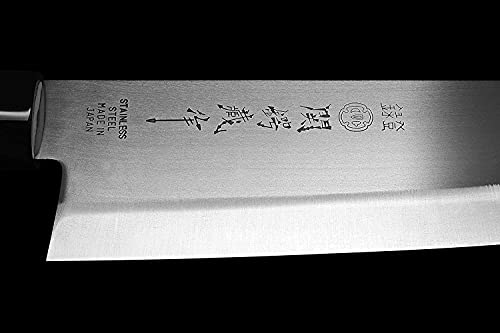
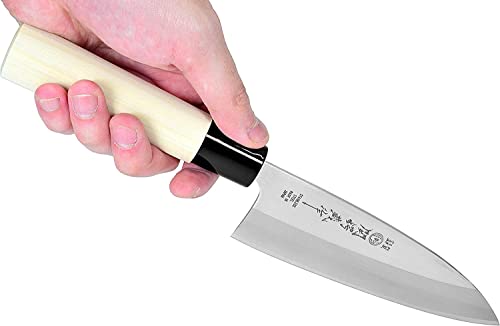
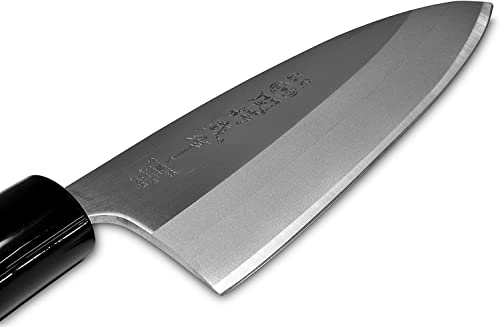
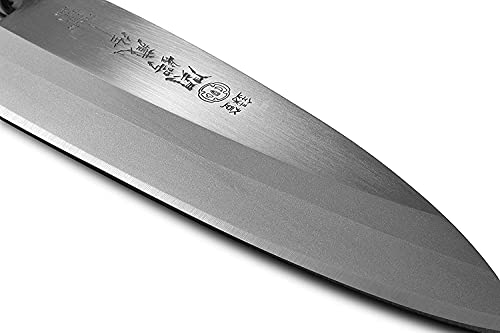
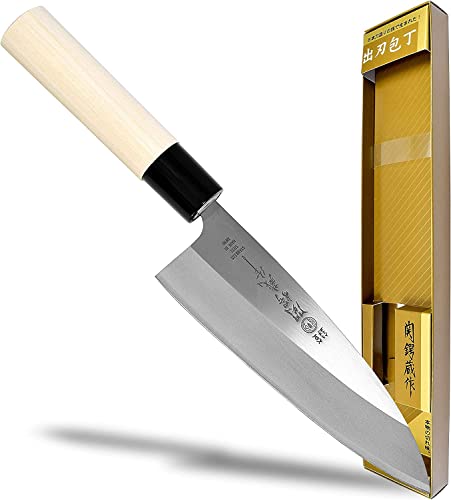
The Japan Bargain 1548-U Sekiryu Deba Chef Knife is a hand-forged, razor-sharp stainless steel blade crafted in Seki, Japan’s renowned sword-making hub. Designed for precision cutting of fish, meat, poultry, and vegetables, it features a sleek silver finish and a lightweight, balanced alloy steel handle. This professional-grade knife combines traditional craftsmanship with modern kitchen versatility, making it a must-have for culinary enthusiasts seeking both performance and style.
| ASIN | B000UCE81K |
| Blade Colour | Silver |
| Blade Edge | Plain |
| Blade Material | Stainless Steel |
| Brand | JapanBargain |
| Colour | Silver |
| Construction Type | Forged |
| Country of Origin | USA |
| Global Trade Identification Number | 04541319112030 |
| Handle Material | Alloy Steel |
| Included Components | Knife |
| Is Dishwasher Safe | No |
| Item Dimensions LxWxH | 28.5 x 5 x 2.3 Centimeters |
| Item Weight | 150 g |
| Item model number | 1548-U |
| Manufacturer | JapanBargain |
| UPC | 719363553916 |
M**I
Good product, moderate sharpness
Product is good not extremely sharp, however it took long to get delivered.
V**I
A lovely knife with great feel.
Excellent! This is Japanese craftsmanship at one of its best. A well balanced knife with a beautiful finish. The knife being sharp is obvious and looks far, far better than the displayed image. The product is worth waiting for , and will not fail to disappoint you. I hope the " Santoku " type will be made available , too. Thank you for crafting such a praiseworthy knife.
J**A
This is an amazing knife, a true bargain for the money! First off, to all the connoisseurs and afficinados, PLEASE compare like for like, quit bringing comparisons with a $200-500 knife, wherever it were made. Grow up and review THIS knife, not your expensive toys! That being said, I am glad I took a chance and didn't let the low-star reviews shake my trust in the Sekiryu brand. This is one for the books. I had purchased a filleting knife about two years ago and back then I was fairly new to Japanese cutlery, I knew mostly about swords and steel, much less about kitchen ware. This knife is touted as stain resistant, which it is, but not stainless. Stainless is soft and doesn't keep an edge. This is more in the line of white Japanese steel and it holds an edge very well. Sharpening this knife will not be simple, but with the right Japanese water stones and some elbow grease, you'll be able to keep this blade sharp. Truth be told, most Japanese custom cutlery comes unsharpened or unfinished, so you'd have to complete the sharpening process yourself. There is a bit of heft to this Deba, and the knife feels good in the hand, blade-weighted for those of you in the know, so it isn't balanced. I was planning on purchasing a Santoku but I'm satisfied this Deba can do most jobs in the kitchen. For the money, you can hardly find a better blade. I would expect this to be the type of knife one can use for a lifetime if you know how to care for it. A bit of Japanese knife oil on the blade will keep it from rusting. I read reviews stating that the knife may rust at the handle, so I made it a point to dip the handle and the ferrule in clear epoxy. I further painted some more epoxy around the insert point and will maintain this as needed based on visual inspection. BSI 30-minute epoxy is my recommendation if you'd like to protect your knife. One last thing, spend a few bucks and purchase a PVC sheath for your knife. It may not be an expensive piece of cutlery, but it deserves protection, so you can keep enjoying it. In terms of sharpening stones, I recommend a NATURAL Japanese stone, if you can afford it. If not, at least make sure it is a Japanese-brand water stone. You'll probably need around 1000 grit for starters, then a 4000-6000 grit to finish. Nagura stones could help with the slurry, which is why you should use a natural stone. Stropping is optional, this is not a showpiece, nor will you need to shave with it, so don't go overboard. Everything considered, just the whetstones will set you back ten times the cost of the knife. I don't recommend sharpening this knife on a 'system,' although I haven't tried different ones. The one I've used is hard to keep uniform without wearing (dishing) the stones. You're better off with a cheap angle guide and the whetstones. To sum it up, this is a superior knife and a great starter for anyone who wants a Japanese-quality blade without spending a small fortune. Sekiryu is a reputable manufacturer, check out more about them and rest assured you're getting a fabulous deal! FYI, I owned German-made knives since I was in culinary school, also owned French-made blades, Swedish knives, Finnish knives, and Norwegian blades. I'm not sure what the Rockwell is for this knife. If anyone can test, I'd appreciate it!
A**R
Purchased this as a why not, and I was surprised with that I got. It is a very heavy knife! I mean heavy! Single bevel, and once sharpened, very sharp! I didn't know what I would use it for until I needed to cut frozen bacon. This knife cut it like it was butter.
D**N
It was about $6 when I bought it. It's not really a Deba, to thin and light but for the price I paid it is better than I expected. I would have given it 4 stars but the knife I received was not as pictured. They stuck some scalloped type of tape on both sides of the blade I'm assuming to make it look like it's multi-layer and they have what look like drips of solder on one side of the blade in an attempt to make it look hammered. All in all I would have been more pleased had it just been a plain blade. I purchased this for the sole purpose of finding out if I liked the Deba style before investing $100+ on the real deal then finding out I didn't feel comfortable with the style. I did the same with a $5 dollar Santouku and saved myself big bucks because I don't like the feel of them. This knife came relatively sharp and took a good edge with little work, though I haven't used it a lot it holds it's edge reasonably well for this type of knife. You are not going to touch real Japanese quality for less than $60 but if you wish to do as I did or just want a serviceable knife cheap then this will work. I suspect if used often you should know how to sharpen but it might hold it's edge longer than I think.
S**C
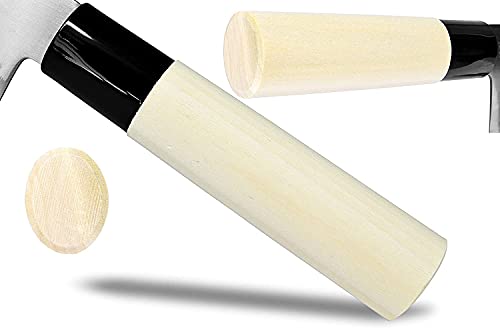
Love it! Exactly what I expected. The blade is thick and heavy. Note this knife is different: The profile is not symmetrical. the left side of the blade is flat and the right side is machined. If you haven't used a knife like this it may take you a while to get used to, especially when you try to cut something straight down like slicing a potato. The wooden handle tends to get greasy so wash it and keep it dry. After using it the handle discolored a bit but It still feels good in your hand.
U**D
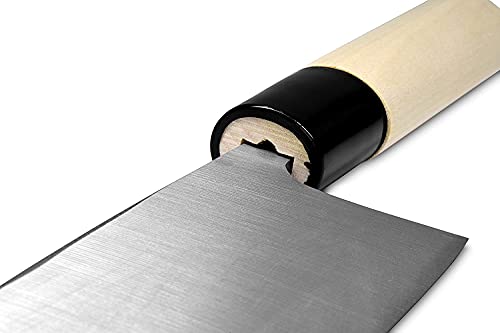
I have read several fair reviews, and they are mostly positive, but owning several of them, I feel compelled to point out a couple of oversights by other reviewers. Firstly, I have read several reviews that describe some of the knives as being "too light" or "less sturdy" than others of the same type. They are indeed substantially lighter than many knives of similar style, BUT this is a positive for those folks who actually know how to use a knife. I'm no professional chef, but I know how to use a knife for cutting. These knives are razor sharp, and hold a good edge for a long time when properly used and cared for. They also sharpen relatively easily. That said, if you are looking to cut through bone, get a saw or a cleaver. These knives are designed for cutting flesh and vegetables, not quartering a steer. If you use these knives for cutting up food, they are wonderful. If you use them to chop down walnut saplings in the back yard, there are other, better knives. Think of them as surgical instruments, not hatchets, and they'll serve you well. Secondly, the handles are raw wood. When you get the knife or knives, buy a small can of polyurethane and simply dip the handles and then hang the knife point up, allowing the excess to run off onto a newspaper. leave the knife hanging for 24 hours to allow the finish on the handle to cure. Steel wool the handle lightly with 0000 steel wool, and repeat the dip-hang-cure-steel wool process to get 3 or 4 good coats of polyurethane into the handle. This brings out the beauty of the wooden handles and toughens them considerably as well. It also prevents oils from hands or foods to build up in the wood's grain. I did this to the first of these knives I bought 4 years ago, and the finish is lasting and makes the knife cleaner as well. Lastly, hand wash and then hand dry these knives. They are not for the dishwasher. the hidden-tang handles hold moisture against the blade's tang and will eventually corrode even stainless steel (which is really stain-resistant, not stainLESS). Oil them occasionally with a drop of mineral oil, and sharpen as necessary. With a little care, these knives will be among the finest you own, and after acclimating to the different weight and balance of them, they will quickly become your favorite knives, lasting you for many years.
Trustpilot
2 weeks ago
1 day ago