
DOWNLOAD THE APP


Customer Services
Copyright © 2025 Desertcart Holdings Limited
DOWNLOAD THE APP
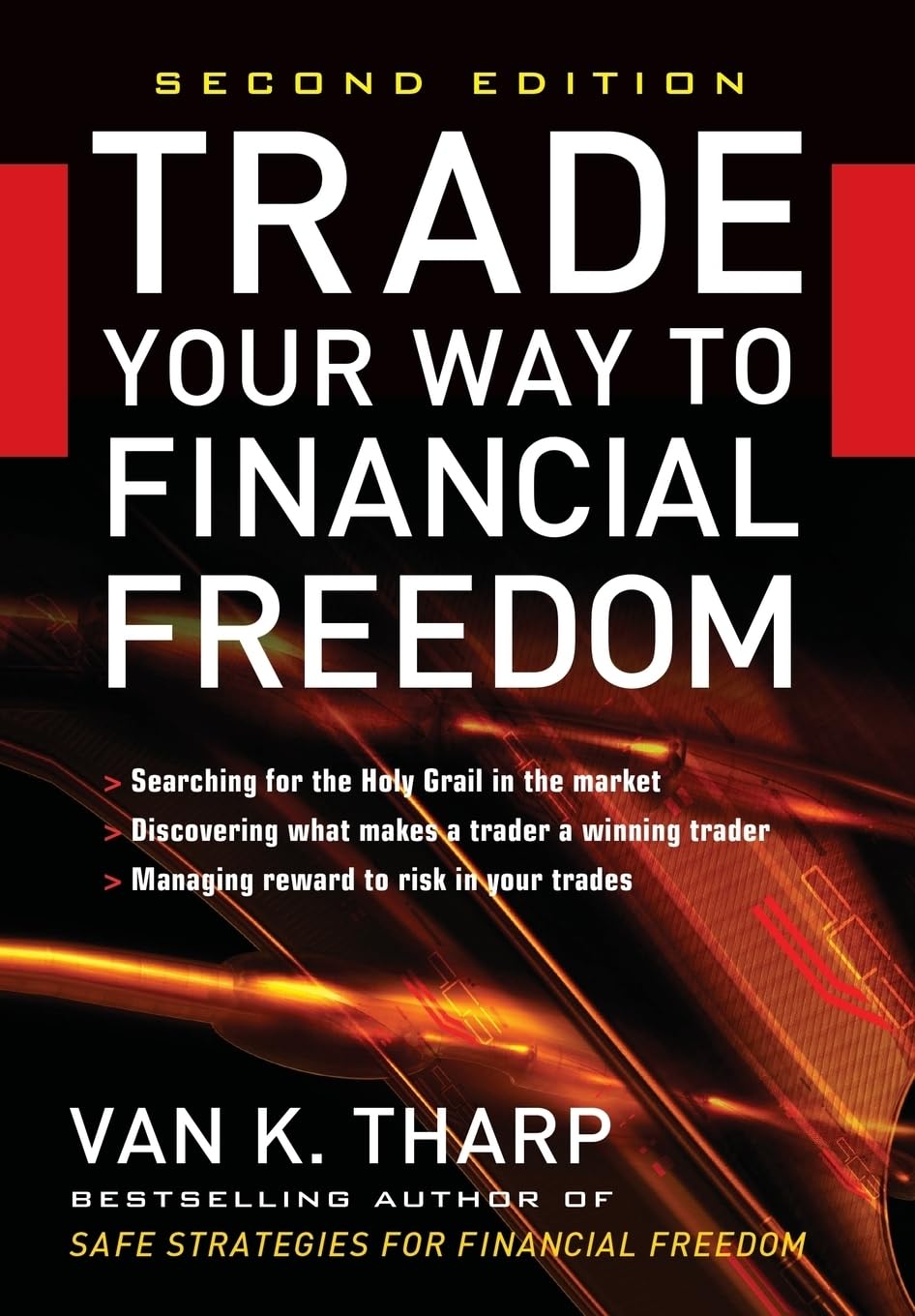
Trade Your Way to Financial Freedom [THARP] on desertcart.com. *FREE* shipping on qualifying offers. Trade Your Way to Financial Freedom Review: A "must read" for active traders. - I'm of the opinion that reviews on stock trading books depend more on degree on the experience and outlook of the reviewer more than the book. At times this makes it difficult to figure whether a book is going to be relevant to me. So I'll describe myself a bit. I have been investing in stocks for many years using the stock picks from one or two good sources. It's been a way to build retirement income in my spare time. I've been moderately successful, but nothing to brag about. In the past few years I've been gradually becoming more active in trading, making many trades a month and recently many per week. I'm considering trading as a living or at least a part-time income. I've studied fundamental and technical analysis through literature, webs sites, some books, newsletters, and my broker's courses, though I don't pretend to be even close to being any sort of expert. Tharp's book is the first time I've seen what I would consider a fundamental "text book" on trading. It's not a book on how to pick stocks or entry points though the subjects are discussed in the context of an overall system. Tharp has created a paradigm shift in my thinking. He walks you through all the elements of a successful trading system, including how to define and measure one and how to think about trading. He asks questions and gives practical examples so you get the ideas and the importance of the issues. He's careful to work through examples and explain himself better than any financial book I've read so far, though he does not explain some technical analysis terms. But they aren't necessary to getting the value of the book (and give you some good topics for your own research). I've been at it long enough to realize that he's pretty thorough in the issues he wants you to consider. He also dispels commonly accepted thinking that leads to poor performance (read "loosing money"). If you are looking for fast answers, a get rich scheme, or an algorithm that will tell you how to find winners, what to buy and when to buy it, then you will probably be disappointed - but in fact you may need the book more than you realize. I wish I had read this book years ago. It would have corrected my understandings of what investment trading is all about and how to go about it. I particularly appreciated the detailed explanations of risk verses reward and position sizing. I have heard "risk vs reward" talked about in many places, but never had it explained in a way that I could use it. His examples may seem belabored to some, but they helped cement the concepts into my mind. I found Tharp's personable style and stories made the book easy to read and helpful. If you have been trading for years and are comfortable with it and make money, then you may not gain much from the book. To everyone else I recommend it. Review: manage some of my investments (dabble more like it). Dabbling in the recent run up in ... - I'm your average Joe trader, manage some of my investments (dabble more like it). Dabbling in the recent run up in cryptocurrencies is what drove a friend to recommend this book to me. I've never written a book review but felt compelled to do so, not to rave on this book, but as "warning" to how to get the most out of it before giving up. PROS: The last third of the book is where it shines for novices. Most who have been around for a while will know there is market and your own psychology behind prices, various entry strategies out there, the standard stuff you nod your head at. The book's value shines through in covering stop-loss, how to take profit, and how to position size. These concepts have actual technical methods and the book covers it at a semi-approachable 12th grade reading level. The book also shines in that it gives you some perspective about how to look at trading in general. The "snowball fight" analogy is very good, you're trying to accumulate earnings while accepting that there will be losses. However over the course of hundreds/thousands of trades, they need to average out to where you're accumulating, net. CONS: This is why I'm writing this review. Put frankly, the writing/literature/style of this book is horrendous. It's harder to read than a college textbook, even for simple concepts. The editors did a very very poor job of editing for style, clarity in the text, and even clarity in the pictures. It's obvious this book was written in the 1990s, most examples are not relevant anymore (tens of pages on impact of transaction costs. Who still trades over the phone?), and even the pictures are not clearly labeled (you literally need a magnifying glass to see the numbers on chart scales that the author constantly references). I've wanted to throw away the book about every 5 pages because I have to re-read sections multiple times just to make sure a pronoun the author uses is what I think it means. This is simply unacceptable. I'm constantly thinking: there must be another book on desertcart that covers similar topics, but written differently. All suggestions are welcome! The last con is that some of the most important topics (stop loss, exits, position sizing) don't go into much detail. The author does a good job citing previous research and his primary sources, but I feel 1/4 of the book has irrevelant fluff that could be replaced with deeper depth about the important stuff. HOW TO GET THE MOST OUT OF IT: The author at the very end suggests readers read the book 4-5 times so the concepts become second nature. I agree 100% with this, because the concepts go against your natural inclination. However because of the crap writing, the average Joe trader needs to read it an extra 3-5 times just to make sure he understood what he was reading. Read this book with investopedia at your side, and you will change the way you look at "trading". Investing? Less helpful. More than 1 trade per month? Definitely buy and read 10x in the next year, it will change your life.


| Best Sellers Rank | #26,950 in Books ( See Top 100 in Books ) #28 in Business & Finance #109 in Introduction to Investing #205 in Economics (Books) |
| Customer Reviews | 4.5 4.5 out of 5 stars (900) |
| Dimensions | 6 x 1.35 x 9 inches |
| Edition | 2nd |
| ISBN-10 | 007147871X |
| ISBN-13 | 978-0071478717 |
| Item Weight | 1.68 pounds |
| Language | English |
| Print length | 482 pages |
| Publication date | November 22, 2006 |
| Publisher | McGraw Hill |
J**C
A "must read" for active traders.
I'm of the opinion that reviews on stock trading books depend more on degree on the experience and outlook of the reviewer more than the book. At times this makes it difficult to figure whether a book is going to be relevant to me. So I'll describe myself a bit. I have been investing in stocks for many years using the stock picks from one or two good sources. It's been a way to build retirement income in my spare time. I've been moderately successful, but nothing to brag about. In the past few years I've been gradually becoming more active in trading, making many trades a month and recently many per week. I'm considering trading as a living or at least a part-time income. I've studied fundamental and technical analysis through literature, webs sites, some books, newsletters, and my broker's courses, though I don't pretend to be even close to being any sort of expert. Tharp's book is the first time I've seen what I would consider a fundamental "text book" on trading. It's not a book on how to pick stocks or entry points though the subjects are discussed in the context of an overall system. Tharp has created a paradigm shift in my thinking. He walks you through all the elements of a successful trading system, including how to define and measure one and how to think about trading. He asks questions and gives practical examples so you get the ideas and the importance of the issues. He's careful to work through examples and explain himself better than any financial book I've read so far, though he does not explain some technical analysis terms. But they aren't necessary to getting the value of the book (and give you some good topics for your own research). I've been at it long enough to realize that he's pretty thorough in the issues he wants you to consider. He also dispels commonly accepted thinking that leads to poor performance (read "loosing money"). If you are looking for fast answers, a get rich scheme, or an algorithm that will tell you how to find winners, what to buy and when to buy it, then you will probably be disappointed - but in fact you may need the book more than you realize. I wish I had read this book years ago. It would have corrected my understandings of what investment trading is all about and how to go about it. I particularly appreciated the detailed explanations of risk verses reward and position sizing. I have heard "risk vs reward" talked about in many places, but never had it explained in a way that I could use it. His examples may seem belabored to some, but they helped cement the concepts into my mind. I found Tharp's personable style and stories made the book easy to read and helpful. If you have been trading for years and are comfortable with it and make money, then you may not gain much from the book. To everyone else I recommend it.
O**E
manage some of my investments (dabble more like it). Dabbling in the recent run up in ...
I'm your average Joe trader, manage some of my investments (dabble more like it). Dabbling in the recent run up in cryptocurrencies is what drove a friend to recommend this book to me. I've never written a book review but felt compelled to do so, not to rave on this book, but as "warning" to how to get the most out of it before giving up. PROS: The last third of the book is where it shines for novices. Most who have been around for a while will know there is market and your own psychology behind prices, various entry strategies out there, the standard stuff you nod your head at. The book's value shines through in covering stop-loss, how to take profit, and how to position size. These concepts have actual technical methods and the book covers it at a semi-approachable 12th grade reading level. The book also shines in that it gives you some perspective about how to look at trading in general. The "snowball fight" analogy is very good, you're trying to accumulate earnings while accepting that there will be losses. However over the course of hundreds/thousands of trades, they need to average out to where you're accumulating, net. CONS: This is why I'm writing this review. Put frankly, the writing/literature/style of this book is horrendous. It's harder to read than a college textbook, even for simple concepts. The editors did a very very poor job of editing for style, clarity in the text, and even clarity in the pictures. It's obvious this book was written in the 1990s, most examples are not relevant anymore (tens of pages on impact of transaction costs. Who still trades over the phone?), and even the pictures are not clearly labeled (you literally need a magnifying glass to see the numbers on chart scales that the author constantly references). I've wanted to throw away the book about every 5 pages because I have to re-read sections multiple times just to make sure a pronoun the author uses is what I think it means. This is simply unacceptable. I'm constantly thinking: there must be another book on amazon that covers similar topics, but written differently. All suggestions are welcome! The last con is that some of the most important topics (stop loss, exits, position sizing) don't go into much detail. The author does a good job citing previous research and his primary sources, but I feel 1/4 of the book has irrevelant fluff that could be replaced with deeper depth about the important stuff. HOW TO GET THE MOST OUT OF IT: The author at the very end suggests readers read the book 4-5 times so the concepts become second nature. I agree 100% with this, because the concepts go against your natural inclination. However because of the crap writing, the average Joe trader needs to read it an extra 3-5 times just to make sure he understood what he was reading. Read this book with investopedia at your side, and you will change the way you look at "trading". Investing? Less helpful. More than 1 trade per month? Definitely buy and read 10x in the next year, it will change your life.
P**E
Dry textbook but has some gems.
I am rating this book 4 stars (higher than it deserves) since it will get you to examine your trading ideas objectively and because it has key ideas that every trader must know. That being said, I must make the following points: 1) The book is unedited. You will read sentences similar to the following: "In this chapter we will look at a key strategy and then add it to what you read in the previous chapter and then later in the next chapter you will remember what you read four chapters ago, and add it chapter 8." Then there will be a sidebar that repeats this verbatim. The entire book could be written in a concise powerful 100 pager that would be an instant classic and sell a zillion copies. Instead, sadly, it will collect dust on shelves everywhere and look impressive in your library but not be read. 2) Key content is held back. You have to read fifty pages of nothing to get one sentence of value and then only a snippet of detail is given. Van Tharp is either too scared to commit his ideas to paper or wants to keep content available for his seminars or workshops (read high priced seminars & workshops). To sum up: a dry, painful and depressing read; but one you must make to go to the head of the class and pass the exam. If you want to pretend you read it, just say the following at your next cocktail party. "Yeah, position sizing is important. You can have a profitable system and still lose money like Van Tharp talks about in his book." That's it, I just just saved you 20 hours of reading torture; please send me a check in the mail.
J**N
Excelente livro! Muito bom para quem busca obter perfil de retorno mais consistente.
G**S
Having learned a lot over the past couple of years trading this book is always where I'd recommend anyone to start reading. The author really drums-in a strong risk management process which is crucial if you don't want to 'blow your account up'. Even if the trading methodologies aren't your bag, the risk management process will be crucial if you want to be successful.
C**T
Hold or fold is often a very difficult question to answer to when you are in a trade and this will help you to build up a methodology to evaluate your trade and conclude if yes or no, you should keep your trade. This book also covers greatly how to write down a trading plan. You hear everywhere that you should have a plan but I never found proper guidelines before this book. However, the author claims many times in the book that entry is not important. I can't disagree more. The entry quality will enables you to have tight stops and thus big positions which will thus open yourself to very good profits. The author often speaks about the possibility of having 25R (25 units return for 1 unit of risk). I agree it is possible but if you would have entered at 50% retracement of your initial entry with the same stop level you would got a 50R return. This is why I think that the author completely miss one huge element in trading
A**R
Iedereen die begint met traden zou dit boek moeten lezen.
P**S
A must read
Trustpilot
1 month ago
5 days ago