We remain fully operational. Our teams are working around the clock to ensure your deliveries continue safely.

DOWNLOAD THE APP


Customer Services
Copyright © 2025 Desertcart Holdings Limited
DOWNLOAD THE APP
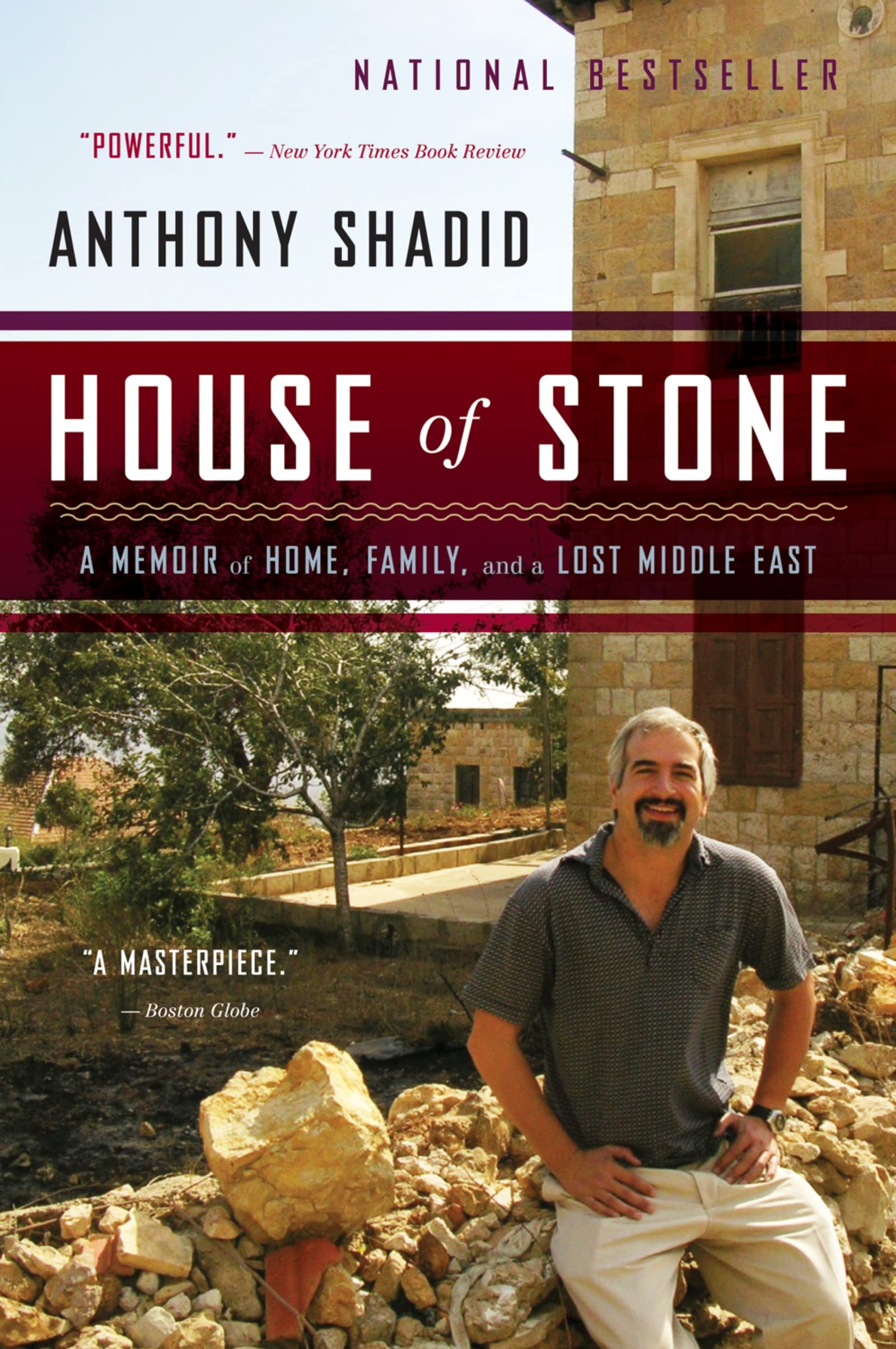
House of Stone: A Memoir of Home, Family, and a Lost Middle East [Shadid, Anthony] on desertcart.com. *FREE* shipping on qualifying offers. House of Stone: A Memoir of Home, Family, and a Lost Middle East Review: Anthony Shadid and the dynamics of the Arab World , Culture, Family and Blood Relationships - Simply brilliant, authoritative, inspiring, historically factual. To understand the dynamics of the Arab World, culture, family and blood relationships, tribal and badoo temperaments, the unbroken human chain of the Hawarna(emanating from the planes of Houran in today's Syria near the Jordanian border, before that they immigrated from Maarrib Yemen. They are today's families (the Farhas, Rashids, Shadids, Barakats, Rahalls, Samaras and many others) the beiyout singular Beit)and Dars'(houses of stones) they left in Judida (MarjOyoun) in the wake of their migration 1890- 1930, mainly to America and Brazil. Anthony vividly recalled in the appropriate nostalgic overtones their story, that only a Hourani, the Hawarna, the badoo can tell. These heart breaking events, a badoo leaving the land of their tribal youth, breaking a holy bond between them and their land, it must be said that Anthony masterfully set the tone and captured the feeling of those history and events forced them to abandon their Diar (homestead) with such warmth and special sense of humor. Rarely a writer stay the whole course of his or her journey with his/her readers. Anthony did exactly that. Anthony with you in every page building the walls of his house of stone, stone by stone, with his readers and generously sharing his and the emotion of his family's odyssey to the promiseland, America.I must admit, that Anthony and his House of Stone next to The Prophet of Gibran are on my night table. Reading Anthony's House of Stone brings back sweet memories of my childhood and rekindle my pride of being a Hourani Fred L. Farha Ottawa Canada Review: More than I expected - This is a well written book. I feel like I am right there with the author while he is restoring his grandfather's house. To be honest, I have not finished this book yet. I feel like I have been reading it for a very long time. I don't necessarily mean that in a bad way, but it does seem to be taking a very l-o-n-g time to finish. I am certainly learning a great deal about the history of Lebanon and Syria, certainly more than I expected to learn while reading a memoir of a house restoration. Again, not meant to sound like a bad thing. The author is very familiar with his family's history and conveys it in a very natural way. He portrays the lifestyle of a very different culture in a way that is informative and casual, and yet still feels quite cozy. I would recommend this book readily.
| Best Sellers Rank | #1,297,338 in Books ( See Top 100 in Books ) #22 in Lebanon Travel Guides #182 in Historic Architectural Preservation #185 in General Middle East Travel Guides |
| Customer Reviews | 4.3 4.3 out of 5 stars (298) |
| Dimensions | 5.31 x 0.77 x 8 inches |
| Edition | Reprint |
| ISBN-10 | 0544002199 |
| ISBN-13 | 978-0544002197 |
| Item Weight | 11.2 ounces |
| Language | English |
| Print length | 336 pages |
| Publication date | February 5, 2013 |
| Publisher | Mariner Books |
F**A
Anthony Shadid and the dynamics of the Arab World , Culture, Family and Blood Relationships
Simply brilliant, authoritative, inspiring, historically factual. To understand the dynamics of the Arab World, culture, family and blood relationships, tribal and badoo temperaments, the unbroken human chain of the Hawarna(emanating from the planes of Houran in today's Syria near the Jordanian border, before that they immigrated from Maarrib Yemen. They are today's families (the Farhas, Rashids, Shadids, Barakats, Rahalls, Samaras and many others) the beiyout singular Beit)and Dars'(houses of stones) they left in Judida (MarjOyoun) in the wake of their migration 1890- 1930, mainly to America and Brazil. Anthony vividly recalled in the appropriate nostalgic overtones their story, that only a Hourani, the Hawarna, the badoo can tell. These heart breaking events, a badoo leaving the land of their tribal youth, breaking a holy bond between them and their land, it must be said that Anthony masterfully set the tone and captured the feeling of those history and events forced them to abandon their Diar (homestead) with such warmth and special sense of humor. Rarely a writer stay the whole course of his or her journey with his/her readers. Anthony did exactly that. Anthony with you in every page building the walls of his house of stone, stone by stone, with his readers and generously sharing his and the emotion of his family's odyssey to the promiseland, America.I must admit, that Anthony and his House of Stone next to The Prophet of Gibran are on my night table. Reading Anthony's House of Stone brings back sweet memories of my childhood and rekindle my pride of being a Hourani Fred L. Farha Ottawa Canada
B**D
More than I expected
This is a well written book. I feel like I am right there with the author while he is restoring his grandfather's house. To be honest, I have not finished this book yet. I feel like I have been reading it for a very long time. I don't necessarily mean that in a bad way, but it does seem to be taking a very l-o-n-g time to finish. I am certainly learning a great deal about the history of Lebanon and Syria, certainly more than I expected to learn while reading a memoir of a house restoration. Again, not meant to sound like a bad thing. The author is very familiar with his family's history and conveys it in a very natural way. He portrays the lifestyle of a very different culture in a way that is informative and casual, and yet still feels quite cozy. I would recommend this book readily.
H**N
Why the Arab obsession with home?
America celebrates immigration. Over the past few centuries, almost everyone who has moved here has found it welcoming, has had little trouble integrating, and - over a fairly short period of time - has found it inviting to call the country home. But not for the late New York Times reporter Anthony Shadid. Born and raised in Oklahoma to second-generation Lebanese-American parents, Shadid was attracted to a different world, one that is not only thousands of miles away, but one hundred years back. In his House of Stone, Shadid described a "project" that he had undertaken. He moved back to his ancestral homeland in Marjayoun, south of Lebanon, and started renovating the long-vacant house of Isber Samara, his great grandfather. "My family wasn't here," he wrote. "They had shown little interest in my project." Shadid said that on those occasions when he spoke to his daughter, Leila, she asked him what he was doing so far away, to which he answered: "Rebuilding our home." Shadid dreamt "of the day [he] would bring her... to a house she could call hers." But why was Shadid exactly looking for a "house/home." What was wrong with Oklahoma where he grew up, or Maryland, where Leila lived with her mother, his ex-wife? Shadid was not the first Arab-American to search for a place to call home. Before him, the late Edward Said, a Palestinian-American professor at the University of Columbia, published his memoirs in a book called "Out of Place." And like Said, Sahdid mainly blamed the West for his lost home. Both men used their remarkably beautiful prose, ironically not in their native Arabic but in English, to describe the presumably harmonious Arab world that once existed before World War I, and before the colonials - first Britain and France and later the United States - wiped it out. "Artificial and forced, instruments themselves of repression, the borders were their obstacle, having wiped away what was best about the Arab world," Shadid wrote. "They hewed to no certain logic; a glimpse at any map suggests as much. The lines are too straight, too precise to embrace the ambiguities of geography and history. They are frontiers without frontiers, ignorant of trajectories shaped by centuries, even millennia." However, unlike Said who wrote about his displacement from the luxury of his Manhattan Apartment in New York, Shadid decided to do something about it. He immigrated back to Lebanon and was set to restore his ancestor's House of Stone to its past glory. "[I]magine I can bring back something that was lost," he argued. That something was "Isber's world, which, while simpler, was no less tumultuous than my own." This begs the question: If Isber's world was disorderly, why blame the colonial borders for wiping "away what was best about the Arab world." And if Isber's world was already chaotic, why bring it back and insist on calling it home? House of Stone is the story of Shadid's renovation project in southern Lebanon, interjected with his reconstruction of the history of his family in Marjayoun, and their emigration to the United States. Along the way, Shadid narrated, mainly to a Western audience, the daily routine of his project, which included recruiting masons, haggling with suppliers and talking to friends. His narration, however, has a number of mistakes that gives away Shadid being a non-native. Despite his best effort to learn the Arabic language and culture during college days, Shadid still fell short of grasping all of the intricacies of Arab life. For instance, when describing a fruit street vendor, Shadid wrote: "Bateekh, bateekh, bateekh, ala al sikeen ya bateekh," and translated it into: "Watermelon, watermelon, watermelon... a watermelon ready for the knife." While the translation might pass, Shadid missed the cultural nuance. When a Lebanese customer goes to buy a watermelon, he usually asks for assurances from the vendor about its "redness" and "sweetness." The vendor usually replies confidently that his watermelons are the best and takes out a knife offering to cut a small piece as a tasting sample to prove his claim. When vendors push their carts down the streets of Lebanon and shout "al sikeen ya batteekh," they don't mean "ready for the knife," like Shadid thought. Their "knife" call is an invitation to customers to challenge their claim. In another paragraph, Shadid wrote: "In the Middle East, the tiles came to be known as sajjadeh, one of the Arabic words for carpet." In Arabic, at least in Lebanon, tiles mean blat. It is customary - especially in old houses - for tiles to be arranged in patterns to display nice geometric shapes, in which case they would be called "sajjadeh," or carpet. Shadid died a few months ago because of his allergy to horses while being smuggled out of Syria where he had finished covering the ongoing revolution there. His book had not been published yet. The book, his understanding of the heritage of his ancestors and their culture, summarizes his attempt to recreate what he thought was their better world, and live in it. That world, which perhaps never existed, he wanted to call home. Shadid was cremated and his ashes thrown over the House of Stone and over the world that never existed, the world that he never barely got a chance to live in.
S**A
Great read!
A**S
Beautifully written and poignant account.
Trustpilot
1 day ago
1 week ago