
DOWNLOAD THE APP


Customer Services
Copyright © 2025 Desertcart Holdings Limited
DOWNLOAD THE APP
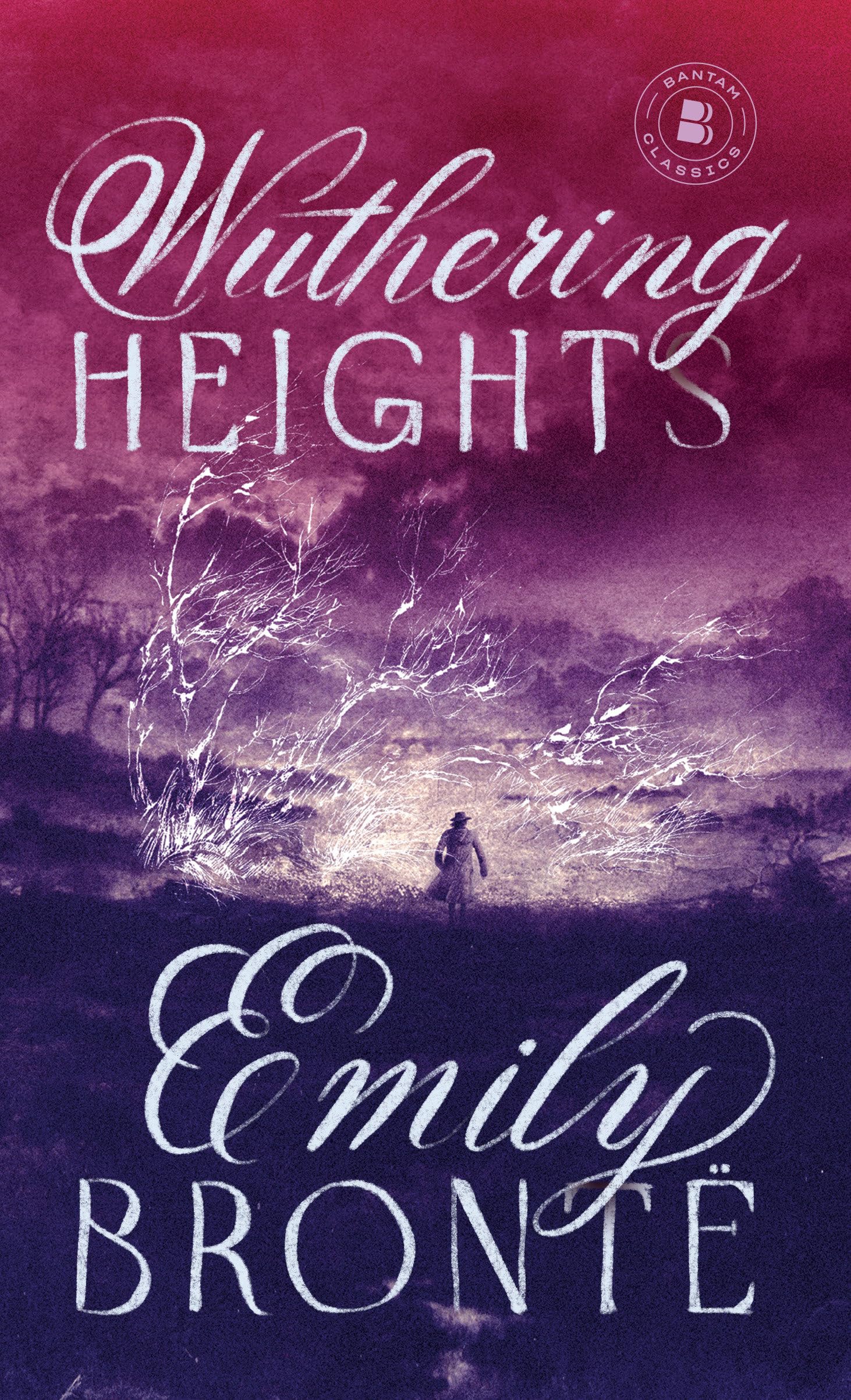
Wuthering Heights (Bantam Classics) [Emily Brontë] on desertcart.com. *FREE* shipping on qualifying offers. Wuthering Heights (Bantam Classics) Review: Stunning - Probably among the top 5 favorite reads of my life thus far. Read it. Then read it again. (Would recommend reading it through the kindle app, as it helps with quickly acquiring the definitions and explanations of the archaic words and phrases that are often attributed to being the reason people shy away from tackling the classics ♡) Review: What A Morose Book - A Real Gothic Story - What a Morose book this is! This is the first book that I have read by the Bronte sisters. I was really looking forward to it. It begins with the story of Mr. Lockwood entering the house of Heathcliff (Wuthering Heights) and the reader finding out that the people inhabiting the house are just nasty. This includes Heathcliff, Hareton and Catherine (the younger). Some have indicated that this is a love story. I am not so sure of that. It is clear in the story that Heathcliff was in love with Catherine (the elder) and was deeply hurt when she married Edgar. He goes off for three years and returns with money. However, where and how he got his money is never explained in the story. Now that he has returned, it is Heathcliff's intention to get revenge on those that he believed have wronged him. This includes Hindley, Catherine's brother, Edgar, Hareton, Linton (his own son) and Isabella. If he cannot get his revenge on those that wronged him, he will get it on the children of those that wronged him such as Hareton and Catherine (the younger). Shortly after he returns, Catherine (the elder) dies but not before giving birth to her and Edgar's dauther Catherine. By this time though, Heathcliff has married Isabella, Edgar's sister. Heathcliff wants to get his hands on Thrushcross Grange since this is the home of Edgar and Catherine. On the day after he is married to Isabella, he basically tells her that he married her to get possession of Thrushcross Grange. It is at this point that I realized that Heathcliff was an evil person. It is also at this point that I no longer considered the novel to be a love story. Heathcliff's love has now been turned into hatred. He has one thing on this mind and that is to make those around him miserable. When he returns to Wuthering Heights, Hindley is a drunk and an gambler. Hindley's son Hareton will inherit Wuthering Heights but Heathcliff gives money to Hindley and now becomes the mortgagor of the property so that when Hindley dies Heathcliff becomes the owner of Wuthering Heights. If Edgar dies without Catherine being married she will inherit Thrushcross Grange. When Edgar gets a letter from his sister, Isabella (remember that is Heathcliff's wife) that she is dying and wants him to take care of her son, Linton (Heathcliff's son too), he goes and gets him from near London. On the night of their return, Heathcliff sends Joseph to get him. The next day Linton leaves to live a Wuthering Heights. Given his condition, he gets Linton to correspond with Catherine but since Nelly and Edgar are standing in the way of their marriage, he forces Catherine to marry Linton. Therefore, when Edgar dies Thrushcross Grange becomes the property of Linton. Linton, being sickly through the whole bood, soon dies and wills the Thrushcross Grange to Heathcliff. At this time, Catherine, Hareton, and Heathcliff are all living at Wuthering Heights and he rents Thrushcross Grange to Mr. Lockwood. At the time Catherine (the elder) dies, Heathcliff asks that her ghost haunt him. In the last couple of chapters, it appears that Heathcliff continually sees Catherine's ghost. Heathcliff fails to eat and eventually dies. At that time, Hareton and Catherine are falling in love, which is the only happy part in the book (other than Heathcliff dying). All in all, this is a very dark story. This is a story of love (at first) and then hatred. This is a story of how hatred can destroy a person as well as those around him. It is a good story but I don't consider this a love story. Heathcliff is an evil person that never changes his ways of making other miserable. He enjoys making other miserable. I liked the book but it is just a little too dark for me to give it a five star rating.






| Best Sellers Rank | #54,765 in Books ( See Top 100 in Books ) #2 in Classic Literature & Fiction #5 in Literary Fiction (Books) #31 in Classic American Literature |
| Customer Reviews | 4.2 4.2 out of 5 stars (27,142) |
| Dimensions | 4.16 x 0.76 x 6.86 inches |
| Edition | First Edition |
| ISBN-10 | 0553212583 |
| ISBN-13 | 978-0553212587 |
| Item Weight | 5.8 ounces |
| Language | English |
| Print length | 315 pages |
| Publication date | January 1, 1981 |
| Publisher | Bantam Classics |
A**E
Stunning
Probably among the top 5 favorite reads of my life thus far. Read it. Then read it again. (Would recommend reading it through the kindle app, as it helps with quickly acquiring the definitions and explanations of the archaic words and phrases that are often attributed to being the reason people shy away from tackling the classics ♡)
J**.
What A Morose Book - A Real Gothic Story
What a Morose book this is! This is the first book that I have read by the Bronte sisters. I was really looking forward to it. It begins with the story of Mr. Lockwood entering the house of Heathcliff (Wuthering Heights) and the reader finding out that the people inhabiting the house are just nasty. This includes Heathcliff, Hareton and Catherine (the younger). Some have indicated that this is a love story. I am not so sure of that. It is clear in the story that Heathcliff was in love with Catherine (the elder) and was deeply hurt when she married Edgar. He goes off for three years and returns with money. However, where and how he got his money is never explained in the story. Now that he has returned, it is Heathcliff's intention to get revenge on those that he believed have wronged him. This includes Hindley, Catherine's brother, Edgar, Hareton, Linton (his own son) and Isabella. If he cannot get his revenge on those that wronged him, he will get it on the children of those that wronged him such as Hareton and Catherine (the younger). Shortly after he returns, Catherine (the elder) dies but not before giving birth to her and Edgar's dauther Catherine. By this time though, Heathcliff has married Isabella, Edgar's sister. Heathcliff wants to get his hands on Thrushcross Grange since this is the home of Edgar and Catherine. On the day after he is married to Isabella, he basically tells her that he married her to get possession of Thrushcross Grange. It is at this point that I realized that Heathcliff was an evil person. It is also at this point that I no longer considered the novel to be a love story. Heathcliff's love has now been turned into hatred. He has one thing on this mind and that is to make those around him miserable. When he returns to Wuthering Heights, Hindley is a drunk and an gambler. Hindley's son Hareton will inherit Wuthering Heights but Heathcliff gives money to Hindley and now becomes the mortgagor of the property so that when Hindley dies Heathcliff becomes the owner of Wuthering Heights. If Edgar dies without Catherine being married she will inherit Thrushcross Grange. When Edgar gets a letter from his sister, Isabella (remember that is Heathcliff's wife) that she is dying and wants him to take care of her son, Linton (Heathcliff's son too), he goes and gets him from near London. On the night of their return, Heathcliff sends Joseph to get him. The next day Linton leaves to live a Wuthering Heights. Given his condition, he gets Linton to correspond with Catherine but since Nelly and Edgar are standing in the way of their marriage, he forces Catherine to marry Linton. Therefore, when Edgar dies Thrushcross Grange becomes the property of Linton. Linton, being sickly through the whole bood, soon dies and wills the Thrushcross Grange to Heathcliff. At this time, Catherine, Hareton, and Heathcliff are all living at Wuthering Heights and he rents Thrushcross Grange to Mr. Lockwood. At the time Catherine (the elder) dies, Heathcliff asks that her ghost haunt him. In the last couple of chapters, it appears that Heathcliff continually sees Catherine's ghost. Heathcliff fails to eat and eventually dies. At that time, Hareton and Catherine are falling in love, which is the only happy part in the book (other than Heathcliff dying). All in all, this is a very dark story. This is a story of love (at first) and then hatred. This is a story of how hatred can destroy a person as well as those around him. It is a good story but I don't consider this a love story. Heathcliff is an evil person that never changes his ways of making other miserable. He enjoys making other miserable. I liked the book but it is just a little too dark for me to give it a five star rating.
R**S
Emily Brontë is a Force of Nature
Readers either love or hate Wuthering Heights with a passion but under no circumstance are they indifferent and there is a reason for that. This book is a too powerful force of nature that devours the reader and does not let they leave. Many hate to be dragged like that. I'm among those who love it, and here are three reasons why: First, I was overwhelmed by the intricate structure of the narrative, which flashes back and forward and intertwines several layers of narrators, from the ostensive Lockwood, to the fantastic voice of Nelly Dean, and then in another layer to what Nelly heard and read from Heathcliff, Isabella and Zillah. Emily Brontë manages to transition from one voice to the next smoothly and seamlessly, while sustaining a cohesive and consistent narrative that, for the length of time it covers, moves really fast. Indeed, I was amazed with how well she cuts any 'shoe leather' (there is particularly one transition, from the moors to inside Heathcliff's house in Chapter 27 that made me wow.) Nelly is a formidable storyteller if not a film editor, not only for what she tells and comments but also for what she disregards or conveniently excludes altogether. Some people say there are unnecessary characters, Lockwood being the most notorious one. But to me, having Lockwood to open room for Nelly is as clever as using Ellis Bell as a pen name, because with that Emily Brontë not only circumvented the prejudice against women authors in the Victorian Society but managed to tell a story in which a housekeeper has a lot to say and do. And imho this device also serves the plot well, because Lockwood's interest on Catherine adds to his unreliability (while he seems to let Nelly's voice reverberate untouched) as much as Nelly's own subtle influence on the destinies of the Earnshaws and Lintons goes unnoticed. Second, there is a formidable storytelling that is both dark, cold and gloomy but also bright, warm, tender and beautiful, and this balance is so well put that readers can either see the novel as a romantic love story or a horror tale of violence and hatred. There are many duplicates and characters are also multifaceted. Most readers detest all characters because of their arrogant, selfish and even violent behavior but, in my view, they are tremendously rich of vulnerability and ambiguity. There is no one to clearly root for but at least to me it was difficult to hate them either. I may be a too indulgent kind of reader, but I felt WH was like Shyamalan's Servant where characters are mostly dislikeable but you just can't let them go. They are a too interesting pack of people to be forsaken. Virginia Woolf describes these characters as impossible in the real world, but yet captivating, which she attributes to Emily's rarest of all powers in a poet: "She could free life from its dependence on facts; with a few touches indicate the spirit of a face so that it needs no body." These characters are not real people, but they feel like people you know all the same. Third, there is the supernatural. From the first scene when Lockwood meets Heathcliff, it became clear that Emily Brontë was no Jane Austen. Indeed, I began WH imagining Heathcliff as a kind of Servant's Uncle George in his natural habitat, rude and rough but tough and disciplined. Then there is the dreamlike haunting scene in Catherine's room (what was that, Kate Bush?) and the creepy, supernatural atmosphere never leaves completely anymore. The second half of the book that covers the second generation was so suffocating that I kept asking myself, as indeed I did in Servant, "why didn't these people escape the evil influence of Heathcliff and go live their lives peacefully elsewhere?" Like Leanne Grayson in Servant, Heathcliff's ability to take control of people seems superhuman, it transcends. Some scholars even see Heathcliff as a demonic figure in the Miltonian tradition of Frankenstein. I didn't know before finishing WH that the Brontë Sisters were not from upper classes in England and wrote their books from their reclusive lives in the far lands of Yorkshire (that made me admire the power of Emily's ideas even more.) Inspiration certainly came from her readings, and I can see Hamlet and Macbeth in WH, while its creepy conclusion goes along with Victor Hugo's The Hunchback of Notre Dame (and now I think, Heathcliff a gypsy just like Esmeralda!). Harold Bloom recognizes Lord Byron, and other scholars explore the hidden parallels of WH with John Milton's Paradise Lost. Richard Ellman mentions that James Joyce once said to Eugene Jolas, while reading WH: "This woman had pure imagination; Kipling had it too, and certainly Yeats." That is more or less how I felt when finishing WH: Emily Brontë's imagination is powerful and irresistible as is her language and style, even when she goes over the top. WH is a force of nature that is futile to resist, it engulfs you with its hyperbolic style, cruel and violent characters, and bleaky and foggy atmosphere. In my case, it took me completely and does not seem to let me go anytime soon.
�**E
UGH‼️ 😖
I thought I read this in my early teens. I now remember I *started* to read it but did not have the fortitude or patience to continue to the end. What a horror of a book! Every character is appalling and distasteful… in different ways. Have to give the author credit: found a way to make each character distinctively nasty 😆 I DID finish the book this time but will never read it again. ONLY reason I DID was to meet the Kindle “Love Letters” challenge. I do not read “Romance novels.” There was NOTHING ELSE I would *consider* wasting my time with and wish I would have just passed on this one. I will never get back that time. It REALLY is not reasonable to provide such a *limited* selection of options for these challenges. Only ONE “classic” novel I could find in the list. On top of all that, I am not certain THE VERSION of “Wuthering Heights” I read will even meet that challenge criteria… which will really piss me off to have endured this nightmare read… for no reason whatsoever! YMMV
C**Y
Great classic read Arrives in excellent condition
Arrived in good condition despite being used Great classic Been wanting to this for years Missed it in classic lit in college
V**Z
dense ..
Loved it but as I was told, it’s very dense. I only checked it out for the movie. I really enjoyed it but some parts I had to go over a few times. I’ll definitely be coming back for rereading.
J**.
Beautiful book. I gave this to my daughter for her 21st. Its a lovely book to keep.
S**A
Non parlerò sul contenuto del libro. L'edizione è bella, buona carta e ben presentata.
L**P
Comprei Wuthering Heights no idioma original com o objetivo de melhorar a leitura em língua inglesa. Apesar de usar bastante o dicionário, não tive dificuldade em assimilar a força da obra. Somente o dialeto falado pelo servo Joseph foi obstáculo para meu propósito. Para outros propósitos didáticos, a história também é perfeita: a construção da narrativa, do ambiente sombrio e da complexidade dos personagens. Os personagens se movem dentro de duas casas da Inglaterra rural, isolados do ambiente exterior. Wuthering Heights é uma delas. Até mesmo os casamentos ocorrem entre os moradores das charnecas. A história é apresentada através de três camadas. Alguém fora da casa inicia o relato. É Lockwood, o inquilino temporário. O relato continua através de Nelly, a governanta, que narra ao inquilino os vinte anos de convívio com os moradores da charneca. Ela é contada em duas fases, a conversa chega ao final duas vezes. Os diálogos descritos por Nelly completam a terceira camada. Nelly, por sinal, é um personagem tão importante quanto os demais. Onipresente. É interessante que a escritora tenha escolhido uma serviçal para transmitir as ações e sentimentos dos outros personagens com tamanha intensidade, profundidade e detalhes. Nelly é inteligente e tem ótima memória. O valor atribuído a ela talvez pode funcionar como uma das diversas percepções críticas de Bronte na Inglaterra do século 19. Além de tudo, ela é o contraponto de generosidade no meio das relações cada vez mais egocêntricas que vão sendo expressas com o desenrolar da narrativa. Nelly representa “o bem”. O livro é considerado um dos clássicos da literatura inglesa e descreve a intensa e destrutiva paixão entre Heathcliff e Catherine. Heathcliff é filho adotivo de Earnshaw, o patriarca de bons sentimentos e índole fraca. Ele trouxe o menino das ruas de Londres, que têm origem cigana e pele escura. Foi bastante maltratado, e o tratamento abusivo continuou em Wuthering Heights. Heathcliff e Catherine, filha de Earnshaw, cresceram como irmãos, brincando pelos pântanos. Mas a paixão explode entre eles, embora Catherine rejeite Heathcliff como marido. Ele então deixa a morada, mas volta rico anos depois. Aqui há um ponto fraco: a autora não explica como Heathcliff ficou rico. Mas tudo o que acontece fora de Wuthering não tem importância. Como um homem atormentado pela rejeição, Heathcliff volta para se vingar de tudo e de todos. Mas a vingança não é sua redenção. Seu comportamento abusivo vai sendo introjetado nos outros moradores, que se tornam abusivos também. O ódio de Heathcliff e o egoísmo de Catherine é refletido nas crianças, nos animais, nas gerações. O abuso e os ciclos de abuso permeiam toda a trama. O isolamento a que os personagens estão submetidos aumenta a intensidade e a repercussão dos eventos, assim como a falta de compaixão. A força com que Bronte humaniza/desumaniza seus personagens é impactante. Os atributos do lado B dos humanos estão bem representados neste clássico: alcoolismo, abuso de crianças, abuso de animais, sadismo, crueldade, violência, humilhação, autodestruição, incesto, visões fantasmagóricas, alucinações. Sem a roupagem de época, “O morro dos ventos uivantes” é um perfeito conto de terror moderno.
M**T
????
L**D
The delivery was fast and the book came in good condition. I really love this edition, it’s even more beautiful irl.
Trustpilot
2 days ago
2 weeks ago