

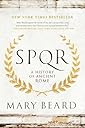




SPQR: A History of Ancient Rome
Product ID: 32863897
Buy anything from 5,000+ international stores. One checkout price. No surprise fees. Join 2M+ shoppers on Desertcart.
Desertcart purchases this item on your behalf and handles shipping, customs, and support to Italy.
SPQR: A History of Ancient Rome [Beard, Mary] on desertcart.com. *FREE* shipping on qualifying offers. SPQR: A History of Ancient Rome Review: An engaging read by a well-informed and engaging author - Having spent 4 years in high school, lots of years ago, learning Latin, or trying to, I have always been fascinated by Rome and its history. All that's left today is my memory of the first few sentences of Caesar's Gallic Wars. With whatever bias that creates, I enormously enjoyed this book, which made human beings of all the personalities I read and heard about way back then and the lives they led. Less enthusiastic reviewers appear to focus on two issues. One, is that Beard is a typical Leftish English academician who is distorting history to make points about our current politics. Perhaps. After all, she's an academic, which is almost a synonym for lieftish. The question is whether she wrote a ood book. I think she did (and I am certainly not a leftish academician). I haven't done the studying which would be required to discredit her presentation. She has quite obviously spent lots of time reading other histories, and Latin (and Greek letters, books and inscriptions. I don't claim to know whether her occasional references to purported similarities between those times and ours are valid, but I would be surprised to hear that humans had changed much since those relatively recent times. And, frankly, I found them kind of interesting. The other complaint of some reviewers is that Beard was constantly noting that no one really knows the history of ancient Rome. All we have are clues, which sometimes conflict with other clues. I don't understand that objection--of course we can't know for sure what what happened in the middle of the West Coast of Italy. We don't even know for sure what is happening today in our own country--all we have is what we're told by others. It's like reading an Editorial in the New York Times and thinking you have all the facts you need. Now add 2,000 years to that uncertainty. And toss in the point of which she frequently reminds the reader--that the person who wrote some letter, book or inscription undoubtedly had biases, or wanted to persuade the reader of something about which there was doubt or uncertainty. Or maybe was just plain wrong. Do you believe everything thing our politicians and their enablers say? Perhaps needless to say, I found the writing engaging, and was interested in the parallels she found between the lives of people--important and otherwise--back then and now. Review: A deep and insightful look at the people, politics, and culture of ancient Rome - Mary Beard is perhaps the best known and most popular historian of Ancient Rome. After reading SPQR, I can understand why. Although, not without flaws, SPQR presents a concise and very readable history of Ancient Rome from its beginnings (legendary and otherwise) to the year 212. SQPR advances more or less in historical order. For each broad period, it discusses culture, society, and history before it jumps to another period. While some have called the book “revisionist,” to my mind it does an excellent job of presenting different hypotheses—some traditional and some new. While this is not a page turner in the classic sense of the term, it is well-written and easy to read. Beard covers the major battles and political events, however much of the book focuses on what we know and do not know about Rome’s people, its subjects, its society, and its culture. She does an impressive job bringing together archeological evidence, documents, and common sense to reconstruct Ancient Rome. Her aim, as she explains, is to show a full portrait of ancient Rome, based on what we know and on our current thinking. In other words, the history of “the Senate and People of Rome” the English rendering of the SPQR. Before 390 BCE or so, we only have Rome’s founding myths and legends. Beard looks at these stories and at many different elements of archeological evidence. This allows her to put together a number of different possibly histories of the early history. Did Romulus found Rome after being raised by a she-wolf and killing his twin brother? No. But many of the origin stories and legends may have some basis in fact. As the book moves forward, it focuses more and more on what we know from the documentary evidence and tries to answer questions about the period. For example, how revolutionary or populist were Julius Caesar or rabble rousers like Clodius? How dedicated was Brutus and friends to the cause of liberty? How did Romans transfer large sums of money? Or how many people really knew how to read and write (20%?). Beard offers a great deal of insight about the Roman republic, both as it rises to power and is it falls into civil war and political chaos. I found her discussion of the rise of warlords (Sulla, Pompey, Caesar, etc.) quite engaging. As Rome became richer and more powerful, it was transformed from an oligarchic republic to a failed state. More money, greater inequality, and less stability. To my mind, the books starts to lose its steam after the reign of Augustus Caesar (31 BC to 14 AD). Augustus (who was still called Octavian), through cunning and military force, is able to stabilize the republic and create a monarchy that restores the peace. Beard explains in detail how Augustus sets up his republican monarchy, along with its compromises and accommodations. However Beard provides little discussion of what happens next. While she does outline the reigns of the twelve legitimate emperors from Tiberius to Caracalla (there were two short civil wars during this period), it is done in short form. Possibly Nero and Domitian were not as bloody as history tells us; perhaps Caligula was not as mad as much as maddening (to the Roman elite). There is a good discussion of the expansion of Christianity in its first two centuries. Beard also discusses the expansion of “Romanization” as the empire expands. The narrative ends in 212, the year that Caracalla grants citizenship to the entire free population. This was on the cusp of the so-called “Crisis of the Third Century.” As Beard herself points out, it is not clear why citizenship was extended or what this meant in practice. I think that this date was chosen because the empire that emerged after sixty years of revolts and civil wars was a very different sort of place with very different rules. It is not an entirely satisfactory answer but at some point the book does have to end. Looking back two thousand years, it is quite common to ask what we can learn from Rome or if we (our civilization) is falling like the Roman Empire fell. Mary Beard argues that there is little that we can directly learn from Rome. From this book, I learned that a lot of modern institutions that we take for granted—ranging from targeted social safety nets to a proto-nation state to the republican government that is really an authoritarian dictatorship—have their origins in Ancient Rome. Certainly, we are not destined to repeat anything but there is much that we can learn.
| Best Sellers Rank | #5,890 in Books ( See Top 100 in Books ) #1 in Ancient Roman History (Books) |
| Customer Reviews | 4.4 4.4 out of 5 stars (12,003) |
| Dimensions | 5.5 x 1.1 x 8.3 inches |
| Edition | Reprint |
| ISBN-10 | 1631492225 |
| ISBN-13 | 978-1631492228 |
| Item Weight | 2.31 pounds |
| Language | English |
| Print length | 608 pages |
| Publication date | September 6, 2016 |
| Publisher | Liveright |
I**R
An engaging read by a well-informed and engaging author
Having spent 4 years in high school, lots of years ago, learning Latin, or trying to, I have always been fascinated by Rome and its history. All that's left today is my memory of the first few sentences of Caesar's Gallic Wars. With whatever bias that creates, I enormously enjoyed this book, which made human beings of all the personalities I read and heard about way back then and the lives they led. Less enthusiastic reviewers appear to focus on two issues. One, is that Beard is a typical Leftish English academician who is distorting history to make points about our current politics. Perhaps. After all, she's an academic, which is almost a synonym for lieftish. The question is whether she wrote a ood book. I think she did (and I am certainly not a leftish academician). I haven't done the studying which would be required to discredit her presentation. She has quite obviously spent lots of time reading other histories, and Latin (and Greek letters, books and inscriptions. I don't claim to know whether her occasional references to purported similarities between those times and ours are valid, but I would be surprised to hear that humans had changed much since those relatively recent times. And, frankly, I found them kind of interesting. The other complaint of some reviewers is that Beard was constantly noting that no one really knows the history of ancient Rome. All we have are clues, which sometimes conflict with other clues. I don't understand that objection--of course we can't know for sure what what happened in the middle of the West Coast of Italy. We don't even know for sure what is happening today in our own country--all we have is what we're told by others. It's like reading an Editorial in the New York Times and thinking you have all the facts you need. Now add 2,000 years to that uncertainty. And toss in the point of which she frequently reminds the reader--that the person who wrote some letter, book or inscription undoubtedly had biases, or wanted to persuade the reader of something about which there was doubt or uncertainty. Or maybe was just plain wrong. Do you believe everything thing our politicians and their enablers say? Perhaps needless to say, I found the writing engaging, and was interested in the parallels she found between the lives of people--important and otherwise--back then and now.
E**M
A deep and insightful look at the people, politics, and culture of ancient Rome
Mary Beard is perhaps the best known and most popular historian of Ancient Rome. After reading SPQR, I can understand why. Although, not without flaws, SPQR presents a concise and very readable history of Ancient Rome from its beginnings (legendary and otherwise) to the year 212. SQPR advances more or less in historical order. For each broad period, it discusses culture, society, and history before it jumps to another period. While some have called the book “revisionist,” to my mind it does an excellent job of presenting different hypotheses—some traditional and some new. While this is not a page turner in the classic sense of the term, it is well-written and easy to read. Beard covers the major battles and political events, however much of the book focuses on what we know and do not know about Rome’s people, its subjects, its society, and its culture. She does an impressive job bringing together archeological evidence, documents, and common sense to reconstruct Ancient Rome. Her aim, as she explains, is to show a full portrait of ancient Rome, based on what we know and on our current thinking. In other words, the history of “the Senate and People of Rome” the English rendering of the SPQR. Before 390 BCE or so, we only have Rome’s founding myths and legends. Beard looks at these stories and at many different elements of archeological evidence. This allows her to put together a number of different possibly histories of the early history. Did Romulus found Rome after being raised by a she-wolf and killing his twin brother? No. But many of the origin stories and legends may have some basis in fact. As the book moves forward, it focuses more and more on what we know from the documentary evidence and tries to answer questions about the period. For example, how revolutionary or populist were Julius Caesar or rabble rousers like Clodius? How dedicated was Brutus and friends to the cause of liberty? How did Romans transfer large sums of money? Or how many people really knew how to read and write (20%?). Beard offers a great deal of insight about the Roman republic, both as it rises to power and is it falls into civil war and political chaos. I found her discussion of the rise of warlords (Sulla, Pompey, Caesar, etc.) quite engaging. As Rome became richer and more powerful, it was transformed from an oligarchic republic to a failed state. More money, greater inequality, and less stability. To my mind, the books starts to lose its steam after the reign of Augustus Caesar (31 BC to 14 AD). Augustus (who was still called Octavian), through cunning and military force, is able to stabilize the republic and create a monarchy that restores the peace. Beard explains in detail how Augustus sets up his republican monarchy, along with its compromises and accommodations. However Beard provides little discussion of what happens next. While she does outline the reigns of the twelve legitimate emperors from Tiberius to Caracalla (there were two short civil wars during this period), it is done in short form. Possibly Nero and Domitian were not as bloody as history tells us; perhaps Caligula was not as mad as much as maddening (to the Roman elite). There is a good discussion of the expansion of Christianity in its first two centuries. Beard also discusses the expansion of “Romanization” as the empire expands. The narrative ends in 212, the year that Caracalla grants citizenship to the entire free population. This was on the cusp of the so-called “Crisis of the Third Century.” As Beard herself points out, it is not clear why citizenship was extended or what this meant in practice. I think that this date was chosen because the empire that emerged after sixty years of revolts and civil wars was a very different sort of place with very different rules. It is not an entirely satisfactory answer but at some point the book does have to end. Looking back two thousand years, it is quite common to ask what we can learn from Rome or if we (our civilization) is falling like the Roman Empire fell. Mary Beard argues that there is little that we can directly learn from Rome. From this book, I learned that a lot of modern institutions that we take for granted—ranging from targeted social safety nets to a proto-nation state to the republican government that is really an authoritarian dictatorship—have their origins in Ancient Rome. Certainly, we are not destined to repeat anything but there is much that we can learn.
J**Y
I thoroughly enjoyed it. It shapes a new understanding of what the early days of Rome really were like according to actual records and archeology, not the myths we all heard about (while not discarding it completely). It also shapes a new identity of what it meant to be Roman and the history and reality of regular folks living in those days. If you are interested in the ancient world and already know a thing or two about it, this is a book you will enjoy.
A**S
Not the story of Rome you want but story of Rome you need. An extremely insightful work by Mary Beard into the history of Ancient Rome, its emperors, citizens, slaves and whatnot. First chapters may scream challenging book, but as the book progresses, you’ll see why the Author provides such rich content and notice that you have actually learned something. Thank you MB
B**Y
great
P**L
Arrived ripped
G**O
Un libro straordinario. Per l'impostazione innanzi tutto: l'inizio "in medias res" (la congiura di Catilina), tale da catturare - da subito - l'attenzione del lettore. Per la trattazione scorrevole, ma mai banale, che ti fa vivere e toccare con mano lo sforzo e l'emozione dello storico che trae i segni di una possibile verità da reperti della natura più disparata (una lapide tombale di struttura palmirena scavata in Inghilterra, un rostro punico ripescato nelle acque siciliane, e tanto, tanto altro ancora). Per la capacità narrativa e di sintesi che consente all'autrice di racchiudere in poco più di 500 densissime pagine mille anni di storia, dalla fondazione di Roma all'editto di Caracalla, che attribuì la cittadinanza romana a tutti i liberi residenti entro i confini dell'impero. Ne viene fuori un quadro affascinante, innanzi tutto - ne sono sicuro - per la stessa autrice, che ha la capacità di trasmettere al lettore questa sua emozione i fronte a una civiltà variegata e inclusiva, nella quale hanno convissuto popoli diversissimi per livello di civilizzazione, per etnia, per lingua. La sterminata bibliografia proposta (ma, ovviamente, non esaustiva come la stessa autrice ammette) è fondamentalmente limitata ai testi in lingua inglese, a parte, naturalmente, i documenti originali latini o greci, per i quali, comunque si propongono le traduzioni o i siti web ove rintracciarle. Non so se questa sia stata una scelta dell'autrice, fatta considerando che il volume è indirizzato a non specialisti come me, ma è comunque istruttivo per un italiano (anche se io ho letto il volume in lingua inglese) scoprire quanti studiosi fuori d'Italia dedicano la propria attività professionale alla storia della civiltà romana. E per lo più si tratta, è importante dirlo, di studi assai recenti. In conclusione: se siete appassionati di storia in genere e di storia romana in particolare, dovete leggere questo libro; se non lo siete cominciate a leggerlo ugualmente: appassionerà anche voi.
Trustpilot
2 weeks ago
3 weeks ago