

Desert Online General Trading LLC
Dubai, United Arab Emirates
Desert Online General Trading LLC
Dubai, United Arab Emirates
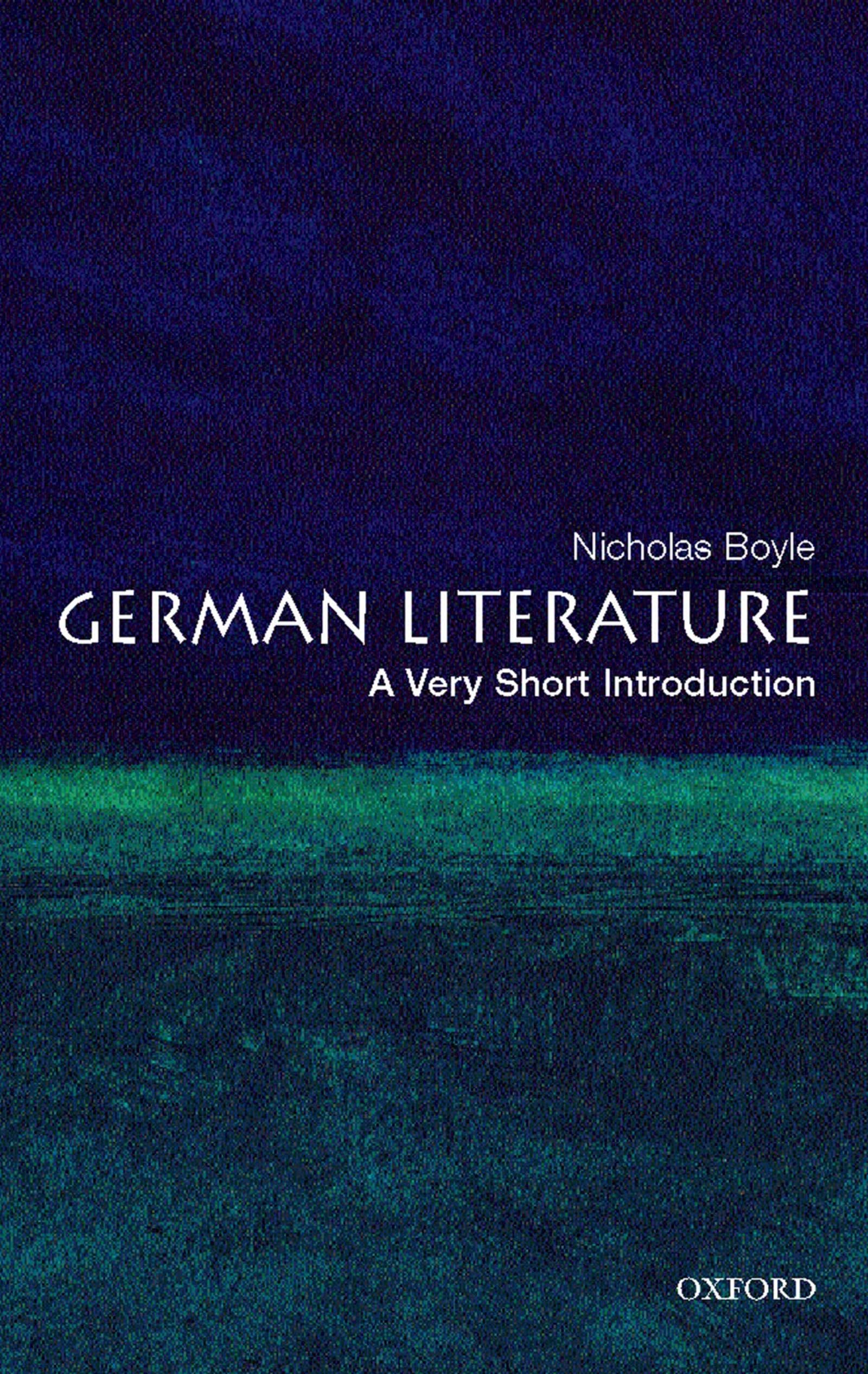
Full description not available

M**I
Achieves the basic purpose of an introduction to a vast and complex subject
Perhaps the attempt to cover more than four centuries of literature within the same analytical framework is overly ambitious, but Professor Boyle achieves the basic aim of an introduction in making sure the reader will pursue the subject. His treatment of Brecht is unduly ungenerous and his fleeting comments on the philosophers are insufficient for a backdrop, but his discussion of the poets is intriguing and, on the whole, the introduction has many meaningful insights to generate a greater interest in its subject matter. I am sure many would have picked up an edition of Holderlin's Fragments or The Tin Drum after reading this introduction.
J**R
The broad context I never bothered to search for in college
I was a German major in college. I lost a lot of the language and had to build it back up. Over time I gained a better appreciation for reading about German in English. This book makes good sense of the whole corpus of German literature in under 200 small pages.
J**Y
It's great!
It's really great!
F**Y
disappointing
A very disappointing book. I was expecting an introduction to German literature more along the lines of literary theory or literature per se with some linguistics to boot. This book is all about the political and social background of the times the pieces were made. Thus the title is misleading. Moreover, it makes no mention at all of Austrian or Swiss writers, as if German literature were a property of German writers only. I stopped reading this boring book half of the way. A waste of money.
P**.
Five Stars
Great!
D**S
German Literature and its place in the world
German Literature: A very short introduction by Nicholas Boyle, Oxford University Press, 2008, 182 ff.The author, who is the Schröder Professor of German and President of Magdalene College at Cambridge University, makes the point in the Introduction to his book that literature is about more than the texts themselves. They reflect on and impact on the world through their authors and readers. German literature has excelled in subjective poetic literature but has contributed rather less to the more objective realistic novel. Boyle makes the point that the term `German literature' embraces a wider field than just books generated by authors within what we now recognise as the German nation.During the Middle Ages the German nation was slowly establishing an identity for itself through the increasing importance of the university throughout German lands after the Reformation. Boyle maintains that Luther's `revival of Augustine's distinction between the earthly and the heavenly cities was the true source of the modern dualism of matter and mind that is usually attributed to Descartes.' In fact, the Reformation that Luther inspired did much to promote the influence of the universities. The first Prussian university was established in Prague in 1348 and in this period there were 40 universities in Germany compared with just two in England. Meister Eckhart, Jacob Böhme, Martin Luther, Gottfried Leibniz, Immanuel Kant and Friedrich Klopstock, to mention just a few well-known writers cited by Boyle, emerged from within this cultural setting. Johannes Gutenberg invented printing in the 15th century and this led to widespread dissemination of literature.`The History of Dr John Faust' appeared in Frankfurt in 1587. Faust was an astrologer and alchemist who came to an unsavoury end and his demise, as Boyle points out, was primarily simply a news item of the day - a `novel' in the true sense. By the 18th century Germany had more writers per head of the population than any other nation in Europe. The `Sturm und Drang' or `Storm and Stress' movement developed in the latter decades of the 18th century and it laid the ground for Romanticism in both literature and music. The movement took its name from the title of a play by Friedrich Maximilian Klinger but the theorist of the movement was Johann Gottfried Herder. The towering figure to emerge from this new vision in literature was Johann Wolfgang von Goethe.Following on from Immanuel Kant, a powerful philosophical group emerged in Jena and elsewhere in Germany comprising G.W.F. Hegel, Johann Gottlieb Fichte, Friedrich Schelling, the Schlegel brothers, August and Friedrich, and the poets Friedrich Hölderlin and `Novalis'. These, with Klinger and Herder, were the founders of the Romantic movement. Boyle recounts the collections of national fairy-tales of the brothers Grimm and of Achim von Arnim and Clemens Brentano. The latter authors' `Boy with a Magic Horn' (Des Knaben Wunderhorn) served as inspiration for a number of composers: all of those I know of were German - Mendelssohn, Schumann, Brahms, Weber, Webern, Mahler and Zemlinsky.The highly significant German philosophers, Schopenhauer, Nietzsche and Marx, are also covered in context in this short volume. I recognise that the author wanted to put Germanic literature in its social and historical context, and this he does very well. However, in reading the book I felt that I was reading a book about German social history rather than one about literature. It is detailed and learned and rather more academic in nature than some of the other Very Short Introductions I have read. I would suggest that this is a book for those who want to know in some detail the social and historical background to German literature rather than about the literature itself. Introduction to German Philosophy: From Kant to Habermas
H**C
Some like it short
Boyle's "Short" history begins with the Reformation. One would be hard-pressed to surpass it in 159 pages. His treatment of Nietzsche is almost ridiculously dismissive, but that is the only part where his own (Catholic humanist) sympathies prevail. Boyle weaves a narrative, convincing in some respects, less so in others, but always useful, and the book is pithy enough that if one were to read all the reviews on this page, one might in the same time have read a decent chunk of Boyle instead. Boyle sees through every pose and pretense in a tradition rife with them, and his analyses are often surprising and penetrating. His refusal to take fully seriously figures such as Heidegger, Adorno, and Benjamin (whose stars have been on the wane, but are not yet eclipsed) will likely be seen as prescient.
E**O
Dense with information
Boyle, the author of the most thorough and insightful biography of Goethe in the last century, has composed an excellent introduction to German literature. It's ideal for someone who would like to understand the connections between German history and literary expression. However, the book is complex and it treats the literature in the context in which it was written, not according to modern standards. It might be heavy going for a casual reader, but for someone who wants to think seriously about the topic, Boyle's book is ideal.
D**S
German Literature and its place in the world
German Literature: A very short introduction by Nicholas Boyle, Oxford University Press, 2008, 182 ff.The author, who is the Schröder Professor of German and President of Magdalene College at Cambridge University, makes the point in the Introduction to his book that literature is about more than the texts themselves. They reflect on and impact on the world through their authors and readers. German literature has excelled in subjective poetic literature but has contributed rather less to the more objective realistic novel. Boyle makes the point that the term `German literature' embraces a wider field than just books generated by authors within what we now recognise as the German nation.During the Middle Ages the German nation was slowly establishing an identity for itself through the increasing importance of the university throughout German lands after the Reformation. Boyle maintains that Luther's `revival of Augustine's distinction between the earthly and the heavenly cities was the true source of the modern dualism of matter and mind that is usually attributed to Descartes.' In fact, the Reformation that Luther inspired did much to promote the influence of the universities. The first Prussian university was established in Prague in 1348 and in this period there were 40 universities in Germany compared with just two in England. Meister Eckhart, Jacob Böhme, Martin Luther, Gottfried Leibniz, Immanuel Kant and Friedrich Klopstock, to mention just a few well-known writers cited by Boyle, emerged from within this cultural setting. Johannes Gutenberg invented printing in the 15th century and this led to widespread dissemination of literature.`The History of Dr John Faust' appeared in Frankfurt in 1587. Faust was an astrologer and alchemist who came to an unsavoury end and his demise, as Boyle points out, was primarily simply a news item of the day - a `novel' in the true sense. By the 18th century Germany had more writers per head of the population than any other nation in Europe. The `Sturm und Drang' or `Storm and Stress' movement developed in the latter decades of the 18th century and it laid the ground for Romanticism in both literature and music. The movement took its name from the title of a play by Friedrich Maximilian Klinger but the theorist of the movement was Johann Gottfried Herder. The towering figure to emerge from this new vision in literature was Johann Wolfgang von Goethe.Following on from Immanuel Kant, a powerful philosophical group emerged in Jena and elsewhere in Germany comprising G.W.F. Hegel, Johann Gottlieb Fichte, Friedrich Schelling, the Schlegel brothers, August and Friedrich, and the poets Friedrich Hölderlin and `Novalis'. These, with Klinger and Herder, were the founders of the Romantic movement. Boyle recounts the collections of national fairy-tales of the brothers Grimm and of Achim von Arnim and Clemens Brentano. The latter authors' `Boy with a Magic Horn' (Des Knaben Wunderhorn) served as inspiration for a number of composers: all of those I know of were German - Mendelssohn, Schumann, Brahms, Weber, Webern, Mahler and Zemlinsky.The highly significant German philosophers, Schopenhauer, Nietzsche and Marx, are also covered in context in this short volume. I recognise that the author wanted to put Germanic literature in its social and historical context, and this he does very well. However, in reading the book I felt that I was reading a book about German social history rather than one about literature. It is detailed and learned and rather more academic in nature than some of the other Very Short Introductions I have read. I would suggest that this is a book for those who want to know in some detail the social and historical background to German literature rather than about the literature itself. Introduction to German Philosophy: From Kant to HabermasIntroduction to German Philosophy: From Kant to Habermas
D**R
Deutsche Literatur: ganz kurz
Es scheint ein Zeichen der Zeit zu sein, dass es neuerdings bei allen Verlagen ganz kurze Einführungen zu allen Themen gibt. Der Hamburger Junius Verlag hatte mit solchen Einführungen zum Thema Philosophie ja schon vor über zwanzig Jahren begonnen. Am Ende dieser Entwicklung steht der Wikipedia Artikel. Früher waren Literaturgeschichten lang, sehr lang. Jörgensen, Bohnen und Öhrgaard brauchen für die beispielhafte Darstellung von Sturm und Drang (C.H. Beck) 660 Seiten für 50 Jahre deutscher Literatur. Aber es geht kürzer: die gesamte deutsche Literatur seit dem Mittelalter auf 171 Seiten. Erschienen in der Reihe der "Very Short Introductions" der Oxford University Press. Diese Reihe gibt es seit 1995 und es sind schon mehr als 100 Titel in dieser Reihe erschienen. Vor 50 Jahren gab es in Frankreich schon einmal ein ähnliches Unternehmen mit der Reihe " Que Sais Je?". Das Ganze kann natürlich nur funktionieren, wenn man für diese Bände wirklich kompetente Spezialisten gewinnt. Für die deutsche Literatur hat die OUP den Cambridge Professor Nicholas Boyle ausgewählt, den wohl führenden englischen Germanisten seiner Generation. Boyle hat 1991 und 2000 die ersten beiden Bände seiner viel gerühmten Goethe Biographie vorgelegt, er schreibt zur Zeit am dritten Band. Und nebenbei hat er diese nette "very short introduction" der Deutschen Literatur geschrieben. Fünf Kapitel, zwei Seiten Literaturverzeichnis, ein Index und zahlreiche Illustrationen. Es ist eine tour de force, geistreich, amüsant und sehr provokant. Manchmal ärgerlich. Wenn Boyle über Günter Grass "Ein weites Feld" sagt, dass dies Werk politische Propaganda sei, aber als Roman nichts bietet, dann folgt er lediglich dem ärgerlichen "Spiegel" Artikel von Reich-Ranicki. Aber von solchen Ausrutschern abgesehen, kann man nur sagen: "brillant"! Mehr kann man auf 171 Seiten nicht verlangen.
M**R
Five Stars
An excellent introduction to German Literature.
Trustpilot
3 weeks ago
2 weeks ago