We remain fully operational. Our teams are working around the clock to ensure your deliveries continue safely.

DOWNLOAD THE APP


Customer Services
Copyright © 2025 Desertcart Holdings Limited
DOWNLOAD THE APP
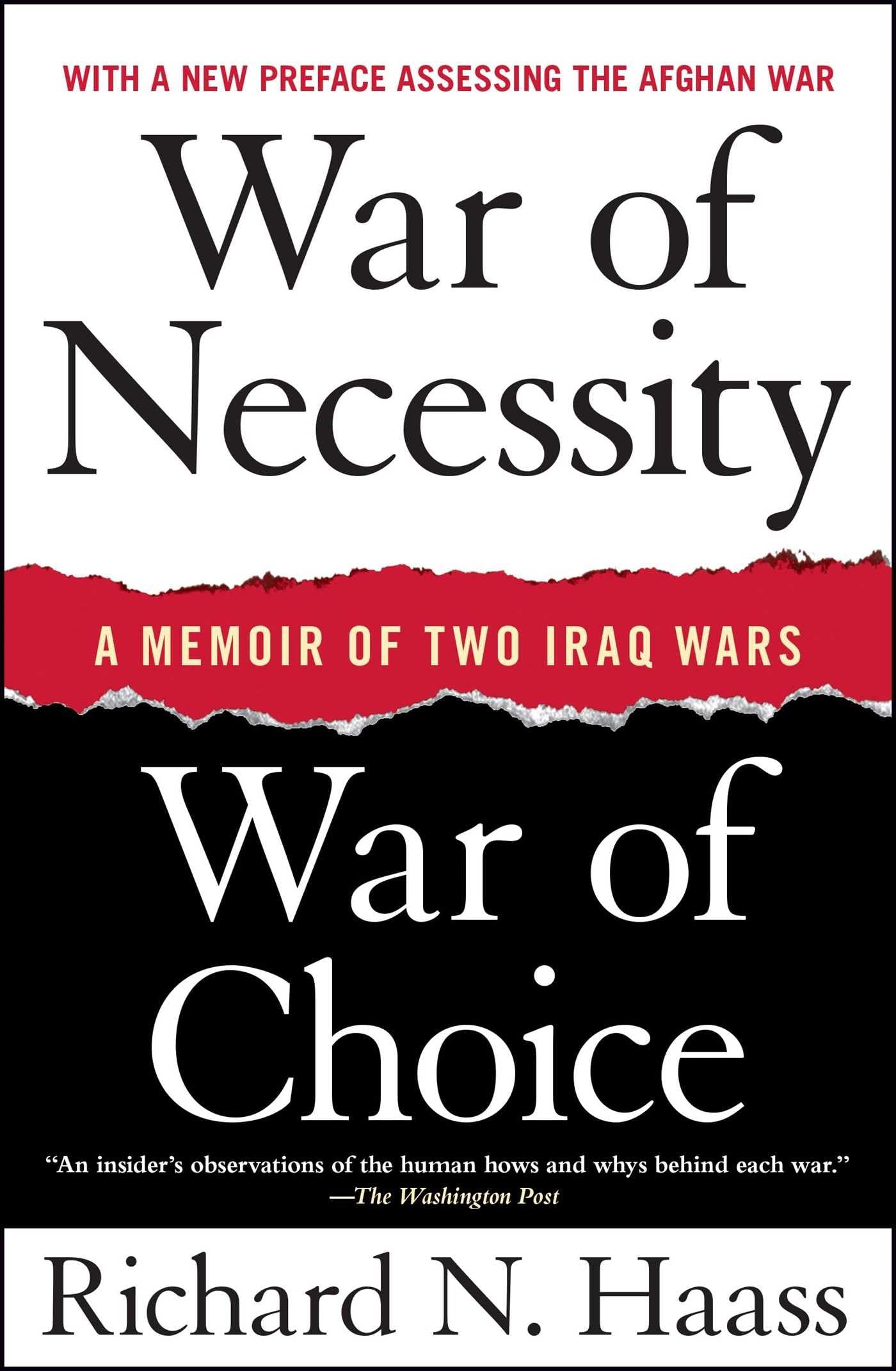
War of Necessity, War of Choice: A Memoir of Two Iraq Wars [Haass, Richard N.] on desertcart.com. *FREE* shipping on qualifying offers. War of Necessity, War of Choice: A Memoir of Two Iraq Wars Review: Good read for a college level political science class / History intellectuals - I became aware of this book when author Richard Haas made reference to it while being interviewed on Fox Network News with respect to the current situation in Iraq and Syria. What grabbed my attention was the book’s title. Contrary to what the title implies the book is not a chronological and analytical, nor a comparative and contrasting history of the two Iraq wars; but a Washington insider’s view of the political analysis, policy and strategy involved. As a member of the National Security Council (NSC) for the 1st Iraq war and director of policy and planning under Secretary of State – Colin Powell in the 2nd Iraq war the author presents a very detailed memoir of the origins, intelligence gathering, discussions and decision making and the results in both cases. One could also title this book “Correct Foreign Policy vs “Incorrect foreign policy” With the Iraq invasion of Kuwait in August 1990 the U.S under President George H.W. Bush was presented with a foreign policy crisis; although Iraq under the rule of political despot Saddam Hussein presented no immediate threat to the U.S. the Bush administration determined that not only was the invasion a direct violation of the United Nations Charter, in addition this brutal invasion threatened to destabilize the entire middle east where most of the world’s oil comes from, that already had a long history civil wars and political conflict. The book in very readable detail describes how President G.H. W. Bush put together an effective team under the NSC and other agencies, with the right credentials and background (Dick Cheney, Paul Wolfowitz, General Colin Powell to name a few) who forged an effective international coalition to drive the Iraqi Army out of Kuwait, disable it and contain Saddam Hussein in Iraq while preserving Iraqi political structure with Saddam Hussein still in power. An important quote in the book “You can break the pot, but now have a broken pot” (General Colin Powell) implied that it was important to liberate Kuwait – but not occupy Iraq or change the regime under Saddam Hussein since the nation of Iraq was little more than an artificial state of 3 historically warring factions. This policy proved very effective and Iraq War 1 ended with relatively little cost and very few American casualties; with Saddam Hussein contained throughout the remainder of the G.H.W Bush administration and subsequent President Clinton administration. War of Choice, War of Necessity delineates in part two how the 9/11 terrorist attack, largely prorogated President George W Bush to decide, that because intelligence showed that the Saddam Hussein regime was hiding weapons of mass destruction and in the process of developing nuclear weapons, that regime change was necessary in Iraq in addition to changing Iraq into a republic more acceptable to the international community. Although President G.W Bush put together an experienced team of advisors and political analysts; with the exception of Richard Haass, this team simply told the president what he wanted to hear since the 9/11 attack irrevocably motivated the reactionary president to attack Iraq again and oust Saddam Hussein. The U.S. policy in Iraq War 2 proved untenable because it speculated with little analysis the U.S. invasion would be highly praised and welcome by the Iraqi people, had no plan to control the populace during the interregnum of regime change and there essentially was no actual alternative regime to change to. The intelligence that cited WMD and “We don’t want the smoking gun to be a mushroom cloud” (Secretary of State Condoleezza Rice) were completely inaccurate. War of Necessity, War of Choice published in 2009 did not know the outcome, but correctly predicted the Iraq War 2 would fail to achieve sought objectives; and we now know in 2015 that American involvement would end in 2011 at a cost of nearly 1 trillion dollars, claim more than 6000 American lives and launch ISIS – a far greater threat than Saddam Hussein ever was. War of Necessity, War of Choice is a good read for anyone interested in the behind the scenes making and planning of good versus bad foreign policy, a good selected read for a college level political science class. The book stresses that American people should not assume any decision to go to war is a correct one just because Washington politicians advocate it. My quote – old Native American saying “Before you attack your enemy – question your leaders”. Review: War of Necessity, War of Choice - An amazing inside look by Richard Haass in how we got into this mess and why. Richard can be regularly seen on MSNBC's "Morning Joe", and his knowledge of the real story lends credibility to his book.
| Best Sellers Rank | #180,030 in Books ( See Top 100 in Books ) #23 in History of Cuba (Books) #38 in Iraq History (Books) #264 in Middle Eastern Politics |
| Customer Reviews | 4.3 4.3 out of 5 stars (79) |
| Dimensions | 5.5 x 0.92 x 8.44 inches |
| Edition | 1st |
| ISBN-10 | 141654903X |
| ISBN-13 | 978-1416549031 |
| Item Weight | 2.31 pounds |
| Language | English |
| Print length | 368 pages |
| Publication date | May 18, 2010 |
| Publisher | Simon & Schuster |
T**H
Good read for a college level political science class / History intellectuals
I became aware of this book when author Richard Haas made reference to it while being interviewed on Fox Network News with respect to the current situation in Iraq and Syria. What grabbed my attention was the book’s title. Contrary to what the title implies the book is not a chronological and analytical, nor a comparative and contrasting history of the two Iraq wars; but a Washington insider’s view of the political analysis, policy and strategy involved. As a member of the National Security Council (NSC) for the 1st Iraq war and director of policy and planning under Secretary of State – Colin Powell in the 2nd Iraq war the author presents a very detailed memoir of the origins, intelligence gathering, discussions and decision making and the results in both cases. One could also title this book “Correct Foreign Policy vs “Incorrect foreign policy” With the Iraq invasion of Kuwait in August 1990 the U.S under President George H.W. Bush was presented with a foreign policy crisis; although Iraq under the rule of political despot Saddam Hussein presented no immediate threat to the U.S. the Bush administration determined that not only was the invasion a direct violation of the United Nations Charter, in addition this brutal invasion threatened to destabilize the entire middle east where most of the world’s oil comes from, that already had a long history civil wars and political conflict. The book in very readable detail describes how President G.H. W. Bush put together an effective team under the NSC and other agencies, with the right credentials and background (Dick Cheney, Paul Wolfowitz, General Colin Powell to name a few) who forged an effective international coalition to drive the Iraqi Army out of Kuwait, disable it and contain Saddam Hussein in Iraq while preserving Iraqi political structure with Saddam Hussein still in power. An important quote in the book “You can break the pot, but now have a broken pot” (General Colin Powell) implied that it was important to liberate Kuwait – but not occupy Iraq or change the regime under Saddam Hussein since the nation of Iraq was little more than an artificial state of 3 historically warring factions. This policy proved very effective and Iraq War 1 ended with relatively little cost and very few American casualties; with Saddam Hussein contained throughout the remainder of the G.H.W Bush administration and subsequent President Clinton administration. War of Choice, War of Necessity delineates in part two how the 9/11 terrorist attack, largely prorogated President George W Bush to decide, that because intelligence showed that the Saddam Hussein regime was hiding weapons of mass destruction and in the process of developing nuclear weapons, that regime change was necessary in Iraq in addition to changing Iraq into a republic more acceptable to the international community. Although President G.W Bush put together an experienced team of advisors and political analysts; with the exception of Richard Haass, this team simply told the president what he wanted to hear since the 9/11 attack irrevocably motivated the reactionary president to attack Iraq again and oust Saddam Hussein. The U.S. policy in Iraq War 2 proved untenable because it speculated with little analysis the U.S. invasion would be highly praised and welcome by the Iraqi people, had no plan to control the populace during the interregnum of regime change and there essentially was no actual alternative regime to change to. The intelligence that cited WMD and “We don’t want the smoking gun to be a mushroom cloud” (Secretary of State Condoleezza Rice) were completely inaccurate. War of Necessity, War of Choice published in 2009 did not know the outcome, but correctly predicted the Iraq War 2 would fail to achieve sought objectives; and we now know in 2015 that American involvement would end in 2011 at a cost of nearly 1 trillion dollars, claim more than 6000 American lives and launch ISIS – a far greater threat than Saddam Hussein ever was. War of Necessity, War of Choice is a good read for anyone interested in the behind the scenes making and planning of good versus bad foreign policy, a good selected read for a college level political science class. The book stresses that American people should not assume any decision to go to war is a correct one just because Washington politicians advocate it. My quote – old Native American saying “Before you attack your enemy – question your leaders”.
D**.
War of Necessity, War of Choice
An amazing inside look by Richard Haass in how we got into this mess and why. Richard can be regularly seen on MSNBC's "Morning Joe", and his knowledge of the real story lends credibility to his book.
A**R
An intriguing fly-on-the-wall view of history
It's hard to imagine anyone who doesn't have an opinion on the two Gulf Wars, and it's even harder to imagine anyone who hasn't Monday-morning quarterbacked themselves into believing that they could have done it better if given half a chance. Well, this book gives you a chance to answer that existential question - what would you have done if you had been granted a seat at the table of history? Richard Haass gives you a unique insider's perspective to the decision making process that led to these wars, and puts you in the driver's seat by posing key questions, such as would you have resigned if you'd found your viewpoints disregarded by the decision makers? And, how forcefully would you have pushed your advice if you ran the risk of completely being sidelined? That in a nutshell, is why this book works. This isn't a book analyzing history - it's about vicariously observing history as it evolved. There are a few central tenets in this book that captured my attention: (1) The central theme of this book is based around what constitutes a war of necessity vs. a war of choice; and how these should be planned and waged. Wars of Necessity include WW II, the Korean War, and Gulf War 1. These are characterized by self-defense; involve the most important national interests; have a marked lack of alternatives to the use of force; and result in a considerable price to be paid if the status quo is allowed to stand. (Here he includes "Preemptive Wars", that are required against an adversary from whom an attack is *imminent*.) On the other hand, Wars of Choice include Vietnam, Bosnia, Kosovo, and Gulf War 2. They involve stakes that are less clearly vital; and have viable alternative policies such as diplomacy. These include "Preventive Wars" that are undertaken to interrupt a gathering threat. An example being the Israeli attack on Iraq's nuclear facility in Osirak. (2) Regardless of your political leanings, I cannot imagine this book as being read as anything other than a strict indictment of 43's presidency from an insider. For example, he describes the second war as "a blunder"; points out that "W" inherited a robust economy, a budgetary surplus, and a rested military, and left behind a country in hurt; and describes an administration riven by cronyism and pathological unilateralism, that silenced the voices of reason - such as Shinseki and Secretary Powell. (3) Mr. Haass paints an interesting picture of President Bush as an exceedingly smart individual, who favored bold dramatic actions, and who viewed changing course as a sign of weakness. (4) He categorically disputes any link between Saddam's Iraq and terrorism, and disparages the intelligence on WMD - which he also blames for the stain on Secretary Powell's extraordinary career record. (5) Interestingly, he paints a very sorry image of Secretary Powell, where the loyal veteran is continually caught "playing defense, reacting to the agenda of others"; and where there is a perception in the White House "that Powell was not a team player". (6) I was particularly struck by his assessment that despite the incalculable costs incurred, in blood and treasure, the greatest cost of Gulf War 2 may actually end up being the opportunity cost - where we squandered a rare opportunity to shape the world by miring ourselves in the morass of our own making in Iraq. There are some excellent lessons to be found in these pages as well: 1) "A good idea that is not, or cannot, be successfully implemented is either not a good idea or an idea that ought not to be pursued." 2) "Planning is never better than the assumptions fed into it. " 3) "One is more likely to influence policy if one argues for changes that would move the ball a few yards down the field, than if one suggests a total change in the game plan. So, once a decision has been made, continuing to argue against it, simply reduces any further influence you might have on the topic." 4) "In life, it tends to be better to err by commission than omission. Most of my regrets stem from what I have failed to say or do, not from what I've actually done." 5) "In normal times, but even more so amid crises, it is never enough to do the right thing. It is also necessary to go out and explain what you are doing and why, and in so doing, build [..] support for the policy." 6) "Sometimes it is better to try and come up short than not to try at all. This takes away the argument that "if only" you had done something, things would have been better." If you don't have the time, an excellent synopsis can be gleaned from the Appendix - which sets the stage for much of what is in the book. Written in Sep 2002, it demonstrates that voices were being raised and going unheeded in the excitement of girding for battle. Happy Reading!
R**Y
Brutttoporco
I bought the book even after I read it free from the library. A necessary read if you want to understand the war in Iraq and Afganistan.
L**.
not bad
Useful account from the inside but also a biased one. Useful for students of foreign policy who are interested in The First Gulf War!
J**Y
Five Stars
No issues
G**L
Nothing but a self promoting portrait of an inside man
Haas does a poor job explaining how the US got dragged into two wars by two different presidents. If you are looking to find what drove Bush and his gang of 4 to ram the second war down the people of America, this is not your book. The whole book is about Haas and not the Bush presidencies. I would skip this book in favor of others that better detail what went on behind the scenes in the white house and not Haas's office.
P**O
Credo che riuscire a "giustificare" una guerra sia un'impresa aprioristicamente impossibile. Certo che, con il senno di poi, tutto risulta più semplice anche se non sempre condivisibile. L'analisi è comunque lucida, le argomentazioni fornite ed alcuni "episodi" sono veramente interessanti. L'autore è protagonista e non solo testimone.
A**S
la première partie est intéressante car elle est dans l'action avec le père Bush, la seconde dans le refus de^l'arbir=traire du fils, l'est moins.
S**E
Fast delivery. Product as described.
Trustpilot
2 months ago
2 weeks ago