We remain fully operational. Our teams are working around the clock to ensure your deliveries continue safely.

DOWNLOAD THE APP


Customer Services
Copyright © 2025 Desertcart Holdings Limited
DOWNLOAD THE APP
Buy anything from 5,000+ international stores. One checkout price. No surprise fees. Join 2M+ shoppers on Desertcart.
Desertcart purchases this item on your behalf and handles shipping, customs, and support to Italy.
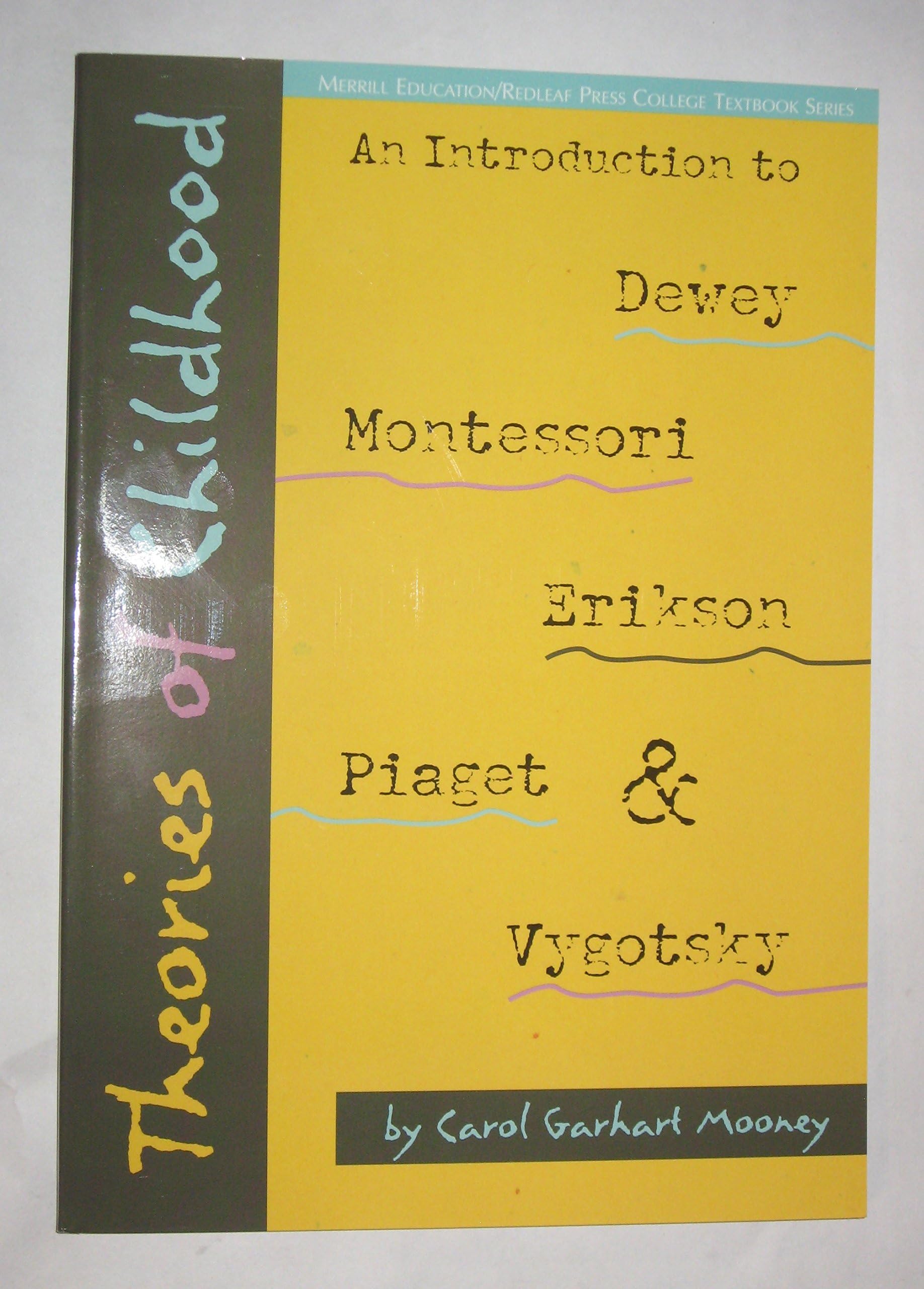
Theories of Childhood: An Introduction to Dewey, Montessori, Erikson, Piaget, and Vygotsky [Mooney, Carol Garhart] on desertcart.com. *FREE* shipping on qualifying offers. Theories of Childhood: An Introduction to Dewey, Montessori, Erikson, Piaget, and Vygotsky Review: Incredible, readable, short book. Everybody should read this! - I really liked this book, and I learned a ton from it. This book takes the theories of five different major contributors in the field--John Dewey, Maria Montessori, Erik Erikson, Jean Piaget, and Lev Vygotsky. The book is a short 94 pages of content, and it dedicates one chapter to each of the five educators. I really liked this format, because it gives a great introduction. I learned that all Montessori schools aren't connected, and that Maria Montessori was the one responsible for kids having child-sized tools, and I learned how developing object permanence is connected to kids being distraught when they leave their parents, from Erikson. I also like the examples in the book. Each bad example is balanced by at least one good example, and the author admits where she messed up in the past, which I don't think I've ever seen with an academic. Kudos to you, Carol Mooney. And, the introduction is actually readable. This is usually the sign of a great book. I usually suffer through introductions on books, but this one actually flew by. Pros: +The whole book, including the introduction, is very readable +Excellent overview of some hard-to-compress subjects +Made me think about a lot of stuff, and reconsider my beliefs on some things +Written in conversational, first person, so it's easy to learn and remember Cons: -I didn't like the quote boxes on the sides of the book. I ended up just skipping over them. But they are a good way to get an overview of the whole book in about ten minutes. Review: A must have for anyone entering the Early Childhood Education field! - Basically an overview of the different styles of the most influential educators in early childhood studies. Even if your class does not require this for reading I would recommend it. I wish I had owned this book when I first started taking Early Childhood Education classes. Trust me when I say that most, if not all teachers will test you on your knowledge of at least; Ericson, Piaget, Vygotsky, and their theories and ideas. In addition to the brief, but effective, overviews for their differing styles, this book also covers some of the history of Dewey, Montessori, Ericson, Piaget, and Vygotsky. Like the reviewer "Susan L." said, the discussion questions at the end of each chapter and suggestion for reading are some of the best things about the book. An example of the discussion questions (posted after the chapter on Maria Montessori: "Last week you had a big cleaning day at the center. The children took their chairs and toys outside and scrubbed them down with soapy water and brushes. Today a dad came in with a complaint that he does not pay tuition for his children to do your cleaning. Basing your response on Montessori ideas about real jobs and responsibility, what would you say?" Overall, an effective introduction and general overview of five selfless leaders and their ideas and understanding of how children learn and grow into their best selves. (I am a male student within one year of completing my Associates Degree for Early Childhood Education with a focus on Challenging Behaviors and Administration. I currently work at a Preschool part time.)
| Best Sellers Rank | #1,185,925 in Books ( See Top 100 in Books ) #874 in Educational Psychology (Books) #1,498 in Business Education & Reference (Books) #2,537 in Early Childhood Education |
| Customer Reviews | 4.7 4.7 out of 5 stars (191) |
| Dimensions | 7 x 0.4 x 10 inches |
| Edition | 1st |
| ISBN-10 | 188483485X |
| ISBN-13 | 978-1884834851 |
| Item Weight | 9.6 ounces |
| Language | English |
| Print length | 120 pages |
| Publication date | July 1, 2002 |
| Publisher | Redleaf Press |
J**Y
Incredible, readable, short book. Everybody should read this!
I really liked this book, and I learned a ton from it. This book takes the theories of five different major contributors in the field--John Dewey, Maria Montessori, Erik Erikson, Jean Piaget, and Lev Vygotsky. The book is a short 94 pages of content, and it dedicates one chapter to each of the five educators. I really liked this format, because it gives a great introduction. I learned that all Montessori schools aren't connected, and that Maria Montessori was the one responsible for kids having child-sized tools, and I learned how developing object permanence is connected to kids being distraught when they leave their parents, from Erikson. I also like the examples in the book. Each bad example is balanced by at least one good example, and the author admits where she messed up in the past, which I don't think I've ever seen with an academic. Kudos to you, Carol Mooney. And, the introduction is actually readable. This is usually the sign of a great book. I usually suffer through introductions on books, but this one actually flew by. Pros: +The whole book, including the introduction, is very readable +Excellent overview of some hard-to-compress subjects +Made me think about a lot of stuff, and reconsider my beliefs on some things +Written in conversational, first person, so it's easy to learn and remember Cons: -I didn't like the quote boxes on the sides of the book. I ended up just skipping over them. But they are a good way to get an overview of the whole book in about ten minutes.
8**K
A must have for anyone entering the Early Childhood Education field!
Basically an overview of the different styles of the most influential educators in early childhood studies. Even if your class does not require this for reading I would recommend it. I wish I had owned this book when I first started taking Early Childhood Education classes. Trust me when I say that most, if not all teachers will test you on your knowledge of at least; Ericson, Piaget, Vygotsky, and their theories and ideas. In addition to the brief, but effective, overviews for their differing styles, this book also covers some of the history of Dewey, Montessori, Ericson, Piaget, and Vygotsky. Like the reviewer "Susan L." said, the discussion questions at the end of each chapter and suggestion for reading are some of the best things about the book. An example of the discussion questions (posted after the chapter on Maria Montessori: "Last week you had a big cleaning day at the center. The children took their chairs and toys outside and scrubbed them down with soapy water and brushes. Today a dad came in with a complaint that he does not pay tuition for his children to do your cleaning. Basing your response on Montessori ideas about real jobs and responsibility, what would you say?" Overall, an effective introduction and general overview of five selfless leaders and their ideas and understanding of how children learn and grow into their best selves. (I am a male student within one year of completing my Associates Degree for Early Childhood Education with a focus on Challenging Behaviors and Administration. I currently work at a Preschool part time.)
E**N
A quick, easy read guide to better understand educational theorists.
This guide provides a handful of educational theorists, their big ideas, and examples of usage in the classroom. It's a great tool for those going into education.
G**Y
Simple and easy read. A friend had recommended I buy this ...
Simple and easy read. A friend had recommended I buy this book to help me review for a comprehension test in my M.A. in Education: Early Childhood program. I'm glad I bought it. That was a few years ago and I still refer back to this book for quick brush-ups and reminders. This would also be a good book for someone who is not necessarily in school and who just wants to get a quick and simple introduction on important theories and methods in the field of early childhood. The book has large print and is 95 pages long.
S**B
A great introduction to popular theories of childhood
This book was short but to the point. It is a great starting point for new parents or teachers just starting out in the child care profession. It whets the appetite for further readingon the popular theorists. The layout was simple and easy to follow. One of the best things I liked about this book was that it had discussion questions and suggestions for further reading at the end of each chapter. I have used this book as a teaching tool during seminars where I work. I could see this book as a good supplemental teaching tool in the classroom. A perfect addition to the pre-school teacher's library.
D**H
If you're looking for a concise, accessible introduction to key educational thinkers—with direct links to early childhood care—this book is a fantastic choice. Each chapter begins with an easy-to-understand overview of a major theorist (likely names such as Piaget, Vygotsky, Montessori, Erikson, or Froebel), followed by a focused explanation of how their ideas apply to real-world childcare settings. The author's writing is clear and jargon-free, making it perfect for students, new educators, or anyone refreshing their knowledge of child development theory. Small bitesize information that is easy to understand and Nate study notes from.
A**C
I love this book, I bought it about a year and a half ago (2012) when I was studying Child Care and Education Level 3 in College, and now I'm studying Early Childhood Studies at University and I still use it. I like the practical examples the author gives, it makes it easier to connect with the theory. The book also has a nice silky feel, which makes holding it while referencing more comfortable :) I will most likely buy her other theory book as I really enjoyed reading this one
S**M
This book was great when studying for my Diploma in Childcare and Education - the modules will require a book of this type and detail to get you through! Get reference point and bite-size information on all the relevant theories.
C**E
I am currently studying for my foundation degree and have found this book very useful. It is easy to read and understand, however it does not go into a great deal of depth. It is great for reading to gain a basic understanding of these theorists before researching them into more depth elsewhere.
A**N
I bought this book for use in my teaching. The theories are clear and concise. Makes it easy to compare and contrast the different theories. Our students find it a great help when writing assignments and case studies. A must for those who are studying early childhood.
Trustpilot
2 days ago
2 weeks ago