We remain fully operational. Our teams are working around the clock to ensure your deliveries continue safely.

DOWNLOAD THE APP


Customer Services
Copyright © 2025 Desertcart Holdings Limited
DOWNLOAD THE APP
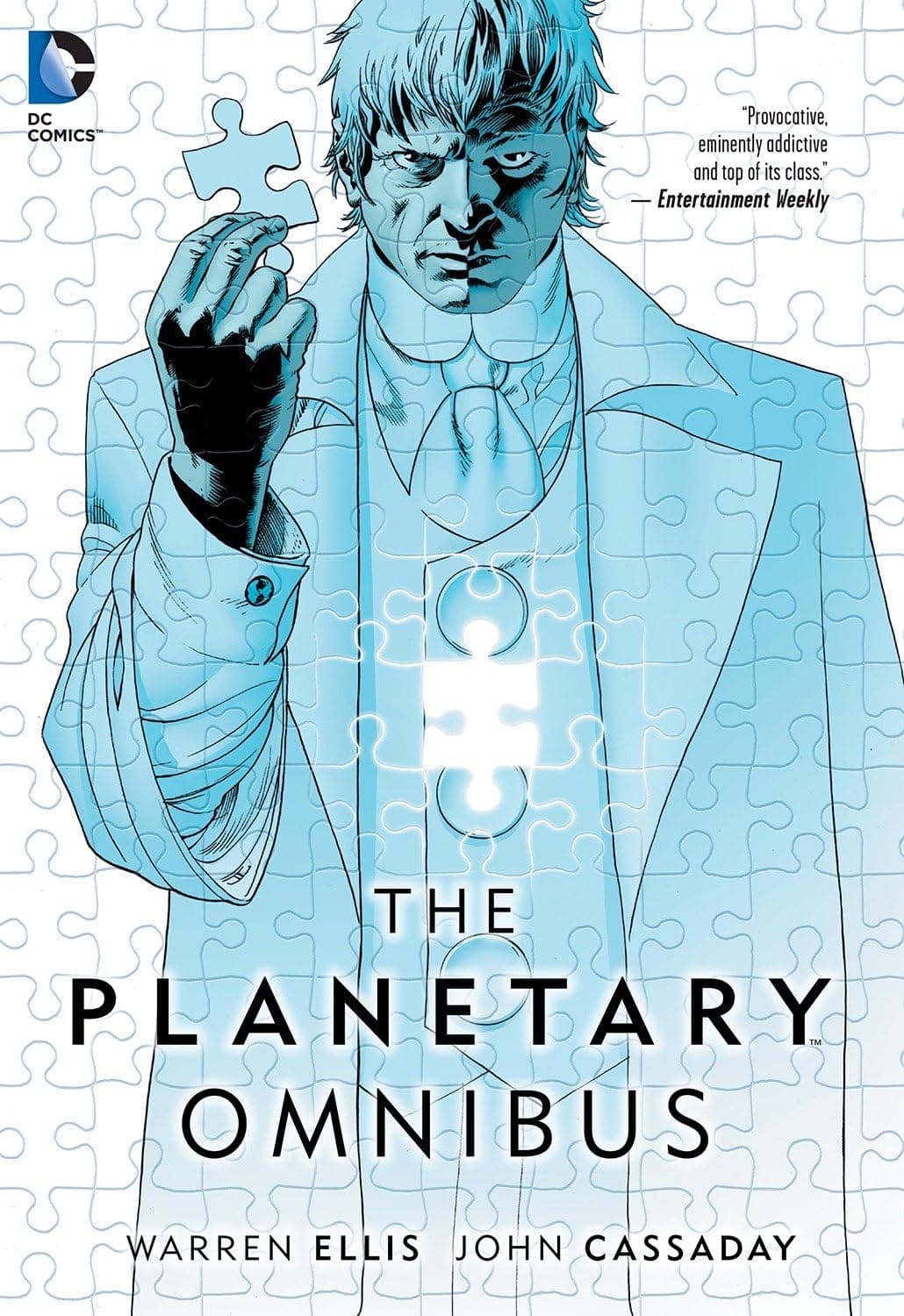

desertcart.com: The Planetary Omnibus: 9781401242381: Ellis, Warren, Cassaday, John: Books Review: The Planetary: Omnibus - "The Planetary" is a comic series written by Warren Ellis about an intelligence organization that protects the universe. The Planetary team features John Snow, who is a cunning and driven man with some extraordinary temperature modification powers, Jakita Wagner, who has the powers of super speed and super strength, and Drummer, who is a protege—he is a meta human that can read any technological language and crack codes in the space of seconds. The three visit strange sights of alien activity, crimes, and legends together to gain intelligence. Their aim is to protect the Earth from upcoming threats, but the plot gets personal when something happens to Ambrose Chase (the fourth member of the team), which uncovers a whole new purpose and a group of villains called The Four. THE STORY: The Planetary is a difficult comic to break down without revealing spoilers. What I can say is that it is a mosaic collection, meaning each chapter feels like it is a separate entity but the further you read the more you realize how much they are connected. Each chapter adds more character development, mystery, and comical grandeur until all its pieces start clicking together like clockwork. Three quarters of the way through you see it take off to the page-turning resolution, and then you sit back, realizing how much went over your head. Comics are not pieces of art that should be consumed quickly, or at least that was how they started. That is all the more true with this series not just because of the overarching storyline but because of the love and care put into each page of each issue. Warren Ellis’ attention to timelines and plot made each piece connect to the overall arch, but he and his team made each issue into stunning pieces of wisdom, adventure, thrill and mind-bending, spell-binding pieces of pulp art. You get more out of the decades this comic pays homage to if you read the dialogue alongside noting scenery, character expression, plot twists, and by paying attention to the outlandish science presented in a couple chapters. You may ask what Dracula is doing appearing in a chapter, but you should also understand that the issue he is in is a love-letter to the gothic genre, complete with dark scenery and winding shadows. You may ask how Sherlock Holmes is important to the story, but you should first stop for a moment to appreciate the genre he comes from and the reason he was chosen to appear in that issue. A final thing I would like to address is this: stop reading at the end. Do not read further the second you feel the story ended. The moment Snow and his team achieve something phenomenal, that is the end. While the issues afterwards feature Batman, Superman, and Wonder Woman dealing with the consequences The Planetary’s intelligence cause after they were revealed to the world, they are outside of the overall arch Warren Ellis constructed. You can read them, but be warned that they are very different from the content before it. THE ARTWORK: Comics begin as scripts; dialogue, description, and action on a page. It is up to the artist to translate that script into pages of panels that are full of drama, tension, mystery, or whatever aspect each comic scene was written as. Therefore, artwork can make or break a comic’s appeal. The Planetary had the astounding talent of John Cassaday attached to the entire project, which blessed the series with an immaculate soul in every speck of detail. Each panel has a purpose to Mr. Cassaday. For scenes that are meant to be beautiful or tragic, as in the page attached below, the colors are deep and vivid. In the third panel to the left of the photo, there is more focus placed on Snow reaching and the woman’s crumbling clothes. The time investment poured into that is what helps us imagine Snow continually reaching, possibly even imagining him holding the jacket tightly. The next panel shows Snow covered in shadows. Following the previous panel, the artwork in this panel captures subtle character development. Snow does not have to say that he feels sorry for what happened to the woman, nor what upset him. We know that her death is the weight on his chest, which helps us understand exactly how human Snow is when we are shown his true birth and purpose in the forthcoming chapters. Drummer and Jakita are shown in less detail, and then as shadows. That is a manifestation of how desensitized these two characters are, which will be brought up again. Another example of Mr. Cassaday’s work bringing a whole new dimension to the comic is also attached. He chooses to change drawing and coloring style in the fourth and fifth panel as the scene between the team gives way to Snow’s flashback. The oily-like coloring functions just like fade to black does for films. There is also the backgrounds. The page prior to this one is drawn and colored with the simplicity and tension of interrogation rooms in film and television. Tension from the page practically drips into you fingers as the two pages unfold. Another aspect is the colors being split behind the characters. On the page before the one pictured is a panel featuring Snow and Jakita. They have a large distance between them, and there is a triangle of blue behind Snow and a triangle of black behind Jakita, both shapes equal in size. In them Mr. Cassaday gave us as readers a symbol of the tension between them. This page’s fourth panel, however, shows Snow’s blue decreasing, which in context (considering the scene change and Snow’s confession) is a symbol of the two confiding and trusting each other again. I have not come close to conveying the breadth of Mr. Cassaday’s work. All throughout this omnibus he draws a massive, adorned ship that travels the multiverse, then finds a way to express the micro universe and elements, then crafts a computer-like afterlife machine that keeps souls in storage. No matter the subjects and story he draws for each chapter, they all seem so believable, but more importantly human. CONCLUSION: With the insurgence of comic book adaptations hitting big and little screens, most of us inevitably pick up a comic book to see where our favorite characters started. All of them deserve to be enjoyed considering all the love poured into them. However, if you want a comic that can make you think, that is more than just a story of adventure and superpowers, look no further than "The Planetary". It is a comic that has set the bar impossibly high concerning plot and artwork. It is an undiscovered treasure for too many so I hope that one day it will get the adaptation it needs to give it the spotlight it deserves. Review: Optimistic, beautiful and epic. - Let me tell you about the world of Planetary. All the fiction, all the fantastic stories you have read and enjoyed in your lifetime. Tarzan, Superman, the Fantastic Four, Sherlock Holmes, Japanese monster movies and pulp heroes. In the world of Planetary, these things happened. Their not things that people have read about, or imagined, or can even conceive. But they're out there, waiting to be discovered. This is where Elijah Snow, Jakita Wagner and The Drummer, super-powered archaeologists of the impossible step in, and where Warren Ellis and John Cassaday craft the most optimistic, beautiful and inventive homage to the popular fiction of the Twentieth Century. Sure there's a story running through the book, about the conflict between the Planetary team and a mysterious group (analogous to the Fantastic Four from Marvel Comics) hoping to use these undiscovered secrets for themselves. But at its core, each issue of Planetary (save for some of the later, climactic issues) works as a self-contained homage and exploration of fiction. This is also how you should approach reading the book. I was used to reading long, serialised stories and was caught off-guard when the team investigated an island of monsters in one issue and tracked down a ghost cop in Hong Kong in the next. It's a book where the story unfurls slowly, and characters and events that only become significant later in the story. Still, the payoff is great and the optimism and fondness for the stories it investigates is obvious. And the art! This is a book that is, simply, exceptional to behold. This is very much a "wide-screen" comic, full of splash pages and detailed and epic images that you want to hang on your walls. Some may prefer a more tightly-formatted and crafted style, but with the scope of the story, epic and dazzling images fir perfectly. Wait 'till issues 19-20. Sometimes I just have to go back and marvel at the sights all over again. In terms of extras the book is comprehensive. Alongside the 27 issues (and 1 prologue) the three lengthy one-offs featuring The Authority, The Justice League and Batman are all included (though only the Batman issue is drawn by Cassady.) There is a foreword by Alan Moore and an afterward by Joss Whedon, as well as character sketches and the script to the first issue. High quality all around. Overall this Omnibus is the best way to experience the story. It's worth it.
| Best Sellers Rank | #59,112 in Books ( See Top 100 in Books ) #198 in Science Fiction Graphic Novels (Books) #201 in DC Comics & Graphic Novels #749 in Superhero Comics & Graphic Novels |
| Customer Reviews | 4.8 4.8 out of 5 stars (1,020) |
| Dimensions | 7.52 x 1.81 x 11.54 inches |
| Edition | Illustrated |
| ISBN-10 | 1401242383 |
| ISBN-13 | 978-1401242381 |
| Item Weight | 4.84 pounds |
| Language | English |
| Print length | 864 pages |
| Publication date | January 28, 2014 |
| Publisher | DC Comics |
A**E
The Planetary: Omnibus
"The Planetary" is a comic series written by Warren Ellis about an intelligence organization that protects the universe. The Planetary team features John Snow, who is a cunning and driven man with some extraordinary temperature modification powers, Jakita Wagner, who has the powers of super speed and super strength, and Drummer, who is a protege—he is a meta human that can read any technological language and crack codes in the space of seconds. The three visit strange sights of alien activity, crimes, and legends together to gain intelligence. Their aim is to protect the Earth from upcoming threats, but the plot gets personal when something happens to Ambrose Chase (the fourth member of the team), which uncovers a whole new purpose and a group of villains called The Four. THE STORY: The Planetary is a difficult comic to break down without revealing spoilers. What I can say is that it is a mosaic collection, meaning each chapter feels like it is a separate entity but the further you read the more you realize how much they are connected. Each chapter adds more character development, mystery, and comical grandeur until all its pieces start clicking together like clockwork. Three quarters of the way through you see it take off to the page-turning resolution, and then you sit back, realizing how much went over your head. Comics are not pieces of art that should be consumed quickly, or at least that was how they started. That is all the more true with this series not just because of the overarching storyline but because of the love and care put into each page of each issue. Warren Ellis’ attention to timelines and plot made each piece connect to the overall arch, but he and his team made each issue into stunning pieces of wisdom, adventure, thrill and mind-bending, spell-binding pieces of pulp art. You get more out of the decades this comic pays homage to if you read the dialogue alongside noting scenery, character expression, plot twists, and by paying attention to the outlandish science presented in a couple chapters. You may ask what Dracula is doing appearing in a chapter, but you should also understand that the issue he is in is a love-letter to the gothic genre, complete with dark scenery and winding shadows. You may ask how Sherlock Holmes is important to the story, but you should first stop for a moment to appreciate the genre he comes from and the reason he was chosen to appear in that issue. A final thing I would like to address is this: stop reading at the end. Do not read further the second you feel the story ended. The moment Snow and his team achieve something phenomenal, that is the end. While the issues afterwards feature Batman, Superman, and Wonder Woman dealing with the consequences The Planetary’s intelligence cause after they were revealed to the world, they are outside of the overall arch Warren Ellis constructed. You can read them, but be warned that they are very different from the content before it. THE ARTWORK: Comics begin as scripts; dialogue, description, and action on a page. It is up to the artist to translate that script into pages of panels that are full of drama, tension, mystery, or whatever aspect each comic scene was written as. Therefore, artwork can make or break a comic’s appeal. The Planetary had the astounding talent of John Cassaday attached to the entire project, which blessed the series with an immaculate soul in every speck of detail. Each panel has a purpose to Mr. Cassaday. For scenes that are meant to be beautiful or tragic, as in the page attached below, the colors are deep and vivid. In the third panel to the left of the photo, there is more focus placed on Snow reaching and the woman’s crumbling clothes. The time investment poured into that is what helps us imagine Snow continually reaching, possibly even imagining him holding the jacket tightly. The next panel shows Snow covered in shadows. Following the previous panel, the artwork in this panel captures subtle character development. Snow does not have to say that he feels sorry for what happened to the woman, nor what upset him. We know that her death is the weight on his chest, which helps us understand exactly how human Snow is when we are shown his true birth and purpose in the forthcoming chapters. Drummer and Jakita are shown in less detail, and then as shadows. That is a manifestation of how desensitized these two characters are, which will be brought up again. Another example of Mr. Cassaday’s work bringing a whole new dimension to the comic is also attached. He chooses to change drawing and coloring style in the fourth and fifth panel as the scene between the team gives way to Snow’s flashback. The oily-like coloring functions just like fade to black does for films. There is also the backgrounds. The page prior to this one is drawn and colored with the simplicity and tension of interrogation rooms in film and television. Tension from the page practically drips into you fingers as the two pages unfold. Another aspect is the colors being split behind the characters. On the page before the one pictured is a panel featuring Snow and Jakita. They have a large distance between them, and there is a triangle of blue behind Snow and a triangle of black behind Jakita, both shapes equal in size. In them Mr. Cassaday gave us as readers a symbol of the tension between them. This page’s fourth panel, however, shows Snow’s blue decreasing, which in context (considering the scene change and Snow’s confession) is a symbol of the two confiding and trusting each other again. I have not come close to conveying the breadth of Mr. Cassaday’s work. All throughout this omnibus he draws a massive, adorned ship that travels the multiverse, then finds a way to express the micro universe and elements, then crafts a computer-like afterlife machine that keeps souls in storage. No matter the subjects and story he draws for each chapter, they all seem so believable, but more importantly human. CONCLUSION: With the insurgence of comic book adaptations hitting big and little screens, most of us inevitably pick up a comic book to see where our favorite characters started. All of them deserve to be enjoyed considering all the love poured into them. However, if you want a comic that can make you think, that is more than just a story of adventure and superpowers, look no further than "The Planetary". It is a comic that has set the bar impossibly high concerning plot and artwork. It is an undiscovered treasure for too many so I hope that one day it will get the adaptation it needs to give it the spotlight it deserves.
C**T
Optimistic, beautiful and epic.
Let me tell you about the world of Planetary. All the fiction, all the fantastic stories you have read and enjoyed in your lifetime. Tarzan, Superman, the Fantastic Four, Sherlock Holmes, Japanese monster movies and pulp heroes. In the world of Planetary, these things happened. Their not things that people have read about, or imagined, or can even conceive. But they're out there, waiting to be discovered. This is where Elijah Snow, Jakita Wagner and The Drummer, super-powered archaeologists of the impossible step in, and where Warren Ellis and John Cassaday craft the most optimistic, beautiful and inventive homage to the popular fiction of the Twentieth Century. Sure there's a story running through the book, about the conflict between the Planetary team and a mysterious group (analogous to the Fantastic Four from Marvel Comics) hoping to use these undiscovered secrets for themselves. But at its core, each issue of Planetary (save for some of the later, climactic issues) works as a self-contained homage and exploration of fiction. This is also how you should approach reading the book. I was used to reading long, serialised stories and was caught off-guard when the team investigated an island of monsters in one issue and tracked down a ghost cop in Hong Kong in the next. It's a book where the story unfurls slowly, and characters and events that only become significant later in the story. Still, the payoff is great and the optimism and fondness for the stories it investigates is obvious. And the art! This is a book that is, simply, exceptional to behold. This is very much a "wide-screen" comic, full of splash pages and detailed and epic images that you want to hang on your walls. Some may prefer a more tightly-formatted and crafted style, but with the scope of the story, epic and dazzling images fir perfectly. Wait 'till issues 19-20. Sometimes I just have to go back and marvel at the sights all over again. In terms of extras the book is comprehensive. Alongside the 27 issues (and 1 prologue) the three lengthy one-offs featuring The Authority, The Justice League and Batman are all included (though only the Batman issue is drawn by Cassady.) There is a foreword by Alan Moore and an afterward by Joss Whedon, as well as character sketches and the script to the first issue. High quality all around. Overall this Omnibus is the best way to experience the story. It's worth it.
A**Z
De esas historias que te alegra saber que las leíste antes de morir. Todos conocemos el estilo de Ellis, así que no hablemos de la locura narrativa, hablemos de lo bonito que es el final: Durante todos los números de te presentan misterios que, de momento, parecen aislados, hasta que dejan de serlo y entiendes por qué pasó todo. La interacción de los personajes me encanta, los diálogos son fluidos y naturales (sin caer en los errores de muchos escritores). Lo que más me gusta es que, al igual que Morrison, Warren es de los pocos escritores que comprenden que el 9no arte no son libros, TV o películas, por lo que lo que te entrega es un cómic 100% puro, algo que agradecerás mucho. Contenido extra: Además de los Crossover con Authority, Justice League (Elseworld) y Batman (una historia demasiado bonita) trae el guión del #1.
D**N
Awesome book. was planning on reading one chapter a night with my daughter. ususally turnes into 3-5. super compelling. Visually stunning.
M**1
سمعت عنه كثير يمدحوه ان شاء الله يكون قد التوقعات
R**S
Edição incrível, com excelente encadernação e acabamento, todas as histórias, mais os crossovers com "Authority", "Liga da Justiça" e "Batman" que foram publicados. A arte do Cassaday é sensacional; sabe ser detalhista quando é necessário, e sabe ser preciso e pontual, com quadros limpos e claros, sem verborragia visual. Warren Ellis, pra mim, é dos melhores escritores de quadrinhos da atualidade; consegue desenvolver histórias incríveis sem ser pedante ou superficial. Em "Planetary" há bastante ação, com visuais deslumbrantes, mas há muito cuidado com a qualidade dos diálogos também, com as relações entre os personagens muito bem desenvolvidas (o histórico dos personagens é revelado de forma inteligente e paulatina, demonstrando uma preocupação da série com a necessidade de se manter o mistério que envolve a todos). Pra quem não conhece, o grupo "Planetary" se apresenta como uma organização mundial, encabeçada por Elijah Snow e complementada por Jakita Wagner e Drums, que investiga fenômenos estranhos registrados em todo o globo e alguns segredos que certos grupos tentam esconder do conhecimento público. A série se fundamenta na constante referência e revisitação da ficção do século XX de uma forma geral, especialmente da ficção científica, histórias policiais/agentes secretos, de mistério e, claro, das histórias de heróis de quadrinhos, e consegue não ser clichê. Fãs de HQs e cultura pop vão gostar.
T**R
Planetary Omnibus kitabını alma sebeplerimden ilki tek bir kitapta tüm hikayenin toplanmış olmasıdır. 'Omnibus' formatı bildiğiniz üzere birçok farklı fasikül ve kitabın birleştirilmesi ile oluşturulmaktadır. Ancak birden fazla omnibusa sahip hikayelere toplamak ekonomik olarak çok pahalıya geldiği için, tek bir kitapta tüm hikayenin bitiyor oluşu bu hikayeyi tercih etmem de büyük rol oynadı. İlgi çekici bilimkurgu türünde bir hikayeye sahip olan bir eser ancak konusu hakkında henüz hikayeyi tamamlamadığım için yorum yapmayacağım.
Trustpilot
1 month ago
5 days ago