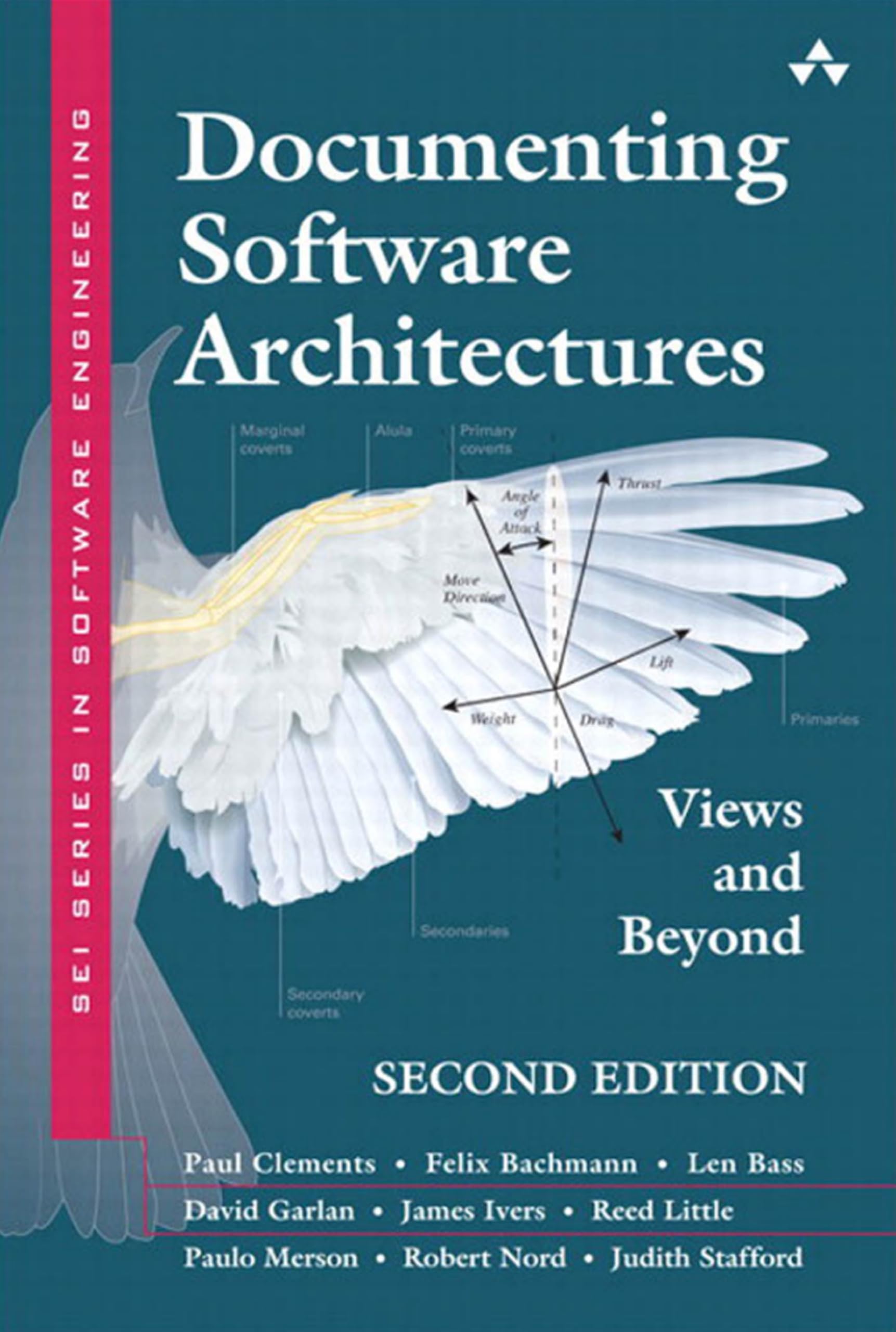
Documenting Software Architectures: Views and Beyond (SEI Series in Software Engineering)
Product ID: 8116103
Buy anything from 5,000+ international stores. One checkout price. No surprise fees. Join 2M+ shoppers on Desertcart.
Desertcart purchases this item on your behalf and handles shipping, customs, and support to Italy.
“This new edition is brighter, shinier, more complete, more pragmatic, more focused than the previous one, and I wouldn't have thought it possible to improve on the original. As the field of software architecture has grown over these past decades, there is much more to be said, much more that we know, and much more that we can reflect upon of what's worked and what hasn't―and the authors here do all that, and more.” ―From the Foreword by Grady Booch, IBM Fellow Software architecture―the conceptual glue that holds every phase of a project together for its many stakeholders―is widely recognized as a critical element in modern software development. Practitioners have increasingly discovered that close attention to a software system's architecture pays valuable dividends. Without an architecture that is appropriate for the problem being solved, a project will stumble along or, most likely, fail. Even with a superb architecture, if that architecture is not well understood or well communicated the project is unlikely to succeed. Documenting Software Architectures, Second Edition, provides the most complete and current guidance, independent of language or notation, on how to capture an architecture in a commonly understandable form. Drawing on their extensive experience, the authors first help you decide what information to document, and then, with guidelines and examples (in various notations, including UML), show you how to express an architecture so that others can successfully build, use, and maintain a system from it. The book features rules for sound documentation, the goals and strategies of documentation, architectural views and styles, documentation for software interfaces and software behavior, and templates for capturing and organizing information to generate a coherent package. New and improved in this second edition: Coverage of architectural styles such as service-oriented architectures, multi-tier architectures, and data models Guidance for documentation in an Agile development environment Deeper treatment of documentation of rationale, reflecting best industrial practices Improved templates, reflecting years of use and feedback, and more documentation layout options A new, comprehensive example (available online), featuring documentation of a Web-based service-oriented system Reference guides for three important architecture documentation languages: UML, AADL, and SySML Review: Continues to impress - This is one of those books about which it is difficult to say enough good things. I found the first edition very influential on my on thinking to say nothing of enlightening. Impressively, the authors have improved this second edition, for example moving the comprehensive sample documentation online, thus making room for more of the lucid and rational explanation of documentation practices that made the first edition so useful. I usually include a discussion of who would benefit from a reading in my reviews. Anybody who thinks they might be producers or consumers of software architecture documentation owes it to themselves to get a copy of this book now. Others might think they have no need for this book, but still should read it. This includes Business Analysts, who, this book makes clear, are stakeholders of software architectures. BAs will also their thinking sharpened on how to develop useful documentation and use graphical notation in a precise and meaningful fashion. This book is on my short list of classics of software engineering. It is a book I return to often. Reading this second edition, even after being fully familiar with the first, was still a richly satisfying experience. I cannot recommend this book enough. Review: Exceptionally Well-Written - This is an exceptionally well-written book, and I'm glad to have it in my library. It gives thorough and detailed advice, with plenty of sidebars and cross references. The book has a URL to a website that presents an architectural description that embodies many of the recommendations from the book. There were some areas where the book fell short of what I was looking for guidance on: (1) the intersection of the requirements document and the architecture document; (2) the intersection the architecture document and the detailed design specification; (3) where & how interaction scenarios are documented (the book does mention use cases and includes them in a view in the example architecture document). Still, the book covers so much so well. If you have an interest in creating software architecture documents, I highly recommend this book.
| Best Sellers Rank | #283,535 in Books ( See Top 100 in Books ) #30 in Technical Writing Reference (Books) #45 in Software Design & Engineering #249 in Software Development (Books) |
| Customer Reviews | 4.5 out of 5 stars 111 Reviews |
B**E
Continues to impress
This is one of those books about which it is difficult to say enough good things. I found the first edition very influential on my on thinking to say nothing of enlightening. Impressively, the authors have improved this second edition, for example moving the comprehensive sample documentation online, thus making room for more of the lucid and rational explanation of documentation practices that made the first edition so useful. I usually include a discussion of who would benefit from a reading in my reviews. Anybody who thinks they might be producers or consumers of software architecture documentation owes it to themselves to get a copy of this book now. Others might think they have no need for this book, but still should read it. This includes Business Analysts, who, this book makes clear, are stakeholders of software architectures. BAs will also their thinking sharpened on how to develop useful documentation and use graphical notation in a precise and meaningful fashion. This book is on my short list of classics of software engineering. It is a book I return to often. Reading this second edition, even after being fully familiar with the first, was still a richly satisfying experience. I cannot recommend this book enough.
J**Y
Exceptionally Well-Written
This is an exceptionally well-written book, and I'm glad to have it in my library. It gives thorough and detailed advice, with plenty of sidebars and cross references. The book has a URL to a website that presents an architectural description that embodies many of the recommendations from the book. There were some areas where the book fell short of what I was looking for guidance on: (1) the intersection of the requirements document and the architecture document; (2) the intersection the architecture document and the detailed design specification; (3) where & how interaction scenarios are documented (the book does mention use cases and includes them in a view in the example architecture document). Still, the book covers so much so well. If you have an interest in creating software architecture documents, I highly recommend this book.
P**R
Providing Structure for the Messy World of Architecture
Some of us have been practicing software modeling since the early days of Rational Rose (about 20 years ago!) And still we find this business of describing a system's architecture to be vexing. Just give us some rules! Ah, but it's not so simple. Our job as architects and designers is not to just fill out a template. It's to wrap our brains around requirements, ponder solutions, innovate, and sort it all out for ourselves and others. This book feels like modeling 5.0 or something like that. It's an evolutionary next step in the art and craft of communicating software architectures. Paul Clements and team have done a good job of proposing a framework for exploring and communicating designs. It's kind of easy to remember (three views). Yet they recognize that this problem doesn't have a formulaic solution. I might complain that the book doesn't actually work through a complete example--rather, it is rich with tiny examples of each view and style. The comprehensive example is online. Based on personal experience, I might add that this approach needs the support of modern presentation techniques. Audiences--even highly technical ones--may not warm up to a purely views-based presentation. All in all, I highly recommend this book to all software practitioners.
K**A
Very good book for those software architects interested in conveying there designs
This is a second edition and has added extra material along with discussing some of the impacts of how overall software development process has changed since the first edition.
A**E
but wasn't great.
Did get some ideas, but wasn't great.
A**R
Great
Great
P**R
Should be required reading for all software architects.
Not too much to say beyond: this should be required reading for all architects.
G**Y
Awesome job
This should be a must-read for any Computer Science student. Generations of IT folks are struggling with poorly documented applications because the art of documentation is so under-appreciated. This books tries to give hints and tools to address this problems. Highly recommended.
W**M
Excelente libro!
Hace parte de la serie de SEI, y complementa mucho el libro Software Architecture in Practice. Facil de entender y comprender, sin lenguaje complejo. Muy recomendado
P**T
Great Read
This book covers a lot of ground and the Author has a very sympathetic way of delivering the content. I felt like I was reading novel and not a technical book. Another aspect that's pretty cool is the fact that the book gives a lot of background detail on the history of certain terms or practices. This book will give you a nice baggage of information and I believe it's a must for any SE.
R**T
Good content but faulty production
Pages in my copy are printed out of sequence from start to finish, e.g. page xxxiv opposite page 5, 498 opposite 493, and so on. The content is excellent but the book is unusable in this state.
V**N
Five Stars
GOOD
E**O
Excelnete Libro
Estoy muy contento y satisfecho con el servicio que se me ofreció. El producto llego en tiempo y forma tal y como me lo prometieron. Estoy muy contento y satisfecho.
Trustpilot
2 weeks ago
4 days ago