We remain fully operational. Our teams are working around the clock to ensure your deliveries continue safely.

DOWNLOAD THE APP


Customer Services
Copyright © 2025 Desertcart Holdings Limited
DOWNLOAD THE APP
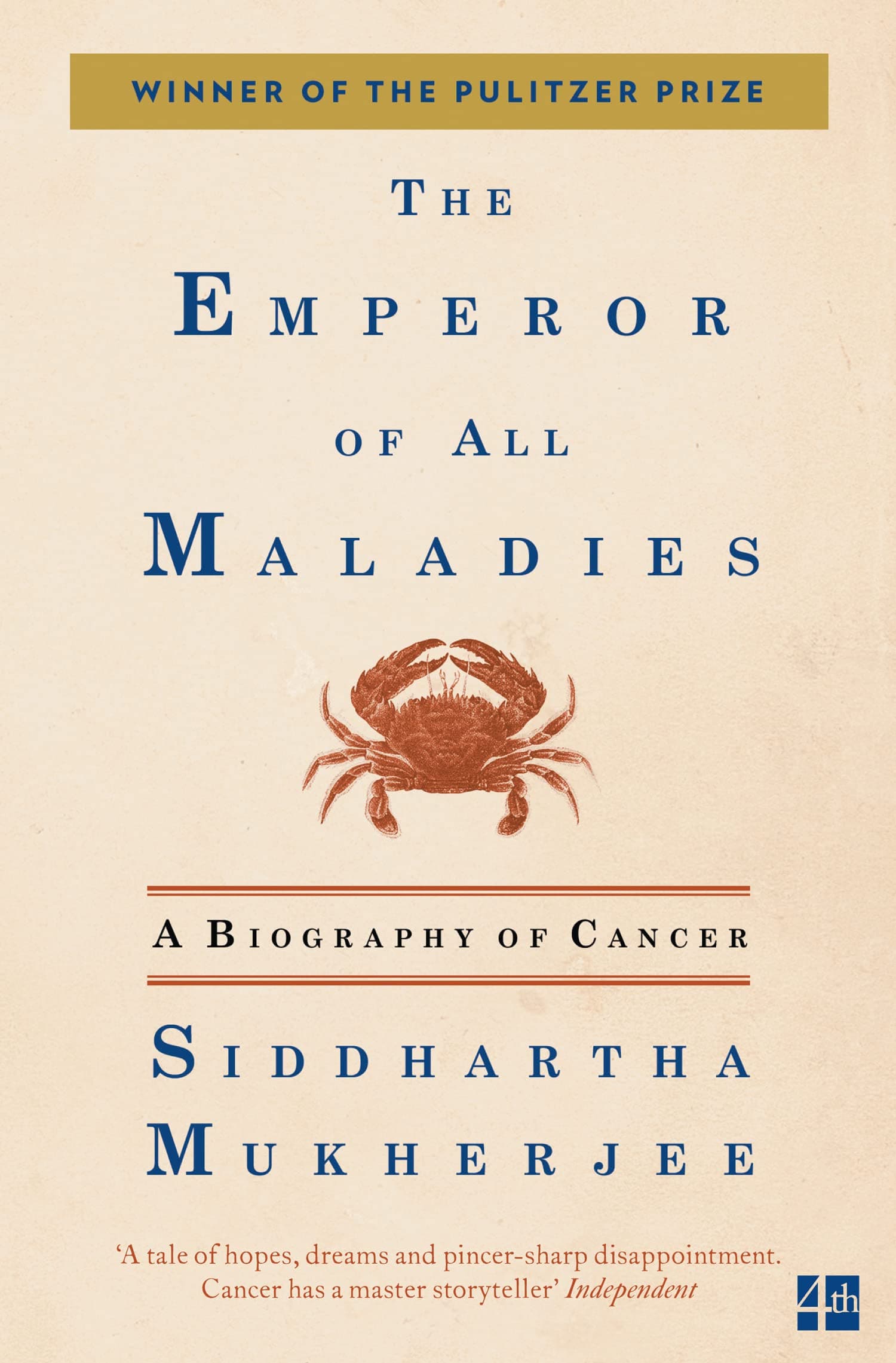
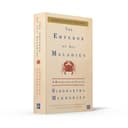


desertcart.co.jp: The Emperor of All Maladies : Mukherjee, Siddhartha: Foreign Language Books Review: 恥ずかしながら最近まで著者のことも著書の ことも知りませんでした。ポッドキャストで, Reid HoffmanとManas AIなる創薬ベンチャー を昨年創設したこと、2010に出版したベスト セラーの第二版が最近出たことを知りました。 この15年間の劇的な変化、進展が見られない 部分、まだ結論付けられない物が、楽観的でも 悲観的でもない客観的な視点で描かれています。 最後のところに12項目にまとめられているた め理解の助けになります。 追加された100ページ強を読んだだけですが、 Manas AI設立の背景を垣間見ることができた ように思います。 なお、 ◇日本語版はおそらく本年末あたりに出ると 思いますが、時間とともにどんどん色あせ る分野なので早いとこ読んでしまいましょ う。 ◇医学用語を別にしてもハイレベルの語彙に 満ちています。効率的な語彙力増強も可能 で英語学習にもいい本だと思います。 Review: Fascinating - The work by Mr. Mukherjee is unbelievably detailed but easy to read.


| ASIN | 0007250924 |
| Best Sellers Rank | #280,320 in Books ( See Top 100 in Books ) #1 in Oncology (Books) #4 in History of Medicine (Books) #1,025 in Health, Fitness & Dieting (Books) |
| Dimensions | 5.55 x 1.54 x 8.29 inches |
| ISBN-10 | 9780007250929 |
| ISBN-13 | 978-0007250929 |
| Item Weight | 10.4 ounces |
| Language | English |
| Print length | 586 pages |
| Publication date | January 1, 2011 |
| Publisher | BOOKCOUN |
銀**こ
恥ずかしながら最近まで著者のことも著書の ことも知りませんでした。ポッドキャストで, Reid HoffmanとManas AIなる創薬ベンチャー を昨年創設したこと、2010に出版したベスト セラーの第二版が最近出たことを知りました。 この15年間の劇的な変化、進展が見られない 部分、まだ結論付けられない物が、楽観的でも 悲観的でもない客観的な視点で描かれています。 最後のところに12項目にまとめられているた め理解の助けになります。 追加された100ページ強を読んだだけですが、 Manas AI設立の背景を垣間見ることができた ように思います。 なお、 ◇日本語版はおそらく本年末あたりに出ると 思いますが、時間とともにどんどん色あせ る分野なので早いとこ読んでしまいましょ う。 ◇医学用語を別にしてもハイレベルの語彙に 満ちています。効率的な語彙力増強も可能 で英語学習にもいい本だと思います。
ベ**る
Fascinating
The work by Mr. Mukherjee is unbelievably detailed but easy to read.
オ**ン
がん発生の機序の解明と治療及び撲滅活動に情熱を注いだ先人たちの軌跡を記したノンフィクションで、ニューヨークタイムズが選んだ2010年のトップ10書籍の一冊。紀元前の乳がんより今日の抗がん剤グリベックの開発までの様様な史実とその裏に隠された逸話を綴っている。著者は白血病の専門医で、生命の質への配慮を欠き行われた治療には心を曇らす患者思いの臨床家であると共に、本書の筆致からも分かる有能な作家でもある。細胞レベルの話のところには水谷哲先生の武勇伝が語られている他、花房秀三郎博士の華華しい研究成果が記述され、日本人として鼻が高い。今後の研究課題とその難しさ、それ故の予防の大切さにも言及している。医学,科学に加え社会面からの挑戦記録で内容は豊富、考察も十分で、がんについての見識を深め、本質を知るための最適な参考書となつている。ただ専門用語が多く「どなたにもおすすめ」とはいかないが、この領域に関係している方、特に将来の担い手の方にとっては打って付けの一冊だと思う。
O**A
エールリッヒが発見したサルバルサンによる梅毒の治療が化学療法の嚆矢であるとされが、癌の化学療法の始まりはいささか特異な経緯がある。1943年第2次世界大戦中のイタリアの港に停泊していたアメリカの輸送船に対して、ドイツの攻撃機が爆撃し、中に積んでいた毒ガスであるマスタードガスがまき散らされアメリカの乗組員と周囲の住人に大きな被害が出た。白血球減少に陥った人が多く、事件を調査したイェール大学の GoodmanとGilman(薬理書で有名)はこれにヒントを得て、悪性リンパ腫の患者にナイトロジェンマスタードを投与し、一時的な寛解を得た。しかしこの事実は戦後まで隠されていた。著者のSiddhartha Mukherjeeはoncologist(腫瘍専門医)で手術(主に乳癌)やX線治療の話もあるが、癌の化学療法の話が中心である。戦後、小児の急性白血病(ALL)に対して葉酸拮抗剤が使われたのを皮切りに、多剤併用療法へと発展し、白血病が治癒するまでになったが、化学療法はついには固形癌(乳癌)に対して、自家骨髄移植と大量化学療法を行うところまで突き進んでいった。しかしこの話は南アフリカの医者が都合のいいデータを捏造したところでオチがついた。これは癌手術においてハルステッドのradicalmastectomyのように、しだいに拡大、過激な方向に進んでいったことを彷彿とさせる。癌研究の予算獲得と寄付募集のキャンペーンはいかにもアメリカらしいエピソードである。発癌物質の発見は19世紀ロンドンの煙突掃除人に生じたススによる陰嚢皮膚癌が始まりであるが、なんと言ってもタバコが癌予防の最大の問題である。巨大資本であるタバコ会社との発癌性や広告にたいする法廷闘争と、マンモグラフィーによる癌検診の有効性の話は医療関係者であれば知っておくべきである。後半は発癌ウイルス、フィラデルフィア染色体、oncogene、suppressor gene などの基礎的なことから分子標的治療薬のハーセプチンやグリベックの話になるが、脳みその古くなった私には少々難しい話である。この本は同じく癌関連の The Immortal Life of Henrietta Lacks と並び2010年に読んだ医学関係の本の中で最も読み応えのあるものでした。
D**U
ある血液がんの介護者を13年もやっていて、アメリカのAcor online listに参加しています。アメリカのlistで評判になっていましたので、私自身がlung cancerで入院手術の際に読みました。ある血液がんに関連する資料は英文で随分読みこんでいるつもりですが、門外漢の悲しさで知らない言葉の羅列でした。それでもDr. Farberやchild leukemiaの治療法の研究の部分は息をのんで一気に読みました。ガンの患者さんや介護者の方で英語に不自由しない方には是非お勧めします。
す**る
日本語版は図書館で借りて読んでみましたが、時間ができたら原著も読みたいと思って購入しました。 英語はあまり得意ではないので、全部は無理ですが、気になる箇所だけ読んでみました。 意外と読みやすかった。英語に慣れたい方は原著のほうがいいかもしれません。
A**ー
Cancer patients: don't read this, drink a glass of water.
A harrowing read for anyone who has cancer, not recommend for newly diagnosed patients or their carers. Sure, it’s written and edited in a snappy way, and glues together a lot of points of information, but this is not ‘A Biography of Cancer’, it is mainly a history of the 19th and 20th Century development of understanding and treatments of cancer in the Western world, around Chicago and New York particularly, and the politics of cancer in the USA. And the overall message: 150 years of cancer treatment hasn’t much changed – slash, burn, poison – but understanding of cancer certainly has. In some ways that’s frustrating for medics (and patients!). But perhaps it also means doctors don’t have, and never did have, all the answers. However many prizes they win. This book also reveals how brutal some doctors need to be in the modern health industry. The author is aware that he is one of these doctors and shows occasional sympathy with nurses dealing, for example, with vomit. But as a cancer patient myself I thought: Yes, but how about the vomiting person? Maybe you need to be thick-skinned to be a sane medic. Yes, and maybe that’s why about ½ million American women had unnecessary butchery to their breasts not so long ago. Also I wonder about short quotes on the back of books. For example: “‘Feels like a thriller more than anything else’ Will Self.” OK, but was Will Self’s next phrase: ‘a genre unsuited for telling this story or showing human kindness.’ For example, (pages 144-145), when doctors have treated children with the ‘four-drug chemo regimen’ VAMP, having ‘wiped out all the normal cells’ (presumably not ALL cells in the body), children were ‘slumped into near coma and hooked to respirators’. Finding nothing useful to do, doctors, ‘nurtured’, tried to provide ‘comfort’, ‘caregiving and support’, all written as if these four things were extraneous to the work of a proper go-ahead prize-winning medic. Patients in ‘Emperor’ are typically children or women (‘desperate patients lurch toward last-ditch efforts to save their lives’ page 218), but doctors and researchers mainly men, described in 3-adjective combinations such as: ‘Brilliant, brash and single-minded’ (p. 353), and ‘Outspoken, pugnacious, and bold’ (p. 166). And I noticed researchers John Bailer and Elaine Smith are soon reduced to ‘Bailer’ and ‘Bailer’s analysis’ (several times) as if Ms Smith were less important (p. 229-234). I was amused to read of Joseph Lister’s work in Glasgow and ‘the neighbouring town of Carlisle’ (p. 57). OK, I understand this means nothing for readers in Toronto’s neighbouring town of New York. There’s confused British geography on page 81 and confused time on page 239, where chimney-sweep events in 1851 cause law changes in 1788. It’s fine to be slap-dash and derogatory about Britain (so much to be derogatory about!) but if there are errors in things I already knew, what is the possibility there are errors in things I didn’t know? High, I guess. The book is good on mistakes that have been made in assigning the causes of cancer: personality, viruses, and, perhaps, genes. Good on the mood of rivalry and competition among ambitious hospital physicians. Very good at showing how doctors have a strong bias against any experiment that may disprove the benefit of their untested beliefs and practices. Good at explaining drug trials and experiments. Good on the difficulties of statistics and confusion caused by different ways of measuring outcomes, for example time from diagnosis to death. Early testing may cause early diagnosis, and with no change at all in treatment, lead to longer diagnosis-to-death results without increasing lifespan or life quality. And the book is very good at explaining oncogenes and anti-oncogenes. That is, genes promoting the growth of cancer cells, and genes damaging or destroying cancer cells. They are called ‘jammed accelerators’ and ‘missing brakes’ on page 381. Excellent, vivid metaphor, particularly for people in societies where car driving is normal. Finally, I was strongly reminded of the dangers of kidney failure and took this message: before any new treatment, drink more water! Once you start pooing or spewing it may be too late. So, my advice to cancer patients hoping to heal: don’t read this book, drink a glass of water.
湯**馬
此の本は、2010年12月中旬のタイム誌のBOOKSで知りました。私は昭和5年8月生まれの産婦人科開業医。昭和30年に九大を卒業。今、4月11日読了しました。文章は読みやすい。4000年に亘る癌治療の歴史と変遷、治療薬の発達とそれに関わった先人達の激しい闘志・失意・成功などそれぞれのエピソードは感動もの。癌治療の今日までの歴史を知る上では最良と確信。お急ぎの方は、467pからの、女性心理学者Germaine Berneの闘病記を読むことを勧めます。それだけで、此の本の全貌が分かるような気がしているからです。遺伝子探索・使われた抗癌剤の種類・患者本人の外的・内的環境変化などが著者が担当医として謙虚な態度で書かれていたことにいたく感動。283pのMarshallが自らピロリ菌を飲んで胃ガンとの関連性を証明した、その勇気と熱意にビックリ。286pにあった、Lady,have you been "Paptized"?には思わずわが膝を叩いて喜んだ。絶妙のシャレノ効いたパンチに感嘆。但し456pにあげられたエストロゲンと乳ガンとの関連性は2000年の英国でのもので、黄体ハルモンも同時に使われている。それでも、エストロゲン単独使用は乳ガンを引き起こすと見るべきと著者は言っている。しかしエストロゲンの投与法・その種別については触れていない。最終の謝辞では50人はあったかと思われるレビュウ者もそのことには気づいていないのだろうか?非経口的エストロゲンでは骨粗鬆予防・代謝改善・心血管保護上極めて有効と最近強調され始めています。此を読んでエストロゲン悪が定着しないかと心配しているところです。
A**S
Ürün çok güzel ve beklediğim gibi geldi. Kitap kalitesi ve baskısı güzel. Teşekkür ederim.
A**S
I just finished reading it, and I must say it is definitely worthy of its Pulitzer. THe book features very detailed information (the amount of research needed must have been tremendous), but it is conveyed in a very fluid writing. Dr Mukherjee masterfully guides us through seminal moments in the history of cancer discovery and treatment, highlighting the human characters involved in each of those moments. It's very interesting to see characters and concepts come back again in different moments, often in ways to fill in gaps that seemed obvious in retrospect. The only significant aspect lacking in the book is the role of modern pharmaceutical companies and the government (and professional) entities that regulate them. We see a little bit of it with Genentech and Novartis, and the NCI is a major character in the book. However, the whole of the pharmaceutical industry and agencies like the FDA are not there. This is, nonetheless, a must read for anyone interested in digging deeper into the hows and whys of cancer as it is today. Since it was published in 2010, I would love to see an update (a sort of "sequel") covering the stories of the advancements of the last few years; since it's such a dynamic field.
H**K
From the very first pages, The Emperor of All Maladies captivates you with a rare blend of scientific clarity, historical sweep, and deeply human narrative. This is not just a medical history — it is a story of hope, suffering, reinvention, and the relentless struggle between life and disease. Beyond its scientific depth and historical scope, the book also shines as a work of literature. The prose is never dull — it is vivid, elegant, and often poetic. Siddhartha Mukherjee transforms what could have been a dense medical chronicle into an engrossing narrative, enriched with imagery and metaphor. His phrasing lingers long after the page is turned. When reflecting on a missed scientific opportunity, he observes: “The two halves of cancer, cause and cure, having feasted and been feted together, sped off in separate taxis into the night.” He defines cancer with striking clarity as “…where cells acquire an autonomous will to increase” and issues the ominous reminder that “Cancer is intrinsically loaded into our genes, waiting for activation.” Lines such as these reveal Mukherjee’s rare gift for making science not only understandable, but luminous and memorable. What Makes It Stand Out 1. Brilliant balance of science and story The author weaves detailed biomedical content (cell growth, oncogenes, molecular pathways) with gripping human stories of patients, doctors, and researchers. The technical details never overwhelm — they enrich the narrative, letting you see cancer not as abstraction, but as a tragic force that touches lives. 2. Immense sweep of history The book traces cancer’s battle from early observations through decades of experimentation, innovation, failures, and breakthroughs. You sense how medicine evolved — the shifting paradigms, the false leads, the incremental advances. This gives one a profound appreciation for how fragile and tentative progress often is. 3. Philosophical resonance The book frames cancer as not merely medical but existential. “Cancer is stitched into our genome… a flaw in our growth, but this flaw is deeply entrenched in ourselves.” Mukherjee makes us ask: can we ever fully eradicate cancer without also eradicating the very processes — aging, repair, regeneration — that sustain life? This questioning elevates the book from a chronicle to a meditation. A key insight: that cancer is, in some way, entangled with our very nature — embedded in processes of growth, aging, repair, mutation. 4. Moments of human resilience Between the science, there are stories of patients, physicians, and scientists — people who persevere, fail, adjust course, sometimes triumph. These human threads provide an emotional anchor. You care. You cheer. The personal dimension is not an afterthought — it is integral. 5. Impressive clarity and structure Even when describing complex processes (oncogenes, chemotherapy, genetic mutation), the author keeps explanations lucid and accessible. “Science embodies the human desire to understand nature; medicine, then, is fundamentally a technological art.” With sentences like this, the book feels like a guided journey, not a lecture. Standout Quotes: “Cancer is stitched into our genome… a flaw in our growth, but this flaw is deeply entrenched in ourselves.” “We can rid ourselves of cancer only as much as we can rid ourselves of the processes in our physiology that depend on growth — aging, regeneration, healing, reproduction.” “Science embodies the human desire to understand nature; medicine, then, is fundamentally a technological art.” “Perhaps cancer defines the inherent outer limit of our survival.” In Short: This book deserves five stars. It is rare to find a work that is at once scientifically ambitious and deeply humane, historically comprehensive and emotionally gripping. If you care about medicine, human suffering, scientific ambition, or just the fragility and resilience of life, this will stay with you long after the last page.
A**O
I was looking for some scientific information about cancer, and I stumbled upon this book. I was expecting a somewhat boring chronology of cancer research; I couldn't have been more wrong. The author makes a wonderful job in selecting stories and "storylines", and telling them in an enjoyable style (a well-deserved Pulitzer). You will travel through history and follow the fall of the humoral theory, the rise (and fall) of radical surgery, the rise (and fall) of radical chemotherapy, and the rise of the genetic theory of cancer. It turns out that following the evolution of the scientific understanding of cancer is the best way to learn about it. In addition to cancer itself, the book teaches much about science going wrong: scientific communities following dogmas and being blind to evidence against them; a premature all in battle against cancer (lacking mechanistic understandings); fabrication of data; politics and corporations hampering scientific research; the loss of connection between doctors and patients. A highly suggested read, although the book is slightly outdated now.
E**Y
Fantastic book. I read this during my undergraduate university years as a biology student studying health and disease. It was incredibly insightful, both for its historical storytelling and the slightly greater focus on the science of cancer compared to other similar books tailored for a general audience.
Trustpilot
3 days ago
3 weeks ago