
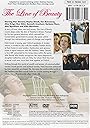
The Line of Beauty
Product ID: 71436351
Details
- ContributorVarious
- FormatColor Multiple
- GenreClassics
- LanguageEnglish
- Number Of Discs1
Desertcart purchases this item on your behalf and handles shipping, customs, and support to Italy.
Isn't it ironic that Nick Guest (Dan Stevens), the protagonist in the BBC's miniseries, A Line of Beauty , is a Henry James scholar at university before being inducted into the fast-paced, sexy world of upper class British society? Director Saul Dibb has transformed this politically scandalous story, based on the Alan Hollinghurst novel, into a juicy, three-part series set in 1986/87 that pits decadence against the heartbreak and crash that often follows it. A Line of Beauty follows Guest, an aspiring politician, who happily accepts an invitation to live and work for a friend's family headed by famous Conservative, Gerald Fedden (Tim McInnerny), under the condition that Guest watch their mentally unstable daughter, Cat (Hayley Atwell). Upon discovering that Nick's gay, Cat and Nick become best friends. Plots complicate to keep Nick's sexuality under wraps, as the viewer glimpses fancy debauched parties, major drug use (the show is named after a line of cocaine), and explicit sexual escapades. Soundtracked by great '80s bands like Duran Duran and New Order, the show's hip coolness counterbalances Guest's ultimate tragic fall, following the onset of AIDS. A story that at once assesses the British political corruption, sexual discrimination, and '80s fashion, A Line of Beauty offers soap opera-like entertainment along with conceptual substance. --Trinie Dalton Line of Beauty (DVD) Adapted by award-winning writer Andrew Davies from Alan Hollinghurst's Booker Prize-winning novel, this three-part saga is set during the Thatcherite 1980s. A story of love, class, sex and money, The Line of Beauty crawls deep under the skin of Thatcher's Britain, seen through the eyes and experiences of a young, gay man, from the euphoria of falling in love to the tragedy of AIDS. Framed by the two general elections which returned Margaret Thatcher and the Conservative government to power, the series unfurls through four extraordinary years of change and tragedy. Review: A Life Perpetual Wandering - June 24, 2008 (original review, with minor edit) There is much to learn from UK's treatment of homosexuality in films. The subtle detail of realism is often absent in American version of the gay cinema. The story does not insult viewer's intelligence with some self-pity fest or wrap things up in an unbelievable Hollywood ending. The undertone of the story is rather grim, much like Breakfast on Pluto . The future is viewed as bleak and hopeless. The way it unfolds is like Maurice , so it's not really for people with short attention span. Fortunately, the story is divided into three episodes, and can be viewed more or less independently. The story can sink one's heart rather deep, so be forewarned. The main character is called Nick Guest. Like his surname suggests, he could not find a place where he belonged. The way I see it, he is this paradigm figure that represents every gay man. He had fun, had made a career, while it lasted.... He thought he had love and friendship, but everything was but a grand illusion. After that, he moved on again, with uncertainty. The very last spoken line wrapped up everything.... When Nick decided to move on and move out of the house he had made it home for the last four years, he had a little chat with Elena,. He amusingly recalled he had mistaken the maid as the mistress of the house. Elena, with a smiling indifference, said something like, "You know when you first came..., I thought to myself, you were no good." To me, that is the line that hurts the most; an in-your-face denial of the familial connection. The film captures the essence of what is like to be gay very well (from a soul-searching perspective). It's not without flaw, however. I was quite baffled at how Nick could flip from sexually-inexperienced to someone who engaged public sex with a stranger. He also seemed to know how to do it (from behind) at his first try.... In any case, it's a good gay film that deserves to be called a drama (and not to be mistaken as a "drama" ;-)). Whole-heartily recommended, but please watch it when you're not already too depressed. * * * August 14, 2009 (update) It's been a year since I first watched "The Line of Beauty." The story haunted me in a heart-sinking but beautiful way. A romantic notion, I guess. I noticed the screen writer this time. What a surprise, my favorite, Mr. Andrew Davies! No wonder the treatment is so sublime and simply beautiful. For those who aren't veterans of BBC dramas, Andrew Davies is responsible for many successes of classics novel adaptions such as 1995 version of Jane Austen's Pride and Prejudice (with Colin Firth/Jennifer Ehle), and 2005 version of Charles Dickens's Bleak House (with Gillian Anderson). He seems to have a great touch to turn everything into gold (except for one, but that's only my opinion). Anyways, here is what I think after the second screening. The story remained more or less the same of how I remembered. However, I found out there are more sex scenes than I first awared. Don't know how that happened. Maybe I was so focused on the story, my mind skipped them, despite they were rather daring acts. Some people who reviewed the original novel mentioned they were offended by the number of sexual elements. The original novel, The Line of Beauty by Alan Hollinghurst, is 2004's Booker Prize winner, by the way. If you think my original review is a little muddy, well, I am not going to change that. However, I do want to explain what I think about Nick's character, which many people neither understand nor could relate to (I don't remember who said it's okay for the reader not able to relate to his character, because that means the character is refreshing). He did not suck up the family for his own benefit. He was accused of doing so by Gerald, when his political career went kaboom. Imagine yourself in Nick's shoes. His position in society was grossly under that of the rest of the family. He had to be tactful and be diplomatic. That brings up an interesting observation. For those who have watched The Talented Mr. Ripley , you might remember Tom Ripley did a gig as a classical pianist, but Dickie liked jazz. Nick Guest also played a Mozart to Catherine, probably that's what he thought a grand family like hers would do, but Catherine thought it was like a funeral or something so she played some punk rock on the radio. Subconsciously, people do that sort of things. But some reviewers of the novel or DVD did get frustrated and called it sucking up to the high society. If that's the case, then they are just as bad as Gerald, and totally missed the point why it was such a tragic event for Nick. I'm going to use another example, this time with Mansfield Park . I'm not entirely sure if it's in the novel (I'm not that far into it yet, but I am reading it), but in the movie version Fanny was caught between two worlds. She was born in an under-privileged household, but brought up in a high-society. She was constantly reminded that she was below everyone else in the rich household. When she decided to retreat to her blood family, figured she would be treated as equal, but ironically everyone thought she was too grand a lady. That's Nick. He is a guy, obviously, but I mean it doesn't matter where he goes, he is not received properly. So... to my fellow Americans, yes, you DO understand class system. I had strangers decided to talk to me in big words when they were obviously not comfortable using it. Perhaps I should be flattered that they thought of me as a grand lady (though I am neither). The effect of education, I suppose. ;-D (yes, that's from Rozema's version of Mansfield Park featuring Frances O'Connor) (*ponders a bit then laughs at his own remark*) In the last of the three-part mini-series, you can tell Nick was genuinely absorbed into the way of this strangely dysfunctional family, which had a value very different from his own. People do get comfortable in a place, especially when one treats it like their home already. What did he get at the end? These people who he spent four years, lived, laughed, endured crisis(eseseses) with, just HAD to hurt him, only because he was gay. Mr. Nick Guest, where do you beautifully belong? Review: Great Movie Which Is Based On The Book - A good story showing the difference between rich and poor. The story takes several different twists which keeps it interesting. Remember it is British with the social structure which is different than in the US. You might purchase the book as it really fills in the storyline.
| Contributor | Various |
| Customer Reviews | 3.9 out of 5 stars 180 Reviews |
| Format | Closed-captioned, Color, Multiple Formats, NTSC |
| Genre | Classics |
| Language | English |
| Number Of Discs | 1 |
-**-
A Life Perpetual Wandering
June 24, 2008 (original review, with minor edit) There is much to learn from UK's treatment of homosexuality in films. The subtle detail of realism is often absent in American version of the gay cinema. The story does not insult viewer's intelligence with some self-pity fest or wrap things up in an unbelievable Hollywood ending. The undertone of the story is rather grim, much like Breakfast on Pluto . The future is viewed as bleak and hopeless. The way it unfolds is like Maurice , so it's not really for people with short attention span. Fortunately, the story is divided into three episodes, and can be viewed more or less independently. The story can sink one's heart rather deep, so be forewarned. The main character is called Nick Guest. Like his surname suggests, he could not find a place where he belonged. The way I see it, he is this paradigm figure that represents every gay man. He had fun, had made a career, while it lasted.... He thought he had love and friendship, but everything was but a grand illusion. After that, he moved on again, with uncertainty. The very last spoken line wrapped up everything.... When Nick decided to move on and move out of the house he had made it home for the last four years, he had a little chat with Elena,. He amusingly recalled he had mistaken the maid as the mistress of the house. Elena, with a smiling indifference, said something like, "You know when you first came..., I thought to myself, you were no good." To me, that is the line that hurts the most; an in-your-face denial of the familial connection. The film captures the essence of what is like to be gay very well (from a soul-searching perspective). It's not without flaw, however. I was quite baffled at how Nick could flip from sexually-inexperienced to someone who engaged public sex with a stranger. He also seemed to know how to do it (from behind) at his first try.... In any case, it's a good gay film that deserves to be called a drama (and not to be mistaken as a "drama" ;-)). Whole-heartily recommended, but please watch it when you're not already too depressed. * * * August 14, 2009 (update) It's been a year since I first watched "The Line of Beauty." The story haunted me in a heart-sinking but beautiful way. A romantic notion, I guess. I noticed the screen writer this time. What a surprise, my favorite, Mr. Andrew Davies! No wonder the treatment is so sublime and simply beautiful. For those who aren't veterans of BBC dramas, Andrew Davies is responsible for many successes of classics novel adaptions such as 1995 version of Jane Austen's Pride and Prejudice (with Colin Firth/Jennifer Ehle), and 2005 version of Charles Dickens's Bleak House (with Gillian Anderson). He seems to have a great touch to turn everything into gold (except for one, but that's only my opinion). Anyways, here is what I think after the second screening. The story remained more or less the same of how I remembered. However, I found out there are more sex scenes than I first awared. Don't know how that happened. Maybe I was so focused on the story, my mind skipped them, despite they were rather daring acts. Some people who reviewed the original novel mentioned they were offended by the number of sexual elements. The original novel, The Line of Beauty by Alan Hollinghurst, is 2004's Booker Prize winner, by the way. If you think my original review is a little muddy, well, I am not going to change that. However, I do want to explain what I think about Nick's character, which many people neither understand nor could relate to (I don't remember who said it's okay for the reader not able to relate to his character, because that means the character is refreshing). He did not suck up the family for his own benefit. He was accused of doing so by Gerald, when his political career went kaboom. Imagine yourself in Nick's shoes. His position in society was grossly under that of the rest of the family. He had to be tactful and be diplomatic. That brings up an interesting observation. For those who have watched The Talented Mr. Ripley , you might remember Tom Ripley did a gig as a classical pianist, but Dickie liked jazz. Nick Guest also played a Mozart to Catherine, probably that's what he thought a grand family like hers would do, but Catherine thought it was like a funeral or something so she played some punk rock on the radio. Subconsciously, people do that sort of things. But some reviewers of the novel or DVD did get frustrated and called it sucking up to the high society. If that's the case, then they are just as bad as Gerald, and totally missed the point why it was such a tragic event for Nick. I'm going to use another example, this time with Mansfield Park . I'm not entirely sure if it's in the novel (I'm not that far into it yet, but I am reading it), but in the movie version Fanny was caught between two worlds. She was born in an under-privileged household, but brought up in a high-society. She was constantly reminded that she was below everyone else in the rich household. When she decided to retreat to her blood family, figured she would be treated as equal, but ironically everyone thought she was too grand a lady. That's Nick. He is a guy, obviously, but I mean it doesn't matter where he goes, he is not received properly. So... to my fellow Americans, yes, you DO understand class system. I had strangers decided to talk to me in big words when they were obviously not comfortable using it. Perhaps I should be flattered that they thought of me as a grand lady (though I am neither). The effect of education, I suppose. ;-D (yes, that's from Rozema's version of Mansfield Park featuring Frances O'Connor) (*ponders a bit then laughs at his own remark*) In the last of the three-part mini-series, you can tell Nick was genuinely absorbed into the way of this strangely dysfunctional family, which had a value very different from his own. People do get comfortable in a place, especially when one treats it like their home already. What did he get at the end? These people who he spent four years, lived, laughed, endured crisis(eseseses) with, just HAD to hurt him, only because he was gay. Mr. Nick Guest, where do you beautifully belong?
M**R
Great Movie Which Is Based On The Book
A good story showing the difference between rich and poor. The story takes several different twists which keeps it interesting. Remember it is British with the social structure which is different than in the US. You might purchase the book as it really fills in the storyline.
C**S
The price of priviledge
This three-part, three-hour drama, based on Alan Hollinghurst's novel of the same name, has much going for it. Taking place in 3 episodes in 1983, 1986, and 1987; many themes are explored with sensitivity and insight. However, I would like to focus this review on just one aspect of the film, which is the price of privilege. Middle-class Nick Guest (played well by handsome Dan Stevens) is attracted to his best friend Toby Fedden (played by Oliver Coleman). When they graduate from Oxford, Nick comes to visit Toby in the Fedden's beautiful grand home in West London. Soon his gracious personality and wit and handsome appearance win over the entire family, especially daughter Catherine Fedden, a self-mutilator. Gerald the father (played to perfection by Tim McInnerny) and Rachael the mother (played by Alice Krige) run off the France leaving Nick to care for the house and for Catherine (nicknamed Cat). Dissonance immediately begins since the Feddens seem much to smart, sensitive, and informed to run off to France and leave a mentally ill daughter with a virtual stranger. Catherine and Nick soon however become best of friends since Catherine is fascinated with the fact that he is gay and she seeks non-sexual intimacy with him. She also specializes in penetrating hypocrisy, almost as if hypocrisy was unbearable to her. This is a trait that makes her a social and political liability for her parents. This is also the trait that drives the multiple tragedies of this story. What kind of fellow is Nick? He lives in fabulous surroundings in a home where the father is a conservative member of parliament yet, as his name implies, he is a guest in this rare world of privilege and he done not yet know its price or the price others pay. Nick is a student of Henry James and wishes to go to graduate school to study James. However in the meantime he begins to explore his sexuality and soon begins an affair with a handsome Jamaican man, Leo, played by Dan Gilet. This allows for more exploration of conservative hostility toward persons of color which is contrasted with Nick's erotic attraction to warm sweet Leo. But as the story progresses, Nick goes through the maturing steps of a broken heart and then eventually becomes lovers with a multimillionaire Lebanese, Wani Ouradi, who supports Nick in a world of multiple partner sexual adventures, cocaine drug orgies, and the development of an indulgent arts magazine that appeals to the ultra-sophisticated rich. Wani is played by Alex Wyndham who maintains the erotic mysterious decadent stereotype of the gay exotic. All of this splendor begins to crumble with the rising political success of Gerald Fedden, which requires him to associate with wealthy bigots and prejudicial hate-monger ideologues that direct the policies of the conservative party. It is daughter Cat who pulls the world down around the other characters by exposing all the hypocrisy and hidden scandal that supports the privileged life that she and her family enjoy. However her desire to reveal all hypocrisy also bleeds into the life of Nick and his lover Wani, who is dying of AIDS. Wani does stretch toward honesty and authenticity as he begins to die, offering to leave Nick the building in which they manage their arts magazine. Having sex with men while implying to the world that you are straight may protect privilege but it makes a man vulnerable. Thus when we see Gerald fall from his political perch due to financial and sexual scandals, we also see Wani fall as he deteriorates physically from the effects of HIV. Nick looks at the first edition of their magazine Ogee and the impression is that the wealthy, privilege, glamour, and luxury is at best an illusion, and more likely a diversion from authenticity. Nick becomes the scapegoat for the scandals that plague the Fedden home, even though his gayness was surely one of the least scandals the Fedden's faced. Yet the viewer is left with the impression that the scapegoat role allows him to make an emotional break from the Feddens and maybe one day this young man's painful experiences will afford him authenticity. The film is oddly optimistic in the end since Nick may be in both pain and grief and must start his life over, but the viewer is never in doubt that the painful lessons will be integrated into this bright sensitive young man so that the final product is stronger and more self directed. Well made, beautifully acted, clearly formatted and edited, the film is very good and is highly recommended.
G**E
How to make Thatcher interesting
This movie was a gentle- though cynical tale of life in Thatcher's England. A young gay man ends up living with his friend's family, who are upper class and politically conservative. Most of the episodes are spent ambling through some interesting observations of the double life the main character leads- on the one hand being the people pleasing toady of the family and on the other a gay man exploring sex, drugs and the AIDS phenomenon of the 80's. The best scene is where our hero asks Madam Thatcher [referred to as The Lady] to dance at a party and she accepts. From there on it is all down hill. The ending is really sad and gloomy, but if that doesn't bother you, it is worth a look.
M**E
Bad DVD - Not Recognized by an DVD player, NTSC or PAL
This DVD would not play on any of the 4 DVD players I have. I ve 3 NTSC (North American Region) and one PAL, European Region). I double checked to make sure it was a North America Region DVD. It was. Put it in my computer and it read the files and opened up the player. There were 3 chapters each about 50 minutes long. First one played fine, Second had lots of pixelization and audio drops. Third one was completely unreadable. I just threw it out. The storyline from the 1st chapter was slow and dull anyways.
E**D
Dan Stevens, Now International Star of Downton Abbey
Twenty-three year old Dan Stevens was excellent in The Line of Beauty. He was almost in every frame of the film, and he gave a sensitive performance. His was not an easy role to play, a gay man in a still homophobic world. Above all he was believable. The film is faithful to Alan Hollinghurst's beautifully written novel. I most high recommend both. As to Stevens, he is now known all over the world for his performance in Downton Abbey. I hope he will always be proud of his role in The Line of Beauty, for it is truly one of hte best films addressing gay life during the times of Margaret Thatcher when AIDS was mostly ignored by both American (under Reagan) and British politicians.
D**R
Does work in most DVD players
The DVD doesn't work in most DVD players.
D**S
One of the best movies I have watched in recent years
One of the best movies I have watched in recent years. The storyline was consistent with the time when AIDS was making headlines in the 80's. Dan Stevens did a superb job in portraying himself in the character of Nick Guest. As well, the rest of the cast did a great job in making this film a 5 star. I have never heard of this movie until I became I interested in Dan Stevens in his portrayal of Matthew Crawley. Such a fine actor.
Trustpilot
3 weeks ago
3 days ago