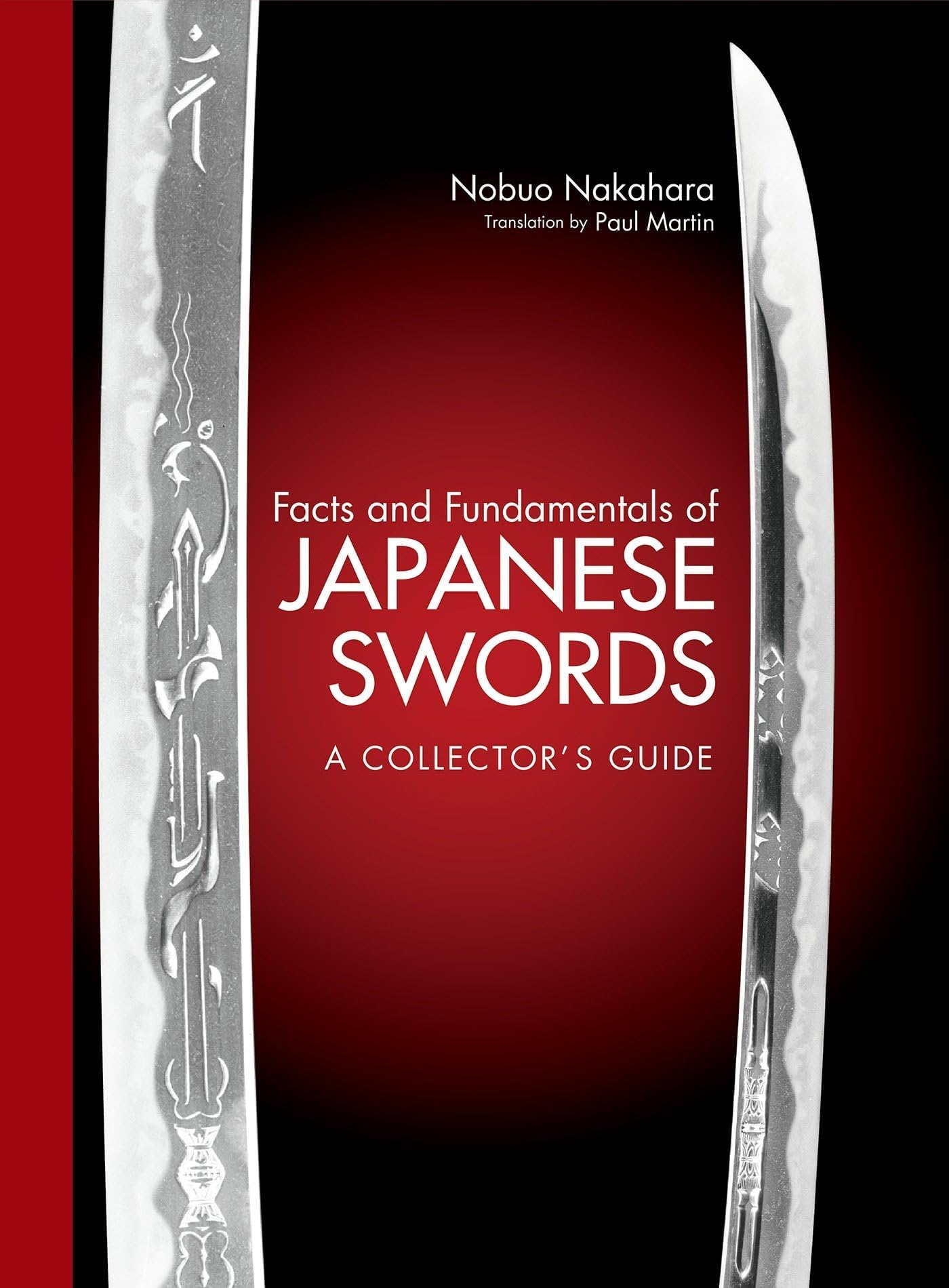
Facts and Fundamentals of Japanese Swords: A Collector's Guide
Product ID: 62127424
Buy anything from 5,000+ international stores. One checkout price. No surprise fees. Join 2M+ shoppers on Desertcart.
Desertcart purchases this item on your behalf and handles shipping, customs, and support to Italy.
Facts and Fundamentals of Japanese Swords is a practical, comprehensive volume that offers information, along with 300 photos and illustrations, enabling collectors to evaluate the veracity and quality of swords that they are considering acquiring or already have in their collections. The book is divided into three sections: An Overview of the Japanese Sword, The Forged Sword, and Consequences of Modification and Wear. Each section provides very specific, useful lessons by the author that serve as virtual hands-on experiences. With easily understandable examples, the author precisely instructs readers on how to discern and obtain a "healthy" blade, while avoiding fakes or potentially problematic blades. In addition, he shows not only the difference in styles and shapes of blades, but explains what the differences mean and how to interpret them from a buyer's/collector's point of view. Paul Martin, a Japanese sword researcher and curator, is a former member of the Department of Japanese Antiquities at the British Museum, London. He has translated the text, and drawn on his extensive experience and expertise in the field to adapt the author's theories and discussions, making them more accessible to Western readers. Review: words of wisdom for kantei - As I've noted in other reviews, the appreciation of nihonto (Japanese swords) for those who don't speak or read Japanese is a bit of a challenge owing to a relative dearth of widely available books on the finer points of studying these antique weapons and works of art. We are fortunate to now have several different introductory books in print (by the likes of John Yumoto, Leon Kapp/Yoshindo Yoshihara, Kazan Sato, Clive Sinclaire, and Colin Roach), some recent museum exhibition catalogues from exhibits of nihonto in the U.S., and now this latest welcome addition, "Facts and Fundamentals of Japanese Swords: A Collector's Guide." This book is an English-language revision and translation of a Japanese-language book by Nobuo Nakahara, a researcher and expert on nihonto. Unlike most other books out there, this is not so much an introductory overview that focuses on history, culture, or over-arching basics with pretty color pictures, but more of a specialty text that focuses on some finer details of studying nihonto (i.e. the sword itself). And unlike the similarly translated encyclopediac work, "The Connoisseur's Book of Japanese Swords" by Kokan Nagayama, this is a much slimmer volume (191 pages) written in a less dense and more accessible, conversational style. The book is divided into four main sections: An Overview (covering blade types, parts, and historical development), Fundamental Elements (covering specific aspects of the sword such as hada, hamon, kissaki, nakago, horimono, etc.), Sword Appreciation (discussing etiquette and kantei-sho), and an appendix featuring many different pictures of various blades. The translator, Paul Martin (an authority on nihonto in the English-speaking world), has also included a handy vocabulary review at the beginning of each sub-chapter (with a larger glossary in the back) as well as several sections of Q&A with Nakahara-san in which preceding topics are clarified and expanded further. The organization of the book and the breadth of material make it suitable for a relative novice like myself, though the information presented is fairly specialized and geared towards those seriously interested in studying nihonto and collectors interested in some of the finer points of kantei (sword appreciation and identification). Also, as Mr. Martin points out, Nakahara-san "has some fairly strong opinions that, while intellectual and enlightening, are not always in line with the mainstream point of view." These seem to include a very narrow definition of what constitutes shobu-zukuri, the belief that some tachi were worn in the sash (blade facing upwards like an uchi-katana), the rise of the importance of the wakizashi beyond the katana in the Shinto era, the role that kesho polishes and horimono play in potentially disguishing flaws, the problems presented by mumei (unsigned) and suriage (shortened) blades, and the paramount importance of nioi-guchi in determining the quality of a blade. There are also some excellent finer points on proper handling etiquette when examining blades, like why to avoid wearing gloves that are sometimes provided at shows. This is but a small sampling of the kind of thought-provoking information presented throughout the book and is not available in any other English-language reference that I can think of. The book also has ample illustrations and black and white matte photos to supplement the text, but doesn't try to be an "eye candy" kind of volume. For those who don't have easy access to nihonto study groups and club newsletters, this is wonderful information presented in a fashion similar to oral tradition from master to student. This isn't a kind of "if you could just get one book, get this one" reference, and it's more sophisticated and technical than any available colorful introductory book, but it's an approachable primer packed with great information that really gets you thinking. As a comparison, Nagayama's "Connoisseur's Book..." is far more fact-filled and comprehensive, but also dense and difficult to digest compared to this accessible and efficient text. As Nakahara-san intended, "Facts and Fundamentals..." sets you on the path to learn "the correct way to study Japanese swords" and also "teaches people how to get the most out of swords." Highly enjoyable and recommended for anyone seriously interested in Japanese swords. Review: Great book for experienced collectors - For the experienced collector, this book presents some controversial but I believe valid points about the preservation and collecting of Japanese swords. Very well written and documented with clear, relevant photos. Also some of the best photos of swords in a book of this price that I have seen. Excellent translation also, with comments from the translator expanding on some of the material to make it more accessible to those without a full knowledge of Japanese sword terms and jargon. I found this book so useful that I have bought multiple copies and gifted them to other collectors. Probably not the best book for beginners as much of what is put out goes against canon, but once you've been around a while, it's refreshing (in my opinion anyway) to hear some alternative opinions and explanations.
| Best Sellers Rank | #267,968 in Books ( See Top 100 in Books ) #10 in Sword & Knife Collecting #21 in Military Antiques & Collectibles #209 in Antiques & Collectibles Encyclopedias |
| Customer Reviews | 4.9 out of 5 stars 90 Reviews |
J**E
words of wisdom for kantei
As I've noted in other reviews, the appreciation of nihonto (Japanese swords) for those who don't speak or read Japanese is a bit of a challenge owing to a relative dearth of widely available books on the finer points of studying these antique weapons and works of art. We are fortunate to now have several different introductory books in print (by the likes of John Yumoto, Leon Kapp/Yoshindo Yoshihara, Kazan Sato, Clive Sinclaire, and Colin Roach), some recent museum exhibition catalogues from exhibits of nihonto in the U.S., and now this latest welcome addition, "Facts and Fundamentals of Japanese Swords: A Collector's Guide." This book is an English-language revision and translation of a Japanese-language book by Nobuo Nakahara, a researcher and expert on nihonto. Unlike most other books out there, this is not so much an introductory overview that focuses on history, culture, or over-arching basics with pretty color pictures, but more of a specialty text that focuses on some finer details of studying nihonto (i.e. the sword itself). And unlike the similarly translated encyclopediac work, "The Connoisseur's Book of Japanese Swords" by Kokan Nagayama, this is a much slimmer volume (191 pages) written in a less dense and more accessible, conversational style. The book is divided into four main sections: An Overview (covering blade types, parts, and historical development), Fundamental Elements (covering specific aspects of the sword such as hada, hamon, kissaki, nakago, horimono, etc.), Sword Appreciation (discussing etiquette and kantei-sho), and an appendix featuring many different pictures of various blades. The translator, Paul Martin (an authority on nihonto in the English-speaking world), has also included a handy vocabulary review at the beginning of each sub-chapter (with a larger glossary in the back) as well as several sections of Q&A with Nakahara-san in which preceding topics are clarified and expanded further. The organization of the book and the breadth of material make it suitable for a relative novice like myself, though the information presented is fairly specialized and geared towards those seriously interested in studying nihonto and collectors interested in some of the finer points of kantei (sword appreciation and identification). Also, as Mr. Martin points out, Nakahara-san "has some fairly strong opinions that, while intellectual and enlightening, are not always in line with the mainstream point of view." These seem to include a very narrow definition of what constitutes shobu-zukuri, the belief that some tachi were worn in the sash (blade facing upwards like an uchi-katana), the rise of the importance of the wakizashi beyond the katana in the Shinto era, the role that kesho polishes and horimono play in potentially disguishing flaws, the problems presented by mumei (unsigned) and suriage (shortened) blades, and the paramount importance of nioi-guchi in determining the quality of a blade. There are also some excellent finer points on proper handling etiquette when examining blades, like why to avoid wearing gloves that are sometimes provided at shows. This is but a small sampling of the kind of thought-provoking information presented throughout the book and is not available in any other English-language reference that I can think of. The book also has ample illustrations and black and white matte photos to supplement the text, but doesn't try to be an "eye candy" kind of volume. For those who don't have easy access to nihonto study groups and club newsletters, this is wonderful information presented in a fashion similar to oral tradition from master to student. This isn't a kind of "if you could just get one book, get this one" reference, and it's more sophisticated and technical than any available colorful introductory book, but it's an approachable primer packed with great information that really gets you thinking. As a comparison, Nagayama's "Connoisseur's Book..." is far more fact-filled and comprehensive, but also dense and difficult to digest compared to this accessible and efficient text. As Nakahara-san intended, "Facts and Fundamentals..." sets you on the path to learn "the correct way to study Japanese swords" and also "teaches people how to get the most out of swords." Highly enjoyable and recommended for anyone seriously interested in Japanese swords.
D**N
Great book for experienced collectors
For the experienced collector, this book presents some controversial but I believe valid points about the preservation and collecting of Japanese swords. Very well written and documented with clear, relevant photos. Also some of the best photos of swords in a book of this price that I have seen. Excellent translation also, with comments from the translator expanding on some of the material to make it more accessible to those without a full knowledge of Japanese sword terms and jargon. I found this book so useful that I have bought multiple copies and gifted them to other collectors. Probably not the best book for beginners as much of what is put out goes against canon, but once you've been around a while, it's refreshing (in my opinion anyway) to hear some alternative opinions and explanations.
A**E
Great book. Thank you!
The book was as described. Just you have to wait for delivery 3-4 weeks. But it worth it to wait.
D**S
Helpful Reference for the New and Experienced Collector
I great reference book for the serious study of Japanese art swords. I recommend this book to all new collectors and established collectors like myself. The information is extensive all aspects of the Japanese sword and the English translation of the original Japanese text is accurate and easy to read.
J**H
Precise book.
Sent fast and good quality. A really detailled book, designed for people ready to dive deeply in the art of japanese swords. The author is himself a really good expert on the subject.
B**H
Perfect introduction to a collector or curator
This was the first book I bought when I took a job for a museum to analyze some of their artifacts and I realized that these included several Japanese swords. I also perused several other books on Japanese swords and their use. This provided an excellent introduction for these other books. Serious enthusiasts should also pick up the Connoisseur's Book of the Japanese Sword and Lethal Elegance the finest book on Japanese sword fittings. While I wasn't able to provide accurate dating based on a simple reading of this book I was able to identify the major physical features and it led me to other sources and people who were immensely helpful.
D**D
The first technical book on Japanese swords you should buy.
If you want a book on the Japanese sword and what to look for, get this book period. It is probably the best of the in English reference works. The illustrations and photos are very good and actually demonstrate what is being discussed in the text. You don't have to to have the knowledge before hand. Definitely makes understanding more specialized texts on the subject easier to understand. I wish it had been available 40 years ago when I started.
J**S
Very informative
Defiantly a great book as well. Very informative not just on the sword but the adoration and respect of the culture of warfare vs aesthetics. Kind of hard to follow at times because of the extensive historical eras but all in all a great book for anyone interested in the Japanese sword
P**R
This book deserves a place in every nihonto library.
Out of all the Japanese sword books in English this book is hands down one of the most useful and well written books on the subject. It contains a plethora of useful information that to my knowledge is not present in any other English language book. The book is profusely illustrated with excellent quality diagrams and photos. The book contains among other things, explanations of suriage (shortening), why swords are mumei (unsigned) and how to judge quality. All of the chapters are highly factual, well written and easy to understand. The book also dispels a great many of the common myths we so often hear. For a new collector this book contains invaluable information that would be a great help and guide on your first purchase. It may also stop you from making a very expensive mistake. For the experienced collector you are guaranteed to learn something new from this book and maybe change your way of thinking on several key subjects. This book deserves a place in every nihonto library!
G**I
Libro fondamentale
E' uno dei libri fondamentali per chi ama le spade giapponesi, con numerosi riferimenti, anche fotografici, su spade d'epoca. Assolutamente da non perdere se siete interessati all'argomento.
A**R
Four Stars
good read for amateur collectors
A**R
Lots of info. Not sure how this occurred. ...
Lots of info. Not sure how this occurred. But I have read conflicting books. Make you're hown mind up on this one. Lots of pics, and descriptions ;)
K**I
Facts and Fundamentals of Japanese Swords: A Collector's Guide
Facts and Fundamentals of Japanese Swords: A Collector's Guide è un ottimo libro critico, che tira fuori delle discussioni che difficilmente possiamo leggere in altri libri e manuali in materia, chiaro e semplice ed anche dall' ottimo rapporto qualità/prezzo!
Trustpilot
2 months ago
1 month ago