We remain fully operational. Our teams are working around the clock to ensure your deliveries continue safely.

DOWNLOAD THE APP


Customer Services
Copyright © 2025 Desertcart Holdings Limited
DOWNLOAD THE APP
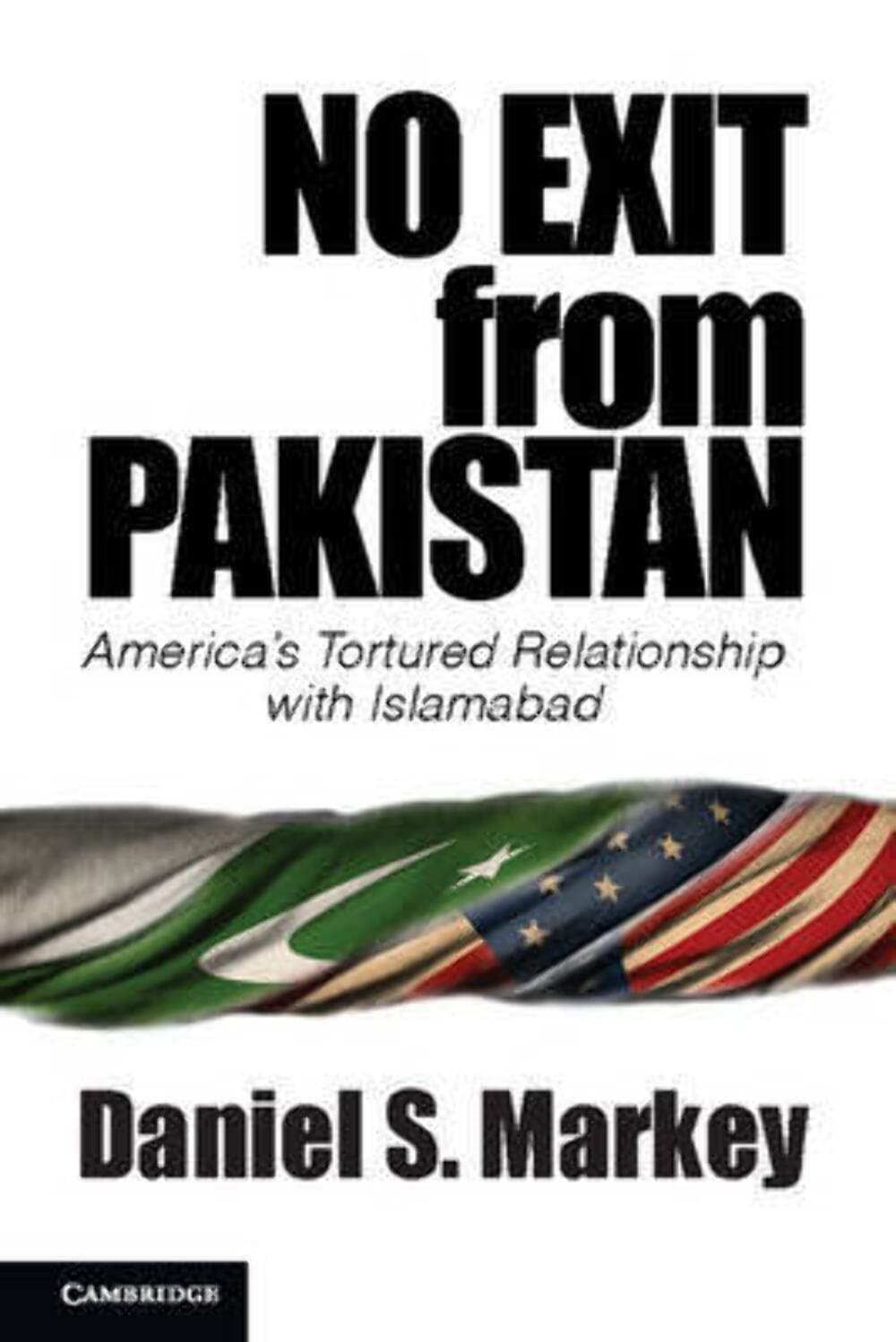
desertcart.com: No Exit from Pakistan: America's Tortured Relationship with Islamabad: 9781107623590: Markey, Daniel S.: Books Review: A great resource for the informed, accessible for all - Though this book's title suggests mere policy prescription, No Exit contributes in several ways. First, before wading into policy, the author faces head-on the question of how an American audience should view the country that is the subject of the book. Some classic works on Pakistan have described the main power centers in the country -- think Haqqani or Nasr. Others have tackled isolated questions: for instance, whether or not the government is headed for failure. But, in addition to covering those details, this book stands out in its description of the four partially-contradictory lenses through which Americans might view Pakistan. This shows implicitly how much outsiders can miss by seeing the country through a single lens. Second, No Exit provides a helpful historical overview of US-Pakistan relations, including incidents that have unfolded recently. The historical sections are well-written and feature recaps of some interesting interactions between the author and Pakistani figures, sometimes at key moments. Third, Markey outlines the main strands of anti-Americanism in the country: different groups have different primary complaints about the US relationship. Finally, the book engages in policy prescription not by presenting a silver bullet but by sketching out three main approaches that are available to the US; he explains the benefits and pitfalls of each one and explains why elements of each may need to factor into policy. Review: A recepie for policy shift - This is the first time a leading American scholar on Pakistan so vehemently dispels the myths surrounding the Pakistani army's exceptionalism. Markey, who formerly worked for the State Department, has emerged as a new ardent supporter for US cooperation with Pakistan's civilian leadership instead of the powerful army. This book challenges the dominant narrative in Washington DC that has always talked about the inevitability of the Pakistan army. This book shows that a counter-narrative is fast taking roots in DC's policy circle against the previously held position by scholars like Dr. Stephen Cohen who portrayed the army as Pakistan's ultimate savior.
| Best Sellers Rank | #2,708,326 in Books ( See Top 100 in Books ) #191 in Pakistan History #1,459 in International Diplomacy (Books) #1,470 in International Relations (Books) |
| Customer Reviews | 4.5 out of 5 stars 89 Reviews |
O**R
A great resource for the informed, accessible for all
Though this book's title suggests mere policy prescription, No Exit contributes in several ways. First, before wading into policy, the author faces head-on the question of how an American audience should view the country that is the subject of the book. Some classic works on Pakistan have described the main power centers in the country -- think Haqqani or Nasr. Others have tackled isolated questions: for instance, whether or not the government is headed for failure. But, in addition to covering those details, this book stands out in its description of the four partially-contradictory lenses through which Americans might view Pakistan. This shows implicitly how much outsiders can miss by seeing the country through a single lens. Second, No Exit provides a helpful historical overview of US-Pakistan relations, including incidents that have unfolded recently. The historical sections are well-written and feature recaps of some interesting interactions between the author and Pakistani figures, sometimes at key moments. Third, Markey outlines the main strands of anti-Americanism in the country: different groups have different primary complaints about the US relationship. Finally, the book engages in policy prescription not by presenting a silver bullet but by sketching out three main approaches that are available to the US; he explains the benefits and pitfalls of each one and explains why elements of each may need to factor into policy.
S**D
A recepie for policy shift
This is the first time a leading American scholar on Pakistan so vehemently dispels the myths surrounding the Pakistani army's exceptionalism. Markey, who formerly worked for the State Department, has emerged as a new ardent supporter for US cooperation with Pakistan's civilian leadership instead of the powerful army. This book challenges the dominant narrative in Washington DC that has always talked about the inevitability of the Pakistan army. This book shows that a counter-narrative is fast taking roots in DC's policy circle against the previously held position by scholars like Dr. Stephen Cohen who portrayed the army as Pakistan's ultimate savior.
J**J
Excellent book
This is an extremely well written and cogently argued book. It presents a thorough picture of a very complex relationship between the US and Pakistan, a relationship that brings to mind that line from "Cheers": you can't live with them but you can't live without them. Neither side can afford to let this relationship fall to pieces, but both have a whole spectrum of mutual complaints corroding the day to day interactions. The author does a great job analyzing these issues, and goes beyond them, offering a structured set of thoughts on how the relationship may advance from the US standpoint. As he writes, in the end, this is not a sprint but a marathon, and Washington should accept it. A highly recommended read on this long-term strategic challenge for US foreign policy.
S**E
Comprehensive history of relationship between America and Pakistan
The book provides a deep background of the historical relationship between America and Pakistan. The author explains how over the years, inspite of the relationship being tenuous, at best, both countries have needed each other. Author suggests what can be done by both sides to help improve this relationship and alleviate the mutual distrust that has been brewing for many years.
Q**D
Surprisingly Readable!
The positive reviews on the dust jacket are all from professionals in international relations, so I wasn't sure at first if this book would also be comprehensible to non-expert readers. But I was quite pleased to discover that this wasn't a problem at all and that "No Exit" should certainly appeal equally to both academics and laymen. When I start most books, I have to confess, I usually wonder if the author has gotten so close to his subject that he has lost his critical eye. One thing I appreciated about this book, however, is that it doesn't pull any punches when it comes to describing all the problems in our relationship with Pakistan and the circumstances (and people) behind these troubles. I was also relieved that I never got the sense that the author had any sort of ideological ax to grind... rather, it was a fair, comprehensive, and readable investigation of the history and issues at hand, their causes and possible remedies. The number of footnotes make it clear this is a well-researched book, but they're unobtrusive and never interfere with the readability or flow of the storytelling. I think anyone with an interest in this part of the world, regardless of their familiarity with Pakistan at the outset, would get a lot out of this book.
A**R
Insightful & positive towards the end
Well referenced and honestly critical of both parties. There is hope and a deeper more meaningful relationship is the way forward!!
G**E
A must read.
Well researched and written with interesting perspective on the future. Incorporates information from intervieews at highest level of government with integration of other scholarly sources.
D**G
Exit Pakistan
I have been waiting for a book like this to come out for some time. Decades. It is a policy advocate's attempted explanation of the curious state of affairs that America has with Pakistan. This is actually quite rare as most who advocate for remaining locked into this most unfortunate relationship avoid offering an explanation as to why America gives so much aid to a country that hates us. It is a relationship that has Pakistan receiving vast sums of money and other forms of aid while they support America's foe in Afghanistan, the Taliban. The relationship is, and always has been, characterized by lies and betrayal, and one could waste a lot of time pointing fingers at who the original or biggest culprit is. But for those of us who don't drink the Kool-Aid in Washington, the bigger questions are, why bother? Who cares who lied first or most? Why not simply pack up and leave? Why not stop giving "aid"? This is a book that is clearly not intended to be read by a questioning and informed reader. It makes huge leaps of logic, invents flawed and incomplete menus of options, and utterly destroys fact and history. The back cover forgoes art to list comments by the long list of government officials and think tank luminaries who appear regularly on TV as "experts" on South Asia and think this arrangement is a good idea. As one thumbs through the pages, a reader can almost smell the Raytheon, General Dynamics, Lockheed, Saudi, and Pakistani money that underwrites so many of Washington's COIN advocates and pro-Pakistan think tanks. If I didn't have a 30 year personal history with Afghanistan from fighting Soviets to being jailed as an "Islamic terrorist" by a publicity-seeking prosecutor in Washington, I might ignore this empty suit, too. The book is a centerpiece of the dangerous status quo foreign policy ideology in Washington that has America do two deeply contradictory things: fight a counterinsurgent strategy in Afghanistan and fund the main backers of the "insurgents" we fight, Pakistan. The logic that this book follows to get the reader there is as twisted as the tangled sinewy flags weakly Photoshopped for a cover illustration. The book narrative or copy is, however, neatly arranged, like a standard undergraduate lecture, to be memorized and used as talking points, but not questioned. Unsurprisingly, much of it doesn't stand up to mild logic testing or fact checking. Consider this: "Frustration and disgust with Pakistan shows little sign of abating. Perhaps now is the moment for the world's sole superpower to escape from this particular torment... Can't America simply leave Pakistan behind?" Indeed. But the author goes on: "No. However appealing it might seem for America to wash its hands of Pakistan, to move on and let Pakistanis, or someone else, pick up the mess, it would be little more than wishful thinking to believe that neglecting the challenges posed by Pakistan will make them go away..." Really? ...Or, for that matter become China's problem as they have significant investments in mineral and energy extraction as well as sizable infrastructure projects underway. China also has a sizable and restive Muslim population and, according to some sources, 20,000 troops in Pakistan. So if the aforementioned "challenges" will not go away, it's a fairly safe bet as to where they may go if America pulls out of Pakistan. This is not explored by the author even as many Pakistanis crow about it to Americans. Mr. Markey puts his underwhelming knowledge of history, tactics and strategy in Afghanistan on bold display with the following: "After the Soviet invasion of Afghanistan in 1979, Pakistan became more strategically important to the United States than ever before. Without Pakistan as a conduit for the weapons and money that flowed to the Afghan insurgents, the anti-Soviet resistance there would have been crushed." Mr. Markey has apparently never heard of airplanes or smuggling by air that had been covert doctrine with American Special Forces and even the OSS during WWII. Then CIA director Bill Casey had himself been parachuted behind Nazi lines to help the French resistance. In the 1980s America had a sizable number of aircraft and squadrons that specialized in airborne weapons delivery which became greatly enhanced by Gen. H. Anderholt in Korea and later expanded greatly in Vietnam under one Gen. Richard Secord. As the Afghan war was being supplied through Pakistani corruption overland, one Lt. Col. Oliver North was successfully supplying Contras in Nicaragua by air most effectively with the help of the same Gen. Richard Secord. It might also be pointed out that the Soviets had removed their Anti Air units from Afghanistan early in the war and lacked the capability to effectively stop a concerted air bridge into Afghanistan at the time any way. They lacked the technology. It might also be pointed out that, at that time, drugs were being smuggled routinely through US air defenses with little effective counter measures to stop them by our own very best air defenses. I might also point out that a few years later, a half mad German kid named Mathias Rust stole an airplane and flew it across thousands of miles of Soviet territory and landed the plane in Red Square. Flying weapons over Pakistan would have been relatively easy and significantly cheaper by cutting out the enormous theft from that supply through Pakistan that everyone knew was "the cost of doing business in Pakistan". To those of us who worked passionately on the Afghan struggle to throw the Soviets out of their country, the notion that a classic tinpot dictatorship with a classic basket case economy and robust kleptocracy should dictate how the United States deliver arms to the Mujaheddin was, at the time, something of a mystery. What we failed to adequately understand was the powerful influence American weapons manufacturers had on operations so as not to jeopardize arms sales to Pakistan at the time. Some things never change. Methinks we have yet another case of a talking head "expert" speaking on behalf of weapons manufacturers here. This is nothing new with American relations with Pakistan. It was that great Foghorn Leghorn impersonator, Congressman Charlie Wilson, who rammed the deal through the Congress and later became a lobbyist for General Dynamics, who insisted that air supply was off the table. Mr. Markey then leaps into a dreamy description of what he calls "mutual vulnerabilities" between the US and Pakistan. For Pakistan, its vulnerabilities are described as dependance on US financial and military aid and protection from a world economy "controlled by the US". He then goes on to state that: "Pakistan lacks sufficient strength, wealth or easily exploited resources to insulate itself from American influence." This last sentence does to logic what M.C. Escher did to perspective. It is a statement that essentially says America can't leave Pakistan because Pakistan either can't protect themselves from us, or can't live without us or can't compete in the global economy without us, so America needs to prop up a fascist military conducting a genocide and an enormous parasitic kleptocracy dedicated to robbing its own people. The statement utterly ignores the vast mineral and energy resources "discovered" in Pakistan in the last three years. (BTW, they were not "discovered" recently. They were largely known since the 1950s but only recently mapped by new satellite technology.) So, the argument goes, America needs to stay in Pakistan because of what Pakistanis can't do. We are to feel sorry for poor Pakistanis while supporting the very monsters that feed on them. So either America is there preying on them as an co-parasitic imperialist power or propping up the status quo because Pakistan is too morally, financially, or militarily bankrupt to stand up on its own, and we need to help those poor kleptocrats and fascists out. The book reads like the proverbial white man's burden on steroids. It's some burden too. When you add the cost of the Afghan war to the aid, loans, and "investments" in Pakistan, you're in the trillion dollar range of American expense. Then the author goes into American vulnerabilities. They are terrorism, nuclear weapons getting into "the wrong hands" (aka terrorists), and regional instability which will kill bazillions of regional people, none of whom, as it happens, are American, but the author is, I'm sure, deeply worried about THEM because he is a great humanitarian, no doubt. We need to worry about this, the author contends, because if America wasn't in Pakistan and Afghanistan doing the voodoo we do, all this bad stuff will happen to THEM. Wars, nukes, and revolutions in Pakistan are problems Americans need to prevent at any cost while neighboring China shows little or no concern about these things in spite of the fact that they are much closer in proximity and consequence. The book even boasts about a hospital in Karachi that gives free healthcare to 2.5 million Pakistanis as an example of what we could do or might do in Pakistan. At a time when Americans are having a vigorous debate about what we will have to pay for public healthcare in this country, the contradiction of it being free in Pakistan as a result of foreign benevolence has a certain irony that is embellished by the author's boast that American aid money had nothing to do with the project in the first place but implies that that is what we could or should be doing. This is all, of course, preposterous. The key characteristic for the pro-Pakistan sentiment of these people is that it is thickly layered hyperbole from one sentence to the next, often from subject to predicate. It is so contrived that it would take a lifetime unraveling the lies, false assumptions, missing information, etc. to parse this out and still get nowhere. But it is basically peddling fear. Life is usually too short to argue with these kinds of Washington fear peddlers. Unfortunately, these people know it, which is why they lay it on so thick. They know what they are doing. They expect Americans to shrug and get on with real lives and real problems while they work the Congress for money for weapons manufacturers and foreign governments and any other entity they can. They occasionally make some official sounding noise to make it seem like something other than rubbish but it is always thin. To them, it's a game. It's a racket. The basic idea is to keep pumping phony noise out faster than the rest of us can refute it. Pakistani "dependance" on American aid, weapons and "protection" is a misrepresentation of the highest caliber. The average poor Pakistani never sees any benefit of American aid. Money is given in his name but he never sees a dime of it. Even US government officials admit that the aid is bribe money. They know it will be stolen. Call it "aid". Call it "loans" or call it "investment". It's all money to be stolen by Pakistani elites who are well aware of what they are doing, as are their American benefactors. Pakistani political parties all have their own militias who are paid cadres, and that is where much of the money goes if it doesn't buy swank London townhouses or villas in Bahrain. It is why so many Pakistanis are flocking to Islamist militias. They know American money can't rig the Islamist game. So, in reality, American money really feeds the problem it is supposed to solve while employing a vast cadre of people who argue for more of this toxic nonsense. The weapons and training we give are meant to "defend" Pakistan. That would be from what, exactly? The vast majority of the military aid and training has to do with enforcing a genocide in Balochistan and persecution of Shia and Christian minorities who are conveniently labeled as terrorists, and American diplomats simply ignore the reality. It is possibly the worst case of willful blindness in history since the Holocaust. And that is the "big weapon" being used on Americans by American officials here, willful blindness. For decades, American diplomats refused to accept that Pakistan backs the Taliban in Afghanistan and have done so for Al Qaeda as well. Diplomats will insist that this proxy war between Pakistan and the United States (that burns through Afghans like cordwood) is an insurgency. Is it an accident that counterinsurgency is the go to tool for imperialists to dominate the developing world in the name of corporate profit? Nukes in Pakistan are a real boogeyman in the book's argument. Many of the people who use this boogeyman are government officials who were stewards of American policy since the 1980s. For all the years that Pakistan was developing its nuclear program, they said nothing. In fact, the book claims that the Pakistani nuclear program wasn't "discovered" by American officials until the 1990s. This is pure invention. It is criminal invention and again, willful blindness. If you were a professional in South Asian studies and did not know that the nuclear development program was not a number one priority in Pakistan, you are an idiot or a liar. Making pretend that this was not known until the 1990s is a stupendous lie. Yet many American officials claim they knew nothing about it. From Zulfikar Ali Bhutto's very public statement in 1965 that Pakistan was to pursue the bomb even if it meant that they had to "eat grass" to do so, to Zia ranting about it on Pakistani airwaves (and it was noticed in American government publications like the FBIS or Foreign Broadcast and Information Service in 1984), there was no lack of indications of Pakistani intentions. But here is what the book has to say: "By 1990, the US intelligence community found conclusive evidence that Pakistan had crossed the nuclear line". Really? What a discovery! Zia had been bragging to the Pakistani people about it in the mid 1980s. The real meaning of that sentence is that by the 1990s, the intelligence community could no longer pretend not to know about it. Why? Simply put, it is a racket. It's about money, lucrative post-government jobs, lobbying contracts, and an old boy (and girl) system that takes care of its own. It's about manufacturers of sophisticated weapons and Saudi and Pakistani purchasing of those weapons. Is it a mere coincidence that Ambassador Robin Raphel has taken to crisscrossing this country ostensibly to raise awareness of a claimed Pakistani need for increased "trade" with the US, while there are renewed Pakistani Army attacks on India and a stepped up campaign of genocide in Balochistan? Are a new wave of dubious Pakistanis on K Street and Massachusetts Avenue advocating more vague "investment" in Pakistan, and the Congress removing restrictions on the sale of sophisticated weapons on the international market not related? I think this book takes its place in these events and should be seen as such. Americans have been asked to go to war against Iraq for false claims which are strangely similar to claims made about Iran. There isn't a single claim made about either of these two countries, real or imagined, that are not just as true about Pakistan. From nukes to "terrorism", and all the other phantom casus belli are well known characteristics of Pakistan, and America accepts it. This book makes the argument that America is stuck in Pakistan in a bizarre "frenemy" relationship and will be for a long time to come. That means a lot of people who write a lot of this rubbish will be able to continue to have jobs spinning this stuff out for an even longer time than the fat run they have already had. With a body count of 2000 American dead and tens of thousands of Afghans, the question about this book looms; is this author criminally stupid or simply criminal? --David Dienstag, Jezail.org and Jezail.tv
Trustpilot
2 days ago
2 weeks ago