We remain fully operational. Our teams are working around the clock to ensure your deliveries continue safely.

DOWNLOAD THE APP


Customer Services
Copyright © 2025 Desertcart Holdings Limited
DOWNLOAD THE APP
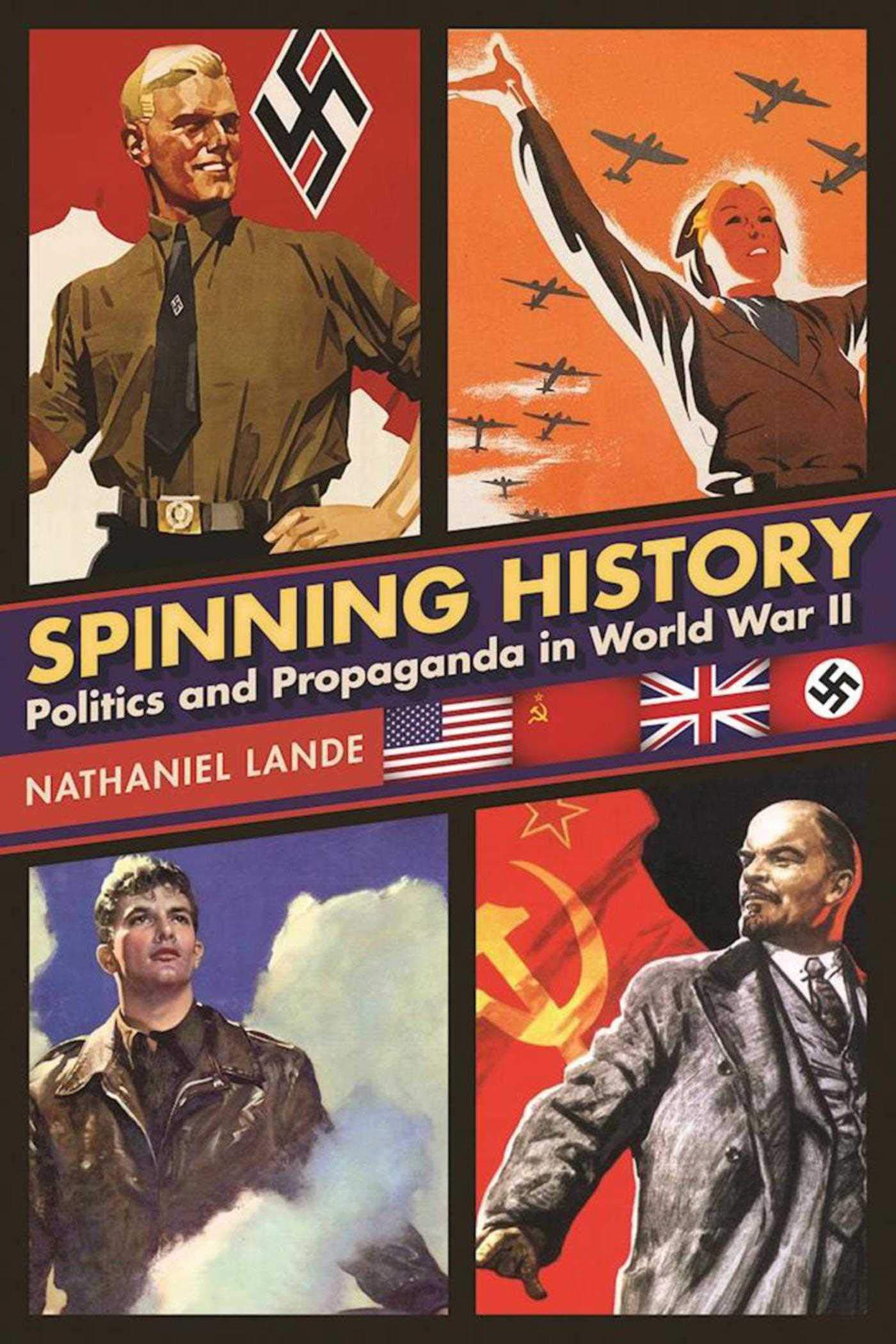
desertcart.com: Spinning History: Politics and Propaganda in World War II: 9781510715868: Lande, Nathaniel: Books Review: Wow - An Interesting take on WWII. It was compelling, well written and I highly recommend it. It kept me engaged and was well researched. Review: Excellent, fascinating book! - Nathaniel Lande is one of today's most creative, versatile, and deft authors, with an impressive publication list spanning a uniquely diverse range of fiction and non-fiction. I first became aware of his writing nearly 30 years ago, when I happened to pick up a paperback copy of his 1982 novel CRICKET and found it so absorbing and moving that I read it all in one sitting; I've admired and enjoyed all his subsequent work immensely. I just finished his most recently published book, SPINNING HISTORY: POLITICS AND PROPAGANDA IN WORLD WAR II. In my opinion, it’s one of his best. Being a great storyteller adds to his effectiveness as a non-fiction writer. His lively, direct, un-stuffy narrative style and his skill in organizing a vast amount of fascinating and well-researched information around a coherent framework of parallels between propaganda and theatre make this book a great read and an important contribution to the literature about World War II and the circumstances that led to it. It’s also extremely relevant to our own time: In addition to shedding light on a most intriguing aspect of World War II, SPINNING HISTORY serves as a crucial and compelling reminder of our responsibility to be on high alert to the power and danger of media manipulation in today's world as well. Santayana’s warning that “those who cannot remember the past are condemned to repeat it” echoed constantly in my mind while I was reading this book. Although I was born shortly after World War II to parents who had served in it overseas and gave me a strong sense of that era and their experiences, and although I've always been keenly interested in the war's events and causes, I learned a tremendous amount from SPINNING HISTORY that I wasn’t previously aware of. As a university faculty member, I look forward to sharing this engaging, valuable, and informative book with colleagues and friends both within and outside of academia. I'm also eager to recommend it to students, as I know it will enrich and enliven their understandably dimmed sense of a monumentally important time that was already many decades distant when they were born.
| ASIN | 151071586X |
| Best Sellers Rank | #905,704 in Books ( See Top 100 in Books ) #243 in Propaganda & Political Psychology #3,253 in History & Theory of Politics #5,321 in World War II History (Books) |
| Customer Reviews | 4.4 4.4 out of 5 stars (25) |
| Dimensions | 6.1 x 1.3 x 9.1 inches |
| ISBN-10 | 9781510715868 |
| ISBN-13 | 978-1510715868 |
| Item Weight | 1.1 pounds |
| Language | English |
| Print length | 312 pages |
| Publication date | March 21, 2017 |
| Publisher | Skyhorse |
K**R
Wow
An Interesting take on WWII. It was compelling, well written and I highly recommend it. It kept me engaged and was well researched.
P**I
Excellent, fascinating book!
Nathaniel Lande is one of today's most creative, versatile, and deft authors, with an impressive publication list spanning a uniquely diverse range of fiction and non-fiction. I first became aware of his writing nearly 30 years ago, when I happened to pick up a paperback copy of his 1982 novel CRICKET and found it so absorbing and moving that I read it all in one sitting; I've admired and enjoyed all his subsequent work immensely. I just finished his most recently published book, SPINNING HISTORY: POLITICS AND PROPAGANDA IN WORLD WAR II. In my opinion, it’s one of his best. Being a great storyteller adds to his effectiveness as a non-fiction writer. His lively, direct, un-stuffy narrative style and his skill in organizing a vast amount of fascinating and well-researched information around a coherent framework of parallels between propaganda and theatre make this book a great read and an important contribution to the literature about World War II and the circumstances that led to it. It’s also extremely relevant to our own time: In addition to shedding light on a most intriguing aspect of World War II, SPINNING HISTORY serves as a crucial and compelling reminder of our responsibility to be on high alert to the power and danger of media manipulation in today's world as well. Santayana’s warning that “those who cannot remember the past are condemned to repeat it” echoed constantly in my mind while I was reading this book. Although I was born shortly after World War II to parents who had served in it overseas and gave me a strong sense of that era and their experiences, and although I've always been keenly interested in the war's events and causes, I learned a tremendous amount from SPINNING HISTORY that I wasn’t previously aware of. As a university faculty member, I look forward to sharing this engaging, valuable, and informative book with colleagues and friends both within and outside of academia. I'm also eager to recommend it to students, as I know it will enrich and enliven their understandably dimmed sense of a monumentally important time that was already many decades distant when they were born.
D**E
Interesting way to look at events in WWII, but not as polished as it might be.
Interesting take on events in WWII and, especially, Hitler, Roosevelt and Stalin, in that order. However, on occasion, it seems like the author suddenly is trying to write a historical account rather than looking at the spin. That is, he just starts describing events without really relating them to the them. Not bad but makes it look a little sloppy. I also thought the book was about one chapter too long. He ran out of things to say and didn't really summarize too well. However, it is an interesting work and made me look a new way at some of the recent specials on television so it did generate thought...and that, to me, is a good thing. I would almost give it a 3.7 or so but went with the four.
J**Y
I found it quite annoying, even when the author did a magnificent job ...
There are two reasons why I didn't give this book a 5 star review. One reason was the style in which the author chose to present his story. Perhaps he thought he was being creative, drawing comparisons to war time propaganda with the production of a play. Speaking for myself, I was not impressed, even though I once did have a part in a play. As a matter of fact, I found it quite annoying, even when the author did a magnificent job telling about Leni Riefenstahl's masterpiece Triumph of the Will or the magical effect of the nighttime Nazi rallies. The other main reason I will get to in a moment. As I said, being annoyed with the writing style, as well as the repetition of facts in the first few chapters that one can find in many other history books, almost led me to not even finishing the book. But I read on, and was glad that I did. On the plus side, there was a mountain of information there that was new to me and thus assuring this book a permanent place in my extensive library. Among the things documented was the sneaky way Roosevelt and Churchill conspired to get the US into the war against the Axis powers. Hindsight proved that this had to be, but at the time a lot of people in America didn't feel that way and they had to be forced or persuaded into it. Of course some people had reasons wanting to be isolationists. Except for Warner Brothers, Hollywood courted Nazi favor in order to sell movies in Germany and Chase Bank was happy to freeze Jewish accounts. These are just two examples. And let's not forget Henry Ford who was as much pro-German as Lord Haw-haw. Even before the shooting started on December 7th, 1941 the US was in a propaganda war with Germany. That is where this book really shines. It explains how the propaganda war was fought behind the scenes and affected the populations of the belligerents in ways they never suspected. Propaganda not only puts out fake news but also suppresses or tells the truth when convenient for the cause. I like the way he explained how they tell the truth at first and lie later. The book is loaded with examples of propaganda warfare as used against the enemy as well as on the Home Front. One example is how we often read how the British kept a stiff upper lip during the height of the Blitz. There were some 60 million address changes in Britain during the war and more civilians were killed than soldiers. What you never heard about was the looters who showed up as soon as the bombs quit falling and ignored the cries for help. Another thing I found interesting was how propaganda drove the people to work as hard they did in the factories as a way of fighting back. The strange thing was how this work changed many a woman's shape. He didn't elaborate but I kept thinking of Olive Oil and Popeye. In spite of all the new material the author presented for historians and us armchair generals, I came across something that bothered me so much as to make the author loose a good deal of his credibility, and thus his work. He mentioned how the Germans used their Stukas with the wing-mounted 37mm cannon to hunt British barrage balloons like the balloon busters of World War I. Now anybody who built that Stuka model as a kid could tell you that it was used on the Eastern Front to blow up Russian tanks. Hans-Ulrich Rudel explains in his book Stuka Pilot how he shot up some 500 Russian tanks. That book use to be required reading for American A-10 pilots. I guess it just goes to show you that even though you do a lot of research, if you don't know the topic to begin with you can make a stupid mistake. In closing I think it would have been a plus to point out that these propaganda tactics are still being used today, whether by governments or businesses, which sometimes might be one and the same. This book is worth reading but don't let this be your only source of new information, unless you are doing a book report! I would like to thank Skyhorse Publishing for the free copy of this book for which I am providing an honest review.
Trustpilot
3 weeks ago
2 months ago