
Desertcart purchases this item on your behalf and handles shipping, customs, and support to Italy.
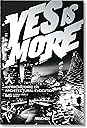
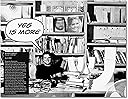
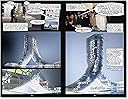
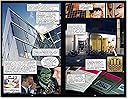
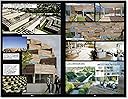
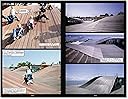
Yes is More is the easily accessible but unremittingly radical manifesto of Copenhagen-based architectural practice Bjarke Ingels Group, or BIG.Unlike a typical architectural monograph, this book uses the comic book format to express its groundbreaking agenda for contemporary architecture. It is also the first comprehensive documentation of BIG’s trailblazing practice—where method, process, instruments, and concepts are constantly questioned and redefined. Or, as the group itself says: “Historically, architecture has been dominated by two opposing extremes: an avant-garde full of crazy ideas, originating from philosophy or mysticism; and the well organized corporate consultants that build predictable and boring boxes of high standard. Architecture seems entrenched: naively utopian or petrifyingly pragmatic. We believe there is a third way between these diametric opposites: a pragmatic utopian architecture that creates socially, economically, and environmentally perfect places as a practical objective. At BIG we are devoted to investing in the overlap between radical and reality. In all our actions we try to move the focus from the little details to the BIG picture.” Bjarke Ingels attracts highly talented coworkers, but also gifted and ambitious clients from all over the world. He then creates intelligent synergies from wild energies and unforeseen dynamics, and transforms them into surprising, functional, valuable, and beautiful solutions to the specific and complex challenges in each task. BIG projects have won awards from the Royal Academy of Fine Arts, and the Special Jury Prize at the Venice Architecture Biennale, as well as many other international prizes. Yes is More is a play on words that represents the company’s ethos and sums up its irreverent attitude towards excessive formalism, and its determination to involve the population at large in its creations. As an extension of its methods and results, its debut monograph uses the most approachable and populist means of communication available—the comic. Review: Creative Problem Solving in Ingenious Ways, Clearly Explained - I love the positivity that runs through the book. It's all about problem-solving , and Ingels and company are ingenious. It's broken down into many small, digestible chapters with great graphics and clear and strong explanations. Yes is More puts across the importance and utility of gorgeous and useful buildings and spaces. I'm inspired by the book as a human being interested in creativity and I find the balance of art and engineering in architecture to be a remarkable subject. Review: "YES! YES! MORE! MORE" - When shouting in italics isn't enough for this breathless, excitable book, it boldly screams. And when that's insufficient, it underlines it as well - and in red. It quickly becomes tiring. Every idea is WHAT WE'VE BEEN WAITING FOR! No point left unexclaimed. As a character in a book, Bjarke Ingels is best when he's bigging-up himself. He does that bigtime. He's not the first architect to make great claims for his buildings and won't be the last but, just because "YES IS MORE" is a comic, we shouldn't assume it's all true. Or that it's a simple book designed to efficiently entertain and inform us. Once past the cover page, we have foreplay as foreword. A double-page spread of Ludwig Mies speech-bubbling "Less is more" is followed by Robert Venturi with "Less is a bore", Philip Johnson with "I'm a whore", a shout-out to Remment Koolhaas ("more and more, more is more"), a nod to Barack Obama ("Yes we can!") and, finally, B.I. bringing this false sequence to the false conclusion of "Yes is more". This is no simple book. In the credits, B.I. is credited with "Text". Whether this is for writing, dictating, or approving the text we don't know, but between that text and us are three translators and eleven (!) text "editors". We can be sure that every image and word has been crafted and calculated to create the impression of sincerity. Enjoyably audacious visual puns and cheesy verbal ones strike the right tone between intelligence and informality. Too clever by half, this book is a sophisticated and hard-nosed marketing tool for a successful architecture and publicity machine. It is wrong to dismiss it. Although this review is a book review and not an architectural one, with BIG, it's impossible to completely divorce the two as both buildings and book are exercises in brand-building. Nevertheless. Although some might see it as a plus, the comic book conceit leaves no place for plans or sections that make demands upon the reader by requiring curiosity and skill to interpret. Instead, relentless commentary not only tells you what to think about a model or a graphic, but how brilliant it is as well. B.I never lets you get a word in edgeways, let alone a question. The book claims to present the complexities behind the designing of buildings in a simple and accessible fashion but book format forces a chronological sequence onto it and the comic book conceit adds a tempo to that. The messy process of designing buildings become linear and compressed. Those lines are direct, wrong choices never made, alternatives rarely explored, and fruitless paths only documented if it leads to a "WE SUDDENLY REALIZED THAT..." breakthrough moment before a happy ending. Despite pitfalls that are always overcome, the sequence of one inventive step after another invariably leads to THE SOLUTION! In true comic format, the hero always wins, even if sometimes it's only a pseudo-moral victory against villainous clients unforgivably lacking in vision and money. But, for architects, disingenuous-ness is par for the course. If you believed Le Corbusier, for example, you'd think he invented concrete columns and slabs. If you believe the commentary for "Bureaucratic Beauty" on pages 128-135, you'd think BIG invented the use of daylight setbacks to maximize floor area and, in the process, sculpt the upper floors of buildings. This is presented in reverse, with the funny roofline being the raison d'etre and - quelle surprise - "THE CLIENT LIKED THE INCREASED NUMBER OF SQUARE METERS!" Fact: Entire neighborhoods in Tokyo have been shaped like this for decades, and for the same reasons. Never ever trust anything an architect says. All you really need to know about BIG's USP-cum-architectural stance is contained in a 600-word essay upfront. Titled "Yes Is More! A Theory of Evolution", it's illustrated by Charles Darwin bubbling "it is not the strongest of the species that survives but the one most adaptable to change". For architects, there is a lot of truth in that. It was the end of the line for Louis Sullivan, for example, when he failed to understand that the owners of department stores and office buildings didn't want to waste money on ornament, no matter how "organic" he said it was. Just like every contemporary starchitect, BIG have correctly concluded that the only clients these days with the money, the land and the desire to build are rich rulers and property developers. So why did BIG create an "archi-comic" for people like us, unlikely to commission them? It goes like this. "YES!" and "MORE!" are two things rich rulers and property developers love to hear. Rich rulers and property developers aren't known for their architectural judgment. All that rich rulers and property developers want architects to do is to create an image that generates some MEDIA NOISE and sprinkles the FAIRYDUST OF FAME on their pet project or country. When the time comes for them to choose an architect, all they ask is "Who's big right now?" This book targeted at you, my friends, is part of that process.
| Best Sellers Rank | #238,281 in Books ( See Top 100 in Books ) #61 in Architectural Criticism #121 in Individual Architects & Firms #240 in Architectural History |
| Customer Reviews | 4.7 out of 5 stars 589 Reviews |
N**H
Creative Problem Solving in Ingenious Ways, Clearly Explained
I love the positivity that runs through the book. It's all about problem-solving , and Ingels and company are ingenious. It's broken down into many small, digestible chapters with great graphics and clear and strong explanations. Yes is More puts across the importance and utility of gorgeous and useful buildings and spaces. I'm inspired by the book as a human being interested in creativity and I find the balance of art and engineering in architecture to be a remarkable subject.
M**E
"YES! YES! MORE! MORE"
When shouting in italics isn't enough for this breathless, excitable book, it boldly screams. And when that's insufficient, it underlines it as well - and in red. It quickly becomes tiring. Every idea is WHAT WE'VE BEEN WAITING FOR! No point left unexclaimed. As a character in a book, Bjarke Ingels is best when he's bigging-up himself. He does that bigtime. He's not the first architect to make great claims for his buildings and won't be the last but, just because "YES IS MORE" is a comic, we shouldn't assume it's all true. Or that it's a simple book designed to efficiently entertain and inform us. Once past the cover page, we have foreplay as foreword. A double-page spread of Ludwig Mies speech-bubbling "Less is more" is followed by Robert Venturi with "Less is a bore", Philip Johnson with "I'm a whore", a shout-out to Remment Koolhaas ("more and more, more is more"), a nod to Barack Obama ("Yes we can!") and, finally, B.I. bringing this false sequence to the false conclusion of "Yes is more". This is no simple book. In the credits, B.I. is credited with "Text". Whether this is for writing, dictating, or approving the text we don't know, but between that text and us are three translators and eleven (!) text "editors". We can be sure that every image and word has been crafted and calculated to create the impression of sincerity. Enjoyably audacious visual puns and cheesy verbal ones strike the right tone between intelligence and informality. Too clever by half, this book is a sophisticated and hard-nosed marketing tool for a successful architecture and publicity machine. It is wrong to dismiss it. Although this review is a book review and not an architectural one, with BIG, it's impossible to completely divorce the two as both buildings and book are exercises in brand-building. Nevertheless. Although some might see it as a plus, the comic book conceit leaves no place for plans or sections that make demands upon the reader by requiring curiosity and skill to interpret. Instead, relentless commentary not only tells you what to think about a model or a graphic, but how brilliant it is as well. B.I never lets you get a word in edgeways, let alone a question. The book claims to present the complexities behind the designing of buildings in a simple and accessible fashion but book format forces a chronological sequence onto it and the comic book conceit adds a tempo to that. The messy process of designing buildings become linear and compressed. Those lines are direct, wrong choices never made, alternatives rarely explored, and fruitless paths only documented if it leads to a "WE SUDDENLY REALIZED THAT..." breakthrough moment before a happy ending. Despite pitfalls that are always overcome, the sequence of one inventive step after another invariably leads to THE SOLUTION! In true comic format, the hero always wins, even if sometimes it's only a pseudo-moral victory against villainous clients unforgivably lacking in vision and money. But, for architects, disingenuous-ness is par for the course. If you believed Le Corbusier, for example, you'd think he invented concrete columns and slabs. If you believe the commentary for "Bureaucratic Beauty" on pages 128-135, you'd think BIG invented the use of daylight setbacks to maximize floor area and, in the process, sculpt the upper floors of buildings. This is presented in reverse, with the funny roofline being the raison d'etre and - quelle surprise - "THE CLIENT LIKED THE INCREASED NUMBER OF SQUARE METERS!" Fact: Entire neighborhoods in Tokyo have been shaped like this for decades, and for the same reasons. Never ever trust anything an architect says. All you really need to know about BIG's USP-cum-architectural stance is contained in a 600-word essay upfront. Titled "Yes Is More! A Theory of Evolution", it's illustrated by Charles Darwin bubbling "it is not the strongest of the species that survives but the one most adaptable to change". For architects, there is a lot of truth in that. It was the end of the line for Louis Sullivan, for example, when he failed to understand that the owners of department stores and office buildings didn't want to waste money on ornament, no matter how "organic" he said it was. Just like every contemporary starchitect, BIG have correctly concluded that the only clients these days with the money, the land and the desire to build are rich rulers and property developers. So why did BIG create an "archi-comic" for people like us, unlikely to commission them? It goes like this. "YES!" and "MORE!" are two things rich rulers and property developers love to hear. Rich rulers and property developers aren't known for their architectural judgment. All that rich rulers and property developers want architects to do is to create an image that generates some MEDIA NOISE and sprinkles the FAIRYDUST OF FAME on their pet project or country. When the time comes for them to choose an architect, all they ask is "Who's big right now?" This book targeted at you, my friends, is part of that process.
F**S
More than a graphic novel, more than a class in architecture
I studied a year of architecture before I changed to animation. It was too mundane for me circa 1970. This book is one of the best books I've ever seen. I learned more than most of my architecture classes, it's a feast for the eyes including tons of photos of amazing architecture and the thinking processes of how the designs evolved. This process applies to any type of design.
M**.
A must for any modern Architect
Great quality book. The texture, material, print, and pictures are high quality. The content format is comic book style, but once adjusted the insight behind some of BIG's designs are quite interesting. It is also great to see the honesty of how some design concept solution were pure accidents or happenstance. This is definitely one architecture book that should be in your personal library.
B**N
Fun and creative architecture manifesto
I recently read that Bjarke Ingels was rated as no. 64 in the list of the 100 most creative minds of the last few years. This definitely shows in this book. Apparently, Bjarke Ingels dreamed of being a comic book writer, but later in life decided to go to architecture school; hence the obvious comic book structure of the book. This "archicomic" is extremely easy to read, and if you're a visual person like me (and I assume most people interested in this book are) then a book literally FULL of drawings, models, renderings, diagrams, etc. will be very appealing to you. This book is a must-have for any fan of contemporary architecture.
I**N
A good start
The author begins this book by telling the reader that he wishes to communicate not just the main ideas and processes his office takes when developing a project, but also the little side stories that often get left out. In this regard, the book is a success. It is filled with entertaining and insightful facts that helped to shape some really interesting projects. Where the book disappoints a little is in it's use of the graphic novel format. For me, the strengths of graphic novels lie in their ability to tell stories with minimal text. Here, many of the images are photographs and detailed renderings. Some of these do a good job of telling a story. Others are either too elaborate, or require excessive text to explain them. Another problem is that there is only one character: Bjarke Ingalls. While he always has something interesting to say, it could have been interesting to have, perhaps, an antagonist. Finally, the chapters are quite brief. Each chapter tells the story of the development of a specific project, but they usually end before they really get started. I would have favored longer chapters, even if they came at the expense of a few projects. Despite a few shortcomings, I think the book will definitely be of interest to anyone who wants to learn more about this exciting office. But for architects it is a bit lacking in detail.
E**S
Every Architecture Student Should Read This Book
There are many excellent books that explain and document great buildings but not as many that explain how architects arrive at their solutions. This is one the best in that regard. The design process rarely being linear, reading this clear and engaging narrative of the thinking that took place behind the earlier works by BIG should be highly instructive and even inspiring to any student of architecture. (Not sure why the original app version with video segments is no longer available.)
M**T
Simple, easy to understand, and interesting
This book takes a completely different perspective on explaining architecture and the work that the firm, "BIG" (Bjarke Ingles Group), has designed. This of when you were a kid and reading comic books, or comic strips, and how easy they were to comprehend. Well, take that and use a more sophisticated topic, architecture, and explain it and the work that BIG has designed, and explain it in the same, simple fashion. This book contains an overdose of images that help explain the firms work along with blob comic quotations from the founder of the firm, Bjarke Ingles himself.
M**R
Sooo Clever
I avoided buying this book for some time because I thought Ingels was just trying too darn hard to be clever. An archicomic? Really?…. As it turns out, this book is clever. In fact it is absolutely brilliant. The non-linear narrative of the graphic novel is perfectly suited to explaining architectural ideas. It is as close to having a personal one on one lecture or even a ‘private chat’ with Bjarke as you will ever get. Don’t make the same mistake I did. Get this book sooner rather than later.
G**Y
Minha nova bíblia!
Além de der apaixonado por arquitetura, sou por HQs. O livro é muito mais que imaginava. Estou em êxtase! E pra completar, a entrega da Amazon chegou antes do previsto. Só alegria :)
S**U
très interessant
La présentation créative rend le livre très intéressant à lire pour connaitre cette équipe d'architectes
J**H
Increíble
Una obra maestra. Realmente logran transmitir el proceso de la arquitectura y como la imaginación puede crear proyectos inigualables.
C**N
Nice Architecture Comic
Great Book about Bjarke Ingels Group explains its failed projects as a comic. So interesting book.
Trustpilot
2 weeks ago
3 weeks ago