We remain fully operational. Our teams are working around the clock to ensure your deliveries continue safely.

DOWNLOAD THE APP


Customer Services
Copyright © 2025 Desertcart Holdings Limited
DOWNLOAD THE APP
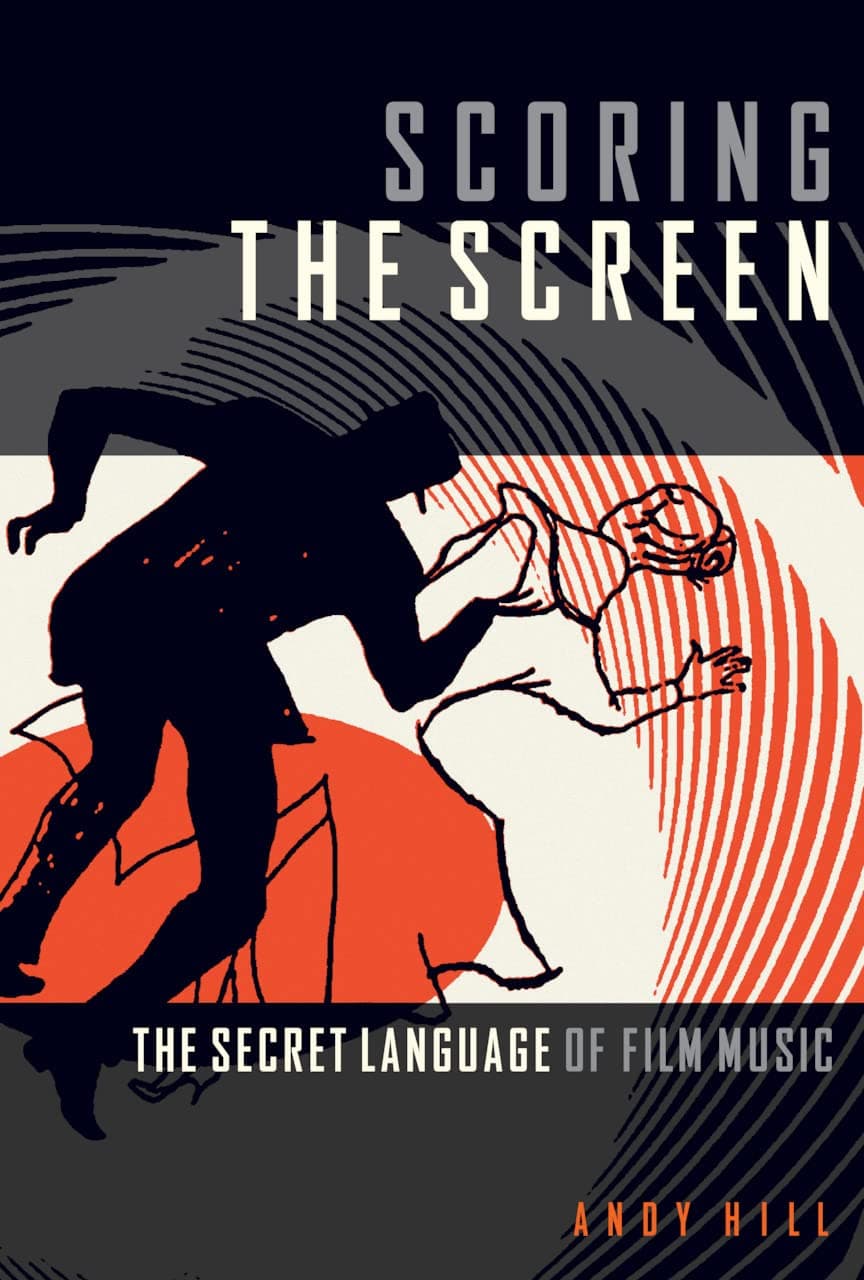
🎶 Unlock the secret soundtrack behind every unforgettable film moment!
Scoring the Screen is a comprehensive 424-page guide that demystifies the language of film music through practical examples and expert analysis. Authored by industry veteran Andy Hill, it bridges music theory with emotional storytelling, featuring detailed score breakdowns from iconic composers. This book is a must-have for aspiring film composers and serious enthusiasts eager to understand the craft shaping cinema’s most powerful moments.
| Best Sellers Rank | #1,130,286 in Books ( See Top 100 in Books ) #351 in Songwriting #443 in Music Composition (Books) #986 in Music Theory (Books) |
| Customer Reviews | 4.8 4.8 out of 5 stars (155) |
| Dimensions | 6.95 x 1 x 9.9 inches |
| ISBN-10 | 1495073734 |
| ISBN-13 | 978-1495073731 |
| Item Weight | 7.4 ounces |
| Language | English |
| Print length | 424 pages |
| Publication date | July 1, 2017 |
| Publisher | Hal Leonard |
S**N
Probably the only truly indispensable and up to date book on the art and technique of film scoring as it is today
There have been quite a few attempts in this relatively young art for people to survey the landscape that is film and television scoring, and make sense of it in writing; most of them are hugely out of date, stopping even before the advent of the DAW, or incredibly wordy (having little in the way of musical examples), and some still come from an incredibly biased perspective about what is "good" scoring or not. Then there are some books that are just incredibly superficial, either by focussing solely on the technology (which changes so fast as to be almost instantly irrelevant) or really aimed at a very basic, beginner level where someone might not even have the basics of music theory down. Either way, there has not yet been a book with an enormous amount of meat on the bone both in terms of the reality of how film scores get put together, or in terms of truly understanding the musical language of film and expressing it clearly. Scoring the Screen changes that - a meticulously researched survey of film scoring as it is today, including the roots and the development through the early years, but focussing on real world examples and a practical approach, tying ideas in music theory to actual emotional responses and the effect of the music on the audience. It is a book that realizes that ultimately film music is designed for an audience, and its power is in its effect on them. The musical score reductions get right to the point, without being dumbed-down (as has certainly been true of some books prior), and there are an incredible number of them, from highly relevant work from Elliot Goldenthal, through John Powell, Don Davis, Hans Z, Danny Elfman, showing you exactly what is going on and why it works. This is the first truly indispensable book for anybody wanting to really read about film scoring as it is today; it is written with a palpable sense of joy and love for the industry and the art, by someone who has been on point in the very, very front line of the industry, managing and overseeing numerous scores from movies you have seen recently, and loved. If you are studying film scoring, you absolutely need it, and I'd be stunned if it's not already on the required reading list of any media music course worldwide. And even if you're just an enthusiast and are interested in delving a little deeper, you really need it. Thoroughly, thoroughly recommended.
S**Y
A powerful learning gift for the aspiring film music composer!
I've found Scoring the Screen by Andy Hill to be a rich gold mine of useful insights, tips, principles of film music, and so much more. Each chapter is dedicated to analyzing one movie and some of its key cues. If you approach the way you read this book as Andy suggests, read while having a keyboard in front of you and the cue up and running on running on your monitor, you will learn a ton about what makes for an effective and emotional score. Highly recommended!
F**R
This is what the world needs
There are a decent amount of film scoring books on the market, and many that get in to analysis, as well. What excites me the most about this one is that it's not just a harmonic analysis, but an orchestration, emotional and basically, film music analysis of some of the best scores (most of which can't be found in full orchestra versions). The introduction touches on the first minute or so of "Malcolm is Dead" from The Sixth Sense, by James Newton Howard, and with full orchestral excerpts, Andy goes through everything from the bitonality, slippery intervallic motions of harmonies, melodic lines, and how this music works with the emotions, thoughts and storyline. It's an inspirational introduction to a very in depth book that I'm looking forward to delving in to. Take notes.
J**I
Even better now with the recent realese of his instruction video course
I am so stunned by how knowledgeable and experienced, but also incredibly generous the author Andy Hill is. He was a pro in Hollywood for many years, but also he is very talented in education. He has more than enough patience and theories to break down this fairly young, but extremely complicated art form. Recently, I purchased his video instruction course from Cinematic Score website run by a film composer and Berklee instructor, Marc Jovani. I could hear and see some of the examples with his explanation. Because of copyright issue of film scores, I’ve never seen this before from other film scoring books! There are very few, a handful amount of film scoring books like <On The Track> by Fred Karlin & Rayburn Wright, or <Music Composition for Film and Television> by the film composer of Mission Impossible and jazz pianist, Lalo Schifrin, but this is truly a one and only gem textbook with actual media examples both classics and recent film scores created by highly renowned Hollywood film composers. Thank you so much for your compassion and intelligence serving greatly for aspiring film composers today, Professor Andy Hill! :)
T**N
Years worth of wisdom
This book is one of the best things I've found in recent years. I'm surprised it took me so long to leave a review on this book because I'm on my second reading of it, and have loved it since cracking it open several months ago. I feel like I could study this thing for years and still be making new connections. What Andy Hill is showing is that film music is now operating as a matured language, and that movie audiences have huge vocabularies and expectations because of the wealth of film that has now amassed. Andy hits on such obvious points, and makes those points super clear through reductions of great score examples. In my opinion, if you have any interest in film music or in scoring films, this is the best thing you could possibly read if you really want to understand what's going on. I would give it 6 stars if I could.
M**A
The best book on Film Music's analysis.
S**P
This book is very well-written and a wealth of information. It arrived in perfect condition exactly when I expected it.
K**I
It was difficult to read on kindle because the letters are too small, especially in scores. You should buy copies.
L**B
Es una muy buena recopilación para la gente que de verdad se interesa en el tema.
R**P
Probablement un livre de référence sur le sujet de la musique de films pour les personnes qui lisent l'anglais. Livre à avoir ! On regrettera peut etre le petit nombre d'exemples qu'on souhaiterai plus important et diversifié !
Trustpilot
5 days ago
2 weeks ago