Buy anything from 5,000+ international stores. One checkout price. No surprise fees. Join 2M+ shoppers on Desertcart.
Desertcart purchases this item on your behalf and handles shipping, customs, and support to Italy.
📖 Unlock the soul of classic literature — where love, intellect, and rebellion meet.
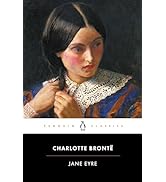
Jane Eyre by Charlotte Brontë, edited by Stevie Davies, is a seminal 1847 novel blending gothic romance with pioneering feminist and psychological depth. Celebrated for its poetic language and complex characters, this Penguin Classics paperback ranks among the top Gothic and classic literature titles, boasting a 4.6-star rating from over 5,300 readers. A must-have for discerning readers craving timeless storytelling that challenges societal norms while delivering an unforgettable love story.


| Best Sellers Rank | #3,535 in Books ( See Top 100 in Books ) #100 in Gothic Fiction #163 in Classic Literature & Fiction #494 in Literary Fiction (Books) |
| Customer Reviews | 4.6 out of 5 stars 5,667 Reviews |
C**S
A beautiful masterpiece
SPOILER ALERT It’s not hard to see why Jane Eyre is considered a masterpiece. The first that becomes apparent is the author Charlotte Brontë’s deeply beautiful command of the English language throughout the novel, with descriptions of vengeance like: "Something of vengeance I had tasted for the first time. As aromatic wine it seemed, on swallowing, warm and racy; its after-flavour, metallic and corroding, gave me a sensation as if I had been poisoned." Or something even akin to prose poetry when the protagonist discusses cold and icy lands: "Of these death-white realms I formed an idea of my own: shadowy, like all the half-comprehended notions that float dim through children’s brains, but strangely impressive. The words in these introductory pages connected themselves with the succeeding vignettes, and gave significance to the rock standing up alone in a sea of billow and spray; to the broken boat stranded on a desolate coast; to the cold and ghastly moon glancing through bars of cloud at a wreck just sinking." But it’s a lot more than imagery that makes Jane Eyre remarkable. The eponymous protagonist and the first person narrative that she is rendered to us in was revolutionary for its time for being incredibly psychological and intimate. Jane is profoundly communicative and lets us know her every thought, feeling, and emotion through a level of intimacy that is only familiar to us when speaking to a very close best friend. One cannot overstate the emotional vigor of the novel and how easy it is for the reader to relate to Jane’s experiences. For example, when she begins to fall for someone, she poetically describes the fine details of the man’s face, the mental insecurity over whether or not it’s reciprocal, and the anxious spilling of a cup of coffee as she awaits news concerning him. Much has been discussed about the political, moral, and religious content present in Jane Eyre, and while in many cases Brontë is not overt with her ideology but rather shrouds it in symbolism, it would be hard to not describe the literary work as mostly progressive or left-wing. The novel was published only months before the Revolutions of 1848 in Europe, and in many ways it captures some of the radical spirit that began to brew just prior. The feminism of Jane Eyre is clear: when Jane finally marries Rochester at the end, she does this through a much more egalitarian and noncoercive position previously brought about by a previous ascension to a social class equal to Rochester’s. Additionally, in an earlier chapter, Jane explicitly herself polemicizes to the reader that it’s ignorant to condemn women to things like sewing and playing the piano just because it’s the custom of that gender. On the other hand, it’s possible to argue that Jane Eyre’s progressivism has limitations because of the way it has depicted Bertha Rochester, a woman of color, and that this depiction of her being essentially demonic in nature is potentially representative of 19th century colonialism and racism. Jane Eyre is undeniably a work that is full of Christian ideology, but it’s also difficult to characterize this Christianity as merely evangelist and doctrinal. If it was, Brontë could have ended the story by having Jane accept St. John’s marriage proposal and devote the rest of her life to evangelist pursuits in India for the glory of her religion, and the work would likely have never entered the mainstream secular canon. On the other hand, Jane’s severely reluctant and painful decision to initially leave Rochester and his genuine love for her because he was legally married to another woman (and despite it being a loveless marriage) was a memorable scene vastly important for demonstrating both Jane’s individualism and her commitment to a certain level of Christian morality. At other times, the presence of Christianity in the work is more symbolic and beautifully fused with imagery: "I must keep to my post, however. I must watch this ghastly countenance—these blue, still lips forbidden to unclose—these eyes now shut, now opening, now wandering through the room, now fixing on me, and ever glazed with the dulness of horror. I must dip my hand again and again in the basin of blood and water, and wipe away the trickling gore. I must see the light of the unsnuffed candle wane on my employment; the shadows darken on the wrought, antique tapestry round me, and grow black under the hangings of the vast old bed, and quiver strangely over the doors of a great cabinet opposite—whose front, divided into twelve panels, bore, in grim design, the heads of the twelve apostles, each enclosed in its separate panel as in a frame; while above them at the top rose an ebon crucifix and a dying Christ." Despite the frequent ideological questions surrounding the work, Jane Eyre is a romance novel at its heart, and that means its appeal is universal. It’s a must read for any person with even a passing interest in literature, and simply one of the greatest pieces of fiction ever written. Brontë’s capability in being able to not only develop highly three-dimensional characters and a riveting plot but to do so through a poetic use of language makes her equal parts writer and artist. Jane Eyre is thus a moving painting, a painting that depicts matters as intellectual as feminism and as familiar and emotional as love.
P**H
Love Story Sublime
There is so much to be said for this novel that it's difficult to know where to begin. It is a superb evocation of a time and place; it is a complex, detailed character study; it has a believable and compelling plot; and, more than anything else, it is a magnificent love story. Of course, love stories are the common denominator of human existence and have been the subject of literature since mankind first put charcoal to rock, so the fact that Jane Eyre is a love story is nothing terribly significant. No, what makes this novel so special is the thoughtfulness with which its narrator, Jane Eyre herself, documents her love affair. She is extremely intelligent, she carefully analyzes her feelings and actions, and she is scrupulously honest with both herself and her reader. This is what sets it apart: it is the depth of these thoughts and feelings that make the novel interesting. Beyond that, though, it is the character of Jane, slowly revealed, that makes the novel a delight. The plot is Jane's story. Orphaned, she is sent to live with her cruel aunt and cousins. At the age of ten she is sent away for good to a charity school, at which she gets her education, but which is run in such a miserly fashion that many of the students there actually die of disease and starvation. Jane survives, and at the age of eighteen, is able to secure a position as a governess to a child in a great house of England: Thornfield Hall. It is owned by Edward Rochester, the man who will become the centerpiece of her life. How the two begin to slowly realize their affection for one another, how they then cautiously begin to act on their feelings, and how they must then surmount the obstacles in their path--both societal and self-inflicted--are what make up the bulk of the novel. There are at least a few surprises along the way. The strong-willed Jane's moral code requires that she respond to these difficulties in certain ways. It is to the novel's and the author's great credit that these decisions are never simply made; Jane agonizes over them in heart-wrenching fashion. As in life, the standards one chooses to live by can be difficult to maintain. This defining tension is what drives the novel, but that it is delivered in such a skillful and assured way is what raises it to its lofty status. The dialogue, particularly, is fantastic. It is the stuff of an actor's dream: much of it can be interpreted in several different ways. Jane describes Rochester as being moody and tempestuous, and he often is, but at the same time--particularly after Jane agrees to marry him--he is hilariously wry and bemused. Jane comes across as being earnest and pleading, but she can be very playful and is often flirtatious. As mentioned above, these are deep, achingly human characters. The setting is also very evocative. The English countryside, class system and moral understanding were obviously familiar to those who read the book in Ms. Bronte's day, and probably familiar to many of us in this day and age. Nevertheless, Ms. Bronte took the time to document these things carefully. The descriptions of Rochester's home, the lanes in front if it and its orchards and fields; the destitute and grimly cold school for girls; and the small country town where Jane makes the acquaintance of a small group of benefactors towards the end of the novel are all a testament to life as it existed at this distant time and age. The novel is looked upon as a classic and should be. Ms. Bronte not only created a beautiful piece having to do with the nature of love--personal to her but universal in nature--but did so in such a spectacular way that she actually makes the reader feel this love, both for her creation, and for her.
D**.
The Model for the Modern Historical Romance
It seems silly to say that a book can affect you on a profound level. well I definitely believe in this power that a good book has. Jane Eyre is one of them. I cannot say that this was an easy book to read. But it was a book that I was very enriched by reading. Romance is a genre that is looked down on by many "sophisticated readers." Perhaps they would look down on Jane Eyre, but would probably get some eyebrows raised at them. Well Jane Eyre is the archetype for the romance novel. After having read thousands of them, I know a romance novel when I see it, and Jane Eyre does qualify. But it is much more than this. It's a story for the person who wonders why the keep trying to do the right thing, and persevering in life, instead of just taking what they want when they want it. If Jane Eyre had been that sort of person, she would not have gotten her happy ending. Instead, Jane walked away from the thing she wanted most in the world. She almost died doing what she felt in her heart was right. Had the story ended there, I probably would have detested this book. But it doesn't. We see Jane continue to grow and act as the phenomenal person that she was. Although often downtrodden, she is no meek mouse. She has a fighting spirit that keeps her going when others would have laid down and died. But despite being a fighter, she is not a user and abuser. It's hard at times for the difference to be clearly delineated. Well there is no question about Jane's level of strength and intregrity. Although it is made clear several times in this novel, that Jane is no beauty, her soul makes her a beautiful character. Beautiful in a more profound way. There are moments when you feel, how can one person suffer so? But taking the journey, you realize that all Jane's suffering had a purpose. It refined her into a woman who could look beneath and love what others could never love or understand. It made her the woman who could love and heal Rochester. At the same time, Rochester was made for Jane Eyre. He had searched his life for a woman like her, and made quite a few mistakes along the way. And out of love, he was able to let her go when he wanted to keep her. But she came back to him, when he needed her most. Rochester is the hero that formed the archetype for many of my favorites: tortured, scarred, dark, enigmatic, all of those things. Best of all, loving little, plain, ordinary Jane with a fundamental intensity that pours out of the pages of this book into my heart as a reader. Despite his lack of perfection, I could not love him more. Ah, how maudlin I sound. I can't help it. This book moved me to tears. Yet I smiled at the same time. I enjoyed the conversations between Rochester and Jane. There was a heat there, a passion. Yet this book is clean enough to read in Sunday school. That is grand romance. The journey so well expressed, that no sex scenes are needed. It's all there. This novel is also inspirational. Not preachy, in my opinion, but for a believer, one can definitely find spiritual messages in this book. About perseverance, about not wearying about doing good. About the profoundness of God's love. It's all there, but in a narrative that expertly showcases it, not preaching it. I feel I am failing to write the review I want to write for this book. The words do fail me. All I can say is that this book will always be a favorite of mine because of the way it touched my heart and challenged me.
M**Y
Successful Foray Into Classical Fiction
This review contains spoilers. To preface this review, I was pleasantly surprised by how much I enjoyed a book from the 1800s. I probably would not have read Jane Eyre if it weren’t for a well-timed reference and a stoic challenge to read a classic. I went in blind, not knowing anything about Charlotte Brontë or her religious history. At times, I related more to Edward Rochester than Jane. He was closer to my age and more passionate. Jane could be frustrating and rigid at times, especially with religion. It stood out most in her interactions with St. John Rivers. He felt like a full-on zealot—using religion to manipulate. Although I suspect he was far too deep in his own ego regarding his religious crusade to be aware of that. But who knows. There's a quote from his sister describing him as a good man, while also saying he tramples "little" or "insignificant" people. Contradictory. He also repeatedly frames Jane’s refusal of marriage as moral weakness and positions himself as spiritually superior. He uses religious language (duty, God’s will, prayer) to pressure her into marriage. On the other side, Rochester at first felt a little too ungrounded, almost lacking real stability at times (though he was by far my favorite for his passion and interesting mind). Jane sat somewhere in between. And by the end, Rochester had changed—more balanced, a bit more spiritual, and a much better match for her. I also found it interesting that his dependence on her at the end of the novel was a selling point for her. A little icky, but I get it, and it suits Jane's character. Overall, a better age-gap love story than Twilight, with a more appealing Edward.
W**!
This is one iof the greatest novels ever written!!!
All I have to do now that I have acquired Charlotte Bronte's, Jane Eyre is to extract all of the values of great literature by which my life will be immeasureably improved. That is what my English Professor told me. He has it in the glass cabinet at the side of the classroom which I read when he was gone after school. Now that I have the book I need a glass cabinet to put it in. I will ask my father for that.
T**S
Jane Eyre – A Timeless Classic Worth the Wait
Jane Eyre has been on my bucket list for years, and I’m thrilled to say I’ve finally read it. Charlotte Brontë’s masterpiece was everything I hoped for and more, a novel rich with depth, passion, and a heroine whose strength still resonates today. At its heart, Jane Eyre is a story of resilience, self-respect, and unwavering moral conviction. From her tragic childhood at Gateshead and the harsh conditions of Lowood to the mysterious and haunting Thornfield Hall, Jane’s journey is one of immense hardship. Yet, despite the constraints placed upon women in her time, Jane remains fiercely independent. She refuses to compromise her values, even in the face of love, loneliness, and societal pressure. Brontë explores powerful themes that remain relevant: the struggle for autonomy, the tension between passion and duty, and the search for a true sense of belonging. The novel also weaves in elements of gothic mystery, making it both emotionally profound and utterly gripping. Jane’s dynamic with Mr. Rochester is compelling, not just for its romance but for how it highlights her insistence on being seen as an equal. Reading Jane Eyre now, I can see why it has stood the test of time. Jane’s story is one of triumph, proving that integrity and self-worth will always outshine adversity. If you haven’t read this classic yet, I highly recommend it. It’s a novel that lingers long after the final page.
B**N
Endless legacy of Charlotte Brontee, author and poet.
Jane Eyre surpasses time and race. It is a story of the human heart and the power of the soul. Brontee stays true to her Christian beliefs through it all, neglect, hunger, class discrimination and gender discrimination. The imperfect walk of humanity, with miraculous strength arising to carry convictions of an inner whispering spirit. Flames of passion took my breath away. Mr. Rochester a wealthy man though broken inside evolves as well. It’s a story of the power of faith, self-discipline, healing and the triumph of love! Jane is financially restored but her plight reveals justice with her view of money. I read this book and shared its thought provoking story with coworkers. They are engaging the movie. No version of the movie reveals the depth of the outpour of the heart and soul; however, it will begin a wondrous journey of thought into the hearts and souls of the 21st century woman and man. This winding road of what self-love truly is and the victory of its perseverance. The heart warming legacy of friendship, lessons of trust, and sexual passion so intense its flames lit my soul with a deep inner thought and reflection of how I view the many hues of love and it’s bold yet torturous seasons. May Charlotte Brontee rest in peace! She has served humanity well for generations to come!
G**N
Too close for comfort
This book is hard for me. The genius of the writer has caused me to stop often, unable to withstand suffering I have felt. Jane is incredibly brave, constant and intelligent. Life gives her rocks and shoals and she navigates them by using her virtues. This a book of inward struggle. If Lizzie had told Pride and Prejudice, it would have some of this but this is a wild and gothic world beyond the emotions of Netherfield.
A**E
Need better care of books by Amazon!
Arrived within 3 days. Bottom right corner of the book was bent. Makes me think twice about ordering anymore books from Amazon as only 40% of my recent book haul arrived in acceptable condition. Love Jane Eyre. Replacing my old worn out version.
R**H
good quality, great read
came as described:) good quality and a great read, ordered it for university and was cheaper than the bookstore offered!
C**E
Vale a pena
Ainda nao li mas o texto aconpanha comentários e artigos de apoio. O livro não tem orelha e a capa é fininha, então as bordas vieram com pequenas falhas e com o tempo pode piorar mas com cuidado ele pode se manter direitinho.
J**I
Genial
Buena letra
A**A
A gothic classic
An emotionally charged read. I can see why this book has the following it does, the silent yearnings of a young woman & her master woven into silent sexual tension, only to be ripped away & then joined again in tragedy. I read this decades ago, lost my copy & decided to fall back into love with Mr Rochester, oh I know the controversy, but if he's anything like the 2011 adaption with Michael Fassbender as He, then I don't care, I'll take it. My next read is Jane Eyre's Husband, a story about the life of Mr Rochester & within the context of CB work.
Trustpilot
4 days ago
1 month ago