We remain fully operational. Our teams are working around the clock to ensure your deliveries continue safely.

DOWNLOAD THE APP


Customer Services
Copyright © 2025 Desertcart Holdings Limited
DOWNLOAD THE APP
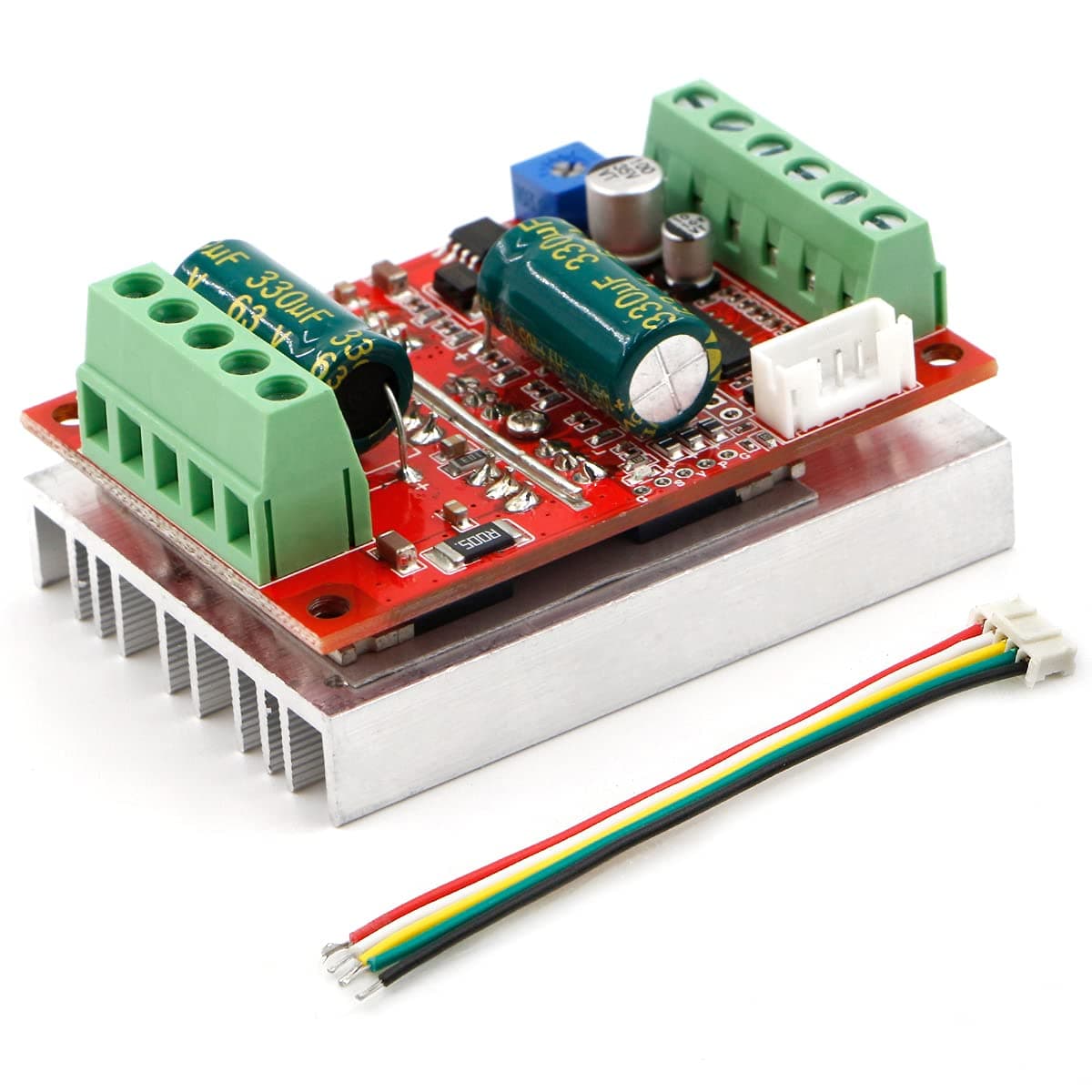
⚙️ Power your DIY robotics and automation with precision and confidence!
The RioRand 350W 6-60V 3-Phase PWM DC Brushless Motor Speed Controller is engineered for 120° electric angle brushless DC motors with Hall sensors, delivering up to 350W peak power and 16A continuous current. It offers versatile speed and direction control through multiple input modes, robust heat management, and built-in overcurrent protection, making it ideal for DIY robotics, electric tools, and industrial automation projects requiring reliable, precise motor control.


| ASIN | B087M2378D |
| Brand Name | RioRand |
| Customer Reviews | 4.1 4.1 out of 5 stars (206) |
| Horsepower | 350 Watts |
| Included Components | controller |
| Item Weight | 77 Grams |
| Manufacturer | RioRand |
| Material Type | Copper |
| Model | KJL-01 |
| Model Name | KJL-01-with-Hall-Sensor |
| Voltage | 60 Volts |
C**G
These motor controllers work well with big DC motors. You can only run one motor off of each one. You do not have to use all of the pins to control the device with arduino or esp32. R_ls and L_ls can be left with no connection. The enable pins can simply have 5v applied directly or can be switched. The only thing that might be of concern is the heat sink is on the other side of the board from the mosfets. I really don't think that they will dissipate any heat the unit heats up under high load.
A**R
So far it works well. I need to address the direction control on the Hall model. The motor will run in a couple different phase wiring orders, if you have it in the wrong order the reverse direction switch does not work. Once you fix that, it reverses perfectly.
A**O
Really simple and good to use
N**.
I first bought two of these for controlling hoverboard motors in a project. Wiring them wasn't too difficult, once I figured out the correct phase wires for my motors. For anybody who can't figure this out: take the 6 or 8 screws off the inside of the hoverboard wheel, then use two flat screwdrivers to pry the cover off the wheel. Inside should be a label for each phase wire. I set up my pots and switches for brake/reverse. Don't use the stop function, just use brake. Everything was working as intended. Once proof of concept was achieved, I needed to use an arduino with PWM control to use an RC receiver. This is where my problems began. First of all, I'm new to arduino so it was a bit of a learning experience. I have other programming language experience so it helped a lot. Once I got my code setup, I jumped my J1 on the board and hooked up everything else. Plugged in power, and the LED instantly turned on then off again. Uh oh. Well, I'll spare the details but two boards later everything is working. I'm still not sure what exactly went wrong the first two times but my best guess is that I accidentally shorted something else when jumping J1 or something. Third board works fantastic though with PWM control with a remote control/arduino. SUMMARY This board is a great value for the price, just be aware that if anything goes wrong or if you need any details about this board, good luck finding it. There's basically no documentation for this board other than the listing on Amazon.
J**G
Used on a hoverboard motor and works well.
Trustpilot
1 month ago
5 days ago