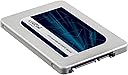
🚀 Upgrade your workflow with Crucial MX300 — speed, reliability, and efficiency in one sleek SSD!
The Crucial MX300 275GB SATA 2.5-inch SSD combines cutting-edge Micron 3D NAND technology with impressive sequential speeds up to 530 MB/s and high random IOPS performance, delivering a reliable, energy-efficient storage solution ideal for professionals seeking fast, durable, and cost-effective internal storage.


| ASIN | B01IAGSD5O |
| Additional Features | Portable |
| Best Sellers Rank | #1,381 in Internal Solid State Drives |
| Brand | Crucial |
| Cache Memory Installed Size | 275 |
| Compatible Devices | Desktop |
| Connectivity Technology | SATA |
| Customer Package Type | Standard packaging |
| Customer Reviews | 4.6 out of 5 stars 12,007 Reviews |
| Data Transfer Rate | 6 Gigabits Per Second |
| Digital Storage Capacity | 275 GB |
| Enclosure Material | 3D Nand Flash |
| Form Factor | 2.5-inch |
| Global Trade Identification Number | 00649528777195, 06953040952300 |
| Hard Disk Description | Solid State Drive |
| Hard Disk Form Factor | 2.5 Inches |
| Hard Disk Interface | Serial ATA |
| Hard-Drive Size | 275 GB |
| Hardware Connectivity | SATA 6.0 Gb/s |
| Hardware Platform | PC & Mac |
| Installation Type | Internal Hard Drive |
| Item Part Number | CT275MX300SSD1 |
| Item Weight | 0.01 Kilograms |
| Manufacturer | Crucial |
| Media Speed | 510 megabits_per_second |
| Mfr Part Number | 150083 |
| Model Name | MX300u00a0 |
| Model Number | CT275MX300SSD1 |
| Number of Items | 1 |
| Read Speed | 530 Megabytes Per Second |
| Special Feature | Portable |
| UPC | 649528777195 061822172634 |
P**L
AWESOME SSD Bang for Your Bucks -- BUT with 1 Caveat!
Until my purchase of this Crucial MX300 SSD, I only bought Samsung SSDs. I intended to buy a Samsung EVO 850 500GB, but I choked on its $179 price. THEN I saw the Crucial SSD 525GB for $119...and could not resist. So far, the Crucial is a GREAT choice. HERE'S WHY! FASTER THAN SAMSUNG: In comparison to my 'decommissioned' Samsung EVO 850 250GB, the Crucial MX300 is noticeably faster. The Crucial boots up Windows 10 a little faster. Big software, like Photoshop, opens a little faster. There isn't a massive performance difference. Nonetheless, I am very impressed with the very snappy speed of the Crucial. It is the fastest SSD I have owned yet. RELIABILITY: I always bought Samsungs because of their rock-solid reliability. That factor almost caused me to pay $179 for the EVO 850. HOWEVER, I bought Crucial RAM since the 1990s because of its extreme reliability for my custom PC builds . So, I hoped Crucial SSDs are as solid as Crucial RAM. So far, so good...but it is only Day 8...and thus only time will tell. MOMENTUM CACHE: This feature dramatically improves the SSD's 'burst' performance. (I think this feature is why software apps open faster in Crucial than with a Samsung SSD.) PRICE: At $119, the Crucial is a bargain in comparison to Samsungs and Intel SSDs. At $89, it is a screaming steal (which I paid for my 2nd Crucial during an Amazon sale). Definitely 5 Stars for price. SUPERIOR USA-Based TECH SUPPORT: I had a little trouble with setting up the SSD. I thought I got a defective one. I called Crucial Tech Support. A very courteous, knowledgeable technician discovered I overlooked a critical step. My mistake. Thus, the issue was resolved quickly. Afterwards, the SSD worked perfectly. The CON: MEDIOCRE SET-UP UTILITY: Crucial's software utility for setting up the MX300 SSD is a little clunky in comparison to the software offered by Samsung and Intel. Thus, initial set-up is slightly more tricky. In fact, my first attempt failed (but not to worry...just call Crucial Tech Support if you get stuck). CRITICAL ADVICE: You can't just install the Crucial SSD (either as an internal or external drive) and hope it will be immediately recognized by Windows. The SSD will not appear in Windows Explorer (or File Explorer). After connecting the Crucial SSD, you have to open Windows' Disk Management utility and INITIALIZE the SSD. Then it will be recognized and ready for the additional steps below. (If you don't know how to initialize the SSD, call Crucial Tech Support.) CRUCIAL ADDITIONAL STEPS: 1. Download and install Crucial's utility called Crucial Storage Executive. (I installed and used the utility after clean installing Windows 10 and updates on the SSD. You should use the utility before installing apps and other software.) 2. *** VITAL *** Use the utility to UPDATE the SSD's FIRMWARE. My SSD's firmware was out-of-date. 3. Use the utility to OVER-PROVISION the Crucial SSD. Use the recommended setting. (Over-provisioning will extend the life of the SSD at the cost of reducing the usable drive space by about 40 GB. Yes, some geeks say over-provisioning is unnecessary for modern SSDs...but I have a strong feeling that it should be done for the Crucial). 4. Enable the Momentum Cache feature. Perform the steps cited above...and your awesome Crucial SSD is ready to blast off! The VERDICT: If the Crucial MX300 proves to be as durable and reliable as Intels and Samsungs, it is definitely the best quality, fastest 'consumer' SSD for the lowest price. I am betting the Crucial is rock-solid. That's why I bought a second one less than 2 weeks after the first. :-)
C**E
Great Mainstream Drive with Competitive Performance, Pricing, and Crucial's Reputation for Reliability
This is a really nice drive with competitive specs, but not quite the best. The price per GB, the extra GB's in this size category along with it being made by Crucial and with a stated endurance of up to 220 TBW all add up to a great value. Some have complained that nothing comes with the drive and other than the 9mm spacer that is true, yet this is pretty much how most all drives are sold these days. The one drawback if you were hoping for a good migration tool is that they supply a key for downloading Acronis 2015 which recently was updated with patch 6613 and is now supposed to support Windows 10. I don't trust True Image any more after a simple cloning failed and corrupted my original drive. I simply downloaded Macrium Reflect Free which is very reliable and supports Windows 10. The way that I configured my new drive may not be the fastest, but it is safe and reliable. After installing Reflect, I created a full verified system image and put a copy on an external USB 3 drive, Next I disconnected my system drive and booted up off a Rescue Media CD. The external drive containing the system image was connected to one port and the new SSD was connected to another port via a Startech USB 3 to SATA 3 cable. Fired up the restoration and 22 minutes later it completed successfully. I connected it up to an internal SATA port and it booted right up without any problems. The only other thing I did was rename the C: partition to eliminate any confusion and pulled up Disk Management and extended the primary partition to incorporate the remaining unallocated space. This drive formats out to 489.05 GB which is about 43 GB more than a formatted 480 GB drive. My method isn't the fastest way to set up the new drive, but it is extremely safe because while I am doing the image restore my original drive isn't hooked up so even if the restore failed I would still have a perfectly good system drive if needed. In actual use it feels every bit as fast as my Samsung 850 EVO drive. I haven't tried enabling the Momentum Cache feature that allows for dynamically allocating up to 25% of idle system memory for burst writes and is supposed to nearly quadruple the speed. So far it is running very fast so I might not bother with it for now. My experience with other Crucial drives and memory has been excellent and have never had any problems and that was a big factor in choosing this drive as reliability is more important to me than having the absolute fastest drive. I also have several Samsung drives that have performed well and have never given me any problems. A 500 GB 850 EVO carries about a 25% premium over this 525 GB drive and it just doesn't seem to be anywhere near 25% faster, in fact under normal use I don't notice any significant difference, though the Samsung will benchmark out a bit higher. Either one of these drives would have been fine, but given the extra capacity and no discernible difference in everyday use I am very satisfied with this drive. Both are very well made and reliable drives. Update 9/24: I have enabled Momentum Cache and it does make a noticeable difference in the overall performance. My system has 16 GB of memory which means that this can allocate up to 4 GB of unused memory for caching. The nice thing is that it will adjust the amount of memory that it utilizes dynamically according to system demands and loading so that it won't have over allocated memory at a time when the system has a higher demand for more memory. It has worked very well so far without any hiccups, and I don't notice that it is there except that everything is faster. I am running Windows 10.
R**Y
Both drives are good; cloning software worked perfectly both times
Bought two of these 525GB MX300's to replace a 256GB M500 and 256GB M550 in my desktop and laptop. My goal was to clone both drives so I could swap them out without having to reinstall anything or lose any files. First, be sure you download the two pieces of software that help you get the most out of your new SSD: Crucial Storage Executive (displays info about supported drives, including SMART data and allows you to enable Momentum Cache - more on this later), and Acronis True Image for Crucial. There are a fair number of reviewers stating their drives failed after 10-12 months. I'm optimistic if the drive are going to have issues, the SMART software would identify these issues. Both existing drives that I replaced had 95-96% of their remaining lifespan and there were 0 bad sectors. I was able to see this data in the Storage Executive software. I first connected the SSD to a USB port using a SATA to USB cable connector (get one of these if you want to clone your drive for laptops or desktops without open SATA and power connectors - this is the one I used StarTech USB 3.0 to 2.5" SATA III Hard Drive Adapter Cable w/ UASP - SATA to USB 3.0 Converter for SSD/HDD ). Using the Storage Executive software, I confirmed the drive was recognized, healthy and not initialized (partitioned). The firmware was already up to date, another nice feature of the SE software. Next I installed Acronis True Image to perform the cloning. There is no fee to use the software, but it will only install as long as one of the active drives on your system is made by Crucial. The process from there is pretty simple - roughly 4 steps. 1) Choose clone; 2) choose source drive (most likely your C: drive) - I choose the automatic clone method, btw; 3) choose destination drive (your new SSD); and 4) proceed with clone/reboot. It took about 30 minutes for my laptop and 75 minutes for my desktop (different aged systems and speeds). Both clones worked perfectly on the first try and I had no issues booting up after swapping the drives. Getting back to the Momentum Cache setting - the MX300's allow you to utilize some of your DRAM for random write jobs in such a way that it can increase write speed by up to 10x. This is because all the random data will be temporarily stored to DRAM (up to 25% of available system memory or 4GB, whichever is less, and then it will write the data sequentially. According to Crucial, the benefit is faster write speeds (you won't see increased read speeds, so you won't see a performance increase when starting up the computer or using it under normal conditions), and it also helps extend the life of the drive as random writes will wear out the drive faster than sequential writes. Knowing I have so much remaining life on the drives I'm replacing (due to running out of space), I am going to repurpose them in my family's computers, as they still have HDD's and won't come close to using all 256GB. I'm very happy with the older crucial drives and looking forward to years of use with these new ones. If there are any issues in the future, I will update this review accordingly.
A**N
Can Be Tricky To Install But Great Drive So Far
Received this two days ago. Total install time was 6 hr.s due to unusual partition configuration used on SSD it was replacing as boot drive. This has 1050 GB. The MX200 has 1024 GB so it's easy to identify them in BIOS. I run them via two Marvel 6GBs drive slot as the rest of my Sabertooth board is 3GBs. Some dynamic partitioning was needed since I was going from everything on one drive to splitting it up on two. In addition I use a security boot sector so the C:\ runs as a logical, not primary. Rather than go into the whole process here is an over view. -Connected the 1050 (this drive) to Marvel slot 01 (2nd). MX200 1024 remained in slot 0. -Used EaseUS Partition Master 10.2 (free) which has more features than their current free product. -Copied the 1024 to the 1050. Two reboots are required. -Powered down and unplugged the 1024. -Plugged the 1050 into Marvel 0. Left 01 vacant. -Verified BIOS id-d the 1050 as boot drive -Booted into 1050. Checked things out and powered down. -Connected 1040 to Marvel 01. Verified 1050 was the only boot drive option listed. The BIOS would default to the 1024 if both were listed since both drives were marked Active. So I only listed the 1050. Disabling all other disks for boot options. -Boot up 1050. Deleted 2nd partition, formerly D:\ where programs and documents, movies etc. were stored. -Renamed drives letters to conform with shortcuts. Now the old system was on K:\ and it's D:\ partition was relisted as D:\ to make the shortcuts for documents, programs, etc. which are installed on it. -Deleted D:\ on the 1050. -Used EaseUS 10.2 to resize the 1050 to full drive size. This is the new C:\. The 1024 is now the D:\. Two reboots. -Updated Crucial Storage Executive to most recent version. Rebooted. -Used Storage Exec to check Firmware of both drives. Storage Exec reported the 1024 Firmware was out of date. Did online update of Firmware. System hung. After 1 hr. it was at a black screen. Fine, plenty of time to flash in 1 hr. Did the app flash the 1050 with the 1024's Firmware update? No, it just took an hour of shutting down, swapping SSDs between ports and booting up solo on each drive until it was able to boot off the 1050 with both drives attached. Must be some I/O issue in the Firmware which isn't made to conform with the 1024's MU01 firmware. Donno. It worked. -Last thing was to disable Crucial's Momentum Cache on 1024. Rebooted. -Enabled Momentum Cache on 1050. -Done. Last word. Just be a little cautious with the web app. For flashing and Momentum Cache it's a little quirky with two different Crucial SSDs installed. It's great and doing well now. Tons of writes left on this and data preservation features. About 10% faster than the 1024 prior to enabling Momentum Cache. However, shutting down, swapping ports and getting good boots should not have been necessary. If anyone gets a black screen after flashing firmware. Shut it down and boot it up solo on boot port 0. If that doesn't work put the old boot drive on port 0 and hot plug the 1050 into another port. It will detect and configure the Firmware to communicate with the OS driver. Then shutdown and move the 1050 back to port 0 and it should be good. Good luck.
L**S
Great hardware, software needs work
There are a couple reasons I bought this 275 GB Crucial SSD Drive. Some reasons prove to be very practical and others did not windup working out. 1.Larger size of the drive - worked. 2. Crucial Tech Support - left a great impression. 3. Company & Warranty - very good. 4. Software Bundle - glitchy and frustrating with my setup. Size of Drive Larger than Competitors The first reason I bought the 275 gigabyte SSD Drive is because the data and software on my original SATA drive was 224 gigabytes period I was concerned that a 240 gigabyte drive would not hold my software or data. Crucial Tech Support When I called Crucial to find about if the drive was compatible with my computer. I talked to some very good tech support people who impressed me with their knowledge of the computer I had and what I was trying to do. Amrican tech support people who are kind, helpful and extemely knowledgeable scored high on my list. It is very important when you buy an SSD drive that you have someplace you can call for technical support which they will help you. Crucial also has some very good videos. I also choose to buy The crucial drive because when I talked to the tech person he stated that Crucial is one of the few companies that make their own drives and their own and Flash NAND. The drive comes with 3 year warranty. These were all good buying choices. Software The next reason I purchased this drive is because it comes with the software from Acronis True Image HD 2105 software.. Most people buy the software after they buy the SSD drive. I figured it saved me some money. The tech also told me that when push comes to shove if I did not have electrical power for the new SSD drive I could take it off of the DVD drive already in the computer to enable the drive to work. The only place I ran into glitches was with the Acronis True Image HD 2015 software. The Crucial SSD Drive comes with an OEMversion of the software which means that only some features of the software are enabled. Basically the True Image HD 2015 Software did not boot as it was supposed to do after finding the Crucial Drive. I couldn't the software it to boot. I could generate an zip file error message but that’s all. I couldn't get the bootable drive to boot, then I became very frustrated there isn’t Acronis support for the for True Image HD 2015 software there is only Crucial support and I installed the drive on a weekend. The screen froze and the software was not doing what it was supposed to do which was to reboot to copy the drive. It was freezing in the middle of the drive not initializing the Crucial Drive. The support information from Crucial was not really clear what to do it said make a bootable Drive I tried that it did not work. Finally, I borrowed a full version of Acronis True Image from my neighbor who gave me up the bootable CD / DVD disc and then I was able to copy the information from the original drive to the SSD drive. I plan on buying a full version of a Acronis True Image to copy my drive in the future because I spent quite some time trying to get the OEM version to work which lacked certain functionality. It's not really clear whether the software was unable to copy the device correctly and but after about five hours I just gave up. I think the OEM software that comes with the drive is good enough for most people however it did not work for me. I realize that the Crucial SSD drive is not the cheapest but it is working now at the speed of light. I am very happy with the drive I wish the 500-gigabyte drive was less expensive. The tech support guy also told me that I didn't have to worry about an buying a 3/12” drive adapter kit that I could just use foam double stick tape to hold in the drive because it was a solid state drive. That saved me the price of the adapter kit which I am grateful for. I have had several people tell me that the SSD drive speeds up Windows functionality and they were right. Things that were cranking and taking forever now take very few seconds. The entire procedure for installing the drive took a several more hours because of the software not working, Therefore, I suggest if you really want to do the whole change over quickly to invest in buying the full version of the Acronis Image Software. Another thing that did not work out properly which I thought would is that I ordered the Crucial Drive from Amazon directly as opposed to ordering it from Crucial. I thought that ordering it from Crucial would take longer because they are in Idaho and I needed the drive delivered to California. However, it took a almost took 8 - 10 business days before Amazon shipped this SSD Drive. Once it was shipped it was delivered the next day. It leads me to believe that Amazon when it gets an order,contacts Crucial, who then sends the drive to Amazon and then they send it to the customer. Now that I see how fast Windows is running on the SSD drive I wish I bought an SSD drive sooner I rate crucial the drive itself very highly. They are they are aware that if you don't have the right software to install the drive then people will return the drive. I realize that they are not in control of whatever made it impossible for their OEM software to work. The technical support directly from Acronis does not work for the OEM version. The support documentation for the software from Crucial was not that great. Fortunately, for me I have a neighbor who is a software engineer and brilliant. He told me at one point “Google” the solution but the solution was having a good smart tech person to be your neighbor. I highly recommend the crucial SSD drive to users. I only wish they would bring the price down which I would suspect would be happening in a few years
T**2
Mature SSD technology that's affordable
Needing more storage space, I removed my m.2 PCIe x4 SSD (think 2000MB/s read speed) for this MX300 model. 1TB NVMe PCIe x4 drives cost more than twice as much as this model right now, and with drive longevity having improved in the industry in general, even TLC chips will enjoy a healthy lifespan (imagine how much more robust MLC chips are, but that issue of cost is a biggie). The good: * ECC checking for greater data integrity * hardware data encryption * 530MB/s read, 510MB/s write speeds - even coming from my previous model SSD that had 4x those speeds, I haven't noticed any real life performance issues - this drive is fast from a real world perspective. * 1TB of space for $289 at the time of this writing is downright impressive * stays cool under use (Win10 is updating in the background, SSD remains at 37C under load, 30 idle in my 23C room. SSDs need to remain as cool as possible for longevity and stability concerns) The bad: * benchmark tests do reveal high latency under more demanding disk I/O processes, which I've not yet experienced and I do considerable use, even virtual machines. Most users won't even notice this so as far as "bad" goes, it's not very bad The following 4 items pertain to SSD drives in general: * as with all SSDs, for the sake of drive write longevity (TRIM, wear-leveling, garbage collection features designed to improve longevity), try to leave 20% of space available at any given time. * don't use compression on the data on this drive (e.g. NTFS). * don't defrag a SSD, you'll wear it out quicker * TLC means more data is put into each cell. 3 bits, to be exact. (MLC holds 1 bit per cell). Every time a cell is written to, its lifespan diminishes. That's why TRIM and garbage collection were created, to more effectively store data in cells and place data in areas that hadn't been written to as often in order to increase lifespan. Under normal drive use, you're likely not going to encounter any problems during or even for some time after the warranty period ends. (Those 2x-as-expensive drives may offer 10 year warranties, but are you doing extensive disk writes the way server computers do? Know your needs and, in most cases, this MX300 is going to be perfect.) The ugly: * The m.2 version is still a SATA drive, but the NVMe PCI 3.0 drives offer 4x the read speed (and more than 2x the money for the same storage capacity). Looking forward to when Corsair makes one in the next couple of years. :) Summary: I am coming from a faster SSD for the sake of more space, so any nitpicks I have need to be kept in context. Anyone coming from a platter-based HDD is going to love this drive. It's economical and robust. Error handling algorithms help ensure data integrity and drive longevity. The only nitpick worth mentioning is the potential latency issue, which most users are not going to experience. No real need to take off a star over that, to be honest. If one is running a web server or database server with constant, heavy traffic, they would be looking at enterprise-grade drives to begin with. :) Highly recommended.
C**6
Great drive - great price
I purchased 2 of these to breath a bit of live back into an old Asus G73JH laptop. Sure I could buy a new laptop. When I get the $$ together I will migrate the Crucial drives over. So, currently I am using 2 of the MX300 2TB drives in my old laptop. No issues with the old Asus laptop recognizing the new drives. I cloned the OS drive over to the 2TB drive after formatting and allocating space with the Win10 Drive manager. Did the same with the 2nd 2TB drive as well. I did not put this setup into a raid configuration - this laptop will allow this, I just have no need at the moment as I will only be using this laptop for about 6 more months. The old drives were 500mb Seagates - so it should be pretty obvious there is a massive improvement to the operation of this old G73JH. These 2TB drives are SATA 3 (6mb/sec) My old Asus G73JH is SATA 2. Most SATA 3 drives are backwards compatible to SATA 1.5 - but not always. Has to do with the bus controller - so you might want to make sure your laptop will support the SATA 3 drives if it has a SATA 2 bus. The Crucial USA website does have a nice utility which will scan your computer and tell you what - if any - upgrades your computer can take. I used this tool to verify the 2 TB drive would work. Overall - great drive to use, easy install, good speed improvement and no issues at all. 2TB at a reasonable price is awesome. In about a year you should be able to purchase 10TB SSD's, but for now this will work just fine for me.
J**R
# 1 speed improvement you can do for your MacBookPro
Holy mackerel !! Installed this in my old 2007 17" MacBook Pro that was about to be discarded because it was so slow. I'm in a slight state of shock right now because it's a totally new experience. It boots almost instantly & applications open before can I lift my finger off the trackpad . It was simple to install. I made a bootable OS X El Capitan installer on a thumb drive then removed the old hard disk. The new mx300 fit perfectly . After loading the new ssd with OS X from a time machine back up a simple terminal command to enable "Trim" finished the process.I Didn't need to contact crucial for anything. In 1994 when I got my first apple solid state memory cost $1.00 per mb. So this seems an amazing value. I was so pleased with the performance jump in my 10 year old Mac book pro I've since done the same upgrade to my mid 2012 i7 and I might even do my lonely win10 laptop too. I love it when a product works better than expected. UPDATE; 9/30/2016. Bought a second and installed it in my mid 2012 i7 quad. That thing is just scary fast now, no issues at all. Did a clean install of Sierra . At these prices there's no reason not to ditch the old spinner and update. I'm in no way associated with this product. I received nothing in return for my review. I HIGHLY recommend this product. 5/14/17 My two MacBook Pros are still lightning fast & running flawlessly, back here to buy a third for my Acer Win10 machine(sometimes you need windows) I guess there was a nand memory shortage in the 4 quarter 2016 so the prices have gone up 20% but still a heck of a value in my opinion. My Acer is really a slug so I can't wait to see the metamorphosis.
A**O
Prestazioni ottime e prezzi interessanti.
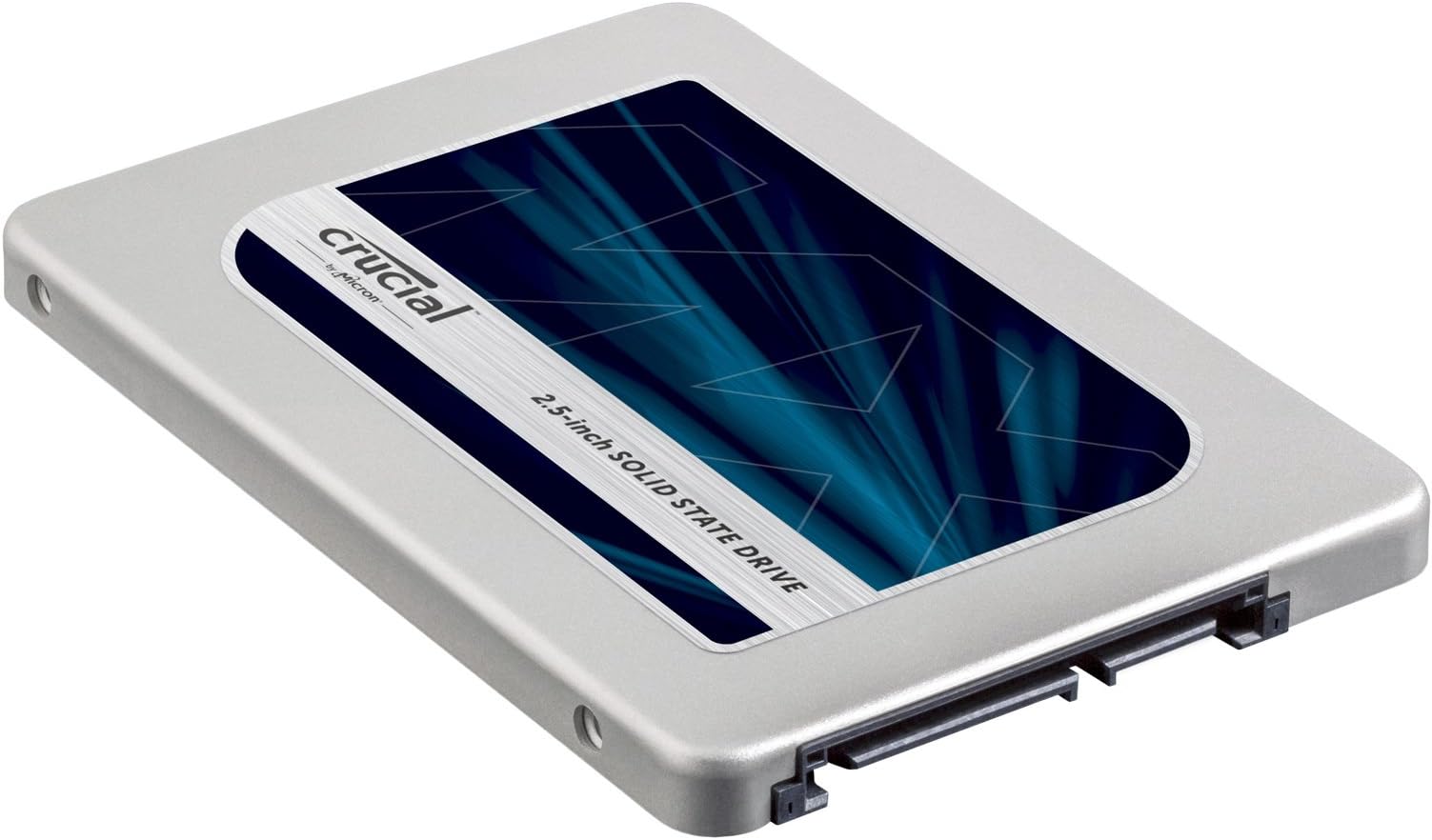
È il mio primo SSD, dopo aver letto tanto in merito a questi solid state drive mi sono deciso a comprarne uno. Versione da 275GB per poter installare il S.O. (Win 10 Pro 64 bit) ed i programmi base che necessitano di un caricamento rapido dei dati. Crucial, una delle aziende più attive in questo settore, è nota agli appassionati di tutto il mondo per l’elevata qualità e affidabilità dei suoi prodotti. Nota alla pari di Samsung per gli SSD. Inutile dire quanto la spedizione di Amazon sia stata efficiente. Al contrario dei dischi meccanici il pacco per gli SSD è congruo con le aspettative, non essendo così delicati come gli HDD. Confezione e Bundle: Il design è come molto curato, anche se minimalista, il colore predominante è il bianco. Nella parte frontale, oltre al logo dell’azienda, troviamo un’immagine che raffigura un’anteprima del drive contenuto, la serie di appartenenza e la capacità di archiviazione, in questo caso un insolito 275GB. Girando dal lato opposto la confezione troviamo l’elenco dettagliato del materiale fornito a corredo e alcune indicazioni del produttore tradotte in diverse lingue (manca l’italiano). Dopo aver aperto la confezione notiamo che sia l'SSD sia l’intero bundle fornito con lo solid state drive, sono ben riposti all'interno di un blister di plastica nero rigido. Assieme all'SSD troviamo quindi: 1x Adattatore per l’installazione dell’unità in un vano da 9.5mm di spessore; 1x Cartaceo riportante il seriale per l’attivazione del software di migrazione Acronis True Image HD. Specifiche tecniche: Crucial Serie: MX Serie: Crucial MX300 Fattore di forma: 2.5 “ Controller: Marvell 88SS1074 NAND: Micron 384 Gbit TLC 3D a 32 strati DRAM: 512MB Lettura sequenziale: 530MB / s Scrittura sequenziale: 510MB / s Lettura casuale file 4KB: 92K IOPS Scrittura casuale file 4KB: 83K IOPS Modalità risparmio energetico: 4mW Inattività: 75mW Massima potenza: 5.2W Durata: 220TB Garanzia: Tre anni L’interfaccia di trasmissione è ovviamente conforme allo standard SATA III a 6Gb/s, quindi il massimo ottenibile dall'interfaccia classica SATA. Al fine di garantire una buona solidità, resistenza agli urti e dissipazione del calore generato dalle componenti interne, è stato scelto l’alluminio quale materiale principale di entrambe le facce della scocca, con la parte superiore che si presenta satinata e dalle forme arrotondate. Nella parte posteriore troviamo un’etichetta adesiva riportante il modello preciso del prodotto, con relativi numeri di serie, e un codice a barre bidimensionale (QR Code). Troviamo, inoltre, il codice PSID, indispensabile per poter sbloccare il drive nell'eventualità di smarrimento della chiave di criptazione dei dati contenuti. Questo aspetto non lo ho mai provato. Eseguito un semplice test con l'SSD occupato solo dal sistema operativo, come detto Windows 10 Pro a 64 bit. Il test si riferisce ad una misurazione delle prestazione con file da 1GB, SSD occupato in 20 GB e in uso dal sistema stesso. Dopo averlo utilizzato ormai per 3 mesi posso giungere ad una conclusione: Crucial MX300 è in competizione con i modelli Samsung EVO, quindi parliamo di una categoria intermedia di SSD. Rappresenta il giusto compromesso tra prestazioni velocistiche ed affidabilità nel tempo, senza rinunciare ad un prezzo contenuto (anche se da un po' di tempo il prezzo delle memorie NAND è in aumento, riscontrabile sia negli SSD sia nelle memorie RAM), risultando di fatto la soluzione ideale, per tutti coloro, che intendono abbandonare gli ormai vecchi e limitanti dischi rigidi tradizionali di tipo meccanico in favore di una ben più prestante unità allo stato solido (SSD), capace di donare nuova vita anche a sistemi non proprio al passo coi tempi, come ad esempio vecchi notebook o PC aziendali, pur senza dover affrontare un notevole esborso di denaro.
D**A
Great Product - Super Fast!!
Bought it for my Lenova Y580 formerly 650 G hard drive. I am not a tech person, so had to watch videos to see how it was done and it was pretty easy to install (if I can do it, anyone can). The result is amazing. It used to take 5 to 10 minutes to restart my computer, which was mainly because I had a almost full, very slow hard drive. I just restarted it now with the new SSD, (my third restart since installing) and timed it at exactly 20 seconds from beginning to shut down and up again to my desktop ready to use. My apps and programs load almost instantly, even Adobe Lightroom and my raw photo files, which used to be the slowest of all my programs and files to load. The rest of my comments here pertain only to a couple of snags I ran into during the cloning process, and have nothing to do with the SSD itself. I did have to get a SATA to USB cable, which I hadn't realized I'd need at first. (I wasn't kidding when I said I know almost nothing about these things). The other problem I ran into is that the Acronis True Image 2015 software wouldn't work. At the reboot point, it would not continue running the process and I had to start it again. I tried a few times (which was time consuming) before I realized it wasn't going to work. I finally figured out that it didn't work on Windows 10. There was a patch available on their website but it didn't work either. Apparently you can only update the patch if you already have the full paid version of it, and that's how I discovered this version that comes with the SSD is just the 30 day trial. ( I am not sure why you need to enter a key or serial number if it's just a trial because you can download that yourself at any time from their website. ) So I tried downloading the 2017 trial version from the Acronis website, and it didn't work because the Cloning part, which is the only part I needed, was only available on the purchased version. I didn't want to spend another $50 for a one time process, so googled for a solution and found another free program called Aomi Backupper. This was very easy to use and although it took a few hours to clone, it worked perfectly. It probably only took that long because of the state of my original hard drive. It created some partition issues (probably because I hadn't known which option to select in the cloning process, so picked "optimal for ssd". ) I had to then download the free Aomi partition program so I could move and then extend partitions it had created in order to have my C drive extended to the extra 300 or so gigs the new drive had from my old one. So, while I have heard how good the Acronis software is, just wanted to let you know if you do get the older version that doesn't work with windows 10 and you don't want to put out more money to buy it, there are other free products out there. Aomi Backupper worked great for me, but I have no idea if it's one of the better ones or not. It was just a lucky first try. So I am giving 5 stars just because the SSD is fantastic and the Acronis issue, wasn't a big deal. I would have bought the hard drive even without it. It was a nice bonus that probably works for a lot of people, and had it worked, I would have been thrilled, but it all turned out fine in the end. Hopefully Crucial will start including a newer version that also allows you to Clone on WIndows 10. But I do love the new hard drive. I also swapped out my ram recently from 6 to 16 gigs and between those two things, I feel like I have a new computer.
G**Z
La mejor relación calidad/precio
¡Tiene un rendimiento BRUTAL! Lo instalé en una ThinkPad T460P, corre únicamente GNU/Linux con una partición home encriptada. El arranque dura menos de 5 segundos, las aplicaciones abren de forma casi instantánea, hasta Chrome que en otras máquinas de configuración similar con HDD tarda varios segundos, aquí no tarda más de 1 segundo en estar completamente operacional. Sin duda es el SSD con la mejor relación calidad/precio. Según algunos benchmarks el rendimiento entre la unidad de 275GB y las de mayores capacidades no es tan diferente como en algunas otras marcas. En una excelente opción como disco principal con suficiente espacio para el sistema operativo y archivos personales. La instalación en igual de fácil que con cualquier HDD/SSD de 2.5", depende más del equipo a instalar que de la unidad en si. Incluye un espaciador para completar la altura común de los HDD..
F**6
super, monté sur PS3 et macbook
Bonjour, Ce disque dur est une fusée, j'en ai monté un dans une playstation 3 (525 Go) et un dans un macbook de 2007 (275 Go) en clonant le disque dur, les résultats sont impressionnants ! Dans la playstation 3, l'accès au playstation store est deux fois plus rapides, les jeux comme gran turismo 5 et 6 voient leur temps de chargement améliorés de façon impressionnante, destiné se charge lui aussi très vite, du tout bon, et la console chauffe beaucoup moins et donc fait beaucoup moins de bruit ! Pour le macbook, il suffit de cloner le disque dur d'origine (fujitsu 5400 rpm / 160 Go) avec Carbon Copy Cloner et le montage ainsi que le reconnaissance sont immédiats. La vitesse d'écriture multipliée par 4, la vitesse de lecture multipliée par 5, les pages internet qui s'ouvrent instantanément avec la même connection réseau, les applications quasi immédiates, avant l'applestore s'ouvrait en 38 secondes, là en 6 secondes, ça parle ! Ces deux disques durs m'ont été livrés en chronopost, donc bien emballés, et dans chaque emballage il y a un code pour un clonage via ACCROIS mais je vous conseille si vous avez un mac d'utiliser CCC qui fonctionne en licence gratuite le premier mois Très satisfait de cet achat, bien plus rapide et fiable que mon ancien CORSAIR F40 lui aussi SSD monté lui aussi sur une PS3 qui a commencé à faiblir au bout de deux semaines Merci de m'avoir lu
K**M
Im Vergleich zu Samsung 850 EVO und Samsung 840 EVO
Ich habe mir diese MX300 zum Speichern vieler virtueller Maschinen angeschafft (beruflich bedingt) Nicht nur als OS-Platte eingesetzt profitiert man von den kurzen Zugriffszeiten und hohen Lese/Schreibraten im Vergleich zu einer konventionellen Festplatte. Auch virtuelle Maschinen laufen auf einer SSD deutlich flotter. Als OS-SSD ist die Samsung 850 EVO mit 500 GB eingesetzt, als kleineres Datengrab die Samsung 840 EVO mit 250GB (ehemals als OS-SSD eingesetzt) Die neuere 3D-Flashtechnologie mit kolportierter längerer Lebenszeit der Zellen ist für mich kein Kaufgrund. Meine SSDs erleben das Ende Ihrer Lebenszeit in meinen Rechnern sowieso nicht und werden vorher getauscht. Ein paar Worte zum Lieferumfang und ein Tip. Dabei sind die Schrauben und eine Seriennummer für Acronis Trueimage zum Umziehen des OS von der alten auf die neue SSD. Keine Kabel. Nützlich der beigelegte Spacer um die SSD in Laptops einbauen zu können welche eine etwas dickere SSD aufnehmen wollen. Die Acronis-SW - nun. Braucht kein Mensch und man kann immer wieder von diversen Problemen durch TrueImage lesen. Auch ich hatte mich letztens mit einem durch TrueImage verursachten Problem herumschlagen - ich konnte die Reparaturoptionen von Windows 10 nicht mehr auswählen. Ein Regeintrag vonTrueimage mußte deaktiviert werden um das Problem zu lösen. Unerfreulich. ********************************** Deswegen als alternative Lösung - nutzt das Freewaretool "MiniTool Partition Wizard" - damit kann das OS auch ganz ohne Spezialwissen auf eine neue SSD migriert werden - ohne potentielle unerwünschte Nebenwirkungen. Nutze ich schon seit Jahren - kann ich sehr empfehlen. ********************************* Ich habe ein paar Screenshots von AS-SSD angehängt. Zuerst die Crucial verglichen mit der Samsung 840 Evo - ohne den Features "Rapid Mode" von Samsung und "Momentum Cache" von Crucial. Beide nutzen Arbeitsspeicher als Zwischenspeicher bevor die Daten auf die SSD geschrieben werden - bringt in beiden Fällen einen erheblichen Performanceschub. Wie man sieht nehmen sich die 2 Platten nichts - sind auf vergleichbaren Niveau. Dann mit aktivierten RapidMode auf der 850 Evo und der Crucial. Die Samsung hat größtenteils die Nase deutlich vorn. Ich sehe das Ergebnis aber ebenfalls als vergleichbar an, denn in der Praxis wird man nicht sehr viel davon bemerken. Weil man immer wieder liest diese Caching-Techniken seien mit Vorsicht zu geniessen. Nun - logischerweise sind bei einem Absturz des Rechners Daten im Arbeitsspeicher die noch nicht auf die SSD geschrieben wurden verloren - unter Umständen mit dem Resultat eines korrupten OS. Wer also ein wackliges System hat verzichtet evtl. besser darauf. Die Lösung der Wahl wäre aber natürlich sein System in Ordnung zu bringen. Anwendungen oder Spiele die wegen der Caching-Technologie Probleme machen habe ich mit Rapid Mode von Samsung nicht erlebt. Bzgl. Momentum Cache von Crucial kann ich nichts sagen, da sie nicht als OS-Platte genutzt wird. Natürlich sollte man genug Arbeitsspeicher im Rechner haben - bei mir 32 GB - da kann ich also leicht etwas diesen Technolgien zur Verfügung stellen. Mein Eindruck der Crucial - günstiger Preis bei aktueller Technologie und Leistungsdaten welche im Rahmen des zu erwartenden liegen - zu Samsung als Platzhirsch diesbzgl. etwas aufgeschlossen. Wer unbedingt die Benchmarksieger will muß eben etwas mehr Geld in die Hand nehmen . in der Praxis erlaubt auch die Crucial sehr flottes Arbeiten.
Trustpilot
1 day ago
2 days ago