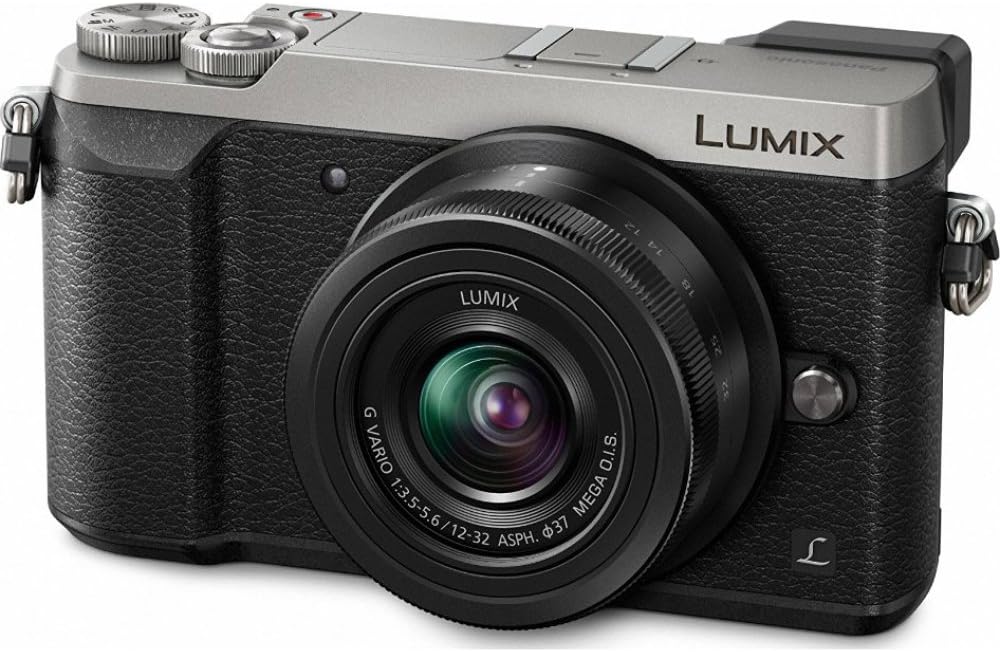
📸 Elevate your photography game with the GX85 — where pro power meets pocket-sized freedom!
The Panasonic LUMIX GX85 is a compact mirrorless camera featuring a 16MP sensor without a low-pass filter for enhanced detail, advanced 5-axis in-body stabilization paired with 2-axis lens O.I.S., and a 3-inch tilting touchscreen LCD. It supports 4K video and innovative 4K PHOTO/Post Focus modes, making it ideal for millennial professionals seeking DSLR-quality performance in a lightweight, travel-friendly design.


| ASIN | B01DOKHS8E |
| Age Range Description | Adult,Teen,Adult |
| Aperture modes | F2.8- |
| Are Batteries Included | Yes |
| Aspect Ratio | 16:9 |
| Auto Focus Technology | Contrast Detection, Multi area, sensor |
| Autofocus | Yes |
| Autofocus Points | 179 |
| Battery Weight | 1 Grams |
| Best Sellers Rank | #372,539 in Electronics ( See Top 100 in Electronics ) #1,185 in Mirrorless Cameras |
| Bit Depth | 12 Bit |
| Brand | Panasonic |
| Built-In Media | Camera, Hot Shoe Cover, Battery Pack, AC Adaptor, USB Connection Cable, Shoulder Strap, Body Cap |
| Camera Flash | no flash |
| Camera Lens | 12-32mm (2x zoom) |
| Color | Silver |
| Compatible Devices | Wi-Fi enabled devices, HDMI-compatible devices, USB 2.0 devices |
| Compatible Mountings | Micro Four Thirds |
| Connectivity Technology | HDMI, Wi-Fi |
| Continuous Shooting | 10 |
| Crop Mode | 16:9 |
| Customer Reviews | 4.4 out of 5 stars 45 Reviews |
| Digital-Still | Yes |
| Display Fixture Type | Tilting |
| Display Maximum Resolution | 1.04 million dots |
| Display Resolution Maximum | 1040 |
| Display Type | LCD |
| Dots Per Screen | 1.04 million dots |
| Effective Still Resolution | 16 |
| Expanded ISO Maximum | 50000 |
| Expanded ISO Minimum | 150 |
| Exposure Control | Program (P), Aperture Priority (Av or A), Shutter Priority (Tv or S), Manual (M) |
| File Format | 14bit, JPEG, RAW DNG |
| Flash Memory Bus Interface Type | UHS-I |
| Flash Memory Type | SDXC |
| Flash Modes | Auto, On/Fill, Off |
| Focus Features | Hybrid |
| Focus Mode | Single-Servo AF (AF-S) |
| Focus Type | Depth From Defocus |
| Form Factor | Mirrorless |
| Generation | 85 |
| Global Trade Identification Number | 00885170285323 |
| HDMI Type | Type D Micro HDMI |
| Hardware Interface | AV Port |
| Has Color Screen | Yes |
| Image Capture Type | Stills & Video |
| Image Stabilization | 5-Axis, Hybrid |
| Image stabilization | 5-Axis, Hybrid |
| Item Weight | 1.09 Pounds |
| JPEG Quality Level | Basic, Fine, Normal |
| Lens Construction | 9 elements in 8 groups and 10 elements in 9 groups |
| Lens Type | Standard Zoom |
| Manufacturer | Panasonic |
| Manufacturer Part Number | DMC-GX85KS |
| Maximum Focal Length | 32 Millimeters |
| Maximum Image Size | 3840 Pixels |
| Maximum Shutter Speed | 30 seconds |
| Metering Methods | Intelligent Multiple, Center-weighted, Spot |
| Minimum Focal Length | 12 Millimeters |
| Minimum Shutter Speed | 0.1 seconds |
| Model Name | Panasonic LUMIX GX85 |
| Model Number | DMC-GX85KS |
| Model Series | GX |
| Movie Mode | Yes |
| Night vision | No |
| Optical Zoom | 2 x |
| Photo Sensor Resolution | 16 MP |
| Photo Sensor Size | Micro Four Thirds |
| Photo Sensor Technology | CMOS |
| Remote Included | No |
| Screen Size | 3 Inches |
| Self Timer | 10 Seconds |
| Sensor Type | CMOS |
| Series Number | 85 |
| Shooting Modes | Automatic,Portrait,Landscape,Aperture Priority,Manual |
| Skill Level | Amateur |
| Special Feature | Travel |
| Supported File Format | 14bit, JPEG, RAW DNG |
| Supported Image Format | JPEG, RAW DNG |
| Total Still Resolution | 16 MP |
| Total USB 2.0 Ports | 1 |
| Total USB Ports | 1 |
| Touch Screen Type | Capacitive |
| UPC | 885170285323 |
| Video Capture Format | 4k |
| Video Output | HDMI |
| Video Resolution | 4K UHD 2160p |
| Viewfinder | Electronic |
| Viewfinder Magnification | 0.70x |
| White Balance Settings | Auto |
| Wireless Technology | BuiltIn; 802.11b/g/n with NFC |
| Write Speed | 60 MB/s or higher |
| Zoom | Depth From Defocus |
A**N
Simply an excellent stills camera, and a great upgrade from a smartphone
I’ve been using a cellphone camera as my primary camera for a few years now and decided it was time to move up to a “real” camera. After successive purchases of two other models that both had defects out of the box and simply weren’t compelling enough to get a replacement of the model, I ended up with this camera. After having it for a few months I can definitely say I’m glad I got the Panasonic LUMIX GX85. The first thing I really liked was the size of the camera. I have rather small hands for a male and the size of the camera is just right for me, being just large enough to have a solid grip on the camera while being small enough to carry around easily. The size of the camera and layout of the controls means it’s easy for me to access all the controls. What impressed me after just a few days of use is the interface and menu system of the camera. I’m already very used to touchscreen camera controls from using smartphones and Panasonic did a really good job with the interface on the touchscreen display. It can be as simple or as busy as you wish it to be and works intuitively. I use the touchscreen display as my primary viewfinder, just like on a smartphone, and I simply find myself really enjoying using it. As for image quality, I currently have a iPhone 7 Plus and the GX85 is leagues better, at least in RAW. The iPhone is a great snapshot camera to always have with you but trying to use it more “seriously” (if vacation photos count as serious) leads to disappointment. The GX85 can take photos with far superior detail and vastly superior dynamic range compared to the iPhone. That means being able to capture things a bit more like you see them and having more headroom to play around with in your photos in applications like Adobe Lightroom. I’ve been very happy with the photos I’ve been able to get from this camera. I tend to mostly capture photos of still scenes and the focusing system in AF-S mode works very well for that. I have attempted a few times to get shots of birds using AF-C mode and have actually gotten a few good shots despite my inexperience with this (or any) camera’s focusing system. The mechanical shutter has a surprisingly soft sound, being loud enough to where you can be sure the shutter really did fire but not so loud, or sharp, that it gets annoying. The image stabilization is excellent and even my shaky hands can reliably get shots at 1/8 of a second and with a bit more effort in steadying myself, 1/4 of a second. Battery life is pretty good on this camera and I can generally get a few hundred shots from it before needing to charge it. It charges through micro USB which is extremely handy, though it cannot charge the battery while the camera is powered on nor can it be powered by micro USB alone. Still, being able to use a portable battery pack to recharge camera is very useful. The included lense is very compact and has good image quality which helps make this a good travel camera. The build quality of this all-plastic camera is excellent and it has a hefty, reassuring weight. The JPEG engine on it is good enough but doesn’t quite match up to smartphones like the iPhone 7 Plus. The biggest issue is that it has a tendency to randomly pepper solid-yellow surfaces with noticeable green dots, a rather bizarre effect. Again, it’s not a bad JPEG engine and most people will be quite happy JPEGs straight out of the camera, but I’ve been spoiled by how well smartphones with their extra processing power can do and I also intended to use RAW and process them in Lightroom later anyway. There are some other downsides I’ve noticed. The electronic viewfinder is not very great to me, with it being rather blurry in parts no matter how I adjust the diopter, the image being a little small, and the field sequential image simply being a little unpleasant to look at. I should emphasize that this is quite personal and you may be absolutely fine with it, and also that I almost never use the viewfinder anyway so having it at all is more of a bonus feature to me. The included lense has a rather limited zoom range of 12-32mm and there is noticable barrel distortion at the widest end (12mm) that disappears at 14mm. The relatively narrow maximum aperture of the lense means low-light image quality may not be as dramatic of an upgrade from a recent high-end smartphone as might be hoped. The smartphone app’s location tracking is unreliable and I’d recommend using something like the GPS Tracks app (on iOS) to log your location and then use Lightroom to add the locations to your photos later. I’m not much on taking video and I can’t comment much on that part of the GX85. There’s really lots more I can say about this camera but this review is probably too long already. This has been an excellent upgrade from my smartphone camera that carries over the intuitiveness of smartphone camera apps and combines that with something with far better image quality and control. It’s just the right size and is so enjoyable to use that I actually do take it with me when I can. Simply put, I’m very glad I got the Panasonic LUMIX GX85 and enthusiastically recommend it.
T**S
Great family camera, shutter issue
Bought this in the recent sale as our family camera and something to take on our trip overseas. I wanted something that was compact enough to carry in my jacket pocket but also gave me the option of putting on longer zooms to start capturing our daughter who is a bit camera shy. I was just tired of looking at blurry family pictures and wanted to start learning how to take better photos before our daughter got too old. It was loads of fun and really glad I picked it up. (updated - shutter issue) I wanted to highlight something odd I've experienced and recommend you check your camera when you first get it. I had only seen this mentioned here in one of the reviews so either no one else is reporting this or the the two of us are the only 'lucky' ones. I like to stay in burst mode since at any time I may switch from a landscape shot to a portrait one where i like to take a few pics just in case. occasionally the camera will take 2 shots at the single shutter press. It doesn't happen all the time and when it does happen, it stays that way for a few minutes then goes back to normal operation. This is not related to bracketing/etc. - i've taken about 3 weeks worth of photos so i feel that i'm somewhat comfortable handling the shutter button yet every once in a while it decides to double dip. i have not found a pattern yet. In single shot mode everything is great. it also happens in electronic shutter mode so i suspect it could be the shutter button. it's a little annoying but not enough yet to send it back to Panasonic and risk having it come back worse. For now I've simply added removing the few duplicates to my workflow. anyone else seeing this? (end of update) Some things to note: - the grip on the camera is rather small and the camera is a bit heavy. I like the weight but holding the camera with my large hands does end up stressing my fingers after a while. I feel like I have to dig into the camera body with my fingers for a firm grip. Try to grab it in person to make sure you're comfortable with it. - while you can recharge the battery in the camera via USB - came in really handy in our trip - you can not transfer data via USB and power the camera at the same time. Since it only uses USB 2, getting those large RAW files and 4k videos means more often than not your battery will run out before the transfer is done. this forces you to get the data directly out of the card. - it has a great touchscreen interface - you can take pictures by simply tapping the location on the screen - much like our smartphones. this means you can track your kids across the screen by moving your fingers and taking burst shots as they run around. - you can take a photo and then decide which parts of the photo you'd like to focus on. this is great when you're just starting to learn depth of field and the different focusing methods. it saved us a number of precious moments. will probably use this less as i get more proficient - but for now it's a great safety net. - as has been discussed, you can't really put this into auto focus on video and pay attention to your kids. you need to watch the camera and either help it focus once in a while or simply take over the focusing. we did lose a few video moments because i was watching the kids vs. the camera and it lost focus and never regained it. - the screen doesn't tilt up for group selfie pictures. not unusual for these and sony cameras but still a bit limiting when on the road and trying to do selfies. we ended up using our phones paired with the camera but still not as nice as having everyone looking at themselves on the camera. - the video audio is a bit weak. I knew this going in and frankly was expecting worse but it's still not as good as i'd like particularly when you see the great video quality that it produces. - those 4k videos are big. if you've only shot 1080p, make sure your PC, display and storage can handle it. I had problems playing the 4k footage on my surface pro during the trip - requiring me to downscale it to 1080p before being able to show it to folks. this was the i5 surface pro. the camera itself does an excellent job of playing 4k directly to a 1080p TV but that means you'll need to keep your videos on the camera and show unedited footage. So finally if you're looking for a fun family camera and something that you can learn photography on but still feel comfortable handing it to your significant other for those shots that a phone won't do, consider this. my only regret is not getting it sooner and losing out on our daughter's earlier adventures. -enjoy
N**P
wish battery life were better.
Battery life is quite short, otherwise this is a great travel camera with the kit lens. I use three batteries in a day of travel, 350-400 pictures that I pare down to about 50. Picture quality is OK with the kit lens but am considering a second lens for use when not traveling.
M**C
4K IBIS! No 29 min limit! Hooray!
Let's start by talking about 4K. The GX85 shoots 4K at 100 Mb/s, the as GH4. The GX85 will shoot 4K as long as your battery and storage allow. For me, my 64GB filled up after 1 hr 29 min, but hey, the camera filled that card up, no questions asked (battery held up, almost). If you want to shoot video in 1080P or lower, shoot in AVCHD and you will have unlimited recording time. You can officially retire that camcorder for good. In my opinion, this camera is better than the GH4 for video. Even though the GH4 has more bitrates for 720P/1080P and some flat profiles, the fact is that the GX85 and GH4 have identical best image quality, but your handheld footage on the GX85 will look much better than on the GH4 because of its excellent IBIS. After repeated claims that IBIS is impossible in 4K because of overheating, two years later, Panasonic somehow combine IBIS and 4K in a tiny body that can continuously shoot an hour and a half without any signs of overheating. Heh. Good one, Panasonic. If you want to bypass internal codecs, you're in luck because this camera also has clean HDMI out for external recorders. In short, while the GH4 still has some "pro" features some "pros" might want, in practice, the GX85 is every bit the video shooter that the GH4 is, at basically half the price and with IBIS! Chew on that! Anyway, many of the other reviews cover what I would have covered anyway, which is that this is a beautiful camera that is a superb stills shooter, but I just wanted to address the video issue, too, since a lot of these points were not made in the press releases (probably to protect the GH4's reputation as a high end video shooter). Despite all this talk of video, I'm mainly a still shooter. Ever since receiving my GX85, I find that I simply cannot put it down. This is a gorgeous little camera. I initially started using MFT because of its balance of size and quality, but over time, I had been trending toward bigger cameras because they had the best features. However, a weird thing happened. I took my camera out less and less. When I got the GH4 to be the camera to end it all, I pretty much stopped taking my camera to social events completely because the GH4 just felt too formal. But ever since I received my GX85, I want this camera around me all the time! I love shooting pictures again. The image quality on this camera is easily the best I've ever seen in any Panasonic camera I've tried yet. There is no shutter shock. Thanks to the lack of an AA filter, improve shutter, and IBIS, I find that pictures are sharp to the last pixel! There is no softness whatsoever. Are there downsides? Yeah, small ones, but it seems like almost every downside has an upside. For instance, I prefer charging in an external charger so I can be charging a battery while using another one, but in-camera USB charging has a huge upside for keeping my camera bag light! I must say, though, the port cover for the HDMI/USB is kind of annoying to open, but hey, I'll get used to it. The tilt screen is a bit stiff and doesn't have huge freedom of movement, but on the other hand, it's super low profile and functional enough. Blah blah, I could go on and on, but a lot of people consider the GF1 to be the best MFT camera that Panasonic has ever made. To me, this camera, the GX85, is their best camera since the GF1. It's a camera that combines usability, stylish looks, superb stills performance, and 4K prowess. And it even comes with a pretty good kit zoom lens. It is excellent bang for the buck. As an aside, I feel bad for GX8 buyers. I wonder how many of them feel a bit bitter about the improved shutter and IBIS on the GX85, which is considerably cheaper than the GX8 ever was.
J**A
Bad autofocus technology in video mode
Very beautiful camera but with one huge flaw. If you are gonna be doing video with this camera you are gonna be sorely dissapointed which was the reason why I returned it. This camera has extreamly slow continuous autofocus in video mode. Both in 4k and HD. The reason being is because this camera and infact all Panasonic Lumix cameras use contrast autofocus detection technology. While Sony and Canon cameras use phase detection autofocus technology clearly a much superior technology. Look around on tne internet and look at what people have to say about continuous autofocus on Panasonic cameras and you'll quickly see the Lumix line of cameras are just not up to the task of doing video. If you plan on only using the cameras to take only pictures than yes Panasonic cameras will work fine. I clearly did not know enough about Panasonic cameras when I bought the GX85. I trusted that the video with these cameras would be decent enough after all they are advertising them as video 4k capable. What use is 4k video if the image is blury because it refuses to autofocus? I tried all kinds of settings to make continuous autofocus work for me but I felt that I had already spent allot of money ($750) for something that felt flawed to me. I didnt want to get stuck with something that didnt work well. How can a company make such a beautiful camera, add 4k video and not make continuous autofocus reliable? People on the internet suggested that professionals use manual focus, but that is absolutely unacceptable to have to resort to manual focus in this day and age. By the way, this camera comes with the kit lens. The kit lens works fine. The kit lens autofocuses fine. But the camera came bundled with the 55-150 lens and I had purchased a 25mm f1.7 lumix lens. Both these lenses make the camera completely unusable for video. The autofocus on this camera will hunt, never focus or slow autofocus with these two lenses. I Panasonic had a winner. But they ruined it with the contract autofocus technology. Here is an example of what the problem is with the continuous autofocus in video mode. Say you are recording a video of your kids. Your kid is moving around in the frame and getting closer or furthur away from the camera. You will notice that that camera will not focus while your kid is moving. It will focus only when he stops moving. And when your kid eventually stops moving the camera focuses but at an extreamly slow speed. This was a disappointment for me.
S**E
All around winner for early and mid level photographers
Had this camera for about a week and already loving it. Looks like the Panasonic 5 axis has finally caught up with the Oly 5 axis system. I paired the GX85 with the Pana 45-150 which had its own IS, and the dual IS worked wonders. I was riding my bike the other day and could shoot crisp shots fully zoomed in while biking. Taking pictures of cats and nephews has also become a breeze since I've got at least a few extra stops to work with. Outside the stellar IS, I really like the range finder form factor which looks especially good with the silver top. The viewfinder leaves a bit to be desired but still does the job for the few situations where the screen is hard to see. The 4K videos, 4k photos, and post focus are nice unique adds, although it can take some time to get familiar with the setup to utilize it day to day. The battery is pretty good, but I really like the ability to charge the camera via USB or external battery which can come in handy with car chargers on long road trips. Now the one potentially major flaw of the camera (only if you have an android phone). The Panasonic image app has an issue where it cannot connect to WiFi to Android phones. This is a huge bummer if you rely on quickly transferring photos. My personal workaround was to use a mini SD card that I can pop in to my phone when I need to transfer pictures. Regardless, I hope panasonic fixes this ASAP. To summarize, this camera hits it out of the park with awesome features beyond direct competitors like the olympus Pen f at almost half the price. Combine that with a great compact kit lens with the wide angle 12mm view and you've got a winning package.
K**R
This is a great camera for video
This is a great camera for video. The 4K is fantastic and the stabilization helps out a lot. The touchscreen is very intuitive but I found it a little hard to focus by touch sometimes. There is no focus ring on the lens so you have to touch to focus in manual mode. Auto focus is good for photos but slow for video. I like this camera but ended up selling it and moving to the Sony a6000 Series. I was not happy with the photo quality and I do more photography than video. Sony is better for photos.
P**R
May be the perfect compromise between quality and size
This is my 3rd m43 camera, replacing an Olympus e-pm2 which replaced an e-pm1. I should also point out that my main system is an APS-c based dslr. The primary reason for having a m43 system is size and the e-pm2 has served me well for a couple years. However, I still prefer to use VF. While I did sometimes use LV on my dslr, I prefer VF because it is more steady the way I hold a camera. So after using the e-pm2 for a couple years, I started looking for a m43 body with VF. Olympus bodies that have VF have the traditional slr look and are too big for traveling. I have been intrigued by Panasonic GX7 since introduction. After reading up on many reviews, GX85 appears to be a better deal than GX7. However, I never ordered a GX7 for a side-by-side comparison, I cannot really answer that question. The rest is a comparison between GX85 and e-pm2. GX85 is substantially heavier than e-pm2 and so is the size. I am not concerned about the weight increase as I am used to handling much heavier APS dslrs. The size is still acceptably small compared to my dslr. As a matter of fact, the increase in camera thickness makes it easier to hold, which I did not expect but that is pleasant surprise. The shutter vibration and sound are head and shoulder improved over e-pm2. There isn't much vibration even using the mechanical shutter. This is by far the best among all cameras I owned in the last 40 years. This really helps me to build confidence that I can rely on this camera for important shots. I never developed this confidence with e-pm2 except when it is on a tripod. I am slowly getting used to the user interface. The availability of the two control dials makes a huge difference. I have already assigned functions to them to make it more like my main dslr. Overall, I think the interface is reasonably well designed. Now on to the VF which is the main reason for getting this camera. It is poor compared to the optical VF on my dslr. There is visible lag that the back LV screen does not have. But I used it for framing and improved stability, it serves these two purposes well. Together with the improved shutter, this is a much better camera than e-pm2. While the IBIS is improved over e-pm2, I don't think it is as good as that of my dslr. The built-in flash is unlikely to be useful if you use anything else other than the 12-32 kit lens. I have not had a chance to use other functions and features. Comparing to my main 24 MP dslr, there is still a small but visible difference in IQ. Since I am using this camera as my travel camera, they serve different purposes. Given what I have tried so far, it is a very capable camera. It may be the perfect compromise between quality and size. I highly recommend it.
A**R
Vraiment très bien. Je commence à apprécier la visée ...
Vraiment très bien. Je commence à apprécier la visée par écran, ce que j'appréhendais le plus. Viseur optique pas très utilisable en plein soleil, mais suffisant dans les autres conditions. J'ai fait des comparatifs avec mon Canon 5D Mark II et des objectifs pros, et franchement, je suis étonné de la qualité du format 4/3. La stabilisation est incroyablement efficace. J'adore cet appareil.
A**N
Five Stars
Crazy amazing camera.
S**U
One Star
photos its good for outside but the video is horrible and fps is slowwwwwww
A**O
Gran cámara y entrega muy rápida
Una cámara intuitiva, compacta para el uso diario y con una gran prestación para video; todo esto a un precio competitivo con el resto de cámaras con prestaciones similares. El envío se realizó desde EUA. En la aduana no hubo problemas y llegó antes de la previsión inicial a mi domicilio
Trustpilot
2 weeks ago
1 month ago