We remain fully operational. Our teams are working around the clock to ensure your deliveries continue safely.

DOWNLOAD THE APP


Customer Services
Copyright © 2025 Desertcart Holdings Limited
DOWNLOAD THE APP
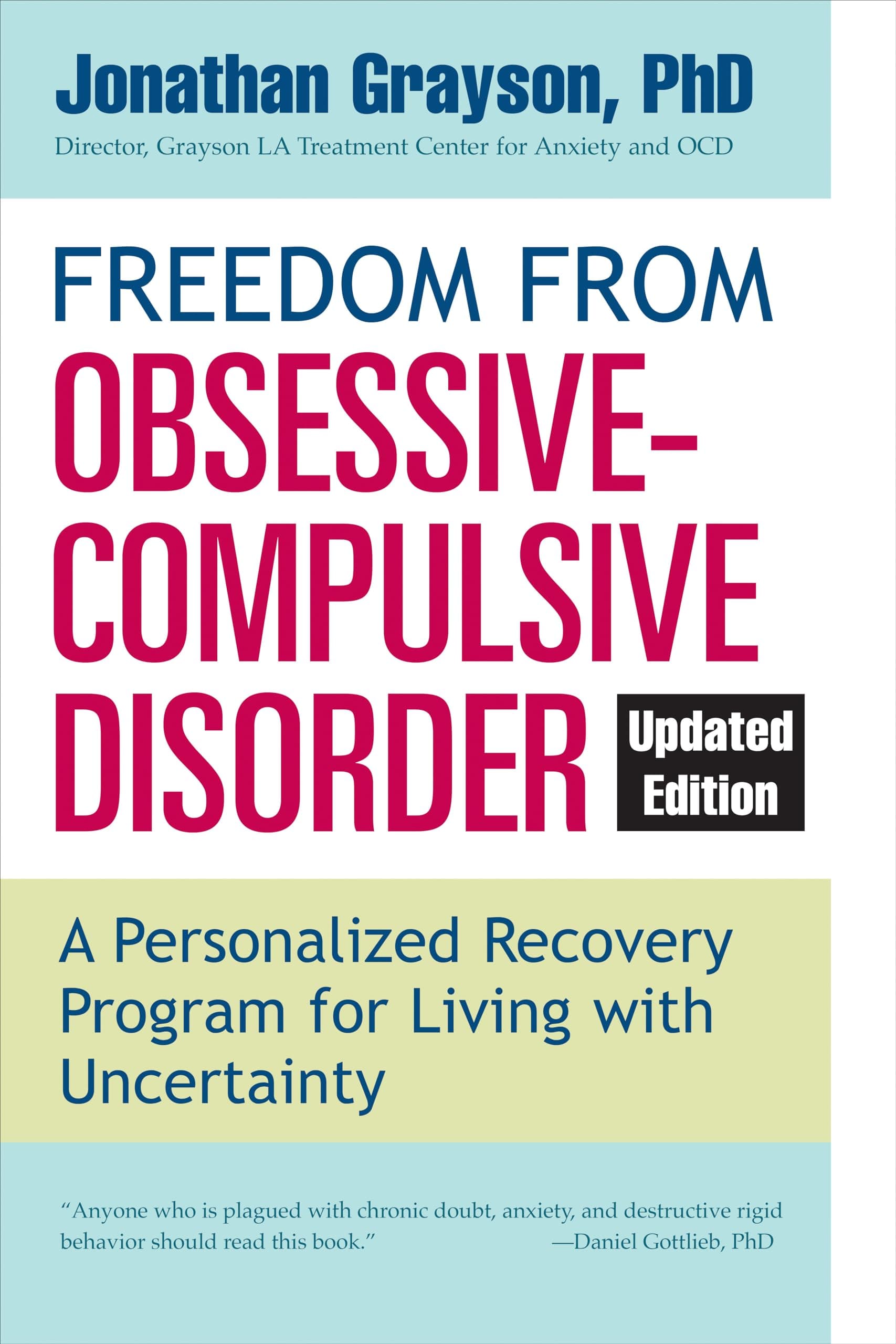
📘 Unlock your mind’s freedom—fight fear with science and strategy!
Freedom From Obsessive Compulsive Disorder by Jonathan Grayson, Ph.D., is a top-ranked, evidence-based guide offering comprehensive exposure and response therapy techniques. Praised for its balanced approach that includes cognitive behavioral therapy and medication considerations, this book has helped thousands overcome OCD and manage anxiety, making it a must-read for professionals seeking mental clarity and resilience.


| Best Sellers Rank | #30,671 in Books ( See Top 100 in Books ) #7 in Obsessive Compulsive Disorder #12 in Compulsive Behavior #51 in Anxiety |
| Customer reviews | 4.7 4.7 out of 5 stars (440) |
| Dimensions | 15.2 x 2 x 22.8 cm |
| Edition | Updated ed. |
| ISBN-10 | 042527389X |
| ISBN-13 | 978-0425273890 |
| Item weight | 352 g |
| Language | English |
| Print length | 384 pages |
| Publication date | 6 May 2014 |
| Publisher | Berkley Books |
A**A
Honestly one of the best books on OCD I have read. Grayson’s suggestions are effective and evidence based. They are also comprehensive and nuanced. For example, he doesn’t neglect the “cognitive” part of CBT, and addresses cognitive disortions. Yet he shows us how does this without falling into reassurance. Also, he is not against medication for those who need it, unlike some other OCD psychologists. Overall a very thorough, effective and balanced book. In conjunction with therapy, it really helped turn my life around!
C**N
era un libro para regalar pero la persona que se lo ha leido lo ha valorado como muy bueno, interesante y bien escrito
A**.
I've read numerous books on OCD and anxiety, including "Getting Control" and "The Imp of the Mind" by Lee Baer, "You Are Not Your Brain" by Jeffrey Schwartz, "Overcoming Obsessive Thoughts" by Clark and Purdon, and "Hope and Help for Your Nerves" by Claire Weekes. I recommend each of these books in their own way, especially "The Imp of the Mind" and "Hope and Help for Your Nerves". Each one has helped me recover from a period of anxiety. However, Dr. Grayson's book is on another level. I'm an OCD sufferer, having gone through many different forms over the years, including Harm-OCD, obsessing about obsessing, health concerns, Relationship OCD, and others. Other books were good, and they provided a lot of good reassurance, but as you may know, with OCD, reassurance isn't always a good thing. I found little to no reassurance in this book, instead I found strong motivation, tools for recovery, and resources to support me in the process. Dr. Grayson is a big proponent of Exposure and Response Prevention, the "gold standard" of OCD treatment today. In a way, there's quite a bit of "tough love", but that's exactly what we need. And at the risk of sounding less OCD and more schizophrenic, it's like Dr. Grayson could read my mind. So many times he said "You're probably thinking..." or "You know that...", and he was almost always right. He has a deep, deep understanding of the OCD mind. His understanding was more evident than any other author I've read. While reading previous books, I ignored exercises because I thought they were silly, contrived, or unnecessary. He addresses this mentality, and I found myself doing all of the exercises. The exercises are mostly very useful. He really lays it all out. He does a brief overview of OCD, but doesn't belabor it - after all, most of us who are reading this book know about it first-hand. He describes the various manifestations and related disorders, how their presence can present challenges, and how those challenges can be overcome. It's true that it's all treated mainly the same way, but it's naive to deny that there are unique challenges to each theme. He helps the reader design individualized recovery plans through numerous exercises. He addresses family and friends, teaching them how they can best support their loved ones with OCD. He lays out a clear plan to avoid major relapses and stay "better". Finally, he leaves the reader with resources for further help, including information on support groups, organizations, therapists, etc. He takes all of this complicated material and makes it easy - learn to live with uncertainty, and your life will improve. I'm confident in saying that this is the best book on OCD I've ever read. I absolutely recommend it to both the individual just learning about OCD and the learned, experienced individual. I will need to reread this one, but more importantly I will use its tools to beat my OCD.
L**.
Very pleased with this book. Will recommend.
B**N
Helpful book
Trustpilot
2 weeks ago
2 months ago