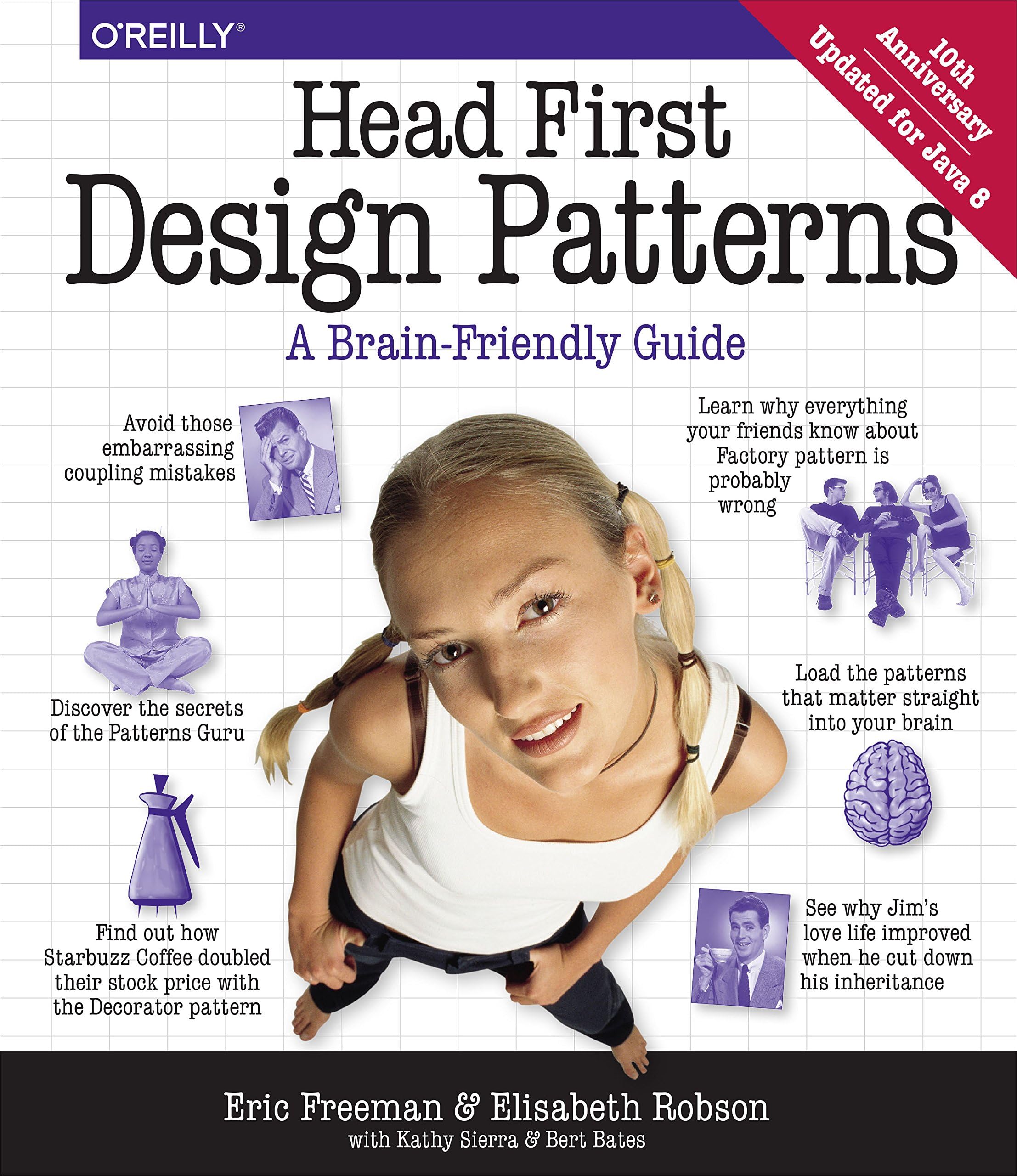
Head First Design Patterns
Product ID: 250733800
Buy anything from 5,000+ international stores. One checkout price. No surprise fees. Join 2M+ shoppers on Desertcart.
Desertcart purchases this item on your behalf and handles shipping, customs, and support to Italy.
You're not alone. At any given moment, somewhere in the world someone struggles with the same software design problems you have. You know you don't want to reinvent the wheel (or worse, a flat tire), so you look to Design Patterns--the lessons learned by those who've faced the same problems. With Design Patterns, you get to take advantage of the best practices and experience of others, so that you can spend your time on...something else. Something more challenging. Something more complex. Something more fun. You want to learn about the patterns that matter--why to use them, when to use them, how to use them (and when NOT to use them). But you don't just want to see how patterns look in a book, you want to know how they look "in the wild". In their native environment. In other words, in real world applications. You also want to learn how patterns are used in the Java API, and how to exploit Java's built-in pattern support in your own code. You want to learn the real OO design principles and why everything your boss told you about inheritance might be wrong (and what to do instead). You want to learn how those principles will help the next time you're up a creek without a design paddle pattern. Most importantly, you want to learn the "secret language" of Design Patterns so that you can hold your own with your co-worker (and impress cocktail party guests) when he casually mentions his stunningly clever use of Command, Facade, Proxy, and Factory in between sips of a martini. You'll easily counter with your deep understanding of why Singleton isn't as simple as it sounds, how the Factory is so often misunderstood, or on the real relationship between Decorator, Facade and Adapter. With Head First Design Patterns, you'll avoid the embarrassment of thinking Decorator is something from the "Trading Spaces" show. Best of all, in a way that won't put you to sleep! We think your time is too important (and too short) to spend it struggling with academic texts. If you've read a Head First book, you know what to expect--a visually-rich format designed for the way your brain works. Using the latest research in neurobiology, cognitive science, and learning theory, Head First Design Patterns will load patterns into your brain in a way that sticks. In a way that lets you put them to work immediately. In a way that makes you better at solving software design problems, and better at speaking the language of patterns with others on your team. Review: Eine Alternative zu trockenen Pattern-Katalogen - Da ich mich hauptsächlich mit Embedded-Entwicklung in prozeduralen Sprachen befasse, war mir das Thema Design-Patterns bisher relativ unbekannt. Im Web findet man einiges zu diesem Thema, allerdings meist sehr trocken und in Form von Pattern-Katalogen ohne konkreten Praxisbezug. Meist wird lediglich ein Beispiel in diversen Programmiersprachen umgesetzt und fertig. Über die Hintergründe, die zur Entwicklung eines Patterns geführt haben, findet man meist eher wenig Informationen. Nach einigem Stöbern bei desertcart fand ich dieses Buch, und ich muss sagen, dass sich die Anschaffung voll und ganz gelohnt hat. Keine sture Auflistung möglichst vieler Patterns, stattdessen eine didaktisch eigenwillig, aber äußerst effektiv gestaltete Reise in die fiktive Stadt Objectville, deren Bewohner mit allzu bekannten Problemen bei der Software-Entwicklung zu kämpfen haben. Jedes Kapitel widmet sich einem Pattern, wobei eine sinnvolle Auswahl aus den GoF-Patterns getroffen wurde. Beginnend mit einer Problemstellung werden die Patterns Schritt für Schritt erarbeitet, wobei auch Irrwege gezeigt und erläutert werden. Zwischendurch sorgen kleine Aufgaben für eine Festigung des Gelernten. Der Schreibstil ist locker, das Layout gezielt ungewöhnlich, um das Gehirn zur Mitarbeit anzuregen statt mit ewigen Textmengen zu langweilen. Für mich geht dieses Konzept auf, man kann das Buch regelrecht verschlingen, und trotzdem bleibt der Stoff "hängen". Zweiflern empfehle ich "Pragmatisches Denken und Lernen" von Andy Hunt, das einige Einblicke in die Hintergründe solcher Lehrmethoden bringt. Gute Englischkenntnisse sollten natürlich vorhanden sein, was allerdings bei der angesprochenen Zielgruppe heutzutage wohl ohnehin unerlässlich sein dürfte. Nachtrag: Meine Java-Kenntnisse würde ich maximal als "grundlegend" bezeichnen. Trotzdem hatte ich keine Probleme mit dem Verständnis der erarbeiteten Code-Beispiele, da es in diesem Buch nicht um das Ausreizen aller Sprachfeinheiten von Java geht, sondern eben um Software-Design und Struktur. Review: El mejor libro que he adquirido en mi vida - Es un libro que todo desarrollador debería leer, vale mucho y es una joya. Son claros y concisos al momento de explicar los temas además siempre mencionan las variantes de los patrones y en muchos casos muestran como lo hace Java y si existe alguna falta en la manera en que java ha implementado ciertos patrones de diseño.







| Customer Reviews | 4.7 out of 5 stars 1,127 Reviews |
E**E
Eine Alternative zu trockenen Pattern-Katalogen
Da ich mich hauptsächlich mit Embedded-Entwicklung in prozeduralen Sprachen befasse, war mir das Thema Design-Patterns bisher relativ unbekannt. Im Web findet man einiges zu diesem Thema, allerdings meist sehr trocken und in Form von Pattern-Katalogen ohne konkreten Praxisbezug. Meist wird lediglich ein Beispiel in diversen Programmiersprachen umgesetzt und fertig. Über die Hintergründe, die zur Entwicklung eines Patterns geführt haben, findet man meist eher wenig Informationen. Nach einigem Stöbern bei Amazon fand ich dieses Buch, und ich muss sagen, dass sich die Anschaffung voll und ganz gelohnt hat. Keine sture Auflistung möglichst vieler Patterns, stattdessen eine didaktisch eigenwillig, aber äußerst effektiv gestaltete Reise in die fiktive Stadt Objectville, deren Bewohner mit allzu bekannten Problemen bei der Software-Entwicklung zu kämpfen haben. Jedes Kapitel widmet sich einem Pattern, wobei eine sinnvolle Auswahl aus den GoF-Patterns getroffen wurde. Beginnend mit einer Problemstellung werden die Patterns Schritt für Schritt erarbeitet, wobei auch Irrwege gezeigt und erläutert werden. Zwischendurch sorgen kleine Aufgaben für eine Festigung des Gelernten. Der Schreibstil ist locker, das Layout gezielt ungewöhnlich, um das Gehirn zur Mitarbeit anzuregen statt mit ewigen Textmengen zu langweilen. Für mich geht dieses Konzept auf, man kann das Buch regelrecht verschlingen, und trotzdem bleibt der Stoff "hängen". Zweiflern empfehle ich "Pragmatisches Denken und Lernen" von Andy Hunt, das einige Einblicke in die Hintergründe solcher Lehrmethoden bringt. Gute Englischkenntnisse sollten natürlich vorhanden sein, was allerdings bei der angesprochenen Zielgruppe heutzutage wohl ohnehin unerlässlich sein dürfte. Nachtrag: Meine Java-Kenntnisse würde ich maximal als "grundlegend" bezeichnen. Trotzdem hatte ich keine Probleme mit dem Verständnis der erarbeiteten Code-Beispiele, da es in diesem Buch nicht um das Ausreizen aller Sprachfeinheiten von Java geht, sondern eben um Software-Design und Struktur.
D**L
El mejor libro que he adquirido en mi vida
Es un libro que todo desarrollador debería leer, vale mucho y es una joya. Son claros y concisos al momento de explicar los temas además siempre mencionan las variantes de los patrones y en muchos casos muestran como lo hace Java y si existe alguna falta en la manera en que java ha implementado ciertos patrones de diseño.
D**R
Great for Beginners and Valuable for Non-Beginners
Head First Design Patterns is an excellent introductory text for design patterns, plus object oriented design in general. Each chapter in the main part of the book covers one or two of the most common design patterns in great depth, including motivation, sample code, exercises, as well as answering many of the questions a reader is likely to have. Additionally, one of the things that makes the book great is that each chapter uses the context of the design pattern to introduce one or two important object oriented design principles such as the Open-Closed Principle and the Principle of Least Knowledge. Less common patterns are covered in the appendix, although in much less depth. I bought this book for my 17-year-old nephew -- who is in the second year of a high school computer programming course -- as a companion to the Gang of Four book. I think the two books work well together, with Head First Design Patterns working as a more accessible introduction to design patterns, and the Gang of Four book serving as a reference for later on. He definitely finds the Head First book easier to read as a beginner. Even I, with a college degree in Computer Science and 20 years in the software development industry, find it valuable, at least as a review. For those wondering about which edition they will get, I bought this book through Amazon and received the tenth anniversary edition, updated for Java 8. The main difference is that it takes advantage of the newly-introduced Lambda Expressions. Although the book uses Java throughout, C# developers will have little if any trouble with the examples. In many cases, the code is identical. Slight nitpick: Some of the patterns in the appendix are given short shrift in the interest of space. For example, the section on the Visitor Pattern leaves out the important fact that one of the main motivations for the pattern is to overcome the limitations of languages that support only single dispatch. Said another way, the Visitor Pattern is trivial to implement in languages that support multiple dispatch. For more detail on these design patterns, I recommend the Gang of Four book, or online resources.
と**も
買った方が良い
とてもしっかりしてる良本
E**R
Muito bom
Excelente livro, boa didática e já utiliza o Java 8
Trustpilot
2 weeks ago
2 days ago