We remain fully operational. Our teams are working around the clock to ensure your deliveries continue safely.

DOWNLOAD THE APP


Copyright © 2025 Desertcart Holdings Limited
DOWNLOAD THE APP
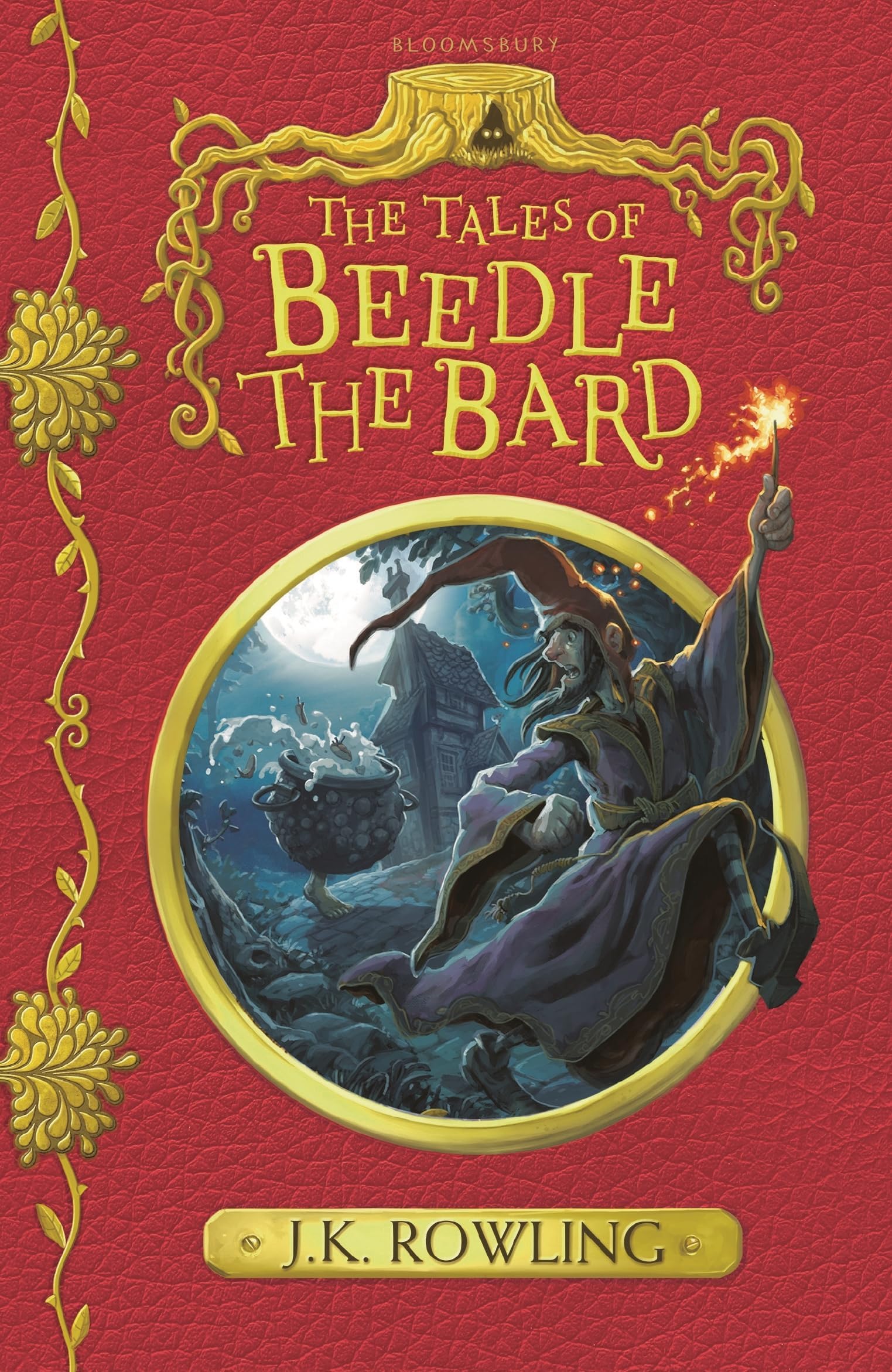
Buy anything from 5,000+ international stores. One checkout price. No surprise fees. Join 2M+ shoppers on Desertcart.
Desertcart purchases this item on your behalf and handles shipping, customs, and support to Italy.
Full description not available
J**I
Love it!
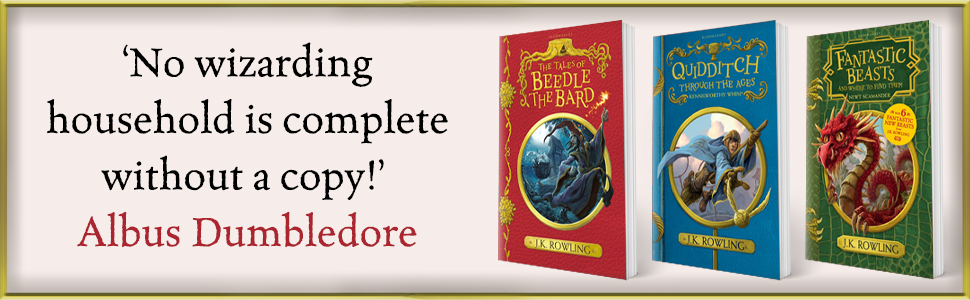
I don’t know if JK Rowling is a Christian or not. There’s a part of me that really doesn’t care if she is or not. Neither would prevent me from reading her books. But, no, it’s not like that. Of course I hope she knows the wonders of salvation and the grace of Jesus, but, well, whatever. There’s not really a way I can explain what I mean by that without being proverbially damned if I do and damned if I do not. How about I say it this way: I am one Christian man who is overjoyed that JK Rowling wrote the Harry Potter books and and even more overjoyed at the lesser acclaimed The Tales of Beedle the Bard.I know some people who would have never hired me to preach at their church if they had known about my cache of Harry Potter volumes that I so prominently displayed—after reading—on the bookshelves in my study or if they knew that I attended not one but two midnight release parties! It could be, perhaps, that it was those same volumes that caused some in my former church to cast a suspicious eye my way and, eventually, call for, and receive, my termination. I doubt it. I know what was in their houses too. (*Smile*)Many who belong to the uber-conservative christian caste of the church are terribly critical of anything Harry Potter. The bible writer called James wrote that, “With the tongue we praise our Lord and Father, and with it we curse human beings, who have been made in God’s likeness. Out of the same mouth come praise and cursing” (James 3:9-10). And so, to paraphrase: “Out of the same mouth comes praise for Narnia and cursing for Hogwarts.” Eh. That’s all it is. No one likes magic if it comes from the pen of someone who hasn’t stood up on an altar and declared their allegiance to Jesus.Frankly, I think that some were simply unhappy that children were actually, gasp, reading. Or maybe they were jealous that JK Rowling sold more books with hidden christian ideas than did Max Lucado with blatantly obvious christian ideas. After all, Rowling dared to talk about things like love, friendship, self-sacrifice, justice, righteousness, and, well, you get the idea. And kids ate it up by the book-ful as did many, many adults.But this has all been hashed and rehashed a million times over on blogs and in books. This short post is about Beedle and the short collection of wizard fairy tales ascribed to his pen and in this particular volume translated by the esteemed Hermione Granger. The book contains five such tales and is a scant 107 pages and can literally be read in under an hour. The five tales are wonderfully written in Rowling’s ironic and cheerful voice, but they are not her voice either. They are told in the voice of Beedle the Bard. Interspersed between each tale is commentary written by Albus Dumbledore. Rowling herself has written some footnotes explaining to us Muggles some of the more complex wizarding history and practices.It was in the introduction to the stories that I came across the point of the whole book, if, in fact, the ‘whole’ book (a collection of five tales) has ‘a’ point. There Rowling wrote:Beedle’s stories resemble our fairy tales in many respects; for instance, virtue is usually rewarded, and wickedness punished. However, there is one very obvious difference. In Muggle fairy tales, magic tends to lie at the root of the hero’s or heroine’s troubles—the wicked witch has poisoned the apple, or put the princess into a hundred-year’s sleep, or turn the prince into a hideous beast. In The Tales of Beedle the Bard, on the other hand, we meet heroes and heroines who can perform magic themselves, and yet find it just as hard to solve their problems as we do. Beedle’s stories have helped generations of Wizarding parents to explain this painful fact of life to their children: that magic causes as much trouble as it cures (vii-viii).Isn’t this the truth? I know that I have personally been the victim of many a magic spell gone wrong. And, too, have I learned that there is no secret spell I can cast that will make this problem disappear or that blessing appear—as if magic spells and charms exist merely to serve my ends and means. There are plenty of times when we certainly wish that magic worked that way. I wish sometimes I could conjure of an invisibility charm and vanish from the world, but it has yet to happen.In Dumbledore’s commentary on the fifth story The Tale of the Three Brothers he writes this:But which of us would have shown the wisdom of the third brother, if offered the pick of Death’s gifts? Wizards and Muggles alike are imbued with a lust for power; how many would resist the “Wand of Destiny”? Which human being, having lost someone they loved, could withstand the temptation of the Resurrection Stone? Even I, Albus Dumbledore, would find it easiest to refuse the Invisibility Cloak; which only goes to show that, clever as I am, I remain just as big a fool as anyone else (107).Sadly, while there may well be a Resurrection Stone and a Wand of Power, there is no such thing as the Invisibility Cloak. The one thing all of us would desire, to be hidden from Death and from others, is the one thing we cannot have in this life. It is a troubling fact of life that we cannot hide from anything. The Psalmist knew this: “Where can I go from your Spirit? Where can I flee from your presence?” (Psalm 139) For some reason God takes particular delight in forcing us to face all those people, place, and things that we would rather not face. He forces us to be seen and prevents us from being invisible. Oh, unhappiness!I think it is easy to want to be invisible, to want to hide from everything. Sometimes, we don’t even want to hide from Death (recall Job who, so unhappy about his so publicly displayed suffering, wished he’d never even been born.) Sometimes we just want to hide from people for a while. What I truly admire about these stories and the stories of Harry Potter is that it’s often not magic that solves the problems or brings the blessings we seek in life. Often, more often than not, it is wisdom that is required, and this wisdom is only acquired by seeing and being seen in and by this world, by facing death a thousand times a day, and by continuing to live day in, day out, in all the strength that comes from being utterly helpless.I recommend that you read this book because it is helpful for gaining some wisdom that will benefit you long before and after you reach the point in life where you realize that being invisible is simply not an option. Such wisdom is beneficial for those of us humans who realize that being seen is not only a privilege, but a responsibility.
F**R
A 12-year-old's review
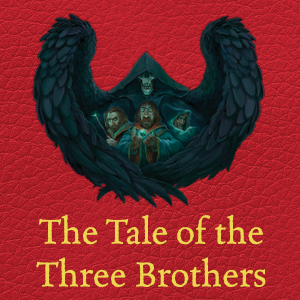
Instead of giving the overall book a review, I'll review each story separately.The Wizard and the Hopping Pot: 5 out of 5. This is because it's a very enjoyable tale about a cold-hearted wizard who learns his lesson. The references to Harry Potter are also enjoyable. To quote the editorial long review of the 5 tales on Amazon, "the kindly old wizard at the beginning of this tale reminds us of Dumbledore quite a bit." Dumbledore's commentary (a nice touch) is hilarious because of the sugar-coated fictional version of this story presented at the end of it. I loved how it said that Hermione Granger translated this book. It made it seem more of an authentic wizard's story book.The Fountain of Fair Fortune: 5.1 out of 5. This tale, in my opinion, may win the prize for the best written down fairy tale of all time. J.K. Rowling's beautiful illustrations to it are a treat to look at. The tale itself is well written, like all of them, and its characters are very real. It really makes the task of climbing up the hill to the Fountain seem extremely hard. I loved the ending, too. It was very unexpected. Dumbledore's commentary is at its highest point here, describing the catastrophic attempt to put the play on at Hogwarts. It's also interesting having one of the Malfoys complain about the story.The Warlock's Hairy Heart: 4.5 out of 5. This particular tale is a bit more gruesome than the others. It should not be read to the easily frightened. It depicts a warlock who thinks that falling in love makes people act foolishly. He finds a way to prevent himself from falling in love, but after meeting a talented and rich witch, his mind might not stay the same. The rest of the tale I'll let you read. It also has frightening illustrations, once again, like all the other illustrations in the book, drawn by J.K. Rowling. She is a very talented illustrator; it's very difficult to draw a human heart accurately, and she pulls it off.Babbitty Rabbity and Her Cackling Stump: 4.9 out of 5. An award should go to this one for having the funniest title. The story here is that our amazingly smart fairy tale king orders the execution of all wizards and witches and then orders a wizard to be his personal wizard despite the previous order. After hiring a fraud, it seems like this charlatan can pull it off, until a poor washer woman named Babbity cackles, leaving the king impatient to learn magic and a very bad situation for the charlatan. Dumbledore's commentary on form-changing wizards makes one think.The Tale of the Three Brothers: 5 out of 5. This story I won't bother giving part of the plot away, since anyone can either read Harry Potter 7 to see it, or hear it in the movie. It's a very interesting tale though, and Dumbledore's commentary is riveting. It offers a new history to the Elder Wand.My overall rating of the book is a ......4.987987 ..... out of 5. This book adds the perfect finish to the Harry Potter series!!!
T**D
Don’t Skip the Footnotes
This was so charming and fun, plus it was a great way to get back in the world after so long. I love fairy tales, and the footnotes written by “Dumbledore” were hilarious.
Trustpilot
1 month ago
2 days ago