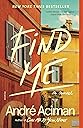
Find Me: A Novel
Product ID: 218817253
Desertcart purchases this item on your behalf and handles shipping, customs, and support to Italy.
A New York Times Bestseller In this spellbinding exploration of the varieties of love, the author of the worldwide bestseller Call Me by Your Name revisits its complex and beguiling characters decades after their first meeting. No novel in recent memory has spoken more movingly to contemporary readers about the nature of love than André Aciman’s haunting Call Me by Your Name . First published in 2007, it was hailed as “a love letter, an invocation . . . an exceptionally beautiful book” (Stacey D’Erasmo, The New York Times Book Review ). Nearly three quarters of a million copies have been sold, and the book became a much-loved, Academy Award–winning film starring Timothée Chalamet as the young Elio and Armie Hammer as Oliver, the graduate student with whom he falls in love. In Find Me , Aciman shows us Elio’s father, Samuel, on a trip from Florence to Rome to visit Elio, who has become a gifted classical pianist. A chance encounter on the train with a beautiful young woman upends Sami’s plans and changes his life forever. Elio soon moves to Paris, where he, too, has a consequential affair, while Oliver, now a New England college professor with a family, suddenly finds himself contemplating a return trip across the Atlantic. Aciman is a master of sensibility, of the intimate details and the emotional nuances that are the substance of passion. Find Me brings us back inside the magic circle of one of our greatest contemporary romances to ask if, in fact, true love ever dies. Review: Aciman continues his exploration of the stickiness and ecstasy and transcendence human desire - Call Me By Your Name has become a part of our cultural mythology, so this new sequel, Find Me could have been indulgent and expected, a sort of wish fulfillment to please readers. (For the record, I probably would have loved that version of the book, too.) I will not spoil anything here by saying this, but Elio is only in about half Find Me and Oliver only about a quarter. The sequel, instead, begins with Elio's father, Samuel, who gave that brilliant monologue at the end of CMBYN. In fact, through these three men—Samuel, Elio, and Oliver—Aciman is able to continue his exploration of the stickiness and ecstasy and transcendence of fullblooded, devoted, naked human desire instead of merely "continuing the story." Aciman gives us gorgeous writing, swoony love scenes, and some lovely new characters, but the philosophical wonderings of the author are given the brightest spotlight and these are the book's showpiece. I feel like I want to read the book again and soak in the wisdom of these pages all over again. A passage like the following is a good example of what we are in for: "Perhaps [...] music doesn't change us that much, nor does great art change us. Instead, it reminds us of who, despite all our claims or denials, we've always known we were and are destined to remain. It reminds us of the mileposts we've buried and hidden and then lost, of the people and things that mattered despite our lies, despite the years. Music is no more than the sound of our regrets put to a cadence that stirs the illusion of pleasure and hope. It's the surest reminder that we're here for a very short while and that we've neglected or cheated or, worse yet, failed to live our lives. Music is the unlived life." I'm not sure all readers will like these characters and how they feel so unabashedly. They don't merely love; they ache. They don't merely regret; they devastate. Reading Find Me made me think about what Hanya Yanagihara said about A Little Life and why she chose to write primarily about men: "I do think that men, almost uniformly, no matter their race or cultural affiliations or religion or sexuality, are equipped with a far more limited emotional toolbox. Not endemically, perhaps — but there’s no society that I know of that encourages men to put words to the sort of feelings — much less encourages their expression of those feelings — that women get to take for granted. Maybe this is changing with younger men, but I sometimes listen to my male friends talk, and can understand that what they’re trying to communicate is fear, or shame, or vulnerability — even as I find it striking that they’re not even able to name those emotions, never mind discuss their specificities; they talk in contours, but not in depth." Aciman's male characters are a gorgeous counterpoint to Yanagihara's—both shadows of the other. Samuel and Elio and Oliver feel deeply, and artfully name those feelings shamelessly. Even when they keep life at arms length and rationalize away their emotional needs, they burn and dare to testify to that burning. It's a joy and a sweet release to participate in these characters' lives—so scared and alive and childlike and tender and bold. And for the record, I love the resolution Aciman gives us of Elio and Oliver. So show up for Elio and Oliver; and stay for the gift that Aciman's language. And maybe you'll also feel the tug of a life well lived by the time you reach the book's end. Review: Beautiful but heartbreaking: What we regret - I read this in one day. I think many people are hoping for a detailed continuation of the Oliver/Elio story, and this book is not that entirely. I still loved it. If you read the book version of "CMBYN", you'll know it does not end how the movie ends, and it progressed farther. I may not be providing **spoilers** but be warned (you may remember Elio mentions in the first book that his father has died; I gave it to a friend so I couldn't check if he mentions he has a half-brother too). Half of "Find Me" is focused on Eliot's father, who, many years into the future, is now divorced. He meets young Miranda on an Italian train, en route from Florence to Rome to see Elio for an evening. I thought, these two characters are WAY too impulsive - but then I realized I am so much like Sami, and I let myself get absorbed into the story. The remaining larger part consists of Elio teaching in Paris and meeting Michel, an older man (I would have liked more on them, but knew their affair won't last), and Oliver, aged 44, hosting a farewell party in NYC as he and his wife are about to move back to New Hampshire - and he realizes he is going to leave her and be with Elio. The last small portion is of Elio and Oliver together - there isn't much, and I've read people are disappointed in that. I was struck by the threads within all the stories and both books - you may want to skip portions, but they are all connected (e.g., Miranda's father tells a story of a violinist who is killed in a concentration camp, and this is also part of a later chapter, as is someone playing Bach at Oliver's party, which Elio played for him 20 years earlier the summer they met). I think, reading it as person in her 50s, it really resonated with me - how we look back on our lives, feel regret, are shaped by who we have loved, try to move forward, and are hopeful we will find love (or find it again).
| Best Sellers Rank | #61,535 in Books ( See Top 100 in Books ) #81 in LGBTQ+ Family Life Fiction (Books) #102 in LGBTQ+ Literary Fiction (Books) #3,054 in Literary Fiction (Books) |
| Customer Reviews | 4.4 out of 5 stars 9,753 Reviews |
D**C
Aciman continues his exploration of the stickiness and ecstasy and transcendence human desire
Call Me By Your Name has become a part of our cultural mythology, so this new sequel, Find Me could have been indulgent and expected, a sort of wish fulfillment to please readers. (For the record, I probably would have loved that version of the book, too.) I will not spoil anything here by saying this, but Elio is only in about half Find Me and Oliver only about a quarter. The sequel, instead, begins with Elio's father, Samuel, who gave that brilliant monologue at the end of CMBYN. In fact, through these three men—Samuel, Elio, and Oliver—Aciman is able to continue his exploration of the stickiness and ecstasy and transcendence of fullblooded, devoted, naked human desire instead of merely "continuing the story." Aciman gives us gorgeous writing, swoony love scenes, and some lovely new characters, but the philosophical wonderings of the author are given the brightest spotlight and these are the book's showpiece. I feel like I want to read the book again and soak in the wisdom of these pages all over again. A passage like the following is a good example of what we are in for: "Perhaps [...] music doesn't change us that much, nor does great art change us. Instead, it reminds us of who, despite all our claims or denials, we've always known we were and are destined to remain. It reminds us of the mileposts we've buried and hidden and then lost, of the people and things that mattered despite our lies, despite the years. Music is no more than the sound of our regrets put to a cadence that stirs the illusion of pleasure and hope. It's the surest reminder that we're here for a very short while and that we've neglected or cheated or, worse yet, failed to live our lives. Music is the unlived life." I'm not sure all readers will like these characters and how they feel so unabashedly. They don't merely love; they ache. They don't merely regret; they devastate. Reading Find Me made me think about what Hanya Yanagihara said about A Little Life and why she chose to write primarily about men: "I do think that men, almost uniformly, no matter their race or cultural affiliations or religion or sexuality, are equipped with a far more limited emotional toolbox. Not endemically, perhaps — but there’s no society that I know of that encourages men to put words to the sort of feelings — much less encourages their expression of those feelings — that women get to take for granted. Maybe this is changing with younger men, but I sometimes listen to my male friends talk, and can understand that what they’re trying to communicate is fear, or shame, or vulnerability — even as I find it striking that they’re not even able to name those emotions, never mind discuss their specificities; they talk in contours, but not in depth." Aciman's male characters are a gorgeous counterpoint to Yanagihara's—both shadows of the other. Samuel and Elio and Oliver feel deeply, and artfully name those feelings shamelessly. Even when they keep life at arms length and rationalize away their emotional needs, they burn and dare to testify to that burning. It's a joy and a sweet release to participate in these characters' lives—so scared and alive and childlike and tender and bold. And for the record, I love the resolution Aciman gives us of Elio and Oliver. So show up for Elio and Oliver; and stay for the gift that Aciman's language. And maybe you'll also feel the tug of a life well lived by the time you reach the book's end.
N**L
Beautiful but heartbreaking: What we regret
I read this in one day. I think many people are hoping for a detailed continuation of the Oliver/Elio story, and this book is not that entirely. I still loved it. If you read the book version of "CMBYN", you'll know it does not end how the movie ends, and it progressed farther. I may not be providing **spoilers** but be warned (you may remember Elio mentions in the first book that his father has died; I gave it to a friend so I couldn't check if he mentions he has a half-brother too). Half of "Find Me" is focused on Eliot's father, who, many years into the future, is now divorced. He meets young Miranda on an Italian train, en route from Florence to Rome to see Elio for an evening. I thought, these two characters are WAY too impulsive - but then I realized I am so much like Sami, and I let myself get absorbed into the story. The remaining larger part consists of Elio teaching in Paris and meeting Michel, an older man (I would have liked more on them, but knew their affair won't last), and Oliver, aged 44, hosting a farewell party in NYC as he and his wife are about to move back to New Hampshire - and he realizes he is going to leave her and be with Elio. The last small portion is of Elio and Oliver together - there isn't much, and I've read people are disappointed in that. I was struck by the threads within all the stories and both books - you may want to skip portions, but they are all connected (e.g., Miranda's father tells a story of a violinist who is killed in a concentration camp, and this is also part of a later chapter, as is someone playing Bach at Oliver's party, which Elio played for him 20 years earlier the summer they met). I think, reading it as person in her 50s, it really resonated with me - how we look back on our lives, feel regret, are shaped by who we have loved, try to move forward, and are hopeful we will find love (or find it again).
B**Á
Hopefull message and closure to Elio's and Oliver's story, just not exactly what you might expect
The book itself is very nice, although it does not have the same feeling as "Call me by your name" does. It feels more like an epilogue and I often found myself reading just in order to finally reach the conclusion. That does not mean the book is not worth it, as it is very poetic and does make you feel and think over the story. However; I can see how some readers, especially those expecting a sequel to "Call me by your name", might be a little dissapointed. The book has three narrators telling three stories, that take place in different periods of their lives - Elio's father, Elio himself and Oliver. While they are all connected, each of them is very different and it can sometimes feel a bit out of context, although at the end, looking back, they all make kind of sense as to the point/message of the book (which us beautiful, hopeful and very relatable). What's probably most important to majority of readers , "Find Me" does have a closure for Elio's and Oliver's story, however, to be honest, it's only at the very end of the book, and it's definitely the part/ narrator (thanks, Oliver) that is the hardest to read. It does remind me of "Call me by your name" in style, but since the narrator here is not a teenager, the content and the whole point of view is very different. If you liked "Call me by your name", or you simply want to know whether they do get a happy ending after all, read it, but don't expect anything like "Call me by your name". This feels more like an epilogue, not a standalone book.
S**.
Loved it
I read this sequel in a day. It made me feel all the feels and I loved it. I cried a few times, laughed a few times and felt connected to it. The intense feelings and life lessons in the book are so profound. This books shines a spotlight on those that have loved and lost or feel like they are “just walking through life” and not fulling living. Yes, i wish that we had more Oliver and Elio in it and, at times, the writing is scattered and a bit confusing but that should not take away from this beautiful book. For me, it was breathtaking and reminded me of the “Oliver’s” in my life that left such a profound mark.
C**R
Disappointing sequel
Prior to reading Find Me, I watched the CMBYN movie twice, then read the book, then watched the movie a 3rd time. Finally, I listened to the audiobook narrated by Armie Hammer. I loved all of it. Needless to say, I was pumped up for this sequel. Though I liked the CMBYN movie very much, IMHO the book is much better. If you haven’t read it, do yourself a favor and read it. There is so much more going on in the book that is not at all obvious in the movie. As I did, you might then want to watch the movie again. You will have a much deeper appreciation of some of the dialogue, much of which is lifted right out of the book. For example, when Oliver asks Elio what he’s thinking about and Elio answers “It’s private” or “It’s personal”, the book tells you in detail what those thoughts are. Also, the book ends 20 years after Oliver leaves Italy. As a sequel to CMBYN, Find Me disappointed me, and my rating is based on this disappointment. Admittedly, given the way the original book ended, writing a satisfying sequel was always going to be a challenge. Nevertheless, Find Me is billed as a sequel. Whether it reads well as a standalone novel will have to be evaluated by other reviewers. ***** SPOILERS THROUGHOUT First, it seems a common misconception by many reviewers that the first-person narrator of CMBYN was the 17-year-old Elio. No. It was the 37-year-old Elio recalling his thoughts and feelings and events of 20 years earlier, 5 years earlier, and finally the recent past. That’s why writing a sequel was always going to be hard. The original book had already set in stone that Oliver and Elio had little communication for 15 years after Oliver left Italy. The final chapters of CMBYN and Find Me both occur in the recent past (from the 37-year-old Elio’s perspective). In this way, CMBYN and Find Me fit together in an interesting way, where CMBYN fits into Find Me’s larger skeleton, if you will. CMBYN fleshes out parts of that skeleton in terms of one character’s experiences in passionate, nostalgic detail. It’s sort of like CMBYN is one installment in a larger series (like the original Star Wars movie). The problem with Find Me is that, while it attempts to flesh out other parts of the skeleton in detail, it covers the eventual reuniting of Oliver and Elio so briefly and with such broad strokes that it is ultimately unsatisfying. One can imagine CMBYN as the story of Elio’s experience from long ago events, which Elio wants to tell Oliver when they finally reunite in the final chapter of Find Me. (In other words, insert CMBYN in the final chapter of Find Me as a story that Elio wants to tell Oliver.) But the problem is that, as he states in Find Me, Oliver doesn’t want to revisit the past. Huh? What a missed opportunity. We readers are desperate to hear Oliver’s side of the story, in passionate and nostalgic detail, and we want to reconnect with the passion and nostalgia of CMBYN. Having Oliver and Elio discuss the past would have been a perfect opportunity for Oliver to share his side of the story. But Find Me disappoints. Instead of a passionate and nostalgic development of Oliver’s story, Find Me gives us other stories about relationships that are like parables of the story of Oliver’s and Elio’s relationship. We get three, separate first-person narrators, each telling his own story, but in the same, rather dispassionate, voice. It’s hard to tell these narrators apart from one another in terms of personality, tone and style. They all sound the same. They are: Elio’s father, Elio, and Oliver. Elio’s father’s story is the longest and sets the stage for the remainder of the book, introducing various themes. Time (with a capital T) is a recurring theme in Find Me. Parallel Lives is also a theme (though I can’t recall whether it was carried forward from CMBYN). In Find Me, both Elio and his father narrate their own interesting stories that elucidate these themes, but Oliver’s story (chapter 3) is too brief and underdeveloped. If Find Me has any of the passion and nostalgia of CMBYN, it is provided by Oliver in the chapter he narrates, but much too briefly. Age Gap Relationships is also a theme, but do we really want to imagine the sex scenes between the 31-year-old Elio and a 60-year-old man? Or Elio’s father with a woman half his age? One reviewer even called it “gross”. Find Me puts more time and effort into describing such sex scenes than it does describing the sex between Elio and Oliver upon reuniting. What a disappointment. It’s almost as if Elio’s and Oliver’s reuniting is an afterthought. WHAT I WOULD HAVE PREFERRED CMBYN leaves us with unanswered questions, especially around Oliver’s thoughts and feelings. Especially in the 80’s, one can rather easily imagine that he might choose to lead a straight life despite having had this intense relationship with a man. Maybe he viewed it as just a fling. On the other hand, maybe he viewed it as so special that it couldn’t possibly be recreated. Maybe he viewed Elio as too young, which certainly would have been reasonable. Had he had relationships with men before Elio? Who was the girlfriend who eventually became his wife? Maybe he struggled over his sexual orientation. Maybe he was in denial about his feelings for Elio. Maybe he told his wife about Elio. Maybe he had other flings with other guys. But we don’t know. We are left to wonder. I would have loved Find Me to address these questions. Given his writing talents, I feel little doubt that Aciman could have done so without lapsing into clichés or common tropes and without labeling Oliver’s orientation. Another big question around Oliver is: what was it about Elio that he found attractive? We never find out. We know a lot about Elio’s attraction to Oliver from CMBYN, but why Oliver feels attracted to Elio remains largely a mystery. Are we to assume that Oliver viewed Elio simply as a toy boy to be played with and abandoned? Find Me could have put such a theory to rest or, alternatively, maybe Oliver had viewed Elio that way at first and maybe it took years for him to realize that there was something deeper going on. But we don’t know. So many possibilities. CMBYN contains a chapter that I call a “dream sequence”, namely the somewhat fantastical third chapter where Oliver takes Elio to a poetry reading in Rome and they end up spending the evening with the crowd, going out to dinner with them where the poet gives a soliloquy about love. One possible storyline that I think could have been a really satisfying sequel to CMBYN would have been the development of a dream-like fantastical Parallel Life where Elio and Oliver maintain a relationship after Oliver leaves Italy. They could write letters back and forth and see each other while Elio is attending college in the States and see where things go from there. Aciman could do a fantastic job with such a premise, and keep the passion and nostalgia of CMBYN alive (while also depicting a parallel universe where Oliver and Elio don’t communicate at all). Perhaps a subject for fanfic if Aciman isn’t going to do it. What Aciman does give us in the way of bringing Elio and Oliver back together in Find Me is absolutely unsatisfying. Essentially, one day Oliver decides that his marriage is over and he wants to go back to Italy and see Elio again after 20 years of little communication. And boom, they are back together. That’s it. So the only thing keeping them apart was Time (with a capital T), because Oliver’s marriage was destined to fail and Elio was waiting all these years for Oliver to “find me”. Even if that’s believable, it’s questionable whether it’s a story worth telling. It’s hard to imagine a movie sequel emanating from this book.
C**L
The perfect sequel....
I loved this sequel to "Call Me By Your Name", and completely disagree with other reviews bemoaning that Elio and Oliver don't finally get back together till the last handful of pages. If they'd gotten together sooner, it would have been a repeat book of Call Me By Your Name. Just re-read CMBYN if you want to re-capture the Elio/Oliver initial romance. Find Me is about the reality of how their relationship could and would likely unfold under the circumstances of their lives, distance, and gay acceptance or lack thereof of THAT time. Each character (especially Oliver) needed their growth and realization away from each other to make their reuniting as genuine and without doubt, as it was. A heart's calling not diminished by time or distance. One of the most poignant parts of Call Me By Your Name, for me, was Elio's father's clear-the-air speech, if you will, when Elio returned home after he and Oliver's getaway. What an insightful and special man and father! On page 112 of Find Me, Elio speaks of, tells his father he made him who he is today, and he could see his father now not just as his father, but as a man in love...the importance of that clarity. Elio says it makes him happy, almost envious. He speaks of how his father taught him how he has this one life to live and time is stacked against us all. So I enjoyed reading about the father fleshed out more in Find Me, and his unexpectedly finding his own truth and joy....an example that no doubt further propelled Elio to stay true and focused on his first love, not allow himself to write it off as just a first love, done and over. Samuel was an excellent example to his son. THIS, for me, tied together why the father figured so prominently in Find Me....his profound influence on his son in all ways. And that is such a huge component of how gay or bisexual children grow up perceiving themselves. Elio is completely comfortable with himself, sure of his heart. Unusual in that era. That, to me, was the essence of both books! Elio completely trusting in his heart. A huge part of that came from Elio's relationship with his father. I didn't get that vibe from Oliver; his was a different experience. Both from his saying in CMBYN that had his father known of his bisexuality, he would have "carted him off to a correctional facility".....to Oliver apparently not believing he could pursue a forever-relationship with Elio, instead pursuing a heterosexual marriage back in the U.S., as though it was the only real choice. I've seen some criticize Oliver leaving his kids and wife in the end, as though callously, selfishly or without thought, but I can't imagine a crueler thing relationship-wise than to stay with someone while your mind and heart are hundreds of miles away. I'm actually a bit shocked that others (as per negative reviews) aren't seeing that about Find Me! Really? The very book title "Find Me", to me, reflects all that it took for Oliver to live with his choices and the cost of them, search his most deeply-rooted convictions, and recognize then seek his un-lived life before returning and finding Elio. Oliver didn't have the supportive background to fully know and find himself and feel secure in himself the way Elio had from a younger age, largely due to his supportive father. In that way, Elio was way ahead of Oliver. My only disappointment is that it appears Find Me will not be made into a movie as well......
B**E
The love stories continue...
Interesting to see that responses to this book are all over the map. I'm definitely in the Loved It contingent. I agree with Kim's assessment that it's more a companion novel than a sequel, but I found it emotionally engaging in its own right. Parents sometime separate once their children are grown; dear friends of mine had a very amicable divorce once their daughters were of age, and everyone survived. Clearly Samuel and Anabelle have done so here, for she scarcely exists in this novel. Instead, we encounter Samuel on a train to Rome to visit Elio, now a concert pianist and music teacher. En route, he meets Miranda, much younger and a bit standoffish. But something sparks, and the two find themselves hopelessly attracted. I have to say, I loved my husband within days of meeting him, more than 27 years ago, so this doesn't seem that far-fetched to me. The particulars of their burgeoning affair are richly romantic - I mean, it's set in Rome. And Samuel is far more likable than some of Aciman's other heroes. We're genuinely delighted by his unexpected happiness, even if neither party is certain that this can last. In the second section, Elio appears. He and Miranda instantly accepted one another in his father's life. Years later, they have become very close, and Elio loves their young son. More significantly, he has moved to Paris and met Michel, also much older than he. (Aciman is now d'un certain age; his literary heroes seem to have no trouble attracting gorgeous young paramours.) In like fashion, Elio and Michel are powerfully drawn to one another, in the equally romantic settings of Paris and the French countryside. Needless to say, Oliver takes center stage in the third section. At his going-away party from a sabbatical at Columbia, he shamelessly flirts with two younger colleagues. (He's now 44.) Of course, one's a man and the other a woman; Aciman is a firm believer in bisexuality. Despite his wife's dismay, and the other guests' apparent obliviousness, Oliver charms both of them. But during it all, he comes to a major insight. I will tell you nothing of the coda, but it builds on all that has come before. As in each of the previous sections, it's richly romantic, highly sentimental. One aches for this all to last, or even to be true. Loved it, loved it, loved it. I don't enjoy all of Aciman, and I hope he will resist flogging this story past its current delicate state. But it's a great joy to read about mature adults facing titanic emotions; romance is not solely the province of the tragic young.
T**Y
Unexpected but good
I liked the father’s storyline the best. You could hear a distinct voice with each section. It was a bit cheesy at parts and self indulgent but still enjoyable.
T**N
A chance to consider intimacy deeply
I thought Call Me By Your Name was outstanding. At its end I thought I would never stop crying. How could anyone walk away from Elio much less Oliver? I rationalised it so I could stop feeling deep grief. Then I found Find Me. The discussion about lifetimes and intimacy deepened and, so, I had more to think and feel. Find Me is a must read for those who want to understand more.
L**S
Chegou perfeito e bem embalado.
(Essa avaliação se refere apenas ao estado do livro físico; ainda não li para avaliar o conteúdo.) O livro chegou em perfeitas condições, apesar de não ter sido a capa que imaginei que teria, já que ele estava com outra capa na página de compras da Amazon, mas não me importo muito com isso. Ele é maior que o primeiro livro (vide foto), a diagramação é estranhinha (as letras são de um tamanho bom, mas o recuo é bem grande), mas nada que vá impactar na leitura — na verdade, é até melhor caso você queira fazer anotações nas margens. Ele não é "floppy"/fácil de abrir, então, para ler com mais conforto, você terá que quebrar a lombada. Eu particularmente prefiro livros mais moles e fáceis de abrir, mas não me incomodo de quebrar a lombada, então não é uma questão que impacta muito para mim. Recomendaria apenas caso esteja num preço ok, honestamente. Comprei por 60 e alguma coisa, se não me engano — o que hoje em dia é um preço ok para um livro importado. É uma facada ainda né, mas fazer o que.
G**.
Ottimo
Sì, forse, André Aciman ha preferito prendere delle vie tortuose e secondarie stavolta, ma "Find Me" costituisce la perfetta conclusione del suo precedente "Call Me by Your Name". Edizione originale inglese, grazie al cielo (e ad Amazon) disponibile anche in Italia. Da avere.
M**M
لا أنصح بهذا الكتاب ابداً وان واجهتكم نفس مشكلتي ارموه في سلة النفايات على الفور
رميته فورا بالزباله ماكنت ادري ان الكتاب للمثلين ، اخذته لان شكل الغلاف اعجبني وقلت اجرب اخذ كتب هذه المره بالحظ وكان اسوء حظ على العموم لن اكرر غلطتي مره اخرى ، لا ادري لماذا تباع هذه الاشياء العقيمه هنا ! ياللاسوء.
D**Z
If "Call Me By Your Name" is the base-game, "Find Me" is the much needed DLC
Yes, I used gamer lingo since I can't find better words to describe this book. As stated in the title of this review, "Find Me" is the author's Downloadable Content of his original great novel, it's amazing as an accompanying piece of great literature that doesn't contradict nor belittles his previous novel. Want to know in great detail about what happened in that 20-year gap? This is your book. Is it "Call Me By Your Name 2: Electric Boogaloo"? NOPE! (Pay no heed to those 1-star reviews that wanted CMBYN season 2). If you read both books you'd experience "Call Me By Your Name: The Definitive Edition" or CMBYN Ver.1.5 Anyway, 10/10 would recommend if you loved the original novel.
Trustpilot
2 months ago
2 months ago