Six
Product ID: 179352670
Buy anything from 5,000+ international stores. One checkout price. No surprise fees. Join 2M+ shoppers on Desertcart.
Desertcart purchases this item on your behalf and handles shipping, customs, and support to Italy.
2007 digitally remastered reissue of this 1973 album from UK legends Soft Machine. In the history of Rock music, few bands underwent such a stylistic musical transformation as Soft Machine. Starting life as a band that absorbed Soul and Jazz influences, the group were one of the first to embrace Psychedelia before heading off on a Jazz influenced tangent. In hindsight Soft Machine's evolution could have only taken place in the musical free thinking environment that was the music business of the late 60's / early 70's. It was an evolution that would produce some of the most startlingly brilliant and innovative music of the period. Sony/BMG. 2007. Review: Great follow-up to earlier CDs - I've always been a fan of the 1969-70 versions of Soft Machine (Third, Fourth & Fifth), but somehow never got around to this one, the first with Karl Jenkins. I've found it compulsively listenable. If you like a hybrid of prog rock and early jazz fusion, you're going to like this. DAL Review: In a leage of thier own. - You cant beat this stuff. Well thought out arangements. Mind bending riffs that put you in a higher plain of musical bliss.
D**E
Great follow-up to earlier CDs
I've always been a fan of the 1969-70 versions of Soft Machine (Third, Fourth & Fifth), but somehow never got around to this one, the first with Karl Jenkins. I've found it compulsively listenable. If you like a hybrid of prog rock and early jazz fusion, you're going to like this. DAL
W**!
In a leage of thier own.
You cant beat this stuff. Well thought out arangements. Mind bending riffs that put you in a higher plain of musical bliss.
W**.
Great service
Love it.excellent service.
G**R
Late Period SM
By a strange coincidence Soft Machine founding member and keyboardist Mike Ratledge’s death was announced the day after I first played my new CD copy of Six. Even before I heard about that I had decided one of the main takeaways from Six was Ratledge’s diminished role in the group. New sax player Karl Jenkins seemed to be taking over, especially on the live portion of the album. It was quite similar to some of the fusion music Miles Davis was producing in 169 and 1970.The four studio tracks featured more of Ratledge and less of Jenkins, but there was little of the feedback and fuzz he specialized in earlier in Soft Machine’s career. My description of those cuts would be borderline ambient. My overall feeling about Six was positive; I rated it about three and a half to four stars. (Although Amazon only has used copies as I post this, my copy is from the Talking Elephant label. Try searching elsewhere on the Web for it.)
B**N
great album
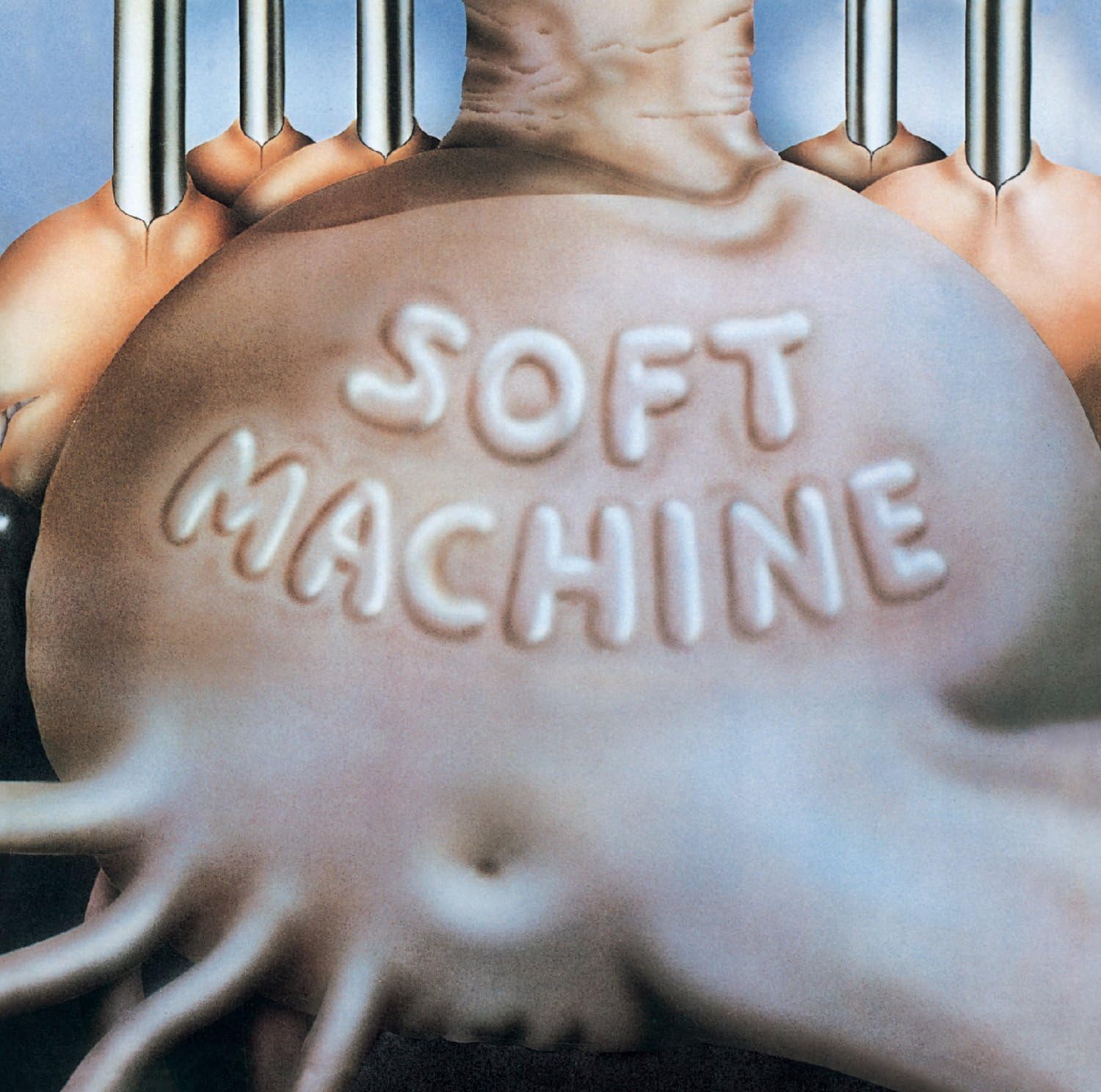
What makes Soft Machine's Six much different from the previous two albums is how the band returned to their melodic, jazzier ways that made them successful on their Third album. Six actually sounds like a continuation of Third and that's a *great* thing. These jams are much easier to get into (in other words, less challenging) not to mention quite melodic and exciting for the most part, compared to the Fourth and Fifth albums. This is definitely an album that wasn't given enough credit back in the day, and apparently that still holds true in todays world since only 12 people here on amazon have reviewed this album so far. Seriously, if you're someone who likes lots of jazzy jams combined with rock and done so in a tasteful and melodic way with saxophones, keyboards and drums played in a distinctly creative and moody kind of way, I highly recommend Six. However, for more challenging and straight up jazz albums (with very little connection to rock) Fourth and Fifth are worth exploring as well. There are a couple flaws though. A couple songs that shouldn't have been included on the album. Those would be "5 From 13" which is a very unnecessary drum solo (come on, I've had to experience WAY too many of these over the years) and "Lefty" which I guess is supposed to be some kind of experimental mood piece but ends up sounding like noodling during a rehearsal. As far as the second disc is concerned, well truth be told, it's not as good as the first one. The best song is unquestionably "Stanley Stamps Gibbon Album" because it's another solid Soft Machine jam. I believe some of the saxophone notes from "Chloe and the Pirates" were lifted directly from "37 1/2". It's still a GREAT song though, with lots of atmosphere. The biggest disappointment is definitely "1983". It consists of one ominous-sounding piano riff repeating for several minutes on end, never really changing until the final minute. Of course by then it's too late to capture my interest. But the one thing that's still a mystery is just what IS the picture on the album cover supposed to be? It looks gross, whatever it is!
J**N
soft machine six ok but...
There's enough good music to make one disk of quality, but instead they made a double of mixed music, some of which I could have made myself late on a Saturday night. 1983, by Hopper is terrible, I guess the writing was on the wall for him in neon. Chloe is excellent, as is the other Ratledge studio number. Ten minutes of the live half is worth listening to. If you don't this post-Wyatt period, buy As If... which contains Chloe, but then you'll miss Pigling Bland. It contains Kings and Queens to make up for this.
B**R
This is a great album even without Robert Wyatt
There is some opinion out there that Soft Machine was never the same after Robert Wyatt departed in 1971. But with the release of their fifth album, they created another great album, without his help, and they prove it again with Six, in 1973. By this point, they included John Marshall and Welshman Karl Jenkins (Jenkins is a common Welsh surname, and he was born in Wales, as had 4-era member Nick Evans), as well as Mike Ratledge and Hugh Hopper. I was a bit scared to try post-Wyatt Soft Machine, but after hearing 5 and Six I was blown away. Six is a double album, one of live material, the other studio. The first disc proves how much the band is able to pull it off live, with lots of great playing. Mike Ratledge, by this point, seemed much more interested in the electric piano than the organ, but it works fine, given this is fusion. They really pull out the stops and give some great jams. I don't think Karl Jenkins had any problem filling in Elton Dean's shoes. The studio half has a more minimalist feel, especially with "The Soft Weed Factor", some might find it a bit repetitious, others find it hypnotic (I find it the latter), this how anyone might feel about minimalist music in general. But then Karl Jenkins also gives some nice sax solos to go with it, and I really like Mike Ratledge's use of electric piano. "Chloe & The Pirates" is a cut I was completely familiar with way before I ever got Six, because this cut was included on a cassette I bought at a Coast to Coast hardware store (now defunct), in Florence, Oregon (hardly prog haven), of all places, back in 1992, an Italian compilation called Rock: Storia e Musica (with a picture of Mike Ratledge on the cover), actually it only had three cuts, one from Third ("Moon in June"), 4 ("Teeth") and of course "Chloe & the Pirates". I bought that cassette because I heard of Soft Machine and not familiar with them at the time and wasn't disappointed. "Chloe & the Pirates" is a pretty tripped out piece, with strange reversed sounds (apparently the electric piano) before they get into a mellow, jazzy jam. Don't be scared off by post-1971, post Robert Wyatt Soft Machine, as they continued making great music and Six is a great album to try!
R**S
transitional album
I was surprised at how good this album actually is. At the time of its release Elton Dean had left a new Karl Jenkins had entered the fold. Robert Wyatt and Phil Howard were gone replaced now by John Marshall. Half of this album are live tracks recorded at the very begining of this lineup the other half is a studio album. Both are transitional in that the live material show how fast karl Jenkins had taken control of the band. Hugh Hopper playing is fantastic sadly this would be his last album he would record with the Softs. The studio section show a new direction of what the band had they developed more with Hugh Hoppper gone into. This would be one of the last great classic Soft Machine albums ... Seven while good was written very hastly and the compostions were never developed properly. Shortly after the release of this album and prior to the release of Seven a rumor circulated that Soft Machine Members were to join up with John McLaughlin one can argue how good or bad that would have been. Most fans of Soft Machine will enjoy six a soild affair and a classic. This particular reissue sound quality is very good. I am comparing this to the One way release. The sound improvement is in the hiss and general brightness of the recording. It pretty much a wash if you have the japanese import copy. Each one of the reissues come with pretty much the same artwork and booklet adding information to each reissue.
T**O
Ottima stampa
Ultima di una serie di ristampe del primo catalogo Soft Machine, 6 e' un doppio album live/studio originalmente uscito nel 1973. Per un'analisi di queste composizioni jazz/rock strumentali rimando a trattazioni più dettagliate. La qualità è eccellente, con un suono nitido e senza scatti o rumori di fondo (dicono che i fruscii "fanno tanto" vinile, ma io ne faccio volentieri a meno). Nel mio caso sono stato fortunato, e ho ricevuto l'edizione limitata in vinile trasparente. Fantastico. Anche la busta apribile è curata, con un effettto satinato sul titolo. Non sono in grado di confrontare la qualità audio con le vecchie edizioni dell'epoca, avendo ascoltato solo, in precedenza, la versione CD, ma nel complesso sono più che soddisfatto. Se fossero tutti così i vinili...
K**.
Soft Machine Get The Deluxe Treatment They Always Deserved
The first copy of this album I owned I bought from a secondhand record shop a bit tatty sleeve but I loved the music. When C.D.s came along eventually it became more bother to have a turntable, I replaced my Soft Machine collection with reasonable quality C.D.s then again when remastered versions came out and now I have bought them on vinyl again! I am, however, more than pleased with both the recent C.D.s and my newly acquired vinyl. The Live Record and Studio Record suit different moods. Sometimes particular tracks would work their way into my brain Soft Weed Factor is one I really do wish this would go on for hours on occasions, it is so hypnotic, but the Stanley Stamps Gibbon Album wakes you up with a more abrasive intro’ before establishing a more muscular groove. I was really impressed with this reproduction, straight out the packaging. The sleeve feels exceptionally god quality, the cover looks wonderful and when I took the first disc out of its sleeve to play I found that it is not 180gm black vinyl , as described above but 180gm clear vinyl, which makes it into an even more cool experience, placing the discs on the turntable. The copy of Seven that I got at the same time is also clear vinyl. I have just shelled out a lot for Soft Machine on vinyl The Soft Machine, Soft Machine Volume II, Third, Fouth, Fifth, Six and Seven. I know these albums really well but they are the most rewarding vinyl albums I have (re)bought bar none. Some reissues I am not sure why they are so expensive as the quality of production does not match the price, this is not the case here, there has been real love and attention to detail
M**O
CD da non perdere!
Era da tempo che cercavo brani del complesso dei SOFT MACHINE. Finalmente la buona occasione! Non lasciatevela scappare anche Voi!
C**Z
Trés déçu. C'est à cent lieues de BUNDLES
Trés déçu. En lisant les 2 critiques précédentes, je me régalais d'avance. Hélas ! Ecoutant BUNDLES depuis des lustres, et plus récemment THIRD, où il y a un morceau extraordinaire, je m'attendais au must. Nenni. Pas de mélodies, un genre d'impro qui ne décolle jamais. Bref, je cherche encore l'intérêt de le ré-écouter.... Faut' dire que dans BUNDLES il y a Holdsworth à la guitare et un Jenkins plus en forme que sur SIX ici présent. En ce moment j'écoute SEVEN, qui aprés 5 morceaux me semble, au risque de me répéter, bien loin aussi de l'excellent BUNDLES.
T**A
Excellent
Excellent
Trustpilot
1 week ago
3 weeks ago