We remain fully operational. Our teams are working around the clock to ensure your deliveries continue safely.

DOWNLOAD THE APP


Customer Services
Copyright © 2025 Desertcart Holdings Limited
DOWNLOAD THE APP

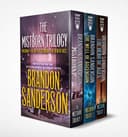
Mistborn Boxed Set I: The Well of Ascension, Hero of Ages [Sanderson, Brandon] on desertcart.com. *FREE* shipping on qualifying offers. Mistborn Boxed Set I: The Well of Ascension, Hero of Ages Review: Refreshing Fantasy Series With Female Lead - I will try to keep this as spoiler-free as possible. I was looking for a fantasy book (or trilogy) with likable female characters that were capable of doing things. This trilogy wasn't precisely that, but I liked it enough that it didn't matter. All in all I would definitely say this trilogy is worth reading. Anyone and everyone can get something out of the winding and unexpected path it takes to get to its conclusion. So, what about the female characters? While the main character (Vin) is female, almost all of the side characters of any import are males. Only Allrienne, and Tindwyll got any reasonable amount of screen time besides Vin, and even then, neither showed up until the second book. Allrienne, despite her amount of screen time, didn't really even do much of import in either of the last 2 books. A couple other female characters had minor roles (Shan, Amaranta, Beldre) with impact on the plot, but had very little screen time, and thus, were a bit more cardboard than they should've been. All in all, I felt like: 2-3 of the people in Kelsier's crew should've been women instead of men, and at least one of the two people vying for Luthadel in book 2 should've been a woman. Either OreSeur or TenSoon could've identified as female (such as their race can do) without any change to the plot, and one of the main antagonists could've been female. No female Inquisitors or Obligators that I recall seeing, and certainly none that had speaking roles or roles of any significance which means nothing would be changed by making some of them female. Almost all Allomancers were men (except Vin, Shan, Allrienne, and B...). Demoux could easily have been a woman without changing his plot at all, and to that point, I can't recall any other officers in the army being anything other than men. I will admit, I'm very glad Sanderson had the change of heart to make Vin female after writing the first chapter. But he could have gone a little farther and gender flipped some of the male supporting cast as well, since it wouldn't impact the story, but would mean a lot to the female reader base. The above was really my biggest gripe. And, while there is a bit of disappointment at what could've been, I did enjoy the story thoroughly regardless. All of the characters were fun to read about, and fit their parts well. Other Negatives: - Endless resources of metals except for Atium, which is obsessed over. I didn't necessarily want an "economics of supply and demand" story, but I feel like completely writing the limited supply of metals off as a given is going too far. Someone has to mine, process, purify, alloy, pulverize, and distribute these metals, and yet more people have to take a measure of each metal and alloy and combine them into the vials that the Allomancers carry around. This economic channel was completely glossed-over in every single book. And only occasionally was it a concern that someone ran out of metals, and then, only the metals on their person (there was always more in a crate back in camp/at home!), despite much of the main characters' time being spent under siege (or laying siege without resupply). What about potential for corrosion or rust while the metals were in storage? How many empty glass vials got thrown onto the ground over the course of 3 books? - The most flagrant abuse of this ignored metal economy was by Spook in book 3 -- how much metal was consumed daily for him to be able to flare Tin constantly (for months?)? Flaring is a much more accelerated form of metal consumption than burning, as evidenced by Vin flaring Pewter for hours to run long distances. Plus, Spook was alone in a city that he (and Elend) definitely did not control, with no resources (in terms of money or Allies) to support him. There was no way he could've had this huge of a supply of Tin without someone (bad) noticing, or Elend becoming suspicious at the amount of Tin he was using, or unless Tin was utterly dirt cheap. - Mention in book 1 of the metals being potentially poisonous if left in the stomach unburned for long periods of time; however, nothing is ever done with this mechanic. It is never mentioned how Kelsier or Vin or anyone gets rid of their metals at night like is implied must be done to keep them from being poisoned. Aluminum, the metal which burns up all remaining metals in an Allomancer's stomach, was supposed to be something only the Inquisitors knew about, and regular Mistlings couldn't burn it besides (unless they were an Aluminum Misting), even though they also could suffer the potential poisonous effects of their metals. - Sazed's emo-ness in book 3 got old after a while. I understand the point of it, but I felt it was beat to death. - Straff Venture was a caricature of a villain, and was much less interesting than the Lord Ruler or Yomen (or, to a lesser degree, Quellion). - Zane's role in book 2 makes no sense until you read book 3, which makes book 2 seem much weaker (and more confusing) while reading it. - Penrod seemed really underused in the books given his position of seniority/authority. He really felt like a character of author convenience, rather than an actual human with hopes and dreams and desires. Which is contrasted against so many other good, well-thought-out characters. - In some instances, the books went too far with the main characters barking up the wrong tree. A lot of time was spent on a misdirection and then when you discover it was a misdirection, you feel like you've wasted half a book reading about something that didn't matter. Positives: - Vin is a refreshing female lead character. She is unparalleled in skill, in physical prowess, despite being small of stature. Generally speaking, we don't end up in victim-like situations with Vin that couldn't just as easily have happened to a male in her place as protagonist. She doesn't hesitate to do what needs to be done, killing or otherwise. She doesn't pine all that much for Elend, and her estrangement from Elend doesn't cripple her in any way in book 1. - Not a lot of time is spent on romance in general. I like a good romance, sure, but this trilogy didn't need it, and I'm glad it was covered quickly (for what characters that had it) and without much fanfare. - Sazed was a breath of fresh air. Everything about his character was entertaining (except the Emo). - The magic system is refreshingly different. I like the notion of a clearly consumable resource that produces magical effects. It gives a different dynamic to the struggle of the powerful (magical) people in the setting compared to others. - I appreciate all the work that went into the setting, making it different than just "yet another medieval earth with elves" and the effort that went into tying the reasons for the setting being the way it is into the main storyline throughout the trilogy - Yomen in particular was an excellent antagonist in book 3. After a fashion, you could sympathize with him after so long of never expecting to be able to. - TenSoon's race and culture was nice and interesting, and I really enjoyed the chapters told from his perspective. - Marsh's final contribution in book 3 we knew was coming down the pipes for a long time, and it ended up being a very butterfly-effect sort of "last hurrah" for his character. The form it took was totally unexpected, but made total sense, and he would truly be the only character who could ever have known that this particular thing was what was needed to help push Vin back on the right track. - The finale in book 3 was great, and lived up to the personality of every single character involved in it -- Elend defended the people to the very end, Vin got to murderface someone who thought he was unkillable, and Sazed got to put his super nerd-itry to epic use. Review: Exceeds Expectations! - I first became a Sanderson fan when he took up the mantle to complete The Wheel of Time series by the late Robert Jordan. I liked Sanderson's writing style, but had no idea what his true imagination contained, what stories he could produce on his own, and so I was a bit hesitant to read his successful series, Mistborn. Not because I didn't believe he was a good writer, but because I did believe, and feared being disappointed. After reading Mistborn, I'm now very relieved. Sanderson not only lived up to my expectations, but surpassed them. As a reader and as a fellow writer, I'm beginning to discover what I truly love most about a story. I love adventure, I love action, but most of all ...I love characters - good, flawed and complex characters. Mistborn had a great story premise, but it didn't' take long before the storyline took a backseat to the characters, and I'm quite happy about that. The first character to really grab my attention, and my heart, was the young, scared and vulnerable Vin - street urchin, orphan and skittish loner. I found myself quickly rooting for her and wanting to see her rise to greatness. Then, it wasn't long before, like Vin, I found myself LOVING the company of Kelsier and his Crew. Perhaps I have a soft spot for a little rebellion, who knows. I can probably blame that on my Star Wars geek side, where the oppressed come together to fight against the Empire. Then of course, I instantly fell in love with the bookworm and prince charming-in-disguise, Elend Venture. However, when I first met this last character, I rolled my eyes, because of the obvious Cinderella motif, but at the same time I had to smile, because there's a reason to use this formula (poor, abused waif becomes the belle of the ball and catches the eye of the dashing prince) - it WORKS! It's something ingrained into the psyche of every young girl, even if we don't recognize it. That was a smart move on Sanderson's part. Then, of course, there are all those other supporting characters that I also fell in love with - including the hero of ages. The genius I found in the Mistborn series Sanderson displayed came in the simple fact that he took the ultimate bad guy, and transformed him into one of the heroes. I have to again use Star Wars as another reference - in the way Lucas took the ultimate bad guy (Darth Vadar/The Lord Ruler) and turned him into a good guy (Anakin Skywalker/Rashek the Terrisman), to reveal the ultimate bad guy (the Sith Lord Palpatine/Ruin), and bring `balance' to the Force/balance of Ruin & Preservation. Whether or not these similarities are intentioned or not, they worked! Combine those attributes mentioned above, and then mix them with magical elements of allomancy and feruchemistry, with political elements of a democracy vs. imperial rule, and religious overtones and the struggle and evidence of faith through the Terris Keepers and the battle of Ruin & Preservation, you've got a perfect mix for epic greatness. However, I will also place Sanderson into the Evil Author's Guild for his flair in killing many beloved characters and revealing a hidden, but pleasantly surprising, hero in the end. ~T.L. Gray Author of The Blood of Cain
| Best Sellers Rank | #1,085 in Books ( See Top 100 in Books ) #36 in Sword & Sorcery Fantasy (Books) #52 in Action & Adventure Fantasy (Books) #107 in Epic Fantasy (Books) |
| Customer Reviews | 4.7 4.7 out of 5 stars (31,630) |
| Dimensions | 4.86 x 3.65 x 7.28 inches |
| ISBN-10 | 125026717X |
| ISBN-13 | 978-1250267177 |
| Item Weight | 2.31 pounds |
| Language | English |
| Publication date | March 31, 2020 |
| Publisher | Tor Fantasy |
C**U
Refreshing Fantasy Series With Female Lead
I will try to keep this as spoiler-free as possible. I was looking for a fantasy book (or trilogy) with likable female characters that were capable of doing things. This trilogy wasn't precisely that, but I liked it enough that it didn't matter. All in all I would definitely say this trilogy is worth reading. Anyone and everyone can get something out of the winding and unexpected path it takes to get to its conclusion. So, what about the female characters? While the main character (Vin) is female, almost all of the side characters of any import are males. Only Allrienne, and Tindwyll got any reasonable amount of screen time besides Vin, and even then, neither showed up until the second book. Allrienne, despite her amount of screen time, didn't really even do much of import in either of the last 2 books. A couple other female characters had minor roles (Shan, Amaranta, Beldre) with impact on the plot, but had very little screen time, and thus, were a bit more cardboard than they should've been. All in all, I felt like: 2-3 of the people in Kelsier's crew should've been women instead of men, and at least one of the two people vying for Luthadel in book 2 should've been a woman. Either OreSeur or TenSoon could've identified as female (such as their race can do) without any change to the plot, and one of the main antagonists could've been female. No female Inquisitors or Obligators that I recall seeing, and certainly none that had speaking roles or roles of any significance which means nothing would be changed by making some of them female. Almost all Allomancers were men (except Vin, Shan, Allrienne, and B...). Demoux could easily have been a woman without changing his plot at all, and to that point, I can't recall any other officers in the army being anything other than men. I will admit, I'm very glad Sanderson had the change of heart to make Vin female after writing the first chapter. But he could have gone a little farther and gender flipped some of the male supporting cast as well, since it wouldn't impact the story, but would mean a lot to the female reader base. The above was really my biggest gripe. And, while there is a bit of disappointment at what could've been, I did enjoy the story thoroughly regardless. All of the characters were fun to read about, and fit their parts well. Other Negatives: - Endless resources of metals except for Atium, which is obsessed over. I didn't necessarily want an "economics of supply and demand" story, but I feel like completely writing the limited supply of metals off as a given is going too far. Someone has to mine, process, purify, alloy, pulverize, and distribute these metals, and yet more people have to take a measure of each metal and alloy and combine them into the vials that the Allomancers carry around. This economic channel was completely glossed-over in every single book. And only occasionally was it a concern that someone ran out of metals, and then, only the metals on their person (there was always more in a crate back in camp/at home!), despite much of the main characters' time being spent under siege (or laying siege without resupply). What about potential for corrosion or rust while the metals were in storage? How many empty glass vials got thrown onto the ground over the course of 3 books? - The most flagrant abuse of this ignored metal economy was by Spook in book 3 -- how much metal was consumed daily for him to be able to flare Tin constantly (for months?)? Flaring is a much more accelerated form of metal consumption than burning, as evidenced by Vin flaring Pewter for hours to run long distances. Plus, Spook was alone in a city that he (and Elend) definitely did not control, with no resources (in terms of money or Allies) to support him. There was no way he could've had this huge of a supply of Tin without someone (bad) noticing, or Elend becoming suspicious at the amount of Tin he was using, or unless Tin was utterly dirt cheap. - Mention in book 1 of the metals being potentially poisonous if left in the stomach unburned for long periods of time; however, nothing is ever done with this mechanic. It is never mentioned how Kelsier or Vin or anyone gets rid of their metals at night like is implied must be done to keep them from being poisoned. Aluminum, the metal which burns up all remaining metals in an Allomancer's stomach, was supposed to be something only the Inquisitors knew about, and regular Mistlings couldn't burn it besides (unless they were an Aluminum Misting), even though they also could suffer the potential poisonous effects of their metals. - Sazed's emo-ness in book 3 got old after a while. I understand the point of it, but I felt it was beat to death. - Straff Venture was a caricature of a villain, and was much less interesting than the Lord Ruler or Yomen (or, to a lesser degree, Quellion). - Zane's role in book 2 makes no sense until you read book 3, which makes book 2 seem much weaker (and more confusing) while reading it. - Penrod seemed really underused in the books given his position of seniority/authority. He really felt like a character of author convenience, rather than an actual human with hopes and dreams and desires. Which is contrasted against so many other good, well-thought-out characters. - In some instances, the books went too far with the main characters barking up the wrong tree. A lot of time was spent on a misdirection and then when you discover it was a misdirection, you feel like you've wasted half a book reading about something that didn't matter. Positives: - Vin is a refreshing female lead character. She is unparalleled in skill, in physical prowess, despite being small of stature. Generally speaking, we don't end up in victim-like situations with Vin that couldn't just as easily have happened to a male in her place as protagonist. She doesn't hesitate to do what needs to be done, killing or otherwise. She doesn't pine all that much for Elend, and her estrangement from Elend doesn't cripple her in any way in book 1. - Not a lot of time is spent on romance in general. I like a good romance, sure, but this trilogy didn't need it, and I'm glad it was covered quickly (for what characters that had it) and without much fanfare. - Sazed was a breath of fresh air. Everything about his character was entertaining (except the Emo). - The magic system is refreshingly different. I like the notion of a clearly consumable resource that produces magical effects. It gives a different dynamic to the struggle of the powerful (magical) people in the setting compared to others. - I appreciate all the work that went into the setting, making it different than just "yet another medieval earth with elves" and the effort that went into tying the reasons for the setting being the way it is into the main storyline throughout the trilogy - Yomen in particular was an excellent antagonist in book 3. After a fashion, you could sympathize with him after so long of never expecting to be able to. - TenSoon's race and culture was nice and interesting, and I really enjoyed the chapters told from his perspective. - Marsh's final contribution in book 3 we knew was coming down the pipes for a long time, and it ended up being a very butterfly-effect sort of "last hurrah" for his character. The form it took was totally unexpected, but made total sense, and he would truly be the only character who could ever have known that this particular thing was what was needed to help push Vin back on the right track. - The finale in book 3 was great, and lived up to the personality of every single character involved in it -- Elend defended the people to the very end, Vin got to murderface someone who thought he was unkillable, and Sazed got to put his super nerd-itry to epic use.
T**Y
Exceeds Expectations!
I first became a Sanderson fan when he took up the mantle to complete The Wheel of Time series by the late Robert Jordan. I liked Sanderson's writing style, but had no idea what his true imagination contained, what stories he could produce on his own, and so I was a bit hesitant to read his successful series, Mistborn. Not because I didn't believe he was a good writer, but because I did believe, and feared being disappointed. After reading Mistborn, I'm now very relieved. Sanderson not only lived up to my expectations, but surpassed them. As a reader and as a fellow writer, I'm beginning to discover what I truly love most about a story. I love adventure, I love action, but most of all ...I love characters - good, flawed and complex characters. Mistborn had a great story premise, but it didn't' take long before the storyline took a backseat to the characters, and I'm quite happy about that. The first character to really grab my attention, and my heart, was the young, scared and vulnerable Vin - street urchin, orphan and skittish loner. I found myself quickly rooting for her and wanting to see her rise to greatness. Then, it wasn't long before, like Vin, I found myself LOVING the company of Kelsier and his Crew. Perhaps I have a soft spot for a little rebellion, who knows. I can probably blame that on my Star Wars geek side, where the oppressed come together to fight against the Empire. Then of course, I instantly fell in love with the bookworm and prince charming-in-disguise, Elend Venture. However, when I first met this last character, I rolled my eyes, because of the obvious Cinderella motif, but at the same time I had to smile, because there's a reason to use this formula (poor, abused waif becomes the belle of the ball and catches the eye of the dashing prince) - it WORKS! It's something ingrained into the psyche of every young girl, even if we don't recognize it. That was a smart move on Sanderson's part. Then, of course, there are all those other supporting characters that I also fell in love with - including the hero of ages. The genius I found in the Mistborn series Sanderson displayed came in the simple fact that he took the ultimate bad guy, and transformed him into one of the heroes. I have to again use Star Wars as another reference - in the way Lucas took the ultimate bad guy (Darth Vadar/The Lord Ruler) and turned him into a good guy (Anakin Skywalker/Rashek the Terrisman), to reveal the ultimate bad guy (the Sith Lord Palpatine/Ruin), and bring `balance' to the Force/balance of Ruin & Preservation. Whether or not these similarities are intentioned or not, they worked! Combine those attributes mentioned above, and then mix them with magical elements of allomancy and feruchemistry, with political elements of a democracy vs. imperial rule, and religious overtones and the struggle and evidence of faith through the Terris Keepers and the battle of Ruin & Preservation, you've got a perfect mix for epic greatness. However, I will also place Sanderson into the Evil Author's Guild for his flair in killing many beloved characters and revealing a hidden, but pleasantly surprising, hero in the end. ~T.L. Gray Author of The Blood of Cain
C**N
A excellent trilogy to start you on reading Brandon Sanderson.
C**S
Ho sempre voluto leggere Mistborn ma allo stesso tempo ne sono sempre stata intimidita. Non lasciatevi ingannare dalla lunghezza dei libri; lo stile di Sanderson é scorrevolissimo e, superato lo scoglio dei primi capitoli introduttivi, la storia si legge tutta d'un fiato! Credo che Vin sia diventata una delle mie protagoniste preferite, ed il sistema magico é originalissimo. Se siete alla ricerca di un buon fantasy moderno, non potrete sbagliare con Mistborn! E il cofanetto é davvero bello ed economico!
Y**)
Book 1 - A world where ashes have fallen from the sky for 1000 years, the sun is a distant memory, and life is a relentless grind of slavery and drudgery. This is the world under the rule of The Lord Ruler, a tyrant who is believed to be immortal and a god who ruled over The Final Empire for 1000 years. In this oppressive society, people don’t dare to lift their heads, fight for their rights, or even dream of freedom. But everything changes when Kelsier, a legendary thief who survived an encounter with The Lord Ruler, decides to attempt the impossible: to ignite a rebellion and overthrow the Lord Ruler and end his rule over The Final Empire. Given the book's popularity and the compelling introduction to its world in the first few chapters, I had high hopes. I'm extremely pleased to say that the book lived up to its promise, delivering a thrilling and satisfying read. Divided into five parts, the author plunges readers into a vast, complicated, and gloomy world. The story gradually and seamlessly introduces Allomancy and the complex world, alongside the characters' ambitious and resilient spirits, their audacious plans and their execution, as well as the action, adventure, and political intrigue. The Final Empire is an engrossing and exceptional fantasy, featuring a richly complex world and a uniquely innovative magical system. Book 2 - Similar to The Final Empire, the plot and world-building are the shining stars of The Well of Ascension. Split into six parts, the story is packed with twists, political intrigue, assassination attempts, betrayal, backstabbing, the burdens of leadership, faith, identity, and profound character growth. The initial parts offer a concise summary of the first book and scattered essential information, crucial for understanding the series. These sections primarily focus on world-building, depicting the turbulent state of The Final Empire following the demise of the Lord Ruler, and the struggles faced by Luthadel and Kelsier's crew — struggles that can only be described as dire. While much of the magic system was was explained in the first book, I found delight in revisiting Breeze's soothing abilities, a Thug's raw strength, Vin's allomancy, and Sazed's Feruchemy. There is another metal introduced in this book - duralumin. It was interesting to see how it works and how Vin was experimenting it. Not just that but we get more details about the Deepness and another scribe they find about the author of Lord Ruler's Logbook mentioning what happened during The Well of Ascension that helps Vin and Sazed to find out about the change in the mist. Even though it slowed the pace a little and we don't exactly see the Well until the end it still added intrigue to the story. I also enjoyed finally getting answers about Deepness, how Lord Ruler got the power, and how the Allomancers came to existence. Now I'm more interested in the mist and there are apparently two kind - one evil, likely called Ruin, and another good, perhaps called Preservation- and I can't wait to know more about them in third book. Overall, The Well of Ascension is a thrilling sequel delivering a compelling narrative driven by weaving action-packed sequences, intriguing plot twists and turns, and remarkable character development. It was truly deeply satisfying experience. Book 3 - The Hero of Ages perfectly takes readers to the end of The Final Empire and literally. It started started a year after the end of The Well of Ascension, when Vin released Ruin, a destructive god-spirit determined to bring the world to its end. Told from multiple perspective of Vin, Sazed, Spook, Elend, Tensoon and Marsh, The Hero of Ages is is filled with twists and turns, complex characters, and deep world-building. There is extensive information about God Spirits- Ruin and Preservation, Hemalurgy, and the creation of inquisitors, Kandra, and Koloss. Amidst politics, bloodshed, and a race to defeat the god spirit, the characters have their own battles to fight. The Hero of Ages ties up many loose ends and answers many questions I had from previous books like – why the world is colorless, why there is ash and sun is red and why it happened when Lord ruler started ruling; what The Well of Ascension truly was; how Allomancers were created and where that power came from; how the inquisitors are made and so Koloss and Kandra; What was that spike in Zane’s body; and why Vin kept hearing Reen’s voice even though she came to terms with what he did to her. I still have questions about why Vin was chosen by preservation, why she still was powerful even though Elend had raw power, what happened to Marsh in the end and also those Koloss that were in the cavern. The ending was tragic and shocking, yet made sense and fulfilled the prophecy. As I mentioned in my reviews of previous books, it didn’t invoke the emotions. It should have been emotionally devastating but it left me feeling more shocked and surprised than deeply moved. Overall, The Hero of Ages is epic conclusion of Mistborn trilogy. It is truly mind-blowing, unputdownable fantasy filled with rich and complex world, and compelling characters.
G**R
Los libros son geniales, desarrollo de mundo, sistema de magia, de personajes, de la misma historia. Físicamente los libros son compactos no lo más cómodo para leer pero se compensa por la historia
A**Y
Entertaining from the start. A really nice variation on the "magic" theme that is pretty inventive. I have just started the 3rd book but so far I like where it's gone and where it seems to be going. There are some characters that I wish had not been let go so quickly, but it did make sense for the story. There is really good character development and for the most part I haven't come across anything that I completely disagreed with the author. I wont spoil anything because there are some nice twists. I wish that the series had one book more before Mistborn (technically book one), because I feel like there could have been a lot more development before the showdown that I felt happened to quickly. I also feel like one of the major hooks for moving the story was a little flat (I'll just call it the 11th gray area). All in all I am very glad I bought the trilogy to start this, and at this point anticipate that I will be continuing to purchase more of the series, I believe there are seven currently. I rate the world building a solid 9, the politics an 8, character development (and believable motivation) a raising 7, and the powers system a very well planned 9. Reading level is probably late teen because of more adult motivations for many characters and the political plot lines. It is an easy read with very few parts that you feel like you are just pushing onto the next story point, and it moves around enough to keep track of several story arcs without overwhelming you with questions that are not quickly resolved. **Google translated** 1541/5000 Von Anfang an unterhaltsam. Eine wirklich schöne Variation des "magischen" Themas, die ziemlich erfinderisch ist. Ich habe gerade mit dem 3. Buch begonnen, aber bisher gefällt mir, wo es hingegangen ist und wo es hingeht. Es gibt einige Charaktere, von denen ich mir wünschte, sie wären nicht so schnell losgelassen worden, aber es ergab Sinn für die Geschichte. Es gibt eine wirklich gute Charakterentwicklung und zum größten Teil bin ich auf nichts gestoßen, was ich mit dem Autor überhaupt nicht einverstanden war. Ich werde nichts verderben, weil es ein paar nette Wendungen gibt. Ich wünschte, die Serie hätte ein Buch mehr vor Mistborn (technisch gesehen ein Buch), weil ich der Meinung bin, dass es vor dem Showdown, den ich als schnell empfunden habe, viel mehr Entwicklungen geben könnte. Ich habe auch das Gefühl, dass einer der Hauptgründe für das Verschieben der Geschichte ein wenig flach war (ich nenne es einfach die 11. Grauzone). Alles in allem bin ich sehr froh, dass ich die Trilogie gekauft habe, um damit zu beginnen, und zu diesem Zeitpunkt erwarte ich, dass ich weiterhin mehr von der Serie kaufen werde. Ich glaube, es gibt derzeit sieben. Ich bewerte die Welt als solide 9, die Politik als 8, die Charakterentwicklung (und die glaubwürdige Motivation) als steigende 7 und das Kräftesystem als sehr gut geplante 9. Die Lesestufe ist wahrscheinlich spät im Teenageralter, da für viele Charaktere und die politischen Handlungsstränge mehr Motive für Erwachsene vorliegen. Es ist eine einfache Lektüre mit sehr wenigen Abschnitten, bei denen Sie das Gefühl haben, dass Sie nur auf den nächsten Story-Punkt drängen, und es bewegt sich so weit, dass Sie mehrere Story-Bögen verfolgen können, ohne Sie mit Fragen zu überhäufen, die nicht schnell gelöst werden.
Trustpilot
2 weeks ago
1 month ago