We remain fully operational. Our teams are working around the clock to ensure your deliveries continue safely.

DOWNLOAD THE APP


Customer Services
Copyright © 2025 Desertcart Holdings Limited
DOWNLOAD THE APP
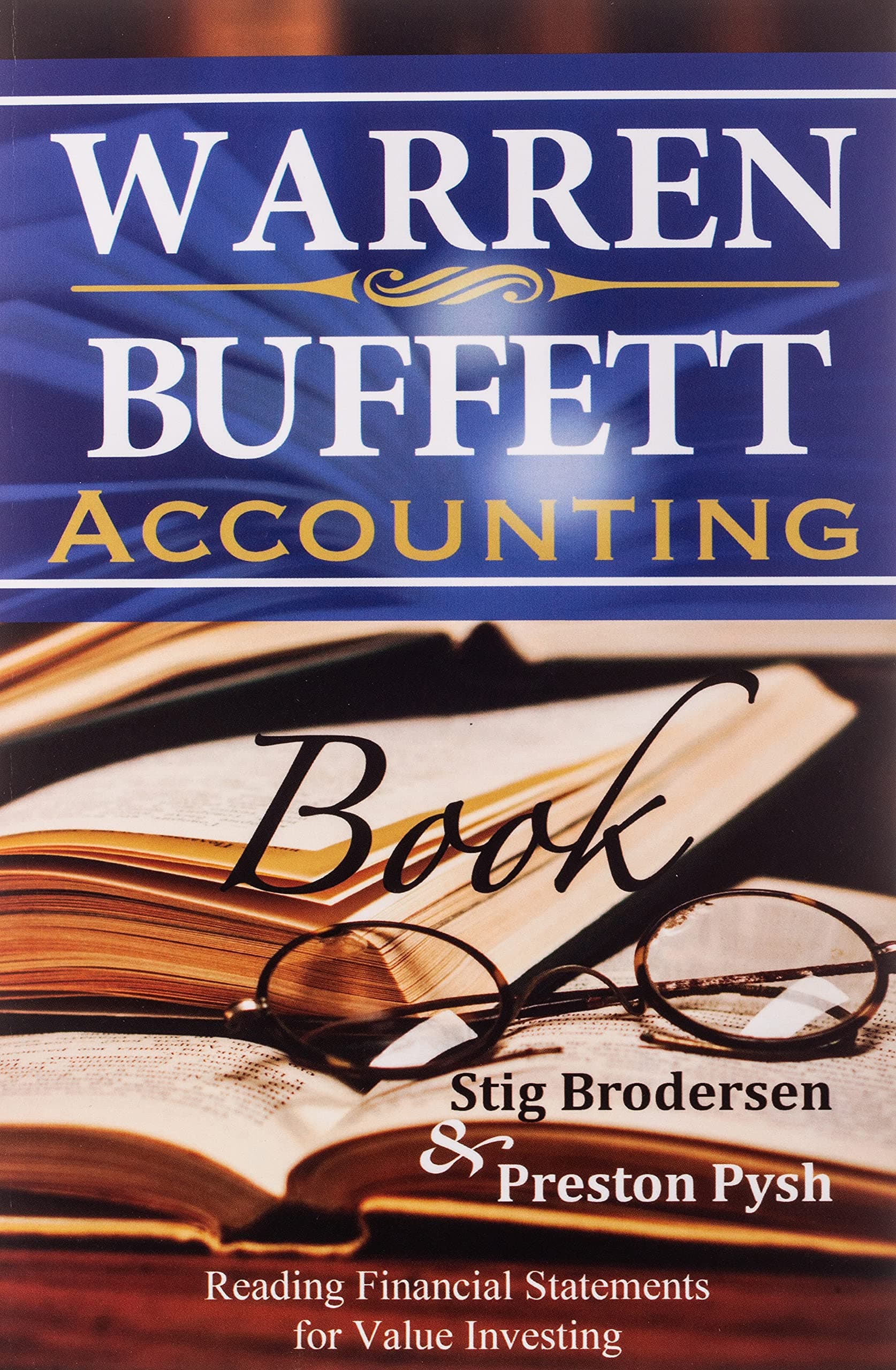
Warren Buffett Accounting Book: Reading Financial Statements for Value Investing [Brodersen, Stig, Pysh, Preston] on desertcart.com. *FREE* shipping on qualifying offers. Warren Buffett Accounting Book: Reading Financial Statements for Value Investing Review: A very good walkthrough for the part-time investor that I am - First, here is some context explaining why I read that book. I have been in and out of the stock market for the last 30 years. I already studied most of the topics explained in the book both from college level courses in accounting and finance and from a lot of reading but I never felt quite sure of myself when picking stocks. Of course I tend to spend most of my time in my own professional area (which is not Corporate Finance) and in my personal life so I don't have the dedication of Mr. Buffett. This book comes in at a very good time for me as I am reviewing my past record in stock / investment picking, what have I already studied and what I have learned from my past experience. The authors of the book take the hand of the reader and guide him through the ideas and steps needed to come up with some value estimate of a company stock. The authors explain how to get that valuation from a reading of the company financial statements. The first part of the book introduces the ideas and the mechanics of the valuation process. The second part of the book is a guided tour of a financial report, explaining all items very simply with simple examples and hints. The books shows how to get the data needed to make an estimate of a stock value including a simple formula of the free cash-flow. One problem I have when reading financial statements is that I am easily confused by the wide range of terminology used to refer any single concept; the authors of the book are aware of that problem and often list the many names that are used to refer to any item in the financials; that is not exhaustive but that helps. The authors show how to use the valuation methods to compare investment alternatives which is the basic motivation for the valuation metrics in the first place since none of those metrics provides an absolute reference. So I read that book as I would have read a tour guide. I first got the financials of some great Buffett stocks and other stocks I am interested in from the SEC web site. Then I read the financial exhibits as I was reading the book. I found the whole exercise very invigorating and I hope it provides a good start for my next investment investigation. The level of mathematics used in the book is at the High-School level. The authors don't explain where their valuation formulas come from but the astute reader will have no problem deriving the formulas used in the book if he starts from the classical formula S(N,a) = a^1 + a^2 + ... + a^N where 'a' is the discount factor 1/(1 + D) or (1 + G)/(1 +D) if there is a growth factor involved. One can get a quick refresh on those matters by looking on Wikipedia. Review: Excellent book if you want to understand how Warren Buffett and value investors analyze financial statements - After reading Warren Buffett's Three Favorite Books, I was excited to find installment two in the series. While the first book provides an outstanding foundation on the principles of value investing, this book takes the reader through Buffett’s methods for understanding key financial statements – balance sheets, cash flow statements and income statements. The book will appeal to the seasoned investor and neophyte alike because it is written in a clear, narrative format while also detailing which data and key ratios are important to the value investor. The book balances the purely quantitative approach with the vitally important need for qualitative analysis. This book brings that elements of value investing together better than any other I’ve read. Finally, the authors provide a straight forward discount cash flow calculation for approximating intrinsic value. Determining intrinsic value is essential for the value investor because a company can meet all the value investing criteria and still be a poor investment if it isn’t purchased at a good price. Certain key ratios can be used as indicators of a good bargain but approximating intrinsic value is the essential component in purchasing a good value that will provide the prudent investors with outstanding returns over the long run.
| Best Sellers Rank | #150,262 in Books ( See Top 100 in Books ) #59 in Financial Accounting (Books) #237 in Investment Analysis & Strategy #424 in Introduction to Investing |
| Customer Reviews | 4.6 out of 5 stars 1,682 Reviews |
R**X
A very good walkthrough for the part-time investor that I am
First, here is some context explaining why I read that book. I have been in and out of the stock market for the last 30 years. I already studied most of the topics explained in the book both from college level courses in accounting and finance and from a lot of reading but I never felt quite sure of myself when picking stocks. Of course I tend to spend most of my time in my own professional area (which is not Corporate Finance) and in my personal life so I don't have the dedication of Mr. Buffett. This book comes in at a very good time for me as I am reviewing my past record in stock / investment picking, what have I already studied and what I have learned from my past experience. The authors of the book take the hand of the reader and guide him through the ideas and steps needed to come up with some value estimate of a company stock. The authors explain how to get that valuation from a reading of the company financial statements. The first part of the book introduces the ideas and the mechanics of the valuation process. The second part of the book is a guided tour of a financial report, explaining all items very simply with simple examples and hints. The books shows how to get the data needed to make an estimate of a stock value including a simple formula of the free cash-flow. One problem I have when reading financial statements is that I am easily confused by the wide range of terminology used to refer any single concept; the authors of the book are aware of that problem and often list the many names that are used to refer to any item in the financials; that is not exhaustive but that helps. The authors show how to use the valuation methods to compare investment alternatives which is the basic motivation for the valuation metrics in the first place since none of those metrics provides an absolute reference. So I read that book as I would have read a tour guide. I first got the financials of some great Buffett stocks and other stocks I am interested in from the SEC web site. Then I read the financial exhibits as I was reading the book. I found the whole exercise very invigorating and I hope it provides a good start for my next investment investigation. The level of mathematics used in the book is at the High-School level. The authors don't explain where their valuation formulas come from but the astute reader will have no problem deriving the formulas used in the book if he starts from the classical formula S(N,a) = a^1 + a^2 + ... + a^N where 'a' is the discount factor 1/(1 + D) or (1 + G)/(1 +D) if there is a growth factor involved. One can get a quick refresh on those matters by looking on Wikipedia.
J**N
Excellent book if you want to understand how Warren Buffett and value investors analyze financial statements
After reading Warren Buffett's Three Favorite Books, I was excited to find installment two in the series. While the first book provides an outstanding foundation on the principles of value investing, this book takes the reader through Buffett’s methods for understanding key financial statements – balance sheets, cash flow statements and income statements. The book will appeal to the seasoned investor and neophyte alike because it is written in a clear, narrative format while also detailing which data and key ratios are important to the value investor. The book balances the purely quantitative approach with the vitally important need for qualitative analysis. This book brings that elements of value investing together better than any other I’ve read. Finally, the authors provide a straight forward discount cash flow calculation for approximating intrinsic value. Determining intrinsic value is essential for the value investor because a company can meet all the value investing criteria and still be a poor investment if it isn’t purchased at a good price. Certain key ratios can be used as indicators of a good bargain but approximating intrinsic value is the essential component in purchasing a good value that will provide the prudent investors with outstanding returns over the long run.
D**N
Reading this book won’t make you Warren Buffett overnight
It’s important to remember that reading this book won’t turn you into Warren Buffett overnight. There’s no secret formula. Instead, you’ll gain a solid understanding of the basics of financial statements and what they tell us about a company’s health and performance. While financial statements from public companies can seem complicated at first, don’t worry—this book provides a quick and friendly overview. You might have already come across similar information on various finance websites, so you’re already making great progress! The book beautifully simplifies key ideas for evaluating companies, making these important concepts much easier to understand. For example, here are four helpful rules: Rule 1—Low debt Rule 2—High current ratio Rule 3—Strong and steady return on equity Rule 4—Effective management incentives. It does a wonderful job of explaining how to read financial statements and breaks down concepts like DCF, cash flow, and EBITDA in a clear and approachable way. Overall, it’s a great introduction to the topic. I would recommend just getting the Kindle version of the book.
K**N
Must have for a value investor
Having read their first book "buffet's three favorite books", I was exited to read their accounting book as well. The book did not disappoint. It builds upon the first book and will provide the reader basic knowledge of one of the most essential part of value investing, accounting principles. From a beginner's perspective, this book will provide you with the essential knowledge needed to build expertise in the topic. Some of the best things about the book is that it is FUN to read (at school I believed accounting could never be fun...), filled with easy to understand examples and that it also outlines the math behind the various calculations. Maybe the best thing about this book, is that author's online forum which can be used by anyone. In their forum there are an extensive amount of other investors as well as the authors themselves that may help if questions arises along the read. For the more experienced investor, I believe this book will provide you with a great summary and a quick reference if you want to look up something quickly. Best regards, Kristian
D**E
Great book for Beginners.
The “Warren Buffett's Three Favorite Books“ series (this being book 2) certainly has provided a great foundation for new investors. If you want to get a good grasp without getting too heavy, submerge yourself and use the tools, links and videos provided every step of the way. If are unfamiliar with certain words just look them up. Before I struggle with Discount Cash Flow, and what exactly is Free Cash Flow. My cohort at University couldn’t explain it but could work out the problems. Now I know and can explain in simple terms. Couple that with actual investing and your investment advisor should be impressed. Mine was. In fact the relationship has evolved to us just discussing the markets and even now it seems I am more in tuned than the advisor. So much so they think I should invest in US markets, I am from Jamaica. Now I am looking to implement generational wealth and go through the actual 3 book’s referenced in the series. I would and have recommended this book to friends. Note though: I take investing as serious as my 9-5, if not more seriously as I look to build generational wealth for my family.
M**O
What great book to read
This book my things easy and explain what you need at least to know about the stock market and shares. I am going to give this book to my son as I can see it simple enough for him to understand. The book is written in a simple English and will be easy for non English natives as me.
D**S
Who knows if they figured it out?
Written for non-accountants like me. I have always followed Buffett’s advice for idiots: buy index funds and hang on. I have always wanted to be more sophisticated and buy individual stocks. I have read much of what Buffett has written but he tells us the specifics of what he looks for reading financials. I can’t divine the tea leaves of his annual report to know how he does it. This book attempts to do that. My concern is that they never say how they found the secret formula. I am supposed to take them at their word that they know. Maybe they do and maybe they don’t. Finding out they didn’t can be a very expensive lesson.
L**O
Very solid read!
Very detailed and thorough! Great book that is extremely informative and detailed. At the end of the day, they make learning about financial statements about as entertaining and informative as anyone else I've read. If you're new to reading financial statements, there's going to be some confusion and boredom involved. Still a great read!
Trustpilot
3 weeks ago
1 month ago