We remain fully operational. Our teams are working around the clock to ensure your deliveries continue safely.

DOWNLOAD THE APP


Copyright © 2025 Desertcart Holdings Limited
DOWNLOAD THE APP
Buy anything from 5,000+ international stores. One checkout price. No surprise fees. Join 2M+ shoppers on Desertcart.
Desertcart purchases this item on your behalf and handles shipping, customs, and support to Italy.
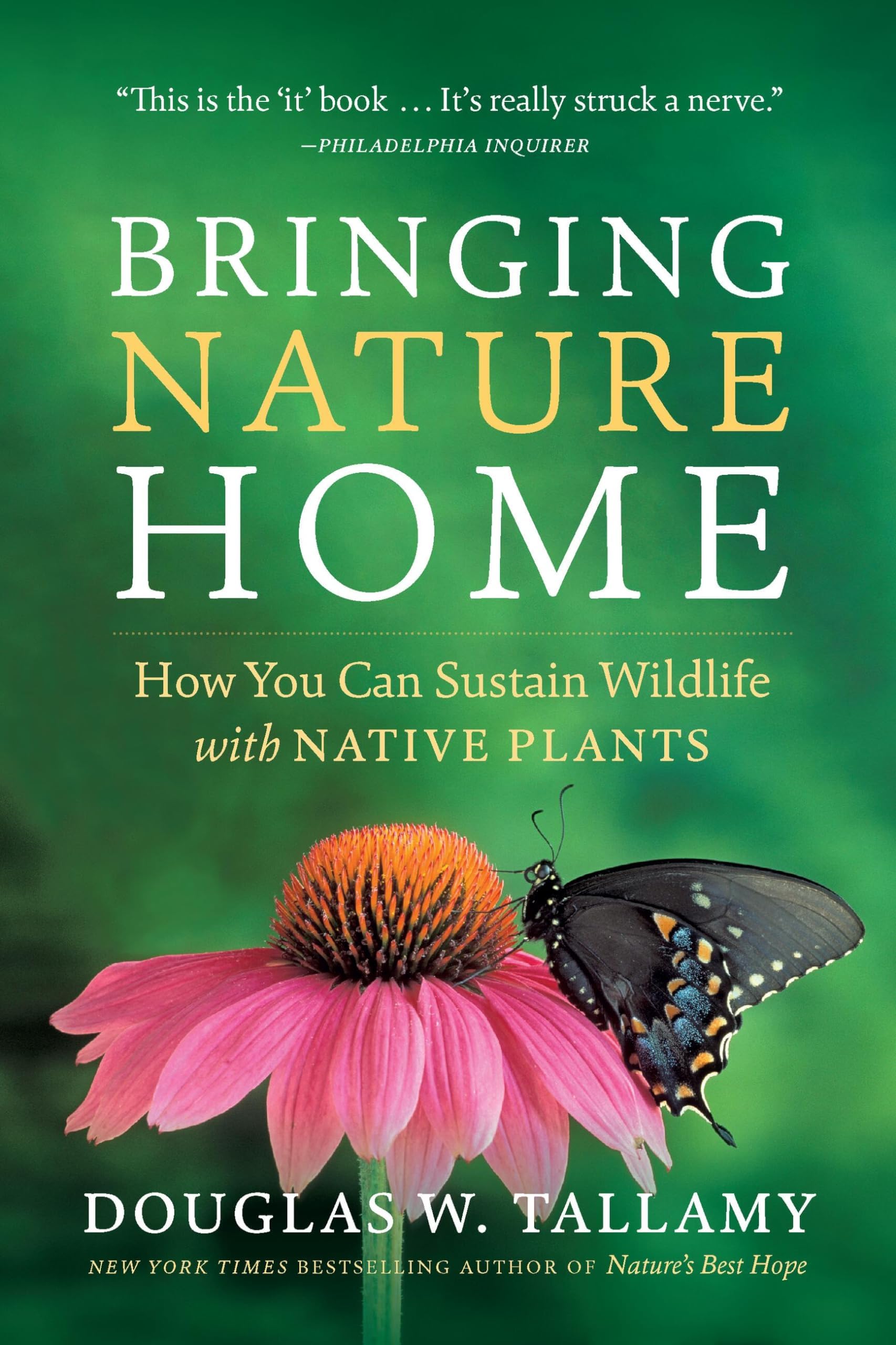
Buy Bringing Nature Home: How You Can Sustain Wildlife with Native Plants, Updated and Expanded on desertcart.com ✓ FREE SHIPPING on qualified orders Review: A Real Treasure, an Indispensable Resource, and a Terrific Gift - This book is terrific. I had checked it out of the library, and then wanted to have a copy of my own. I have gardened and farmed for many years, on a small suburban plot of land. I have seen all the farmland around me be developed into large suburban subdivisions, and seen yards that used to be natural and graceful become more and more sculpted, with lawns that are more like carpets, and a formality more like a living room than a beautiful outdoor space. Lawn services have replaced individual homeowner mowing, and now instead of just mowing, there is edging and blowing and removal of any natural leaf debris that is so important for the many species that a complex ecosystem supports. Many developments have Homeowner Associations that require that it be done this way. Many of them also require the right to approve the planting of anything beyond 3 feet of the house, resulting in a loss of diversity there as well. Even in neighborhoods without HOA's, the trend has been toward sculpted yards and the planting of ornamentals that are often non-native. As a result, there are fewer and fewer songbirds, butterflies, and more and more "pests" that the birds and other wildlife would have managed. I was contributing to this without realizing it, by planting non-native trees or shrubs based only on "beauty," but not with an eye to the species they support or the healthy ecosystem they make possible. Dr. Tallamy explains all of this so easily and clearly, and the many charts and lists provide accessible and quick information. This book can guide you to better choices when you're adding a new tree or shrub or flower to your yard, it can guide you to simple steps that add a very important diversity to your yards plants, and the species they support. It's like, without realizing it, you can offer so many beneficial species food to support a healthy complex web, or inadvertently be part of the starving and loss of beneficial species we want and need, just by choosing a different plant or tree, or doing things a little differently. He shows you how to do this within what you already have. And you notice the difference in even a short period of time. The word seems to go out, and the species arrive! In the past two days I have seen two different species of butterfly I never saw here before. Even things as simple as leaving a "weed" I would have otherwise removed - milkweed - we were actually able to watch monarchs go from egg to larvae to chysalis to butterfly, in our own yard, from plants in my ditch I would have just mowed down. There are so many things we can't do as we see the loss of farmland and wild places around us. This book shows how much we can do, even on a little yard, or even balcony. My yard is more beautiful, and the birds and wildlife is a joy every single day. I even appreciate and notice beneficial insects I never would have noticed, and possibly would not have had. It also helps us pass on the information so our friends and neighbors - and HOA boards - don't inadvertently contribute to the problem, and help them see how easily they can make a positive difference. The book is well written, clear, positive, approachable. It is not a "just for scientist" kind of book, and he does not lecture. It's delightful to read. I love this book and recommend it highly, for yourself, and as a gift for every gardener/homeowner that you know. It is not a book your gardening/homeowner friends might have known about or thought of, but they will appreciate it, and use it, and pass the information on to their children. And in the best kind of way - it doesn't preach, it's like taking a walk outside with a favorite uncle who knows all about the beauty and wonder around you, and is generous and fun enough so you can too. Review: A must-read for anyone who cares about birds and the environment - This book has fundamentally changed the way I look at gardening. I've always thought of myself as an environmentalist, but before this book, I never really GOT the fundamental connection between humans and the natural world. What was missing? The insects. Insects can't eat ornamentals. Birds don't have food if there aren't insects! Oh my gosh. Does Tallamy drive home the importance of a diversity of insects to support the populations we care about. Usually, gardeners prefer a more bug-free environment, sterile even, because bugs eat plants, and we want plants to be beautiful. Tallamy turns that on its head and shows us just how terrible it is to keep only these ornamental species that feed nobody. Sure, birds might eat some ornamental berries -- after they've raised their young. But when they are raising their young? They rely on the species that ornamental gardeners detest -- the caterpillars and other creatures that might eat a leaf or two of native plants. I have been working with native plants in my area for a couple of years, but this book has really given me the impetus to ramp up the outreach that I do. I am already planting at least half native species in my front yard (while my neighbor works to perfect his sterile lawn). My work allows me to advocate for all gardeners to consider adding native species to their properties and supporting the species that help birds and other creatures survive. This book backs me up with solid studies about what planting natives really does -- and the harm that out-of-control ornamentals (like Japanese honeysuckle) really are doing. Yikes. Tallamy reminds us that the future of our planet may depend on small, individual efforts like these. That is the one ray of hope in this book, that we may be able to make a difference in this rampaging Anthropocene era. This is a heck of a book and full of very useful information. If it doesn't light a fire under your butt and get you considering putting in at least a little patch of species native to your area to help the birds and other wildlife, then you've got some soul searching to do, my friend.




| Best Sellers Rank | #25,941 in Books ( See Top 100 in Books ) #5 in Biology of Insects & Spiders #8 in Landscape #24 in Ecology (Books) |
| Customer Reviews | 4.8 out of 5 stars 1,431 Reviews |
F**S
A Real Treasure, an Indispensable Resource, and a Terrific Gift
This book is terrific. I had checked it out of the library, and then wanted to have a copy of my own. I have gardened and farmed for many years, on a small suburban plot of land. I have seen all the farmland around me be developed into large suburban subdivisions, and seen yards that used to be natural and graceful become more and more sculpted, with lawns that are more like carpets, and a formality more like a living room than a beautiful outdoor space. Lawn services have replaced individual homeowner mowing, and now instead of just mowing, there is edging and blowing and removal of any natural leaf debris that is so important for the many species that a complex ecosystem supports. Many developments have Homeowner Associations that require that it be done this way. Many of them also require the right to approve the planting of anything beyond 3 feet of the house, resulting in a loss of diversity there as well. Even in neighborhoods without HOA's, the trend has been toward sculpted yards and the planting of ornamentals that are often non-native. As a result, there are fewer and fewer songbirds, butterflies, and more and more "pests" that the birds and other wildlife would have managed. I was contributing to this without realizing it, by planting non-native trees or shrubs based only on "beauty," but not with an eye to the species they support or the healthy ecosystem they make possible. Dr. Tallamy explains all of this so easily and clearly, and the many charts and lists provide accessible and quick information. This book can guide you to better choices when you're adding a new tree or shrub or flower to your yard, it can guide you to simple steps that add a very important diversity to your yards plants, and the species they support. It's like, without realizing it, you can offer so many beneficial species food to support a healthy complex web, or inadvertently be part of the starving and loss of beneficial species we want and need, just by choosing a different plant or tree, or doing things a little differently. He shows you how to do this within what you already have. And you notice the difference in even a short period of time. The word seems to go out, and the species arrive! In the past two days I have seen two different species of butterfly I never saw here before. Even things as simple as leaving a "weed" I would have otherwise removed - milkweed - we were actually able to watch monarchs go from egg to larvae to chysalis to butterfly, in our own yard, from plants in my ditch I would have just mowed down. There are so many things we can't do as we see the loss of farmland and wild places around us. This book shows how much we can do, even on a little yard, or even balcony. My yard is more beautiful, and the birds and wildlife is a joy every single day. I even appreciate and notice beneficial insects I never would have noticed, and possibly would not have had. It also helps us pass on the information so our friends and neighbors - and HOA boards - don't inadvertently contribute to the problem, and help them see how easily they can make a positive difference. The book is well written, clear, positive, approachable. It is not a "just for scientist" kind of book, and he does not lecture. It's delightful to read. I love this book and recommend it highly, for yourself, and as a gift for every gardener/homeowner that you know. It is not a book your gardening/homeowner friends might have known about or thought of, but they will appreciate it, and use it, and pass the information on to their children. And in the best kind of way - it doesn't preach, it's like taking a walk outside with a favorite uncle who knows all about the beauty and wonder around you, and is generous and fun enough so you can too.
T**I
A must-read for anyone who cares about birds and the environment
This book has fundamentally changed the way I look at gardening. I've always thought of myself as an environmentalist, but before this book, I never really GOT the fundamental connection between humans and the natural world. What was missing? The insects. Insects can't eat ornamentals. Birds don't have food if there aren't insects! Oh my gosh. Does Tallamy drive home the importance of a diversity of insects to support the populations we care about. Usually, gardeners prefer a more bug-free environment, sterile even, because bugs eat plants, and we want plants to be beautiful. Tallamy turns that on its head and shows us just how terrible it is to keep only these ornamental species that feed nobody. Sure, birds might eat some ornamental berries -- after they've raised their young. But when they are raising their young? They rely on the species that ornamental gardeners detest -- the caterpillars and other creatures that might eat a leaf or two of native plants. I have been working with native plants in my area for a couple of years, but this book has really given me the impetus to ramp up the outreach that I do. I am already planting at least half native species in my front yard (while my neighbor works to perfect his sterile lawn). My work allows me to advocate for all gardeners to consider adding native species to their properties and supporting the species that help birds and other creatures survive. This book backs me up with solid studies about what planting natives really does -- and the harm that out-of-control ornamentals (like Japanese honeysuckle) really are doing. Yikes. Tallamy reminds us that the future of our planet may depend on small, individual efforts like these. That is the one ray of hope in this book, that we may be able to make a difference in this rampaging Anthropocene era. This is a heck of a book and full of very useful information. If it doesn't light a fire under your butt and get you considering putting in at least a little patch of species native to your area to help the birds and other wildlife, then you've got some soul searching to do, my friend.
A**F
Best Native Plant Book
Bringing Nature Home, by Douglas Tallamy, has the numerical data to support the use of native, rather than alien, plants in our gardens. There are a lot of good books on native plants, but none quite like this one. Look at p. 235. He shows how many insects that pretty clematis vitalba on your fence, which has been in North America for 100 years, can support: one North American herbivore insect species. ONE. In its homeland, clematis supports 40 insects. That shallow rooted fire hazard Eucalyptus tree? It supports one North American herbivore insect species. The Eucalyptus has been here for 100 years and it supports ONE native insect. In its homeland, the Eucalyptus supports 48 insects. According to Dr Tallamy, 96% of the US is urban, suburban or agricultural. The remaining 4% is left for the natives. No native plants = no native insects, butterflies, birds and other pollinators. No native pollinators - and you wonder why your fruit and vegetable garden is so much work. Bringing Nature Home has appendices which include useful native plant lists for sections of North America and a list of host plants for butterflies and moths. The author is based is in Pennsylvania, so the east coast/mid-Atlantic plant and insect info is quite complete. The info on Japanese beetles is worth the price of the book, if this is an issue for you. If you plant in California, other native plant books (with long lists of plants and pretty color photos, not as much info about insect and bird partners): California Native Plants for the Garden by Carol Bornstein, David Fross, Bart O'Brien Designing California Native Gardens: The Plant Community Approach to Artful, Ecological Gardens by Glenn Keator and Alrie Middlebrook Tending the Wild: Native American Knowledge and the Management of California's Natural Resources by M. Kat Anderson - great intro to what California natives are good for food Las Pilitas Nursery has an extensive website with color photos, sun/water requirements and some insect and bird partner info for California native plants. [...] If you are interested in what happens when the plant partners are no longer around (you might be after you read Bringing Nature Home), read The Ghosts of Evolution: Nonsensical Fruit, Missing Partners, and Other Ecological Anachronisms by Connie Barlow. Please consider planting native plants in your yard. These plants are pretty and easy to care for because they belong here. Making a home for native pollinators could save our food - and our lives.
V**A
A must read for anyone who lives in Florida!
What a wonderful book! Definitely one of the top books to have in a Florida Gardener’s Collection!
K**S
Very good information
I bought this book after hearing Mr. Tallamy give a shorter version of the same in a Continuing Education seminar. As a Landscape Architect and outdoorsman, I felt a great appreciation for what Mr. Tallamy was trying to explain. The idea that most of the insects and caterpillars that support our native wildlife cannot and will not eat many of the things that we plant is a concept that most people just don't think about. I'm certainly not a "greenie weenie" activist type, but I find myself rethinking the plants that I specify and the existing plants around me in a new light. They're not just aesthetic, they serve a purpose in the food web that supports the ecosystems in which we live. If the bugs can't eat them, then the bugs will leave... and the things that eat those bugs won't be there either. If you like song birds, butterfiles and other wildlife; this is a good book to read. If you are a landscape architect, avid gardener or just plain weekend warrior this book has information that you can understand and appreciate. I highly recommend it, especially for professionals.
C**S
Lots to Learn
I love Tallamy’s books. He is a professor of entomology and ecology. He uses his home site as his laboratory, as well as direct students on environmental projects. I have learned a great deal from his writings, and will automatically buy any new title. I have also heard him speak on two occasions. I feel many people have lost their connection to nature or do not understand how we humans are intrinsically linked. This book helps explain how we can use our homesite to support nature and the critters that share our space. There is so much research that supports how humans need to spend time in nature to keep oneself balanced. I think much of the anxiety we hear about and the need for drug use is directly due to our lack of understanding that we are part of the natural world, and need to foster our connections to it. If you want to bring nature home to create a more healthy habitat for you and your family, this book is the place to start. There is a great deal of practical information, as well as basic ecological concepts. Read it!
C**X
Advocates for planting NATIVE plants to attract insect specialists.
So many insights in this book! Start by planting trees, shrubs, grasses and flowers that are native to your region. They will attract insects into your yard that will eat, shelter and reproduce on/in these plants. THIS IS A GOOD THING! The book eloquently describes dozens of case studies of increased biodiversity in the presence of native (vs exotic or ornamental) plants. Walk with me on this: 1) Look out your window. See all those plants? Look at the grass, the ornamental shrubs, the boulevard trees. Can you eat any of that? There are thousands of green leafy plants out there, but only a very few that humans can eat, digest, and gain nutrients from. 2) Insects are the same way. The majority of insects we know are specialists, meaning that despite the abundance of green out there, most insects can only eat and digest a narrow range (think monarch caterpillars and milkweed). So our native bugs need native plants! 3) Birds eat insects. All birds.Yes, even hummingbirds. Even kestrels, our smallest falcons, dine on dragonflies. I could go on, but just buy this book. Read it. Then pass it on. Do it because we need more people to need more nature. Do it not for your grandchildren, but for yourself. Do it because you can make tomorrow a latter day. "The best time to plant a tree was twenty years ago. The next best time is now." -Chinese proverb SPOILER ALERT: That tree you're about to plant should be a burr oak (assuming this is native to your region)- they provide habitat for over 500 species of moths and butterflies.
A**N
Super Practical
Tallamy makes a great case for gardening with native plants to restore the base of the food web – arthropods – which will in turn support populations of other wildlife, like birds. The book includes a great breakdown of productive insect host plants, information about various arthropod families, and a great index of native plants by region (broken down by how they might be used in the garden).
Trustpilot
1 week ago
1 month ago