Buy anything from 5,000+ international stores. One checkout price. No surprise fees. Join 2M+ shoppers on Desertcart.
Desertcart purchases this item on your behalf and handles shipping, customs, and support to Italy.
🔋 Power your life sustainably with Eneloop — the last batteries you'll ever need!
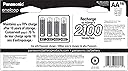
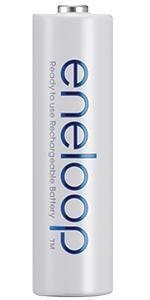
The Eneloop Panasonic BK-3MCCA16FA AA rechargeable batteries offer up to 2100 recharge cycles and maintain 70% charge after 10 years of storage. Pre-charged using solar energy, these NiMH batteries deliver a consistent 2000mAh capacity and perform reliably in extreme temperatures down to -4°F. Packaged in a convenient 16-count set, they are ideal for powering hundreds of household devices with long-lasting, eco-friendly energy.


| ASIN | B00JHKSN4O |
| Antenna Location | Remote Control, Toys, Computer Keyboard, and 100's of Other Devices |
| Battery Capacity | 2000 |
| Battery Cell Composition | NiMH |
| Battery Cell Type | NiMH |
| Battery Weight | 27 Grams |
| Best Sellers Rank | #6,600 in Health & Household ( See Top 100 in Health & Household ) #25 in AA Batteries |
| Brand | Eneloop |
| Built-In Media | 16 AA eneloop rechargeable batteries |
| Compatible Phone Models | gaming consoles |
| Customer Reviews | 4.8 out of 5 stars 11,711 Reviews |
| Global Trade Identification Number | 00073096902114 |
| Item Dimensions | 1.2 x 7.63 x 4.25 inches |
| Item Weight | 15.2 ounces |
| Manufacturer | Panasonic |
| Model Name | eneloop |
| Model Number | BK-3MCCA16BA |
| Number of Batteries | 16 AA batteries required. |
| Recommended Uses For Product | Remote Control, Toys, Computer Keyboard, and 100's of Other Devices |
| Reusability | Rechargeable |
| UPC | 755034392002 073096902114 |
| Unit Count | 16.0 Count |
| Voltage | 1.2 |
| Warranty Description | 1 YEAR |
M**S
These survive overdischarging well. (Eneloops now can hold up to 70% after 10 years!!!)
Update: 6.17.15 - The best just got better, Eneloops can hold up to 70% after 10 years! As indicated on their official website, it's unclear if fully charged Eneloops can hold up to 70% after 10 years or the latest set of Eneloops are able to hold up to 70% after 10 years. It would be impressive if this were true, but after 10 years i think the cycle number would greatly be reduced as testing showed less cycle usage on older cells. Still NiMH technology can be impressive as i have 16 year old cells that work in a clock for a couple of months. It'll be interesting how an aged Eneloop would function. Update 11.04.14 - Be aware of the Chinese knockoffs of Eneloops, they are nowhere near as good as the Japanese ones. The Chinese Eneloops die around 500 cycles while the Japanese ones continue running over 800 cycles. Try to get the Japanese Eneloops if you can as they are generally more reliable. Hopefully Amazon will continue to carry the Japanese ones. Update 9.27.14 - Did a battery test of the pack i used and the battery that was fully discharged still managed to produce the necessary mAh and was slightly higher than the others. For some reason or another only 2 batteries was slightly higher (maximum of 39mAh difference) capacity so it's unclear as to the reason behind that, though 2 of the batteries were numbered and were discharging for a bit in a tv remote and then in a flashlight so it appears that the more often you use them, the more mAh they will produce. That seems to be the case with any NiMH battery, it's best to use them versus leaving them in storage for a long time. So it is highly recommended you buy what you need, if you need some extras or 'in case' make sure you cycle them through and not just leave them sit in storage for several years without using them. Since basic Eneloop batteries have high recharging cycles, it's better to discharge them fully a few times to break the battery in and use them a few times in a high drain device to keep them working. They don't have to be drained fully, 40% discharged (that's 40% charge left in the battery) is the best which will help keep the mAh up and fully discharging them every once in a while to prevent overcharging and voltage depression (or memory effect) which NiMHs are highly resistant that or even don't even have that problem such as the company has stated, they mostly are susceptible to overcharging though which does cause the voltage depression phenomenon which acts like there is a memory effect. Regular, cheap NiMHs or just cheap NiMHs in general lose their mAh capacity over time and even when they are just being used.. avoid those types. Eneloops appear to be the best, AmazonBasics, Duracell and most Energizers are good alternatives if Eneloops are not available but avoid most cheap chargers and find a smart charger with Negative Delta V, overheat protection, and capable of charging any number of batteries. The Panasonic sounds like a pretty good, cheap alternative and get the ones with the batteries as they are a better deal. I plan on getting some Eneloops Pro that comes with one of these chargers but with the basic 2100 cycle Eneloops, it's probably not needed to have the higher capacity ones but they do last a bit longer on a single charge for critical usage. I can't wait to see how long these batteries will hold up during the test of time. Using rechargeable Duracells, they hold their charge for a very long time.. almost 10 years in service and only has a loss of mAh capacity but they still perform for a pretty long time, can still be a few months sitting idle while the Energizers i got around the same time (the 2500mAh ones) lose their charge within a few weeks, but can be recharged and then sit for awhile on the charger and they will get a bit more charge out of them but those will primarily be used in tv remotes and other really low drain devices where i don't mind recharging them every few weeks. Anyway the Eneloops perform well and seem to have a long life ahead of them. == I got the 16 pack and also heard that these batteries are similar to the AmazonBasics which claims they do not lose capacity when over discharged. While i am still in the process of finding out whether the battery that i subjected to an over discharge has lost mAh capacity it held it's ground from zero volts. With the battery fully discharged (or near death) i threw it in a remote with a charged Eneloop and it was showing a sharp decrease from 0.9 volts to 0.4 volts. Then the battery stabilized itself there with no decline or any indication that there was cell reversal (which charges the battery in reverse). I wasn't sure what to make of that, but i have concluded that there is indeed some over discharge protection. I decided to put more strain on the battery and threw the batteries in a flashlight, to my amaze the flashlight, dim as ever was able to light up. I let the batteries sit in there 15 minutes to see if the light would stop working but even after 15 minutes the light was still going. I took the battery out and it was registering just under 0.1 volt. While i was being distracted that i didn't have enough time to unscrew the flashlight to get to the battery i threw the the batteries back in the flashlight and checked it again after 5 minutes. It was still showing just under 0.1 volt. No reverse voltage. It appears that after my test these batteries do not reverse charge and is somewhat resistant to over discharging, which would be fine mixing a pack of these batteries in different devices. Even after my tests i wouldn't recommend mixing the batteries as i am sure even once these batteries reaches 0.7 volts, they start eating up cycles. I have no idea whether keeping the batteries in a discharged state and using them would start reducing the life of the battery or that they would take up a few cycles, but i still need to test the mAh of the batteries to see whether the one i over discharged has lost capacity, which is the other claim from AmazonBasics and i think Eneloop advertises the same thing. It would also make sense why the AmazonBasics has lesser rated recharge cycles then Eneloops. Eneloops do not advertize they can handle over discharging and it makes sense why they don't want to. They want to make sure the consumer gets the most recharges out of their batteries which would make these batteries the number 1 rechargeable battery company of all time. Which is why i highly recommend these batteries. These batteries will last a very long time if you take care of them. You probably will never need to buy new batteries as if you were to charge these batteries daily (or discharge them daily) you would still get about 6 years out of them which is hard to come by with rechargeables that are constantly being discharged and recharged with minimal rest. I'm going to give these batteries another test which will only be 2 AA in 100-130F heat. I have had some people say they don't want to switch to rechargeables because they think that heat will ruin the batteries. I beg to differ, while the batteries might not last as long.. with this other test these batteries should have no problem being able to work in the heat and while it might reduce these batteries life to about 2-4 years, it's far better than replacing the batteries weekly spending more money than what you would on rechargeables. On a fresh charge opened from the package, while it was difficult to understand the date code of the batteries "14-05LJ" and "14-0400" I assume the 14 means the year which would mean these batteries were produced earlier in the year, but again it's not easy to tell based on the letters. If anyone knows that information, leave a comment. Back to a fresh charge from the opened package (literally) I am a bit disappointed from Amazon sending me a product that has been opened, it's possible that it opened during shipping but i did get 2 different date codes on the batteries, but it also appears that Panasonic shipped them this way too. I will say that Panasonics packaging is left to be desired, they could have packaged the 16 pack in a more secure packaging or give consumers a plastic container with the batteries in them but i'm not complaining.. eventually i will put them in a more secure container but for now, the package is holding with some tape. On a fresh charge, these batteries were able to give my phone a 92% charge using a USB charger, powered by AA or AAA batteries. Provided that if i never did charge the batteries i wouldn't have gotten the 92% charge but after recharging the 4 set of batteries i used already, i will see how much of a charge the batteries will put into after a full discharge. I have noticed a few complaints about the batteries not being fully charged and while there are a few different reasons why there is a rare chance that you would get a set of batteries that are discharged or will not recharge correctly. It is a fact of life and happens with any kind of product out there on the market when they are massed produced. It's also rare that businesses would actually strive to lower that percentage because anything with a 1% defect rate is acceptable loss limits when dealing with a world that strives to have profit over making that 1% happy, though many companies do have exchange policies if you received a defective product. A couple of things to think about. These are 1.2 volt batteries and while most devices that require 4 batteries will function fine with 4 NiMH batteries, any higher than that and you would start to see a declining performance or even if your product will function with 6 1.2 volt batteries versus the 1.5 volts. The other thing to consider though with that is alkaline batteries are about 50% charged at 1.2 volts so these devices might run fine even with 1.1 volts but that really depends on the device. Recently, i have found that some devices can ask for more than 1.2 volts and can be considering the NiMH batteries as dying or low but it greatly depends whether the device is detecting the voltage or the mA being produced. With that being said, before assuming that these batteries do not come charged consider these things first that the device may ask for more voltage, your charger is a cheap model or does not function properly, batteries only carry 50% of rated capacity from the manufacture which a refresh is in need or that you require more than 4 batteries and the device will not function properly under the 1.2 volt batteries. With that being said, before you assume these batteries are at fault, try it in a different device or in a flashlight that only requires 1-3AA first after refreshing them a few times and see how they work. With the initial use, i managed to charge my phone up to 92%, it was lower than the http://www.amazon.com/Duracell-Rechargeable-Batteries-Duralock-Technology/dp/B00DSYFAEQ which managed to charge a few devices without being depleted, those are rated at 2400mAh, still on first use these 2000mAh hold up really well and are ideal in just about anything. While there are some devices that won't work well with 1.2 volt batteries and it's not a good idea to use rechargeables in smoke/carbon dioxide detectors or anything really vital to your safety i recommend using http://www.amazon.com/Duracell-Alkaline-Batteries-Preserve-Technology/dp/B00EDK4HXY for high drain devices that often need replacing, for the smoke/carbon dioxide detectors, the classic Duracell battery also rated to last 10 years will work just fine. Other than that, these batteries hold up really well and i will post back when i got more info on the set of 4 batteries i have been testing with and will soon test another set out in my 2D Maglite (using D spacers of course) to see how long they hold up for.
T**S
Still the best in the business.
16 Pack Panasonic Eneloop Standard AA (2000mAh) – Real Tested Capacity. Quick Verdict: If you want reliable, consistent rechargeable AA batteries that actually meet (and exceed) their rating, these are still the industry gold standard for NiMH batteries. ✔ Real tested capacity: 2200–2300mAh ✔ Extremely consistent across all cells ✔ No true weak batteries found after verification These outperform most “high capacity” competitors in real-world use. Real Capacity Test Results Tested using an ISDT N8-Series Smart Charger at 0.7A (analysis mode): * Average range: 2200–2300mAh * Best result: 2291mAh * Consistency: Tight grouping across all tested cells * Internal Resistance: Stable and well within expected range (lower internal resistance means less voltage sag under heavy load and better performance in high drain devices). These are rated at 2000mAh, so exceeding that consistently is a big win. Important Testing Discovery (to me anyway): During testing, one battery in slot #6 appeared to be a weak outlier. Instead of assuming a bad cell, I verified it: Retest Process * Moved the “weak” battery from Slot #6 → Slot #1 * Put a different battery into Slot #6 * Retested both under identical conditions Results * Retested cell: 2291mAh / 173 mΩ (completely normal) * Different cell in Slot #6: 2220mAh / 191 mΩ What This Means The issue was NOT the battery. It was slot variance on the charger (Slot #6) causing: * Slightly lower capacity readings * Slightly higher internal resistance Why This Matters * Confirms excellent consistency across all Eneloop cells * Shows results are reliable and verified * Eliminates concern about defective units Real-World Performance In everyday use, this translates to: * 🔋 Long runtime in high-drain devices * 🎮 Perfect for controllers, cameras, flashes * 🔁 Consistent performance across sets (no mismatched cells) * True Low self-discharge (will hold charge for years) Pros ✔ Exceeds rated capacity across the board ✔ Extremely consistent performance ✔ Good internal resistance ✔ Long lifespan (Thousands of cycles) ✔ Ready-to-use (Most batteries will ship with a “storage charge” that can be anywhere from 40-70% depending on different countries regulations for battery shipping/fire safety reasons. Still usable right out of the package but for maximum run time charge before first use). Cons ✖ Higher upfront cost vs budget brands (that’s about it really). However, even with higher upfront cost the value is still excellent compared to single use disposable alkaline batteries. They will pay for themselves after a few recharges. 🏁 Final Verdict Eneloop batteries continue to set the standard. Even after deeper testing and verification: Every single cell performed exactly as it should. No gimmicks. No inflated capacity ratings as some of the cheaper Chinese made batteries tend to do. Just reliable, consistent performance. 100% Highly recommended if you care about consistency and longevity. “Made in Japan” absolutely makes a difference. The FDK factory in Japan makes the best NiMH rechargeable batteries you can buy. In my opinion they are worth the extra cost. Please Note: All NiMH rechargeable batteries have a break-in period when new. This is usually 3-5 full charge/discharge cycles (for premium Japanese made cells like Eneloop, Fujitsu, and Lada around 2 charge/discharge cycles). A good smart charger with an “Activation” or “Refresh” function can do this for you (it can take several hours) or it will happen over time as you use them normally. This just means that capacity and performance will increase after break-in. So don’t be disappointed if initially the capacity isn’t what is rated. Also because of the different battery chemistry compared to alkalines devices that display a battery/charge gauge may read that the batteries are low or half charged. This is because NimH batteries run an average of 1.2 Volts. Most devices are calibrated only for alkalines which run an average of 1.5 volts when new and steadily drop as they are drained. The device will read 1.2 volts and assume it’s an alkaline that’s half drained or low. Just be aware of this. If the device is giving a half full or low battery reading it doesn’t mean the rechargeable battery is low, dead, or defective.
M**.
Exceptionally Reliable Rechargeable AAs with Long Cycle Life
The Panasonic Eneloop AA Rechargeable Batteries are some of the most dependable batteries available. Being pre-charged and ready to use right out of the package is incredibly convenient, and the up to 2,100 recharge cycles makes them a smart long-term investment. They hold a charge very well during storage and deliver consistent performance across a wide range of devices, from trail cameras and flashlights to remotes and electronics. I’ve found them especially reliable in devices that are used frequently or left idle for long periods. The 12-pack is a great value and perfect for stocking up. If you want high-quality rechargeable AA batteries that last for years and perform consistently, Eneloop is the gold standard and well worth it.
K**C
Love this charger!!!
This wasn't our first eneloop purchase. We have an 8 hour charger, that we purchased when We started buying eneloop batteries with the multi pack-green container. We have used it without issues for a couple of years, but this one charges in 3 hours or less!!! No waiting for 2 days to be able to refresh batteries for one item. Unlike AE batteries, these hold a charge and last a decent amount of time, as long as any mid range alkaline batteries, and you don't have to buy more constantly once you get a decent supply. It took us 3 years or less to purchase enough batteries to charge all our devices, and we ultimately spent much less than we would have on top rated alkaline batteries in that same time...and now that we have 2 chargers, with this lovely quick charger, we won't have to buy more for years! Yay!!! We purchased a battery holder bag separately from a different company because the little green box was not big enough to hold what we had and now we keep a few extras charged and ready to go in case any run low so we can just switch them out and don't have to wait for the batteries to charge. We love that this one has colors so you can tell for sure if it's making a proper connection and that the batteries are fully charged, something our 8 hour charger lacks. Great upgrade!!!
K**I
some good info about batteries
I have tried many different types of rechargeable batteries over time, and so far, I like these the best. Here is some things that I have learned. Basic NiMh rechargeable batteries loose about 1% of their charge, per day, which means in one month, without using them, they will loose about 30% of their charge, and in 3 months, be just about dead. Now, some brands will advertise that their batteries will hold a charge up to 3 times long, which just means that it will take about 9 months to go dead. While this is not a big thing if you are charging them, and then using them within a couple days, it sucks for people that may not use something for a few weeks/months. Say you have a flashlight, that you use in emergencies.. and you want it with a decent charge when you go to use it. It may be dead with standard NiMh batteries. Next is alkaline. While alkaline's are great for holding their charge over a longer length of time, they have a couple major flaws. First, they have a memory effect, which means, don't treat them right, and you get less out of them. Not to mention, alkaline type's are the most well known for leaking, and corroding things. Nimh types don't usually do that. Plus alkaline types dont get as many recharges as NiMh types do too. Which brings me up to these batteries. What is nice about them, is they hold a charge, close to what alkaline types do, but they are a NiMh type, which means they don't hold a memory if you don't recharge them right. They have a standard capacity for now days standards for this type of battery, plus, they are made in japan, not in china. I have used these, and recharged them many times so far, and so far, they have preformed excellently. I have measured their capacity, and it is very close to what they say it is, so no false advertising, or inflated numbers there. Just a good, simple, straight forward, well made battery. If there is any complaints, it would just be this.. and this is standard for all NiMh batteries, not just these. NiMh batteries, say that they hold a charge of, say, 2000 mah. In case you don't know what that means, it is how long that battery will last at a certain drain.. so basically, a 2000 mah battery will last twice as long as a 1000 mah battery. In any case, these types of batteries have to be conditioned to reach full performance. Now, you can just use them, drain them, and then recharge them, and it will eventually condition them after a few times, but basically, what is going on is this. When the batteries are new, a 2000mah battery, may only put out 1500 mah the first time that they are charged.. Then after they are fully drained, and then recharged, you may get 1700mah out of it, then again, next time, you may get 1900, then next time, 2000. Basically, it takes a few full cycles of charging and discharging to get to their full capacity. While this is not exactly a bad thing, it does lead the ill informed to think that they are getting cheated because if they have something that tests the capacity of the battery, they do it when it is new, first full charge, and then condemn the battery for not being as advertised, even when it is. not to mention, that you know that the first few times that you use that battery, you use time is going to be shortened too. Overall, from my experience so far, these seem to be a nice, well made, high quality, no frills battery, that has all the good traits of both the alkaline, and NiMh types. Really, the only thing that I can think of that could really be improved, would be the price.. I kind of wish that they were cheaper, but in the end, they will save me more money then what I paid for them, so I can not complain too much. I like them enough, and have enough confidence in them, that if people as me about what is best in rechargeable's, I tell them to go with this brand.
E**Y
Pretty Good
when i grabbed the box i heard something moving around in there 💔 it was the batteries. that kinda sucked but other than that the batteries work good. i used it for my canon powershot a1000is. i believe these batteries are pre charged so i put them in right away but my camera said i needed to change the batteries so i put in the next set and it wouldn’t even turn on. i charged them and when i plugged them in they read orange. it was charging for maybe 25 minutes and then it turned green. i put them in and they both work! 🤘🏼i will update with how long the battery life last because that camera drains alkaline batteries like crazy. trust me.
T**R
Good charger with batterly level indicator
The charger indicates when the batteries are empty, partially charged, or full. It charges the batteries in less than an hour. Batteries are also great. I have been using some of these for almost 5 years now, and after hundreds of charge/discharge cycles, they are still working well with similar to original capacity.
S**E
Best rechargeable batteries ever
We use a ton of batteries in what feels like hundreds of devices from mice for a dozen computers to remotes for tvs to portable lights, led flashlights, portable fans, games, toys, radios, tools etc... I have been using this brand for almost a decade now and have thrown (for going bad) away maybe two of the more than 200+ batteries we have bought between C, D, AA and AAA cells in this brand. We used to spend hundreds of dollars a year on alkaline batteries, which while they worked well were super expensive to just throw away after one use. Also the big negative of that if you were not using that device often and they when dead we would find the batteries swollen and leaking acid. This has destroyed more than expensive gps, or radio or other toy or tool over the years. The chemistry in these panasonics doesn't do this so is safe to sit in a device for years if you forget it on a back shelf. So far we have some of these that have been recharged at least 30 or 40 times and are still usable. They other nice thing is that you can charge them and they stay charged and it seems that it really is so. Panasonic says they will hold up to 70% of their charge after sitting for 10 years. I don't know about that but all my old rechargeable batteries (Energizer, Duracell etc )would be dead after a couple months of sitting but these even after a year have enough charge to work just fine. Maybe new batteries from other companies have gotten better but I haven't tried any in years as I have stuck to what works for me once I found it. these cost twice as much to three times as much as standard alkaline batteries. You can guess how much money I have saved if I am still using some that have been recharged 30 or 40 times so far. Oh.. warning... buy a very good quality battery charger. Cheap ones will kill these or any other batteries quicker. Look for chargers in the 80 to 120 dollar range with really good reviews and look in the reviews for ones by ham radio people or people that do reviews on different chargers and talk about why they are good or bad. It's very easy to see stuff with a mostly good reviews by normal consumers that don't necessarily know anything but that oh it charged my batteries. Bad chargers charge batters as well as good ones do, they just cause long term cumulative damage that the good ones don't. So instead of hundreds of recharges you might get 10. Most people getting 10 charges on the batteries in you tv remote before they replaced it might thing that was great as it was a couple years of usage and not realize these should last a decade or more in that application. I have been using this charger that is no longer sold since 2012 with my battery's https://www.amazon.com/gp/product/B004J6DLD4 this one at 57dollars seems to be comparable to what I have https://www.amazon.com/Universal-Analyzer-Rechargeable-Batteries-BT-C3400/dp/B07T941JCF/
C**O
Funcionales, recomendables.
Funcionales, buena calidad, recomendables.
M**K
The Rechargeable Battery That Doesn't Let You Down
If you're tired of your gadgets constantly running out of juice, like some people I know running out of excuses, these Panasonic eneloops are the answer. Look, I gave EBL a shot. They were fine—nothing special. Like that one friend who shows up to every party with store-bought chips. But these? These are the real deal. They hold charge, last longer, and actually make you feel like your money wasn’t a waste. Solid performance, zero regrets. So, yeah, save yourself the trouble, grab these instead of the wannabes. They’ll outlast whatever other junk you throw at them.
M**E
The Best Ni-Mh
These are simply the best batteries of this chemistry that you can buy. I've bought dozens of them and apart from one, they all meet or exceed the specifications, and continue to do so. The feature I like the best is that once charged, they stay charged. I have some in weight scales that I use daily. Weight scales don't use a lot of current. These batteries last about a year. Likewise in remote controls. Although they are not recommended for high current devices, I also use them in a bunch of electric locks. They go for months, and I swap them out to recharge about every two months, even though they are still working.
E**A
Pilhas Panasonic
Excelente qualidade e durabilidade. É a segunda vez que compro em grande quantidade para usar nos meus microfones. Vale muito a pena. Recomendo!
H**E
I use them with my Quest 3 controllers
Very nice, I keep charging them and replacing the other ones each time they run out, saves money and time by not having to buy a million battery, would advice for things like this, that you keep using a lot and need recharge like a controller, very good
Trustpilot
2 weeks ago
1 week ago