We remain fully operational. Our teams are working around the clock to ensure your deliveries continue safely.

DOWNLOAD THE APP


Customer Services
Copyright © 2025 Desertcart Holdings Limited
DOWNLOAD THE APP
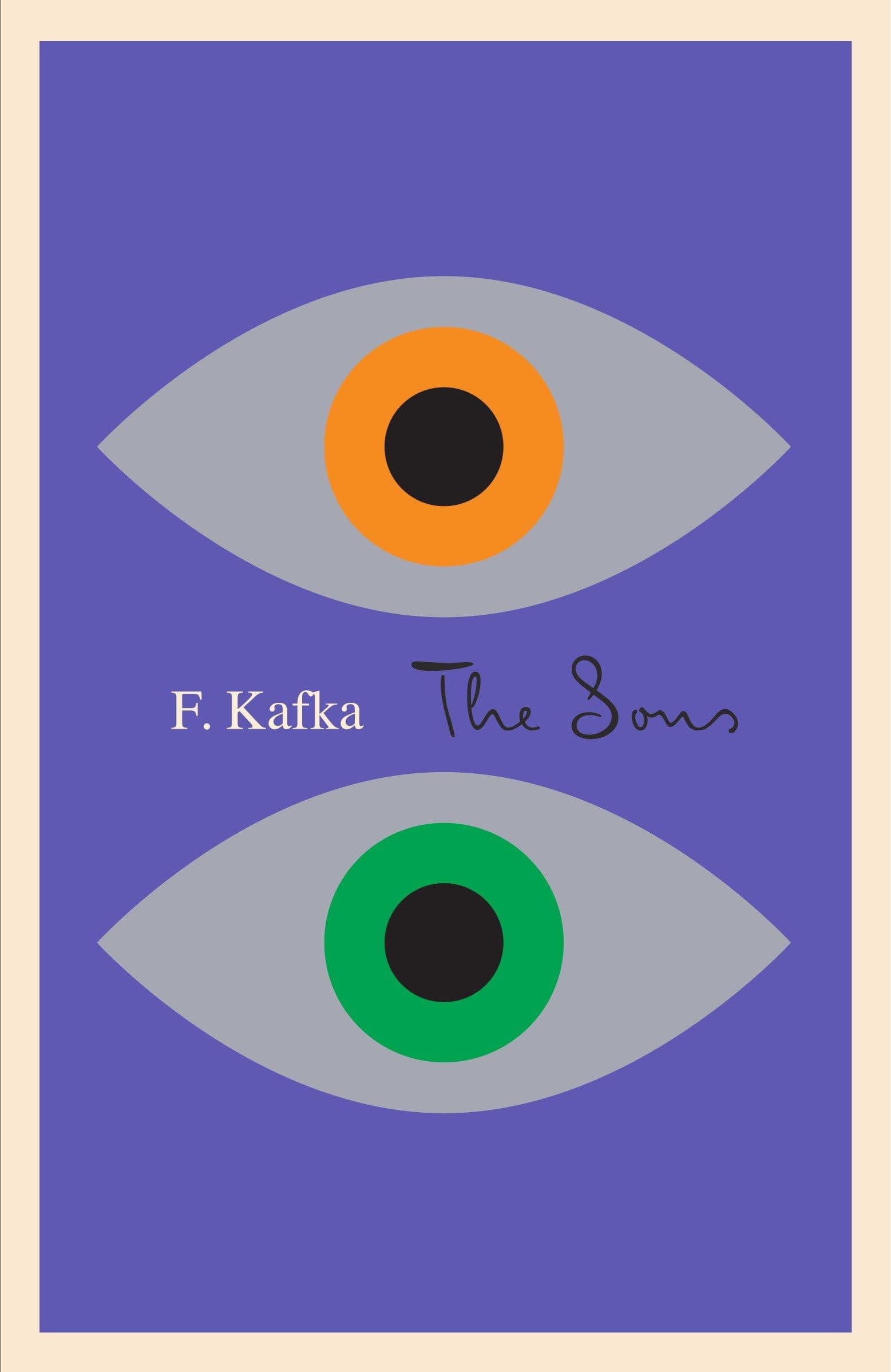
desertcart.com: The Sons: The Judgment, The Stoker, The Metamorphosis, and Letter to His Father (The Schocken Kafka Library): 9780805208863: Kafka, Franz: Books Review: Excellent in Every Way - Kafka is one of those rare writers who can evoke feelings of melancholy, hilarity, sadness and awe all within a 60 page story. I read these stories in order, because that was how Kafka felt these texts should be arranged as they contained a "secret." All I can say is that it is clear to me why Kafka is considered one of, and in my view is, the finest writers of the 20th century. Needless to say, I highly recommend this book. Review: Really a great creation. I read it all at once - The Sons, The Metamorphosis, and letter to his father. Really a great creation. I read it all at once. could not put it down.

| Best Sellers Rank | #441,105 in Books ( See Top 100 in Books ) #133 in German Literature (Books) #9,064 in Classic Literature & Fiction #16,618 in Literary Fiction (Books) |
| Customer Reviews | 4.6 4.6 out of 5 stars (73) |
| Dimensions | 5.19 x 0.53 x 7.97 inches |
| Edition | Uncorrected Proof |
| ISBN-10 | 0805208860 |
| ISBN-13 | 978-0805208863 |
| Item Weight | 6 ounces |
| Language | English |
| Part of series | The Schocken Kafka Library |
| Print length | 192 pages |
| Publication date | August 5, 1989 |
| Publisher | Schocken |
S**N
Excellent in Every Way
Kafka is one of those rare writers who can evoke feelings of melancholy, hilarity, sadness and awe all within a 60 page story. I read these stories in order, because that was how Kafka felt these texts should be arranged as they contained a "secret." All I can say is that it is clear to me why Kafka is considered one of, and in my view is, the finest writers of the 20th century. Needless to say, I highly recommend this book.
A**R
Really a great creation. I read it all at once
The Sons, The Metamorphosis, and letter to his father. Really a great creation. I read it all at once. could not put it down.
E**A
Five Stars
No comment
M**M
Five Stars
Excellent
D**S
A tragic, fragmented portrait of a troubled relationship
At one point in his career, Kafka made a request of his publisher that three of his stories be published together in a single volume, citing "an obvious connection among the three, and, even more important, a secret one." The publisher did not honor this request in Kafka's lifetime, but Schocken Books has since made Kafka's envisioned volume a reality, including use of Kafka's suggested title: The Sons. The first story is "The Judgment," where a dutiful son contentedly looks after his feeble, aged father and prepares for his wedding... until a bout of nearly incomprehensible guilt utterly alters the relationship and the son's plans. Next is "The Stoker," the short story that is also the first chapter in the unfinished novel Amerika. Here a rejected, homesick youth temporarily finds a replacement for the father he has left behind in Europe. Rounding out Kafka's trio is his famed piece "The Metamorphosis," where Gregor Samsa awakens to find he has transformed into a giant insect, a situation that he regards with a surreal and comical lack of amazement, but which causes great consternation for his dependent parents and sister. The stories are, of course, excellent. More tightly written and polished than the fragmentary novels Kafka left behind, they highlight Kafka's taste for absurdity in the midst of banality and his characteristic injection of sly humor into scenarios that are sad or nightmarish from the characters' perspectives. The editors of The Sons included one final piece, a piece that was not in Kafka's request to his publisher. Indeed, this piece was among the personal papers that Kafka asked to have burned unread after his death. It is Kafka's "Letter to His Father." Written when Kafka was thirty-six years old, the lengthy letter endeavors to answer his father's question of "...why I maintain I am afraid of you." Stripped of the playfulness of Kafka's fiction, the letter is like a dash of cold water in the face - both painful and clarifying. Suddenly the bizarre behavior of the sons in the preceding stories, their ingratiating, slavish devotion to fathers who reward them with rejection, intimidation, and violence, becomes more comprehensible as one reads the naked railings of Kafka to the father he both admired and feared. I've seen this letter dismissed as being unrealistic: objectively, Hermann Kafka was not a violent monster. This misses the point. This is not an objective assessment of the complex relationship between a parent and child. This is the desperate plea for understanding from a wounded adult child, speaking bluntly and truthfully about his subjective experience of the relationship. It is the tragic story of a clash of personalities; of a timid, sensitive child overwhelmed by a vigorous, aggressive parent. That the parent was likely well-intentioned and never understood the injurious affect he had on his son does not change the son's experience. Even more tragically, the letter makes it clear that even at the age of thirty-six, Franz Kafka still on some level perceived himself as a scrawny little boy, disappearing in the shadow of his strong father. Speaking from my own personal experience, I will warn you that if you've had any similar issues with your own parents, reading this letter will likely activate some painful emotions, but it can also provide a sense of catharsis. Any of the individual stories in this brief collection is a worthwhile read on its own. Together they pack a powerful punch. I do advise keeping the publisher's order and saving reading the "Letter" for after reading the fiction. Enjoy the stories and see what you get out of them. Then read the letter, and perhaps revisit the stories, and see if you have a new perspective on Kafka's multilayered literary creations.
D**J
Daddy Dislikes My Diet
What happens when one imposes meat-eating on the other? What happens when the one doing the imposing happens to be your own father? And what happens when such carno-terrorism--to borrow from Jacques Derrida--becomes allegorical, representative of an inability to speak? In "Letter to His Father," Franz Kafka (a self-championing vegetarain harboring something akin to a body dismorphic disorder) coughs up a catalog of paternally-driven injustices and imagines a gastronomic utopia inimical to Daddy's sadistic table regime. Often overlooked, "The Letter to His Father" belongs right up there with Kafka's other canonized marvels. Go ahead and chew on it for a while.
M**A
A Letter to my Father
A Letter to my Father by Franz Kafka is a look into the mind of one of the most talented (but also unhappy) writers of the 20th century. It's a very personal account of the relationship between Kafka & his father, his strong, controling, tough father who was the main figure who influenced Kafka's life & way of thinking. Franz Kafka talks with great pain in this 'letter' about his childhood years & how his father controlled everyone in the household, how the writer's own personality was shaped & molded by this one relationship. After reading this letter, the reader is closer to understanding the person that wrote "Metamorphosis" & "The Judgment".
K**A
Not what's in the picture.
I was a little disappointed because the packaging suggested one thing and I was given an older version of the book. It was a litle misleading.
S**N
I got a used old copy of the book
S**E
The concept behind this book is brilliant, collecting three stories (including the masterpiece "The Metamorphosis") that Kafka intended to call The Sons. The updated translation is very strong. Do recommend.
A**R
Read these small pieces and being to wonder about the paradoxical nature of being.
Trustpilot
1 day ago
2 days ago